Whisky Intelligence has reproduced (with permission) The Gauntleys Whisky Newsletter for June 2007; a look back in time. The author, Chris Goodrum, has some excellent insights into the whiskies being commented on which makes for excellent reading on a Sunday. Enjoy!
Dear Whisky Customers,
Ever get the feeling that you are saying the same thing over and over again? I know I do! So what’s he going on about this month I hear you ask, can you guess? Awards!
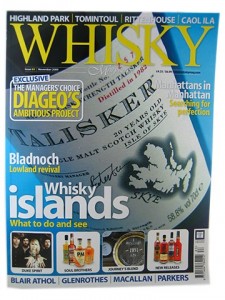
It feels like every month there is someone handing out awards for something or other and lo and behold issue number 63 of the whisky magazine which landed on my proudly proclaiming it to be the ‘Awards Issue’ and ‘The best whiskies in the world’. And the top gong goes to Talisker 18! Now there is nothing wrong with awards, but what do they really achieve? Most whisky customers I have spoken to generally roll their eyes and utter comments like ‘oh there’s another sticker for the bottle?’ and this is my point exactly, there are too many so called competitions and it is always the same things that win and don’t those companies take out expensive adverts in the whisky magazine? Cynical? Moi! No!
I would personally like to see two completions a year, for new bottlings release that year. One for distillery releases and one for independent bottling companies. I mean it is all well and good for the likes of 18 year old Talisker, 12 year old Highland Park et al to win competition after competition. We know that they are good whiskies, we don’t need to be told it every month or two. What we do want to know is what new things have been released, and should we part with our hard earned for them! I doubt very much that the editor of the whisky magazine will send me a reply, he certainly didn’t after my comments in the last newsletter. My guess if that it probably ends up in his junk email box, and we know what’ll happen then. Anyway if anyone else has any comments please let me know.
GLOBAL WARMING AND THE FUTURE OF WHISKY
Now I know what you are thinking, what does global warming have to do with the future of whisky production. Well directly nothing, but indirectly an awful lot. This thought all came about because I was reading an article in the money supplement of the Sunday Times about how to make money through global warming and one of their investment tips was companies that produce biofuel. Now the most common form of biofuel worldwide is Ethanol, which can be produced from starchy grains such as barley, wheat, corn, maize and sugar cane. Do you see where I am going with this?
Doing some further research into this subject it would appear that the European Union has set the following targets for member states. By 2010 all states should achieve at least 5.75% biofuel usage of all traffic fuel. This rises to 10% by 2020. This will obviously produce increased demand for raw materials globally and will obviously push up their price; hence the cost of a bottle of whisky will be set to soar. In fact earlier this year there were a number of reports linking stories as diverse as food riots in Mexico due to rising prices of corn for tortillas and reduced profits at Heineken, due to the increasing use of corn grown in the US Midwest for bio-ethanol production. (In the case of beer, it is more that barley acreage was cut to meet growing demand for corn, rather than the direct conversion of barley to ethanol.)
So where does this leave the UK? Well there is currently quiet a bit of debate as to how useful bio-ethanol will be in replacing fossils fuels in vehicles. The chief policy vehicle in the UK for encouraging biofuel development and its use is called the ‘Renewable Transport Fuel Obligation’ (RTFO). This will require fuel companies here to replace 2,5% of their total transport fuel with biofuels by 2008/9, 3.75% by 2009/10 and 5% by 2010/11. A recent report commissioned by Rolls Royce says that final figure (5%) is equivalent to 1.2 billion litres of bio-ethanol and 1.35 billion litres of bio-diesel. If this was to be produced in the UK, 1.2 million hectares would be required, about 20% of the UK’s arable land.
The report goes onto say that the bulk of our biofuel requirement will be imported and based on soy, palm oil and sugar cane. However I think that there will still be a lot of pressure put on barley and wheat production in the UK, especially with regard to price, and with the current flurry of distillery building projects, whisky manufactures will be in direct competition with bio-fuel producers for the raw materials, which can only lead to an increase in the cost of production and thus an increase in the price of a bottle of whisky. If this happens and it is and of course at the moment still hypothetical then it could lead to a down turn in sales, distillery closures, job losses and an end to the boom time in scotch whisky.
Not wishing to be the harbinger of doom, but life has a tendency to move in cycles, boom one day, bust the next!
Right rant over, time to taste some whisky!
MURRAY McDAVID NEW MISSON RELEASES
My good friends at Murray McDavid kindly sent me some samples of their new Misson releases, and are probably waiting with baited breath as I pass judgment. No I’m only kidding! I think the days have long gone that you could accept without question any new independent bottling. I know that I may lack the experience of some in the industry, but over the time I have been doing this job I have tasted a fair number of good, bad and indifferent whiskies, and this latest selection follows a very familiar path, there are some that make you realize that whisky can be the greatest alcoholic beverage on the planet and some that make you think??. Oh you know what I mean.
THE BAD
1985 Craggenmore (21 year old) 55.6%
Bourbon/ Tempranillo
What is it with red wine finished whiskies? Maybe it’s me; maybe I just don’t get on with them. However in saying that the nose of this is superb and I thought finally a red wine finished whisky I like and to give it its dues it has the finest red wine finished nose I have ever tried, but, and there’s always a big but isn’t there!……….
The nose opens with a slight floral note, followed by spicy redcurrant/ cherry fruit, sweet natural honey and luxurious buttery bourbon oak lying just beneath the spicy top note. It displays a magnificent multi-dimensional depth. I really could sniff this all day. Then it goes horribly pear shaped. On the palate it has a mouthwatering intensity, but it is so one-dimensional it is untrue and short. How could such a gloriously complex nose lead to such a disappointing palate, even a drop of water doesn’t help the proceedings. This really is a shame and goes to show that first sniffs can be deceiving.
1989 Highland Park (17 year old) 52.6%
Bourbon/ Fortified Cellier de la Donna Grenache Blanc
Murray McDavid has bottled some great expressions of Highland Park???????.. In the past!
I’m sorry guys this is innocuous at best and down right awful at worst. On the nose there is a spicy red winy top note floating above some coastal fruit and a touch of peat. It is very floral but not particularly wild and heathery. I certainly would have guessed the distillery.
THE INDIFFERENT
1986 Glenglassaugh (20 year old) 55.3% £68.95
Sherry
One smell and yes this is a sherry cask, with all that in yer face? lush rich, spicy, succulent sherry fruit. There is absolutely no distillery character in sight, but one has to ask if Glenglassaugh ever had any distillery character (apart from wild grassy gorse and sackcloth or old hessian), I mean its owners Highland Distillers never thought it had enough character to bottle it in its own right, (family silver excluded) and most of its production went for blending in Famous Grouse and Cutty Sark, although it has to be said it is a damn fine sherry cask. On the palate it is rich, honied and sherried (no surprise) it is raw and up front and personal. It reminds me of and old bottling of theirs, the 1990 Linkwood with those heavy vegetal notes. A drop of water brings out a slight sulphur/ gun smoke note (which unfortunately lets it down).
So in summing up it Sherry 1 v Distillery Character 0. I love its intensity and frankly if it wasn?t for that sulphur note it would definitely be a good!
THE GOOD
1978 Glenturret (28 year old) 45.8% £76.95
Bourbon/ Rioja
Well knock me down feather. What was I saying about red wine finished whiskies? A glorious nose, the mature bourbon influence is obvious from the start but it is supported by some gloriously oily, rich, mellow fruit dripping in natural honey, beeswax and a touch of red wine fruits. Subtle it isn’t, the aromas engulf the senses, this is gorgeous! Quiet a sweet entry onto the palate, heavily bourbon laced mature fruit with red winey fruit notes and natural toffee along with a slight peaty note on the middle. It has a lovely crisp garden pea freshness but finishes a bit short. However this is immediately rectified with a drop of water which lengthens it and emphasizes the glorious honeyed notes. Well there you go this is the first red wine finished malt that isn?t over powered by the finishing cask. Is it a case of practice makes perfect or a fluke? Either way it is gorgeous!
1989 Rosebank (17 year old) 55.3% £59.95
Bourbon/ Guigal Hermitage Blanc Marsanne
A stunning, crisp, clean, textbook rosebank nose of sweet garden fruit, lime, lemon, mango and a touch of lavender(?) nicely supported by some delicate winey notes. The balance is sublime with oak coming through and adding a lovely butterscotch note. My how it keeps building in complexity, with a late toffee-popcorn note. The palate is rich and fruity with the tangy citrus winey fruit battling against the butterscotch, shortbread and toffee-popcorn flavours. And it goes on with the citrus fruit, a touch of flowers, salt, guava and melon rolling over the tongue. Very long with some wood tannins noticeable in the finish. A drop of water emphasizes the bourbon oak on the nose and allows the tropical fruit notes to linger luxuriously on the palate. There can’t be many casks of this sublime quality left, so grab a bottle whilst you can. It has been said many, many times before, but it is a real shame this distillery has gone.
1982 St Magdalen (24 year old) 58.3% £94.95
Bourbon/ Port
Luxuriously rich aromas of coffee, honey, tawny fruits dipped in oh so sweet spices. Awesome complexity with some lemon fruit notes. Lovely and soft on the palate, again very spicy with the cask finish dominating the palate with touches of tawny fruit, quiet dry with a good length with a touch of salt and wood tannins. A drop of water really brings this malt to life emphasizing the mature honey and natural caramel on the nose. On the palate it allows the distillery character of perfumed grassiness to just about force its way through the port, and I have to say it has a lovely balance for a port finish.
1984 Caol Ila (22 year old) 54.1% £86.95
Bourbon/ Maury VdN Red Grenache
Initially this redolent of luxurious and richly fruity redcurrant and berry fruits, which are promptly blown away by the classic, crisp saline infused subtly peaty aromas. Good grief is this really 22 years old, I’d have put it down as mid teens, is this the Peter Pan of whiskies, clinging on to its probably un-misspent youth. It has an intriguing sweetness to it and I must say that the finish (sorry enhancement) works very well. On the palate again the sweet fortified red fruits begin the proceedings followed by the tangy, crisp coastal fruits and delicate peat. Tongue tingling alcohol somewhat masks the finish, yet it leaves behind a beautiful sweet aftertaste. A small drop of water makes the nose sing! Melding all the components together nicely in a near perfect balance. On the palate it softens it and again brings it all together. The wine cask effortlessly supports the intense citrus coastal fruit and the lazy peat drifts over the tongue. The finish is extremely dry and salty with touches of garden fruits, earth and soil. One word sums this malt up ? Harmonious!
A GENERAL ROUND UP
1989 Auchroisk (16 year old) 63.9% £50.95
This isn’t exactly a new bottling but as I was given a sample I thought it would be rude of me not to review it! What is interesting about this bottling is that it is from a Boubon cask, whereas most of the bottlings of Auchroisk I have come across have been sherry casked, apparently the reason for this is because the whisky they produced was naturally light and the obvious use of sherry casks would give it more robustness.
On the nose it is soft and quiet light and oily with tangy citrus fruit, pear, banana, natural honey, bourbon oak, and a touch of grassiness and dunnage floors. Quiet Lowland-esque and quiet charming. On the palate it is pretty much as the nose. Undiluted the alcohol somewhat dominates. However a drop of water brings out a beguiling sweetness, a juicy yummyness with a delicate touch of orange and a larger-esque malt note. It lengthens and brings out a touch of gin-like botanicals on the finish. A delightful summer malt.
Ardbeg Almost There? (9 year old) 54.1% £36.95
Now this is brand spanking new! Oh so clean, textbook aromas of rich, oily orange fruit, coastal peat, fisherman?s sowesters and tar. Compared to the ?Still Young? it has a more pronounced oiliness. It’s amazing what a couple of years has done to the depth and complexity. It has been a fascinating journey from the ‘in yer face’ brashness of the ‘Very Young’ through the flawed excellence of the ‘Still Young’ to where it is now.
On the palate it is silky, quiet oily with a citrus sea fruit entry, followed by gentle peat and coal smoke wafting in. It really builds on the tongue and without water it is so silky smooth. Lovely length with the tar, fisherman’s outer garments, a touch of grapefruit and bonfires partying on the palate. This is really showing it fruitiness now. Again it is a lot more oily than the ‘Still Young’, less orangy and quiet mellower, the peatiness is a lot subtler, now playing a supporting role rather than screaming at you.
Whereas a drop of water killed the ‘Still Young’ with the ‘Almost There’ it emphasizes its glorious coastal fruit and rubberyness and brings out a lovely sweet note on the nose. On the palate it brings all the flavours together, emphasizing the bonfire smoke and the palate coating juicy/ oily fruit. It really brings out the monstrously intense yet subtle peat, enveloping the senses. Really you just sit there and go wow after a few sips with a silly grin on your face!
Well that’s it for now. Any comments or orders to the usual address please.
Sincerely
Chris Goodrum
http://www.gauntley-wine.co.uk/