TOMATIN DISTILLERY
Some older distilleries’ origins are difficult to be precise about, their documented story usually beginning with the issuing of a licence even though their history may have begun years before turning legal. Tomatin’s start-up, being established in the hey day of the liquid gold rush, seems to be more definite. In 1897 the Tomatin Spey District Company Limited was founded by some Invernessian businessmen. Perhaps its chosen location was a combination of factors: next to a rail line and road, not far from a market- it lies just over 10 miles south of Inverness and on the Allt na Frith (meaning ‘free‘) burn on its way to join the river Findhorn. The burn rises in the Monadhliath mountains from Carn Dubh and Beinn Bhreac then flows into the river Findhorn, where extra cooling water can be pumped from if necessary. It has been suggested that a very early still set up to supply drovers who met in the area was the inspiration for the foundation of the distillery. Credence for this comes in the name: ‘Tomatin’ translates to “Hill of the (Juniper) Bushes”, as juniper wood gives off no smoke while burning it has long been a favourite of illicit distillers who must keep their practice secret. Being at just over 1000 feet above sea level few Scottish distilleries are higher, is this high enough for atmospheric pressure to have an effect on the distillation process and even the character of the make?
Little is recorded of the individuals involved at the beginning but it is easy to believe the parties were local merchants connected to the trade who took a step up from either supplying the industry with services or material or being concerned at the other end of the process with the wholesale or retail of the finished article. At this time demand for ‘Scotch’ seemed to be unquenchable with more distilleries (eleven) being built in this year than any other while total production had been increasing significantly for some time. However circumstances were soon to conspire against the trade and the inevitable bust followed the boom. By 1906 the company had to fold. Three years later Tomatin Distillers Company Limited had been established to revive the fortunes of the still and set about rebuilding the distillery. From this point fate was kinder for quite some time with production only breaking during World War 1 and between 1941 and 1945- two major periods of disruption which effected nearly all production of whisky in Scotland.
However come 1956 the modern tale of Tomatin starts to take shape. After World War 2 another golden era for Scotch whisky began. Depleted stocks from a forced downturn and eventual freeze on production during war time had to be addressed in order that such a valuable export could contribute to getting a nation back on sound economic footing. During the decades following the lifting of wartime rationing on cereal supply for distillation new distilleries were built, mechanisation was broadly introduced, established distilleries were enlarged and most facilities operated at full production capability. What is peculiar about Tomatin is just how far these improvements and increases went.
In 1956 the original two stills, which were capable of producing 120, 000 proof gallons, were joined by another pair. Only 2 years later another two stills were added. Around this period an experiment into directly firing the stills with a flame from oil proved unsuccessful due to the heating being too harsh on the copper due to the sulphur content of the oil leading to metal becoming brittle, eventually a more reliable method of internal steam heating via an oil burning boiler was employed.. Once full capacity was realised it was again time to increase potential output and 1961 saw the total still count reaching 5 pairs with another single still joining them in 1964. These measures meant a ten fold increase in capacity in the twenty years following 1945. By 1970 Tomatin had become attractive to other whisky companies and an offer by the mighty Distillers Company Limited of 13 shillings per share (shares were at the time valued at 9 shillings) was confidently rejected. A few years later the tally increased once more, this time to 14. By 1973 all malting on site was discontinued, presumably to utilise the space occupied by the floors as there was soon to be the biggest extension yet. Before on site malting stopped even 60 tonnes of barley a week was insufficient to satisfy demand- the remaining requirement had to be out-sourced. 1974 saw the most significant boost to capacity with the total number of stills reaching 23 (12 wash and 11 spirit) requiring seven spirit safes and with the capacity to produce 5 million proof gallons. In the twenty years up to this point around £5m had been spent on the distillery, it has been said that this was more per employee than an oil refinery! However maximum potential output was never achieved with the record being set in 1974 at 3.149 million proof gallons. The stills were similar in design: both wash and spirit having reflux bowls, a capacity of 16,820L and lyne arms at almost right angles.
With such scale comes some impressive figures. As the largest malt distillery in Scotland at the time and second only to Japan’s Hakushu distillery as the biggest in the world Tomatin required quite a deal of equipment. For example having two (stainless steel) mash tuns is not uncommon in the grain distilling industry but is most unusual for malt production, Likewise the need for a second (Porteus) mill in order to adequately supply enough grist for the large scale of the set up again indicates output here was unusually high. A total of 24 washbacks were required, more modern stainless steel examples joining older cast iron examples, all at 41KL capacity. An expensive dark grains plant, recycling draff and pot ale into animal feed, was established in the year of the great expansion- as much as an incredible 300 tonnes of feedstuff was produced weekly. The whole facility took up a generous 136 acres.
In the days of heightened production fermentation time was about 48 hours however a slower, 56 hours, regime is currently in place following a 6 hour mash. There are presently 16 mashes a week through 6 pairs of stills eventually producing 45KL of spirit (2ML a year) the operation being worked five days out of seven. Spirit vapour is brought back to liquid via shell and tube condensers positioned outside of the still room in the open air.
Also among many of the ‘firsts’ at Tomatin was the inaugural use, in 1960, of the Lautering system of mashing. Common in brewing this method more efficiently produces and collects sugars from the mash tun. The word comes from the German for ‘filtering’, this method leads to clearer worts as opposed to the more traditional Scottish cloudy worts. Each mash requires 8 tonnes of grist. Another application of more sophisticated methods and again a first for a malt distillery was the installation of an automatic cask filling machine – understandable when around 80,000 casks were required annually. For all this wood 16 warehouses were required and total spirit storage was nearly 55 ML (over 200,000 casks), two facilities being of the traditional dunnage style the others being racked. At the moment all spirit remains maturing on site having been reduced to a standard 63.5%abv as a filling strength. Bottling is carried out in Dumbarton although blending is overseen at the distillery. During the 1970s improvements designers took advantage of the opportunity to organise the distillery’s layout so as to allow as much as possible of the production process to be observed from a single location. Other developments included the energy efficient pre-heating of wash entering the still by heat being exchanged with exiting hot pot ale. The attitude towards efficiency and economy has stuck with Tomatin, very recently a biomass steam boiler, the first of its type in the Scottish whisky industry, has been installed. This has helped reduce carbon emissions by a massive 80% and is a big step towards renewable energy sources.
Perhaps the most original experiment at Tomatin was the eel farm. It is known that eels are encouraged to grow when the water they live in is warmer, so as a distillery has an abundance of such a resource, for example from the condensers, a novel recycling system was developed. However despite an impressive tripling in the growth rate of the fish the farm was closed in 1984.
Despite a significant downsizing in production at the distillery, the 23 stills were reduced to the original 12 in the old still house in 1998 and the dark grains plant closed, it is interesting to note how valuable Tomatin remains to the area. In days of old distilleries were often responsible for a whole community – the direct need for labour as well as the necessary supplies and services resulted in essential industry and commerce for often rural parts. At Tomatin 30 of the original 47 houses built for staff are still occupied by some 80% of the 55 employees. Among the workforce there are two coopers, a surprisingly rare skill to be seen still practised at a distillery, automation, off site warehousing and labour costs conspiring against this particular trade from being commonly witnessed during a tour of a distillery.
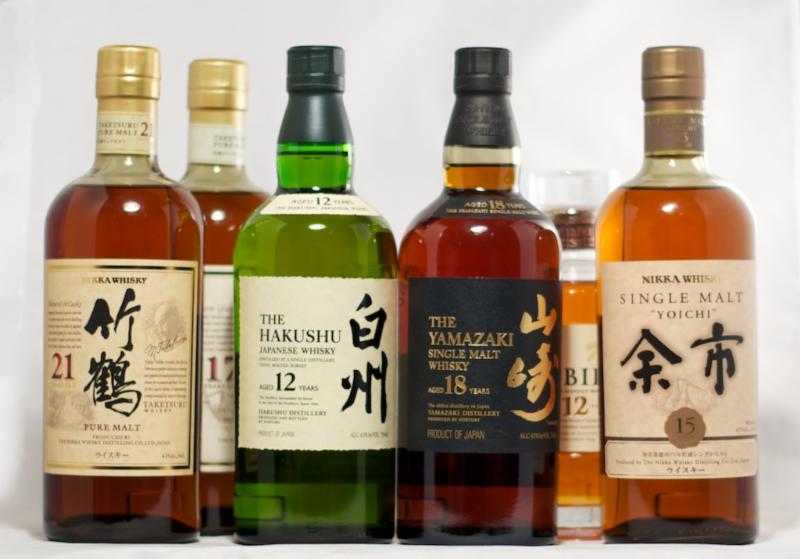
Over time certain overseas markets began to take an interest in Scottish whisky, particularly conspicuous was Japan. By the late 1970s over 5M gallons were being shipped there, a significant portion of this quantity was Tomatin. Exporting was done on behalf of the company via its subsidiary Tomatin Distillers Exports Ltd who concerned themselves with exporting bulk blend, vatted malts and a line in substitute blends: where an existing style was required at a competitive price. The well known company Suntory was responsible for a large portion of these imports. During this period Tomatin was considered amongst the most important producers in the market place and one of the few distillers to offer their make as a single – initially at 5yo then also at 10yo. Another of the businesses involved in importing Tomatin into Japan, since the 1960s, was the Kyoto based Takara Shuzo a shochu distiller and a large and diverse alcoholic beverage producer which eventually (1992) also had interests in the American brand ‘Ancient Age‘ (currently Buffalo Trace). So when in 1984 the Tomatin went into voluntary liquidation with shares suspended (they were the first Scottish whisky company publicly quoted on the stock exchange) Takara Shuzou, saki and Shochu makers who closed their own Japanese whisky distillery Shirakawa ten years ago, joined with the respected Tokyo based trading company Okura, established in 1873, to form Tomatin Distillery Company Limited. This step marked the first time a Scottish distillery fell under Japanese ownership. After voluntary liquidation and before the Japanese take over the distillery continued to produce spirit under the watchful eye of the receiver in order that existing orders for fillings could be honoured. Along with the rest of the Scotch whisky industry the 1980s were difficult times for Tomatin- having no serious brand of their own the company almost entirely relied on orders from blenders to survive, so when retail sales shrunk their customers traded on stock reserves and placed few orders for new fillings effectively bankrupting the business. Not long before the difficulties of the mid-80s things must have been promising as a re-issue of shares resulted in a 20% stake of the company being taken by the Dutch beer giant Heineken, obviously fortunes can change and big companies are not necessarily immune. The distillery has been under the umbrella of the Marubeni group since 2000, Okura & Co. having sold their 20% share in the company to Takara Shuzo in 1998 after becoming bankrupt. Since 2006 distribution has been the responsibility of the Kokubu firm who are currently (2013) celebrating their 300th anniversary..
Joining the party, in 1996 when it was acquired from the long term custodian – Wm. Sanderson a subsidiary of United Distillers at the time, was the long established brand ‘Antiquary’ created around 1880. Originally produced by the Edinburgh tea, wine and spirit merchant John & William Hardie, a company set up by their father James in 1861 with offices at 4 Picardy Place. The firm were one time licence holders of Benromach distillery and held 50 shares at the creation on the North British grain distillery in Edinburgh. Come 1917 Hardie sold the Antiquary brand to J. & G. Stewart which in turn was eventually subsumed within the massive DCL concern. Ultimately the founder and the brand were reunited when, as a subsidiary of William Sanderson, J. & W. Hardie were also taken over by the inevitable DCL. The name comes from the title of a novel by Sir Walter Scott.
Other connections to the company include, historically, Alexander Dunn & Co. (Whisky Blenders) Ltd. responsible for the bespoke labelled brand Slaintheva 12yo. Also St. Andrews Ltd producers of golf themed bottlings such as a golf ball shaped bottle and a bottle in a leather miniature golf bag and trolley which were popular in Japan. Another blend brand ‘Talisman’ also originally belonged to an Edinburgh merchant: Lambert Brothers, has been owned by Tomatin for some time. As well as the Antiquary range – non-age statement, 12yo and 21yo (introduced in 2001) an important blend for the Tomatin portfolio is Big T. Finally there is another three blends owned by the group – Ancient Clan, Grand Alastair and Legendary Scot although sales of these are focused overseas. Finally rumour has it that ‘Prince of Wales’ Welsh whisky was actually sourced from Tomatin, the spirit was combined with herbs to replicate a style which would have been the norm before the benefits of oak maturation was appreciated.
As regards the character of this light to medium bodied Highlander it is interesting to note several earlier comments on the character of Tomatin mention peaty notes, something not too apparent currently, perhaps the in-house malting style led to a smokier dram but once the dried barley was out sourced a change of character was either desired or was deemed more convenient. Although over time there has been a general shift away from the smokier style apparent in many other malts too. Currently a lightly peated specification is supplied mainly by Simpsons in Berwick although three other more local suppliers are frequently used. For a number of years a week’s production is dedicated to a much more significant peating, levels have varied from 12 to 15ppm and future batches will be higher at 30 to 35ppm.
The current distillery manager is the very experienced Graham Eunson. He follows two dedicated Tomatin men in this position. Douglas Campbell MBE started work at the distillery in 1961 joining both his parents on the payroll, he is still employed as a blender and ambassador. Before him served John MacDonald who also went in his father’s footsteps at the distillery, his long career starting in 1948.
All distilleries are unique. In Tomatin we find a well established operation not without its dark days but a survivor who has embraced progress whilst not losing the human touch, keeping a community alive, enjoying well deserved praises for its current offerings and preparing for a future not in bulk shipments but rather catering more for the discerning appreciators of a fine dram.
Notes:
1 litre of pure alcohol (LPA) = 2.595 proof gallons
LPA has been the required measurement for alcohol since 1980.
Proof is 57.16% alcohol by volume (ABV)
4.546 litres = 1 Imperial (UK) gallon