Save £40 on our Malt of the Month at The Whisky Exchange – Scotch Whisky News
February 15th, 2018



Comments Off on Save £40 on our Malt of the Month at The Whisky Exchange – Scotch Whisky News

Whisky Galore News Feb 2018
Hello
Here at Whisky Galore HQ we are busy behind the scenes working hard towards our next Auction which goes live on Thursday 22nd February 2018………
We are here to share some very exciting news with you, here at Whisky Galore Auctioneers have just been recognised as the most competitive Whisky Auction Site in the UK!
And the only Auction Site to offer a FairDeal Policy for all our customers please see below:-
Our Policy here is not to pass on the Administration costs to our valued customers……….
So what are waiting for?
Go on get your bottles in and maximise your profit!
“There really is no better time or place to sell online”!

Latest Arrivals:
The Collector’s Edition
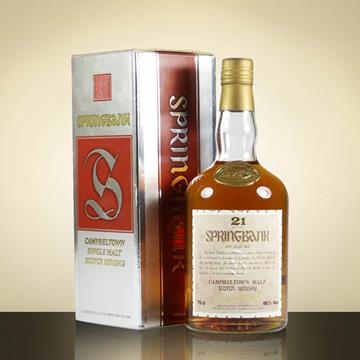
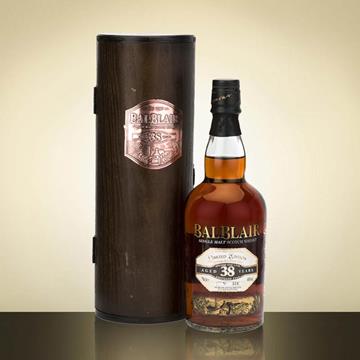
This week we’ve had a few very rare, collectable bottles arrive at The Whisky Shop. From a UK market exclusive single cask from The GlenDronach, to a 1980s bottling of Springbank 21 Year Old and a limited edition Balblair 38 Year Old distilled in 1966, these bottles are perfect additions to any whisky collection and definitely won’t be around for long, with a very limited number of each available.
Next day UK delivery available
International Shipping

Springbank 21 Year Old (1980s)
Aberargie Distillery
(read part 1.1 of our visit to Morrison & MacKay here)
You may not have heard of Aberargie Distillery. In fact you probably haven’t unless you have kept a watchful eye on new distillery openings or a fan of Morrison & MacKay whisky. Aberargie is one of the latest distilleries on the Scotch Whisky Map. Located on the border between the regions of Fife and Perthshire, this is a distillery with quiet pedigree. Although a separate entity from the Morrison & MacKay independent bottling business, they are beyond the paperwork, essentially one and the same. As we discussed in Part 1.1 of our #IndyScotchWhisky blog, the Morrison family have strong links to whisky, casks and in the case of Aberargie, the land. Following a tour of the new bottling plant for Morrison & MacKay (which will also be used for bottling future Aberargie single malt) we were invited to a have a wee look at the distillery itself.
Aberargie – Potted
Let’s take a quick look at the the creation of Aberargie Distillery. Here at The Whisky Barrel we have been working with Morrison & MacKay for many years. As a relatively local company, we’ve developed a very positive working relationship, which is in strong part due to the company’s very friendly and personable approach. The Morrison and MacKay names both have strong whisky pedigree, most notably from their time at the helm of Bowmore Distillery on Islay. Consequently, it was no real surprise when they told us they were well down the road with dotting a new distillery on the map. Ground was broken in 2016, and by November 2017 the first new make Aberargie spirit ran off the stills and the first cask filled.
The biggest challenge for all new distilleries opening in the modern era, is to have something different. To be able to offer a whisky that will stand apart from the crowd. At Aberargie it is all about locality. The farm, owned by the Morrison family aims to provide all the barley that goes into making Aberargie Whisky. This will be local barley grown literally on the doorstep. The location of the distillery is rather attractive too. Set among farmland but in close proximity to the Tay River it sits rather picturesquely among its surroundings and with the backdrop of the Sidlaw Hills to the north and the Ochil Hills to the south.
Whisky Space
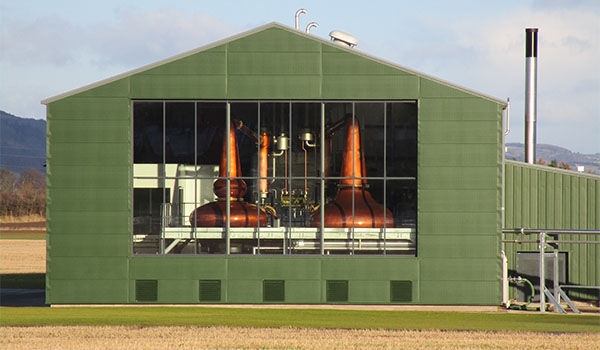
Standing from the main road with a view north to the distillery nestled among the barley fields and the sun behind you, the two beautiful copper stills glow through the large panel windows. Much like the traditional casks of of the warehouse, the copper Forsyths stills are the prominent marker of tradition and history. Beautiful. These fields are where the barley for Aberargie whisky grows. Literally as close as 50 yards to the stills. There is an instant connection to the land. If you’re looking for terroir with your whisky, then Aberargie will be able to challenge Bruichladdich here. The industrial farming style of the warehouse and distillery sit neatly among this Perthshire/Fife countryside.
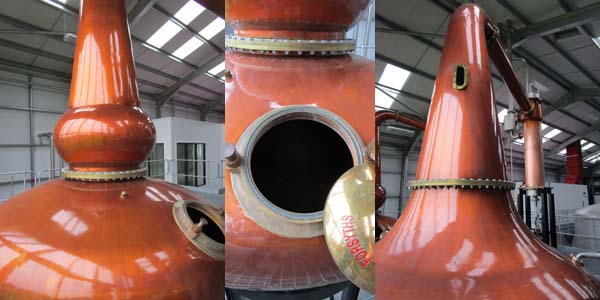
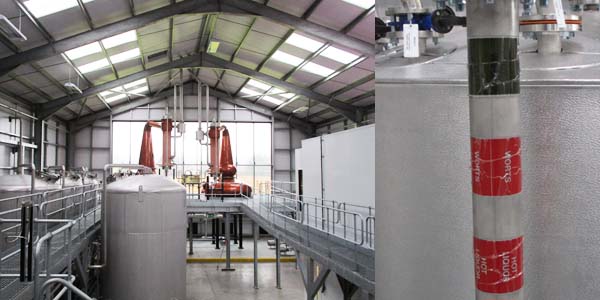
The very first thing you notice when standing in the main building of the distillery is that you can see everything. On the spot, a 180 degree turn lets you take in the stills, spirit safe, mash tuns, washbacks and more. This is a modern distillery. For many standing in a distillery like this, initial thoughts might be along the lines of ‘no charm or character’. There are no white wash walls, there are no old stone walls, no aged tools, no walk between buildings. That is besides the point and not what should be expected here. This is a new distillery with its shiny, modern and efficient set up. And it is not trying to be anything else. It’s gloriously on point.
Still Whisky Stills
Our visit happened to come when the stills were silent. Chilly outside, chilly inside when these giant copper heaters are not working. A simple metal grate walkway leads you from one end of the distillery where the barley is poured into giant hoppers. Alongside run pipe works that takes the various stages of distillation to the next phase. Each part magnificently and purposefully engineered to do its job. And sitting in the windows are the lovely copper stills. Still holding the new look copper hue with the cooler condensers in salmon pink. We were reliably informed this is the colour they should be. If they go darker copper in colour then you might need to send the engineer in.
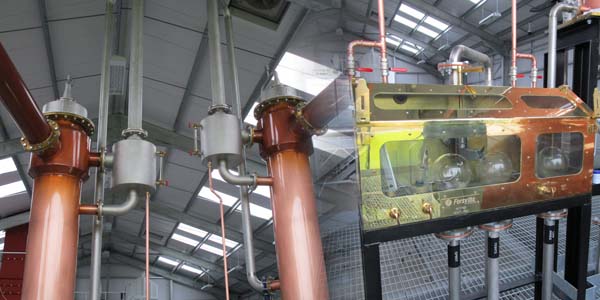
Inside the stills are some unusual panel heaters, not coils. Apparently, the type of heating element is decided by Forsyths themselves and even the distillery don’t know until they are delivered. They are the expert craftsmen after all. The whisky still is the perfect symbol for this distillery. It is the most recognizable part that makes up a distillery; an age-old design and shape still made with traditional methods in mind. But it is a symbol of modern engineering and practice.
Aberargie distillery and its whisky is the same. With the Morrison & MacKay name behind it we are certain of a high-quality scotch whisky. Their expertise of the industry and in distilling, as well as their incredibly high standard wood policy for their casks, combined with this new set up, bodes very well indeed. But we don’t just need words to tell you this is the case…
Aberargie New Make Spirit
The distillery is set up to make the best whisky possible. We won’t know what it tastes like until November 2020 at the very earliest. But we were fortunate enough to sample some of the new make spirits. And it is unlike any other we’ve tasted. Often New Make is a bit of a kick in the teeth:- very high ABV and rather stripped back with no external flavour influence of casks or otherwise. However, this Aberargie New Make you could nose all day. A lovely level of fruitiness and sweet candy which backs up the unmistakably young spirit. The cereals are dominant but rightly so, nodding towards the barley grown outside. The taste is like a high quality German wheat beer with sweet, melting popping candy.
Every whisky in Scotland has its own character and this Aberargie new make spirit is a glimpse of what Aberargie Single Malt Whisky will be. It’s shaping to be a fine Lowland (only just Lowland) scotch whisky. But in another bid to be different, Aberargie will also produce some heavily peated malts with limited run throughout the year. A big bruising peated lowland Aberargie? Time will tell. There is no doubt this is whisky to look forward to. Aberargie Distillery will progress quietly. No visitors. No gin. No fuss. But you have the wonderful range of Morrison & MacKay Carn Mor bottling to keep you keen at The Whisky Barrel.
Our huge thanks to everyone at Morrison & MacKay for entertaining us and Peter for going the extra mile (but with less haste ). A fantastic day. #IndyScotchWhisky

Scotland’s Independent Scotch Whisky
This blog marks the first in a series we will run this year looking at some of these fine independent Scottish whisky bottling companies. Here at The Whisky Barrel, we specialise in stocking Scotch Whisky from Scotland’s finest Indy bottling companies. Much like us, they are often independent, family owned and family run. So we are keen to support similarly minded Scottish enterprises. We start with our chums at Morrison & MacKay, along with the group’s brand new Aberargie Distillery. They invited us for a visit early in January and we jumped at the chance. Inside #IndyScotchWhisky
The Morrison & MacKay Whisky Trail
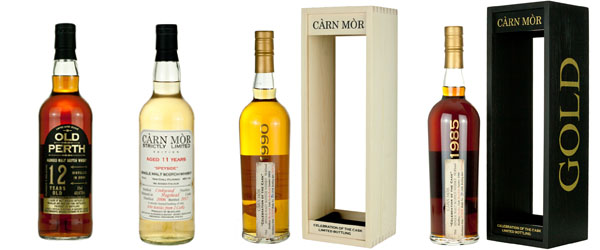
I say ‘trail’…it’s a very short skip across the car park between the Morrison & MacKay bottling operations and Aberargie Distillery. If you are a regular to The Whisky Barrel you will be well versed in the range of fantastic independent whisky that is bottled by the fine folks of Morrison & MacKay:- so, a trail of releases we shall say. Their Carn Mor – Strictly Limited; Celebration of the Cask – and Old Perth label are some of the best indy whiskies available. Now, they have moved, literally, on to a whole new venture both with the opening of their new premises for bottling Carn Mor among others and the brand new Aberargie Distillery. This is an exciting new whisky project and much like the recent news of Daftmill Distillery, this is another one right on our doorstep…though not quite Fife.

In November last year, the first run of spirit came off the still and shortly after the first cask of Aberargie spirit was put into cask. Now laid down to rest, slumber and mature until the whisky is ready. So, with the opportunity to formally visit the Distillery we jumped at the chance.
Although this new distillery is a venture closely tied to Morrison & MacKay bottling company, it is owned by a separate company – The Perth Distilling Co., for the sensible practice of business clarity. This company is owned by the Morrison family. The farm on which the distillery and Morrison & MacKay’s premises are located, is also in the Morrison Family. Got that? Good. We will start here by looking at Morrison & MacKay’s bottling operations.
Carn Mor Whisky and More
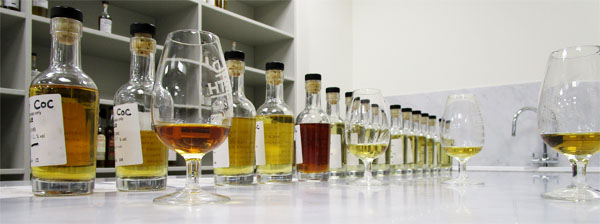
Modern, intertwined with tradition. Fancy new offices. Fancy new bottling hall. Same fantastic range of old and young traditional oak casks. These are the delights that are Morrison & MacKay’s new bottling premises in Aberargie, Perthshire – right on the border with Fife. Carn Mor Whisky, along with the Old Perth label, is the mainstay for this indy bottler. Both brands have grown a very savvy and well-informed following in the whisky world. And rightly so. Carn Mor Strictly Limited has set a place as the affordable scotch whisky. It offers young whisky but that brings a variety of distilleries. And, if you’ve tried you’ll know, whisky that usually belies it youthfulness. The Celebration of the Cask, Black Gold, and recently Bequest labels offer bigger vintages and ages – truly specially selected.
There is big whisky pedigree within this company. Both the Morrison and MacKay names being the very same of the Morrison-Bowmore fame on Islay. Connections such as this lead to access and opportunity for some very fine casks of whisky indeed. They are very proud of their wood policy here, and rightly so. Our visit to their bottling operations well and truly gave us straight from the cask, proof of quality. The new premises have given Morrison & MacKay the space and equipment needed to keep up with demand.
A swanky new bottling hall complete with a seamless line of bottling equipment. From a machine literally sooking up corks and popping them on the bottle to a machine whipping up the cardboard boxes for cases of whisky. But best of all, it leaves a certain focus on the warehouse. The treasure trove of casks. The warehouse is a working synonym. Modern, precise and engineered metal racking holding traditional, old, hand-made wooden oak casks. One day the walls will be black.
Casks of Whisky – To The Warehouse.
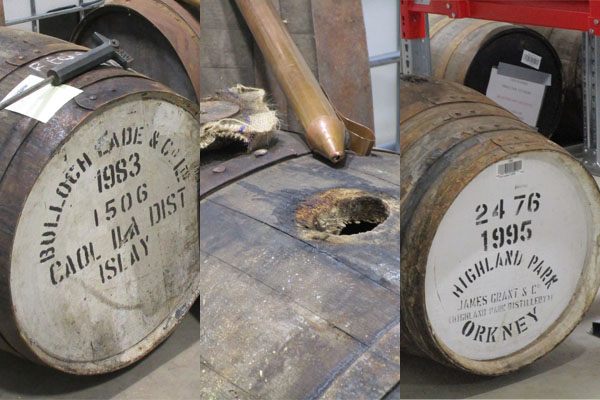
The warehouse of any distillery or bottling company is where the real interest lies for many visitors. And the same can be said for Morrison & MacKay and ourselves. The enthusiasm to show us what it slumbering in the warehouse is apparent. Our enthusiasm to explore evident. The warehouse with racking to the rafter, may look a little sparse in the pictures, but this is an indication of the growth planned for the company. Stocks of casks are already greater with this extra space. It’ll be no time until they are racking to the roof. So what whisky lurks?
First port of call was a rather special grain whisky. Suspected to be a blend of North British and Port Dundas and a vintage pushing towards the 50 year mark. It is utterly incredible! Depth, fruit and a very high quality mouthfeel. When this hits the shelves all bottled up, be ready. Second in line to taste was the next release of the Macallan-Highland Park blend for the Old Perth label. Release number 1 went down a storm last year. Release number 2 is due this year. And it’s good. Ink dark in colour and full of classic Macallan tropical fruits. The Highland Park is in their but Macallan runs this cask.
The warehouse was rounded off by two big hitters. Highland Park 1995 vintage and a Caol Ila 1983 just in the door. The Caol Ila in particular is something to behold. Tasting the whisky before it is bottled is special. Getting to watch whisky being dram from the cask as well, is always memorable experience. We can’t wait to see these and future casks make their way into Morrison & MacKay’s fantastic range of whisky releases.
The First 2018 Carn Mor Imminent
Younger casks followed, soon to be released in the Carn Mor Strictly Limited output – these should be available on TheWhiskyBarrel.com early February. There is a lovely Auchentoshan in the lineup. We sampled straight from the cask it was beautiful. At 46% it retains the character but perhaps a little more mellower which should open this up to a wider palate.
There is also a Macallan Black Gold. Special. It is a very balanced Macallan whisky. A 1992 vintage sherry cask and only around 180 bottles. Demand for this is high. There are more lined up for our shelves so check our New Arrivals pages in early Feb. (Due to land with us this week – keep an eye on social media too #IndyScotchWhisky)
Part 1.2 – Inside Aberargie Distillery will follow…
Finally, we were invited to take a look at the lovely new distillery operation of Aberargie Distillery.

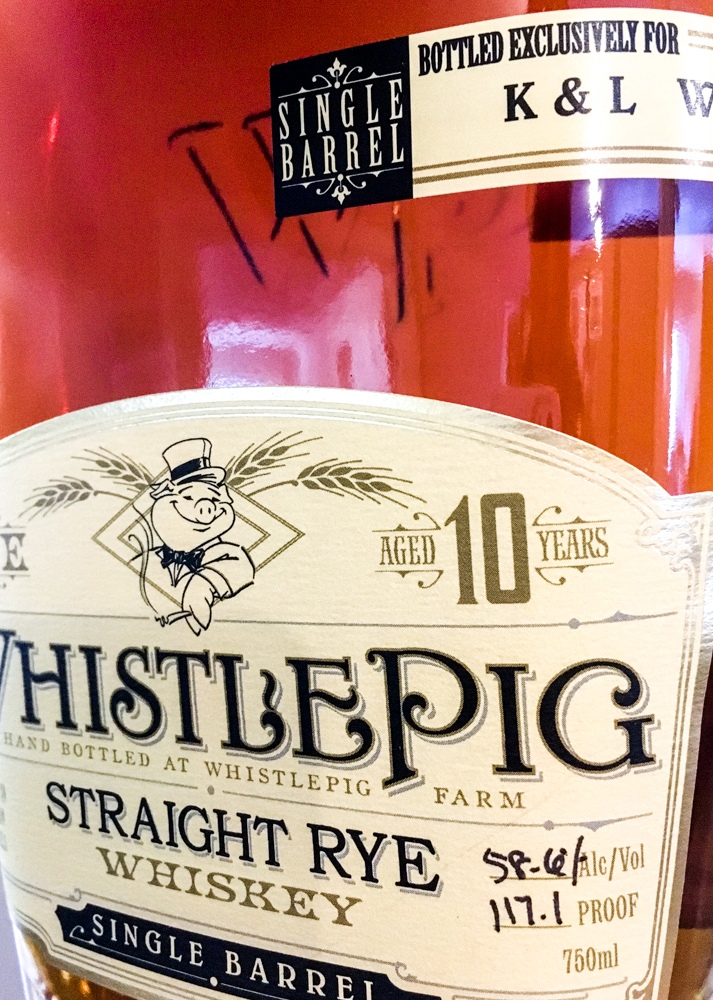
These Whistle Pig cask strength barrels do it for me every single time, no matter how often I taste them or how many bottles I’ve already consumed. When you taste this recent 117.1 proof barrel that we just brought in, what will grab you the same way it grabbed me is the initial sweetness right off the bat, bolstered by the higher than normal ABV%. It lights up your tongue and primes it for the peppery rye spice that follows, giving you the vanilla and sweet oak before hammering home the herbaceous essence of the grain. I don’t think I’ll ever tire of buying these casks for K&L because I just about never tire of drinking them. There’s no limit for how much cask strength 10 year old WP my mind can handle, only my liver can decide when enough is enough.
Whistle Pig 10 Year Old “K&L Exclusive” 117.1 Proof Single Barrel Cask Strength Straight Rye Whiskey $89.99 – Only 130 total bottles from this cask.
-David Driscoll

Ralfy returns to a classic brand with Ralfy Review 712 – Glenfiddich 12yo @ 40%vol re-reviewed 2018

International Scotch Day February 8th, 2018
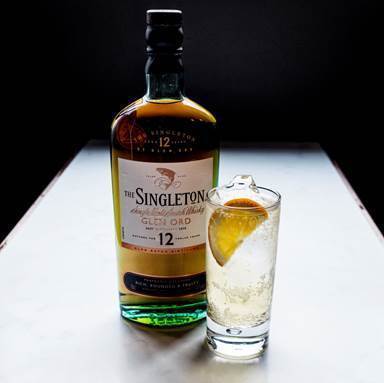
Scotch & Soda
By Ervin Trykowski, Global Singleton Ambassador
Ingredients:
50ml Singleton 12 Year Old
Soda water
Orange Slice
Method:
Add cubed ice to a highball glass, add 50ml Singleton 12 YO, Top with chilled soda water, garnish with orange slice.
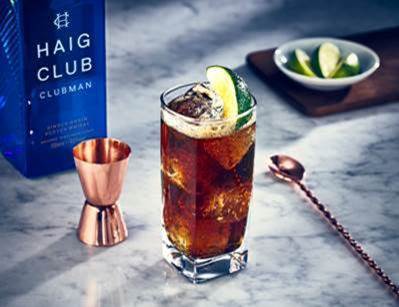
Haig Clubman & Cola
Ingredients:
25ml Haig Club Clubman
Cola
Slice of lime
Method:
Measure out 25ml of Haig Club Clubman and pour over ice in a highball glass. Fill the glass with cola and garnish with a slice of lime.
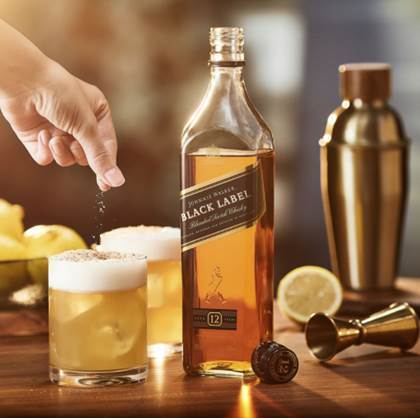
Johnnie Walker Whisky Sour
Ingredients:
1.5 oz. Johnnie Walker Black Label
Dash of Angostura bitters
1.5 oz. lemon juice
5 oz sugar syrup
1 egg white
Method:
Fill a shaker with ice cubes. Add 1.5 oz. Johnnie Walker Black Label. Add a dash of Angostura bitters, 1.5 oz. lemon juice, 5 oz sugar syrup and 1 egg white. Shake until cold before straining into a tall glass.
International Scotch Day – Scotch Facts
1. Only three basic ingredients are used to make Scotch – water, cereals and yeast.
2. Scotch can only be made in Scotland – All Scotch is whisky but not all whisky is Scotch – Scotch whisky has to be produced in Scotland, whereas other whiskies are made in other countries, such as Bourbon in the United States.
3. Scotch can only be matured in oak casks, in Scotland and for a period of not less than 3 years.
4. Scotch is the world’s favourite whisky – Scotch takes the lion share of all whisky sales globally pushing over half of all sales of whisky worldwide.
5. Johnnie Walker is the world’s bestselling Scotch – with more than 17 million cases sold globally every year.
6. There’s no e in (Scotch) whisky – in Scotland we’ve always spelled whisky without the “e”, it is believed that the time saved by omitting writing the “e” on labels left more time to enjoy the liquid.
7. Age isn’t everything – whilst Scotch needs to age in oak casks in Scotland for a minimum of three years to be officially classified as Scotch, aging is just a way of creating a different flavour profile by the way the whisky interacts with the cask. It doesn’t mean it’s necessarily better, it just depends on what you like from a whisky. No age statement? No problem.
8. Today’s rain is tomorrow’s whisky -which maybe explains why there’s so much Scotch in Scotland. After all, the term ‘whisky’ derives originally from the Gaelic ‘uisge beatha’, or ‘usquebaugh’, meaning ‘water of life’.
9. Scotch doesn’t need to be drunk neat and some of the most well-loved classic cocktails are made with Scotch – and increasingly Scotch is dominating the cocktail menus in some of the world’s best bars, with bartenders loving the diversity of flavour which no other spirit can match. Some people will tell you it’s made to be tasted neat with no ice or mixer – don’t listen to them.
10. Malt vs Blents what’s the difference? A single malt whisky is from one distillery only. Blended Scotch, like Johnnie Walker, mixes two or more whiskies from different distilleries around Scotland to create a unique taste, featuring different flavour groups including sweet, smooth or smoky.
11. Tasting – Every Scotch has a unique set of flavours. If you want to look and feel like a Scotch buff, try tasting it like the professionals do: noting the flavours of your drink ‘on the nose’, ‘tongue’ and ‘throat’. Smell the Scotch, swish it around in your mouth a little to taste it and finally pay attention to how it feels as it hits the back of your throat.
12. Scotch at your dinner party – Experiment with food and drink pairings. Light, sweet whiskies can match perfectly with seafood, so go for a lighter flavour-led whisky whilst fuller-bodied whiskies will go well with cheese courses and rich deserts. If you’re brunching, why not try a Johnnie Walker Black Label Bloody Mary?
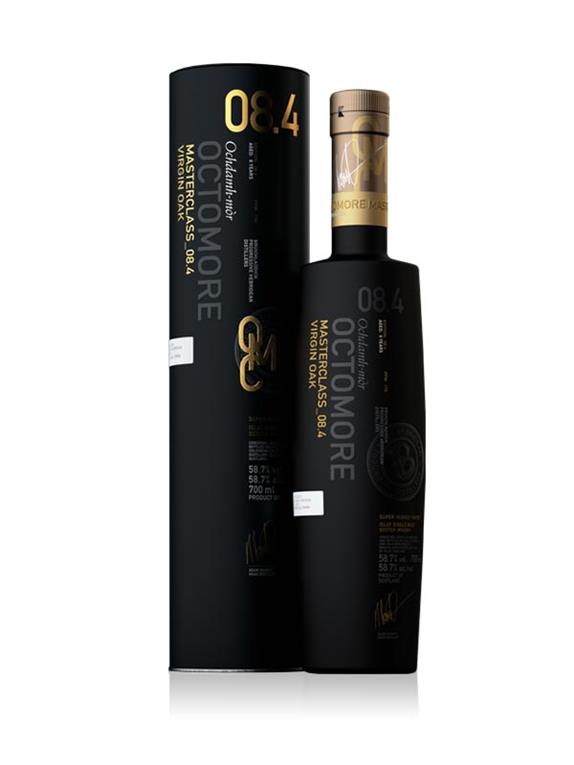
Octomore Masterclass_08.4 Virgin Oak
This 8 year old Islay single malt from Bruichladdich’s Octomore range is the fourth release in the Octomore Masterclass series. Distilled in 2009 from that year’s harvest, peated to 170ppm, 20% of the spirit was matured for the full term in first-fill virgin oak casks, with the remaining 80% in first-fill American ex-bourbon casks before being transferred into the European virgin oak casks that had previously held Octomore 07.4. Bottled without chill-filtration or tinting at a cask strength of 58.7% abv and limited to just 12,000 bottles worldwide.
£150 Pre-Order Now
Orders will be dispatched week beginning 26th February

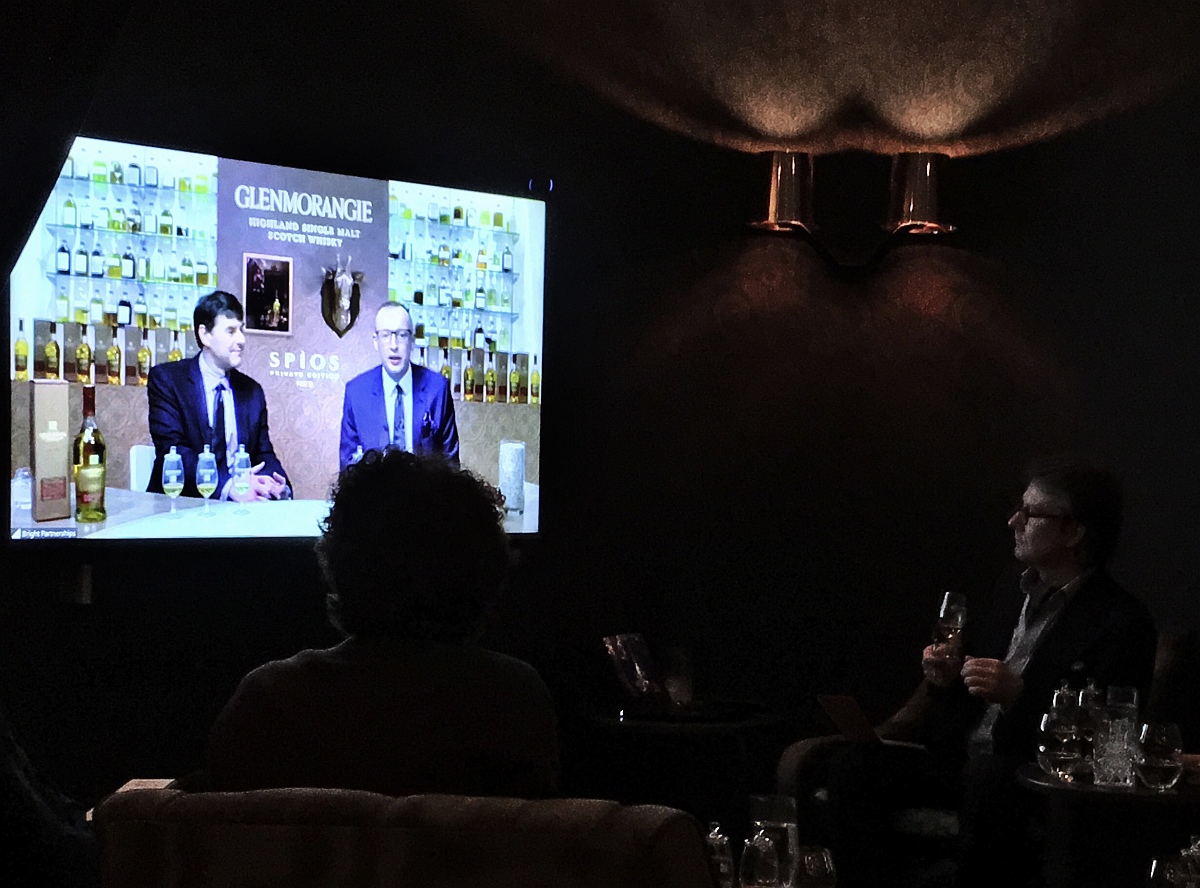
Dr Bill Lumsden and Brendan McCarron introducing their latest creation – Glenmorangie Spios
Glenmorangie‘s Dr Bill Lumsden – director of distillation and whisky creation – likes to experiment. While some of the distillery’s Private Edition releases – his yearly chance to showcase the whiskies he has been tinkering with over the past 20 years – have been weird and wonderful, some of the most successful have been based around a simple idea. The latest is definitely one of those: what happens if you use casks that used to hold American rye whiskey to mature Glenmorangie Original? The answer: Glenmorangie Spios – Private Edition No.9.
I don’t get on well with rye whiskey. I love it in cocktails, but on its own it’s got more punch than I usually want – the commonly cited rye ‘spice’. Spice is an imprecise word when talking about flavour and it always needs some clarification. Do you mean chilli heat, cinnamon, nutmeg, clove, anise, musky leaves, pungent green hops, dried herbs or something else?
When it comes to rye, it’s a very specific character, sitting on top of classic American whiskey spice, the cinnamon and nutmeg notes that you find in almost every one. For me, rye whiskey’s spice combines the kick of cloves with anise and a selection of greener and more herbal notes, especially tarragon and mint – not what you might immediately think when told that a whisky is spicy.
Back to Spios. Bill Lumsden was first introduced to rye whiskey back in the late 1990s by legendary whisky writer Michael Jackson. He was well known for championing lesser-known drinks and was a great cheerleader for rye. At the time, it wasn’t popular and production levels were incredibly low, so there weren’t many casks about – it took Bill a decade to source some to experiment with. Eventually he acquired enough heavily charred first-fill ex-rye barrels and the process of making Spios began.
Compared to the complex vattings and finishes that often pop up in the Private Edition range, Spios is simple – Glenmorangie spirit fully matured in ex-rye casks. They haven’t official disclosed the age, but adding up the various numbers Bill mentioned above, it comes out at around 10 years – the same age as Glenmorangie’s classic 10-year-old Original. If we want to see what rye casks add to the whisky, then how better than to compare the two?
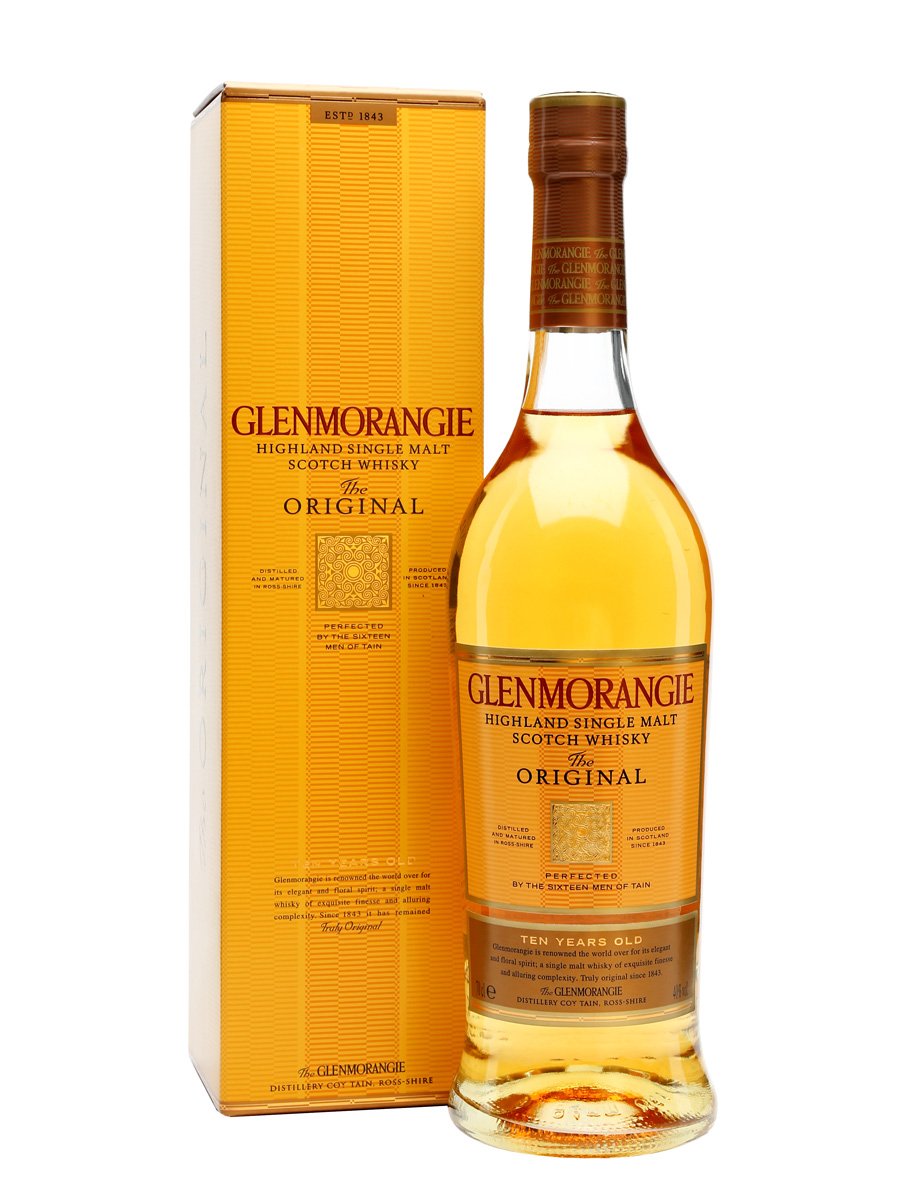
Nose: Spring meadows and flowers up front, with Love Hearts, (restrained) Parma Violet sweets and candied lemon peel: fragrant and sweet. Richer citrus fruit sits in the middle – orange jelly and hints of wine gum – with a pool of creamy coffee and caramel underneath.
Palate: Cream and spice to start: clove and vanilla cream. Coffee and chocolate sit at the back, with orange- and lemon-creme-filled chocolates bridging the gap. Oaky spice develops, dry cinnamon and sweet nutmeg, with a touch of anise.
Finish: Lemon and orange oil fade to leave damp leaves and cinnamon-spiced cream.
Nose: Herbs and toffee roll out of the glass: cloves, mint and spicy green leaves. Clove-studded oranges sit behind, doused with thick vanilla cream and toffee sauce. Hints of banana smoothie develop, stirred through with fresh mint and star anise. With time, fragrant pears and floral notes appear.
Palate: A big hit of spice kicks things off: cloves with a whack of cinnamon heat. Sour plums and baked apples roll through the middle, sat on a bed of leafy mint and tarragon. Warming anise notes build, along with creamy coffee sweets.
Finish: Clove, cinnamon, anise and mint floating on a pool of cream and coffee.
Trying the two whiskies side by side, the progression is clear: the infamous rye spice is carefully layered on top of the classic 10yo Original. Like me, Brendan McCarron – Bill Lumsden’s right-hand man and the distillery’s head of maturing stock – isn’t a big fan of rye on its own, and he nailed it with his description of why this works: ‘Rye is so intense, so dry, so spicy. Just a little bit of that coming into the Glenmorangie house style is the way for me to enjoy rye.’
Glenmorangie Spios is available to buy now.