News

Crabbie 30 year old Speyside Single Malt 2019 Release at The Inverurie Whisky Shop – Scotch Whisky News

Hot off the Press!!!

We don’t have an image yet as this is literally  live from the John Crabbie distillery!

Be the first to get in in this eagerly anticipated release….we only have a handful to sell

A sumptuous and highly collectable Whisky from John Crabbie’s.

This 1988 Distilled 30 year old comes from a very well known but unnamed Speyside Whisky Distillery specialising in Sherry Cask Whisky, using the same liquid as previous 25 and 30 year old releases.

This is a highly sought after whisky and will not be around long. A fantastic price for a 30 year old from this hugely collectable distillery

READ MORE

The Whisky Exchange “Casks – a glossary of terms” – Whisky News

Casks – a glossary of terms

There are lots of technical terms bandied around when talking about casks. This list will demystify some of them.

Amburana – a South American hardwood, occasionally used for maturing cachaça and very occasionally for maturing whiskey. It imparts a distinctive tonka-bean flavour, combining vanilla, coconut and cherries.

American Oak – an oak native to America, Most commonly used to mature American whiskey when new, but reused to age and rest many other spirits around the world. Also known as Quercus Alba.

American Standard Barrel – a 200 litre cask.

Angel’s Share – the spirit that evaporates from cask while it is maturing.

Barrel – strictly speaking, an abbreviation of American Standard Barrel, but often used (inaccurately) to refer to any type of cask.

Bilge – the bulging section around the waist of a cask.

Blood tub – a 30-50 litre cask

Bung – a piece of wood (or occasionally rubber) used to seal the hole in a cask

Bung cloth – a piece of hessian wrapped around a bung before it is inserted into the bung hole. It makes it easier to extract the bung and also helps keep the seal liquid tight

Bung extractor – a tool used to pull out bungs. It is screwed into the wood of the bung and then pulled to extract it.

Bung hole – the hole drilled out of the bilge or head to allow filling and emptying.

Bung stave – a stave with a bung hole drilled into it.

Butt – a 500 litre cask.
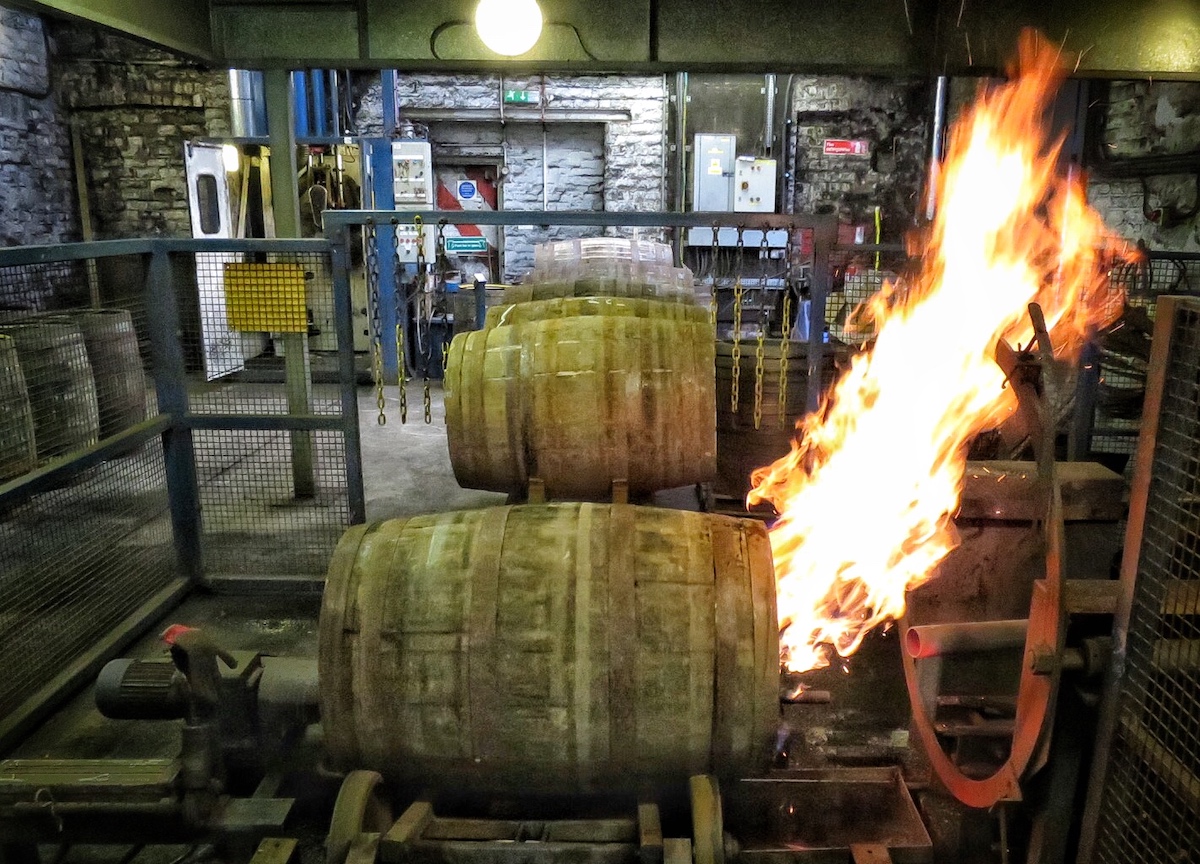
Casks being charred at Loch Lomond distillery

Char – the burnt top layer on the inside of many casks, which acts as a filter during maturation.

Chinkapin – a type of American white oak with scientific name Quercus Muehlenbergii. It is very rarely used in whiskey maturation.

Croze – the groove on the inside of a cask at top and bottom that the head slots into.

Dechar/Rechar – a cask that has had the layer of char scrapped off before being recharred. This rejuvenates the cask, exposing new wood to the spirit that is filled into the cask.

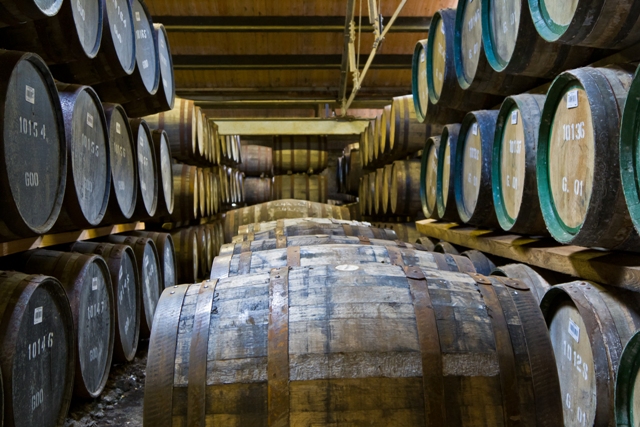
Dunnage warehouse – a traditional warehouse where casks are stored on the sides, racked on top of each other.

European Oak – a term that encompasses a number of different oak species, but is generally used to refer to Quercus Robur. The flavour characteristics of casks made from European oak vary widely depending on the provenance of the wood.

First fill – a cask that has been used once before and has been refilled.

Head – the circular section at the top and bottom of a cask.

Hogshead – a 230-250 litre cask. Often made by adding extra staves to an American Standard Barrel.

Hoop – a band of metal that holds a cask together.

Mizunara – a species of oak that is found in Japan and north-eastern Asia. Also called Quercus Mongolica.

Octave – a 50 litre cask
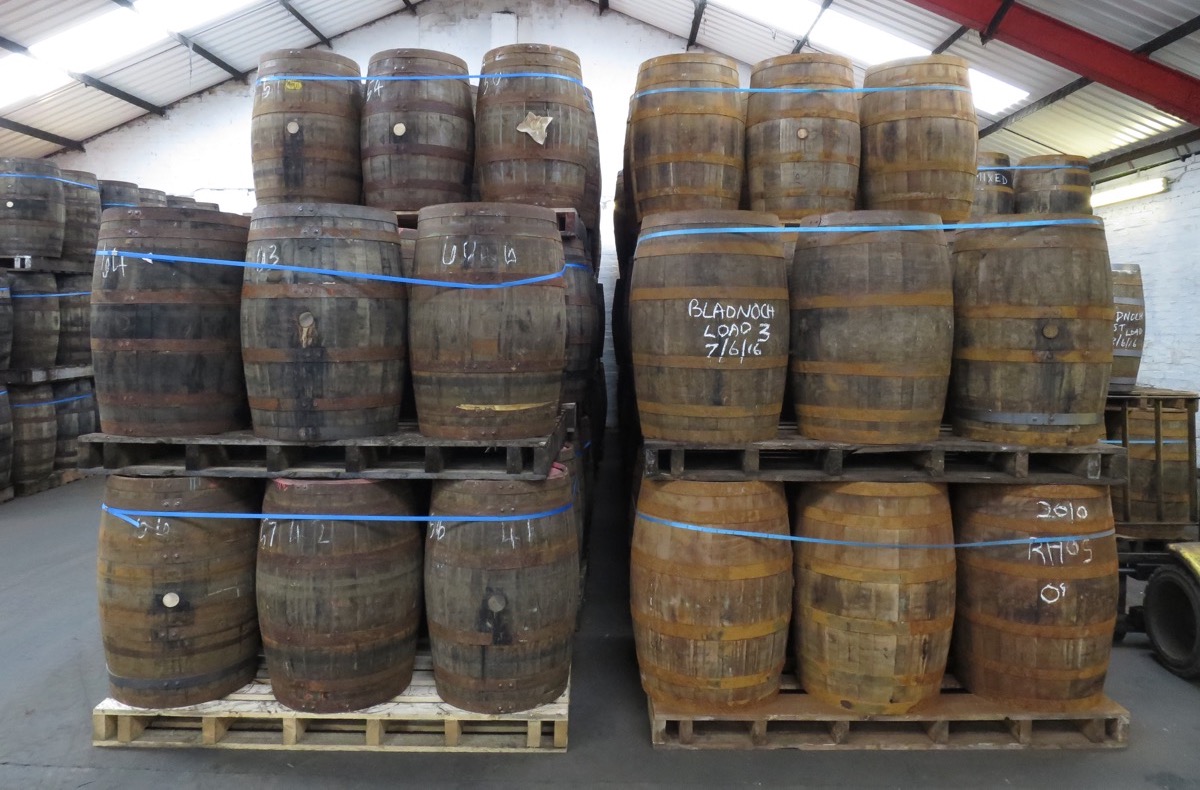
Palletised warehousing. The stacks often go much higher

Palletised warehouse – a warehouse where casks are stored on their ends, stacked on pallets which themselves are stacked on top of each other.

Paxarette – a concentrated wine used for flavouring and colouring. It was often used to season sherry casks, giving them a punchy of sherry flavour. However, the practise has been against Scotch whisky regulations since the late 1980s/early 1990s.

Pièce – a 205 litre cask most-often used in French wine-making.

Pipe – a cask used for maturing port. 350+ litres in size, and usually closer to 500 litres.

Quarter cask – a 125 litre cask, one quarter of a butt.

Quarter-sawn – a method of breaking down a log such a way that the grain is more vertical through the planks. It increases the strength of the planks and allows more grain contact when they are made into casks.

Quercus Alba – the scientific name of American white oak.

Quercus Mongolica – the scientific name for Mizunara.

Quercus Robur – the scientific name of the most common type European oak.

Racked warehouse – a warehouse with shelves for storing casks on their sides.

Reed – a piece of material (traditionally dried reeds) pressed between the head and the croze to make a cask water-tight at the ends.

Refill cask – a cask that has been used to store spirit at least twice: first as virgin oak, then as first-fill then as refill.

Rejuvenated cask – another term for dechar/rechar.

Seasoned cask – casks that have had another liquid stored in them specifically to infuse the wood with some of the characteristics of that liquid.

Seasoning – the process of drying a piece of wood to make it more suitable for use as in building a cask.

Shave/Toast/Rechar aka STR – a process similar to dechar/rechar where a cask has a small amount of wood removed from the inside of the cask to reveal more active wood, which is then toasted and recharred. A method pioneered by the late Dr Jim Swan.
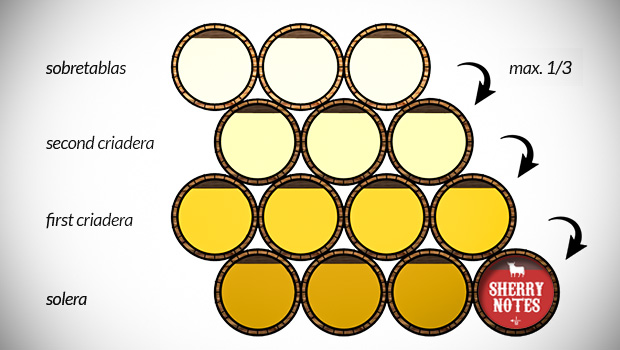
A solera. Image courtest of SherryNotes

Solera – in sherry, a system of continuous fractional blending where a notional row of casks is combined by occasionally drawing some sherry from the final cask, leaving the cask still with liquid in, and then refilling it from the previous cask in the row. That cask is refilled from the previous one and so on until the first in the row, which is refilled with new sherry. In whisky, it often refers to a single vat from which a whisky to be bottled is drawn, without emptying the vat, before being refilled with a new batch of the same whisky.

Stave – one of the pieces of wood that make up the sides of a cask.

Sulphur stick – a stick of sulphur burnt inside a cask to disinfect it before filling. No longer commonly used, but some older casks still have a sulphuric note from their earlier use. Much hated by whisky-writer Jim Murray.

Toast – the process of heating the staves of a cask, activating the flavour compounds within and helping them bend into the shape.

Tun – a large vat used for marrying multiple casks.

Valinch – a long, tapered tube used for extracting whisky from a cask. The valinch is inserted through the bung hole and allowed to fill. The user then place their finger over the hole at the end, stopping air from getting into the tube, and the valinch is removed. As air can’t get in the end, the whiskey (mostly) stays in the tube, allowing it to be poured into a glass.

Virgin oak – oak that has not been exposed to a spirit before; a first-use cask.

Introducing Brora 40 Year Old 200th Anniversary at The Whisky Shop – Scotch Whisky News

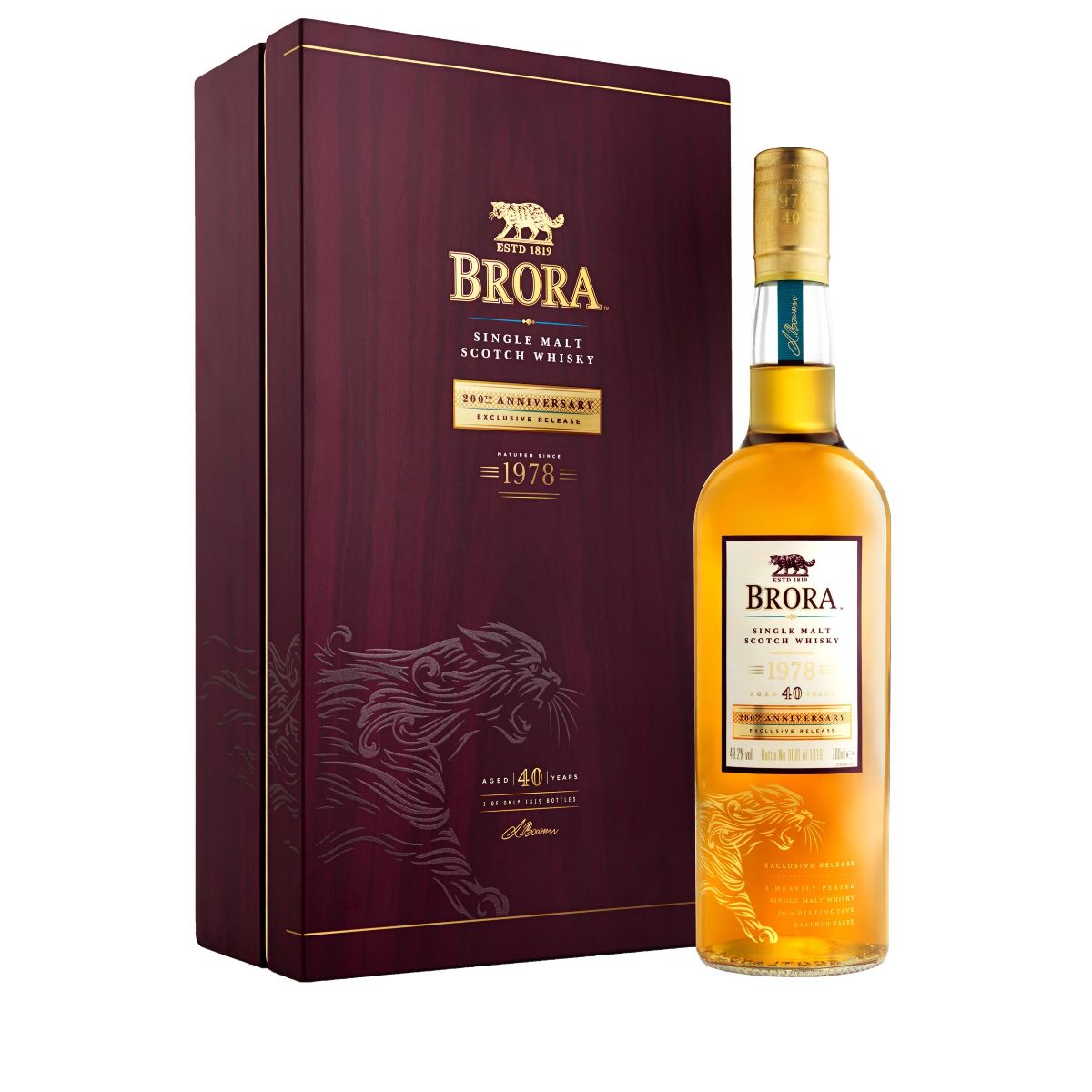
Brora 40 Year Old 200th Anniversary

Distilled at Brora on the Sutherland coast in 1978, this limited edition expression has been bottled one year before the almost-lost distillery is due to reopen.Bottled in celebration of the distillery’s 200th anniversary, this single malt was laid down at a time when Brora was producing a peated malt using heavily peated northern Highland barley. Matured for four decades and limited to just 1,819 bottles (in celebration of the anniversary year), this expression is presented at a strength of 49.2% abv.

70cl / 49.2% abv

£4,500.00

New Scotch from Glenrothes Black Gold at The Whisky Barrel – Scotch Whisky News

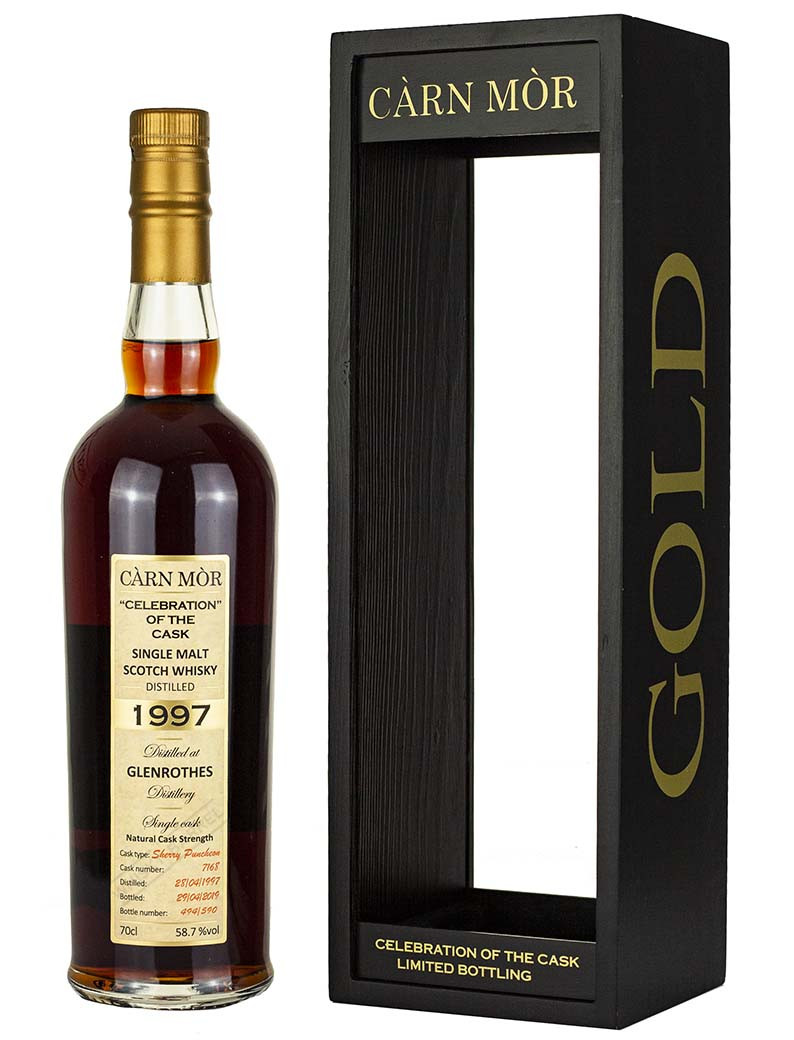
Glenrothes 22 Year Old Black Gold

1997 Vintage Black Gold Sherry Butt

We’ve secured a few more bottles of the single sherry puncheon bottled April 2019 by Morrison & MacKay for the Carn Mor Celebration of the Cask Black Gold series. Rich, sweet sherry cask matured Speyside single malt.

Glenrothes Distillery was established in the narrow valley of the Rothes Burn on the west side of Rothes in the Speyside whisky region by James Stuart & Co. in 1878. This is a large malt whiskey distillery owned by Berry Bros & Rudd of London, with eighteen washbacks, ten copper stills singing in their own mighty cathedral and has retained its traditional pagoda roof. Popular distillery releases include Glenrothes 1995, 1998 and Glenrothes Peated.

SHOP GLENROTHES 22 YEAR OLD- $234.24


The Whisky Exchange “How are Casks Made?” – Whisky News

How are casks made?

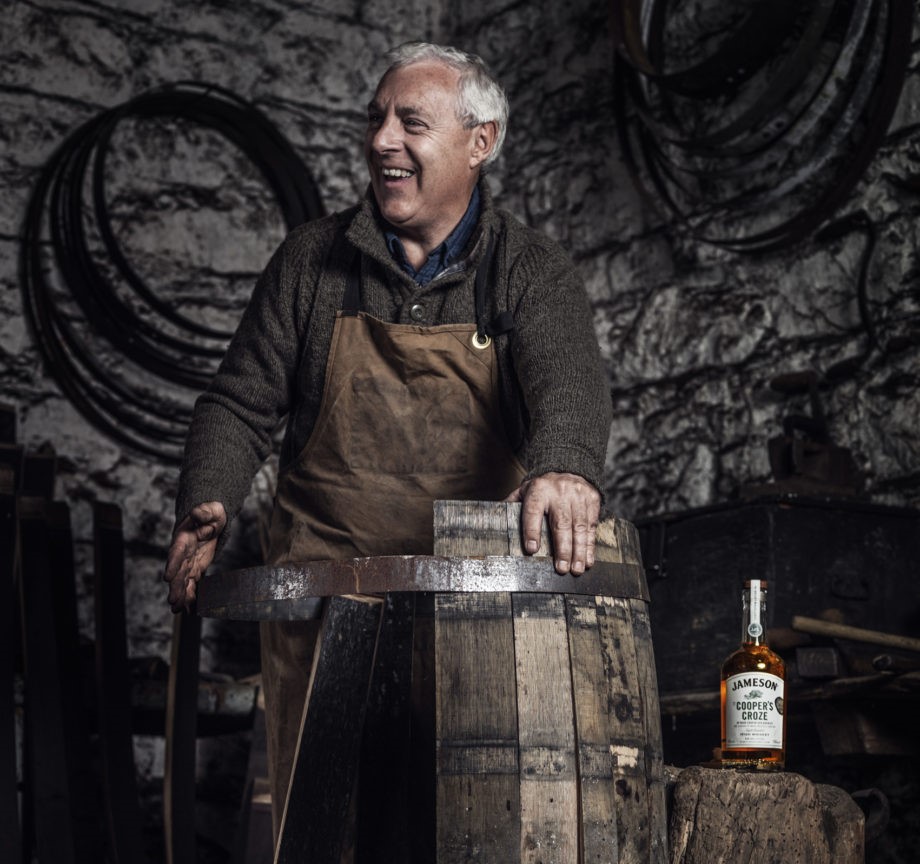
A Jameson cooper is a happy cooper…

The concept of the wooden cask hasn’t changed much since it first came into being, but the practice of making it has gradually been refined over the past few millennia.

That’s not to say there wasn’t trial and error involved – things like the collapsible shipping cask and the Da Vinci-esque cask cleaning machine, both beautifully illustrated in Scientific American in the 1800s, have fallen by the wayside – but today making casks is a superb blend of art and science.

Coopers – professional cask-makers – will craft casks to a distillery’s specifications, altering things such as the intensity of the char by precise amounts to create the desired chemical reaction between wood and liquid.

Depending on what’s destined to go into it, for example bourbon or sherry, a cask is made in slightly different ways. To give you general overview, however, let’s take a look at how whisky casks are commonly made.

A tree is felled

Oak is widely used, not least because it grows in helpful ways and imparts pleasant flavours, and you can learn more about how different types affect whisky on Tom’s blog post. For best results, the tree should be at least 70 years old.

Staves are cut

The oak is cut into long thin pieces and dried, traditionally outside, for several years. This removes moisture from the wood and reduces its harsh tannins. The way the wood is cut is crucial, as a tree naturally contains flow paths for water and nutrients, and cutting along the faster flow paths can result in leakages. Once seasoned, the planks are then carefully shaped into staves.

A SKIRT IS ASSEMBLED AND TOASTED

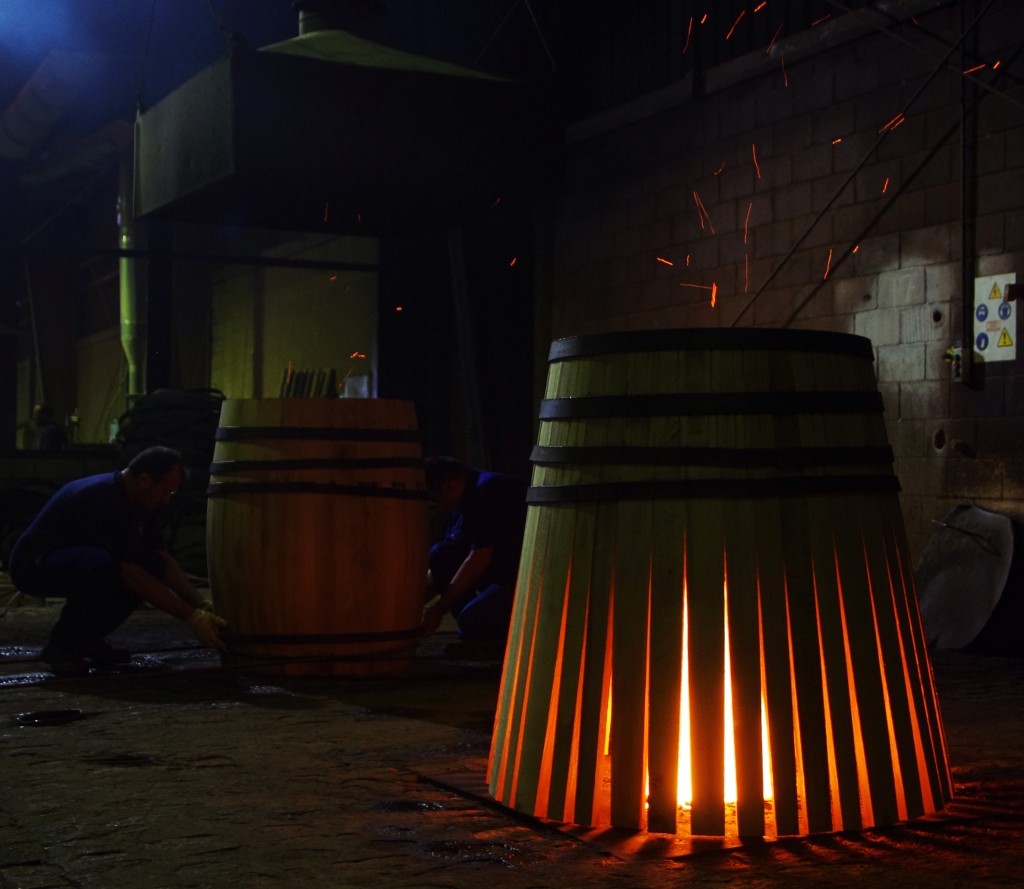
The ends of the staves are fitted together around one iron hoop, forming a skirt-like structure. Heat is then applied in order to bend the staves into shape, which is traditionally done over an open flame and known as toasting. The toasting process also caramelises the wood sugars, resulting in flavours of caramel, nuts and liquorice, and breaks down the wood’s lignin into compounds that result in flavours like spice, vanilla and flowers. Different toasting levels – light, medium and heavy – produce different effects.

Hoop-LA

Metal hoops are applied to the barrel to keep its shape through continuous pressure.

More Fire is always an option

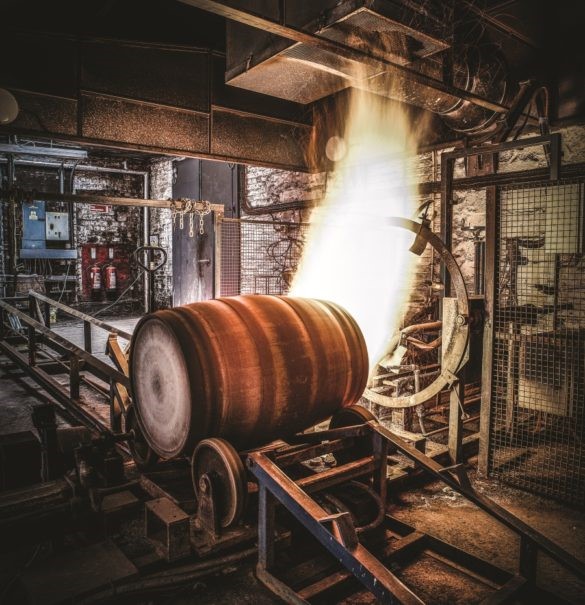
A blazing barrel at Loch Lomond

Barrels destined for sherry and wine tend to stop at toasting, but the pyromaniac bourbon makers go one step further and set the cask aflame. Ok, they’re not really pyromaniacs: by law bourbon must be aged in a new, charred barrel. It still looks fun, though.

Charring, which is measured in levels – the 55 second Level 4 char being the staple – changes the wood further and creates a thin layer of carbon that acts as a filter for impurities like sulphur, removing them from the spirit within.

The end(s)

The finishing touches are applying the cask head(s) – the bit on either end – drilling a bunghole so spirit can be added, and adding the final hoops. Once these are complete, the finished cask is ready to be filled with new make and start its minimum three year journey to become whisky.

See the process in action

If you want to learn more about the art of coopering, you could take a tour of the Speyside Cooperage, or watch this moody and dramatic Macallan video of casks being made in Jerez. Alternatively, kick back with this gem from British Pathé, in which an apprentice cooper is gleefully initiated with excellent 1940s commentary.

Bartels Whisky “20YO Glentauchers £60 delivered” – Scotch Whisky News

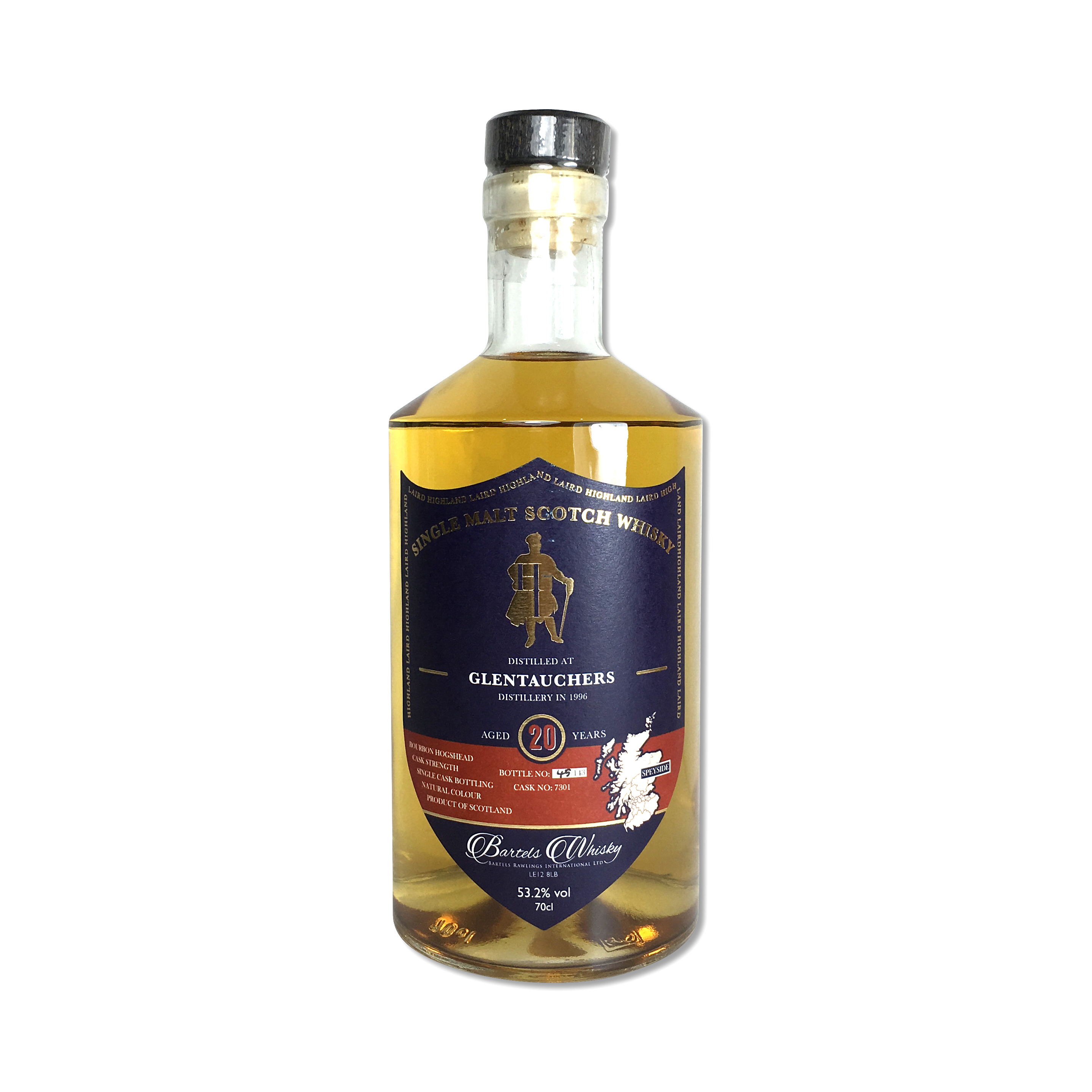
Don’t forget we have reduced the price of our Glentauchers 1996 as we would love to sell the remaining bottles.

It’s a beautiful single malt which has been very well received by everyone who has tasted it at events we have attended.

Glentauchers – 20 Years Old – Single Cask Bottling – Cask Strength 53.2% – £60.00

(Free UK Next Day Delivery as always)

CLICK HERE TO BUY

Winners Revealed in Inaugural Scottish Whisky Awards – Scotch Whisky News

Winners Revealed in Inaugural
Scottish Whisky Awards

The winners in the inaugural competition to assess the business of Scotch whisky have been revealed at a sell-out event held in Edinburgh last night.

The Scottish Whisky Awards welcomed over 400 guests to celebrate and to hear who had been crowned the best in the wide-ranging competition which assesses taste and business performance.

Scottish Whisky Distillery of the Year 2019 was presented to The GlenAllachie Distillery in recognition of an outstanding year of business and after winning five medals in the blind tasting competition. The distillery has successfully served a full range of single malt into the market, opened a visitor centre and created a strong distribution network.  Their awards haul included two gold medals for their 18 and 12 year old single malts.   Craigellachie, Glen Scotia, Highland Park and Loch Lomond Distilleries were also nominated in the category.

Angus-based Arbikie Distilling collected the award for the Newcomer of the Year and were applauded by the judging panel for their field to bottle ethos and innovative approach.  They also collected a silver medal for Arbikie Highland Rye in the single grain category.

Other winners on the night included Johnnie Walker White Walker for their Game Of Thrones campaign whilst the Glasgow Distillery Company triumphed with multiple awards for their recently launched 1770 Single Malt.

Professor Alan Wolstenholme, Chair of the Judging panel commented;

 “Very many congratulations to the winners in the inaugural Scottish Whisky Awards.  Winning a Scottish Whisky Award is a huge opportunity to further the promotion of Scotch whisky at home and abroad. I hope that all the medallists and winners take the opportunity to promote their success and achievements in what was a very tough competition.”

The awards are supported by commercial sponsors including Shawbrook Bank and Bruce Stevenson.

Kevin Boyd, Managing Director at Shawbrook Bank commented;

“Congratulations to all the finalists and winners in the inaugural Scottish Whisky Awards.  Shawbrook Bank are proud supporters of our whisky industry and we are delighted to support these awards and their work to promote the business of Scotch and all our wonderful whiskies at home and abroad.”

Graeme Dempster, Account Executive at Bruce Stevenson Insurance Brokers commented;

“We’d like to congratulate all the finalists and winners at the Scottish Whisky Awards. The quality of talent up for nomination clearly demonstrates the strength of the Scotch Whisky industry today.  At Bruce Stevenson, we’re very proud to have a wide-ranging and deep involvement in such an exciting and growing sector.”

The awards also recognised one of the whisky industry’s most accomplished scientific and technical advisers with a special award presented posthumously to Dr Jim Swan.  The award for outstanding contribution to Scotch whisky was accepted by Dr Swan’s daughters and was presented in recognition of his forty-year career as a research scientist and trusted adviser to whisky distilleries around the world.  The award will be presented annually as The Jim Swan Award for Services to Scotch Whisky to an individual making a significant contribution to the Scotch Whisky industry.

Full results in the competition were unveiled for the first-time last night after being held as a closely guarded secret since the business and taste competitions were carried out in May.  In the taste sessions, adjudicated by the international sensory management consultancy, Cara Technology, over 100 whiskies were blind tasted and scored by a 32-strong judging panel from the UK, mainland Europe and Asia.

The awards which will now become an annual fixture and will be hosted in Glasgow next year, were also a fundraiser for two charities; The BEN, the Benevolent Society of the Licensed Trade of Scotland and the My Name’5 Doddie Foundation, set up by rugby legend Doddie Weir to help improve the lives of those affected by Motor Neurone Disease.

Award winning drams at The Whisky Shop – Outstanding whiskies guaranteed – Scotch Whisky News

Award Winning Whisky

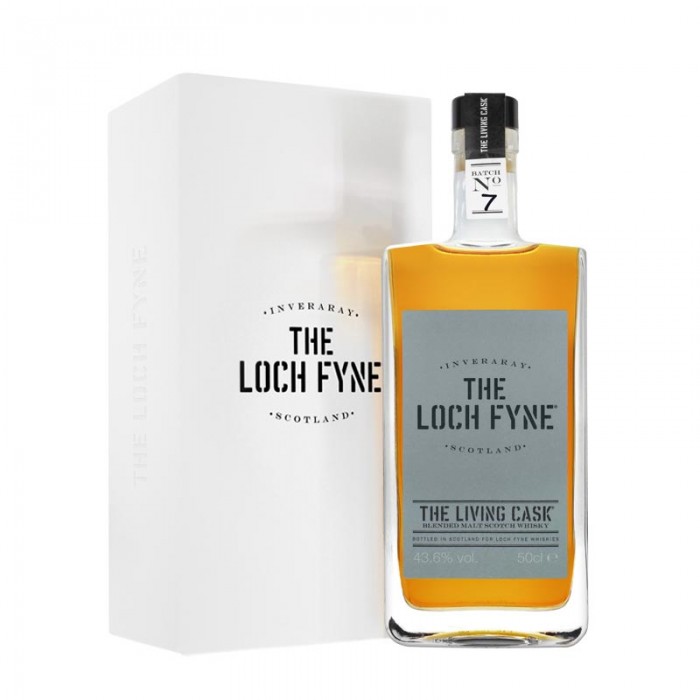
Batch 7 of The Loch Fyne The Living Cask won a Gold Award at last night’s (September 5th) Scottish Whisky Awards. Learn more about this fantastic whisky and more.

Buy Now

Best Blended Malt under 12 Year Old – Scottish Whisky Awards 2019

Claxton’s latest Single Cask Whisky bottlings – Claxton’s Summer 2019 Release – Scotch Whisky News

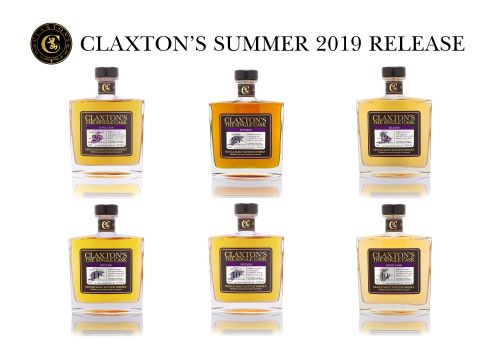
We are announcing Claxton’s latest Single Cask Whisky bottlings – Claxton’s Summer 2019 Release.

Please find below and attached our official PR for the newest bottlings outturn. Any questions or comments please feel free to contact directly –

Claxton’s Summer 2019 Release

Ripon, United Kingdom – 5th September 2019

Claxton’s has launched its latest line-up of Single Cask Whiskies – ‘CLAXTON’S SUMMER 2019 RELEASE’ – Featuring  six brand new Single Cask bottlings, including one Single Grain Scotch Whisky and five Single Malt Scotch Whiskies, all carefully selected for their outstanding quality and variety of styles.

Selected in this outturn are the following single cask releases:

  • 2008 Benriach, Hogshead, 10 YO, ABV 56.5%
  • 2008 Ardmore, Ex-Islay Barrel, 10 YO, 59.4%
  • 2007 Glen Moray, First Fill Bourbon Barrel, 11 YO, ABV 51.4%
  • 2007 Ledaig, Hogshead, 12 YO, ABV 55.8%
  • 1996 Speyside, Sherry Butt, 23 YO, ABV 57%
  • 1992 Strathclyde, Barrel, 26 YO, ABV 50.6%

Claxton’s Summer 2019 Release is now available globally in selected specialist whisky retailers.

In Claxton’s The Single Cask range, each bottling selected is available in limited numbers, with previous releases having been consistently praised by reviewers and fans across the globe for showcasing the merits of single cask whisky.

Claxton’s is a family owned, independent whisky bottling company from North Yorkshire, United Kingdom. The Single Cask range of whiskies is available through a select number of specialist outlets in the UK, Europe and the Far East.

Contacts

HUGO CAPRICHOSO | Brand Development Manager CLAXTON’S UK

Abbey Whisky Malt of the Month – Kilchoman Machir Bay – Scotch Whisky News

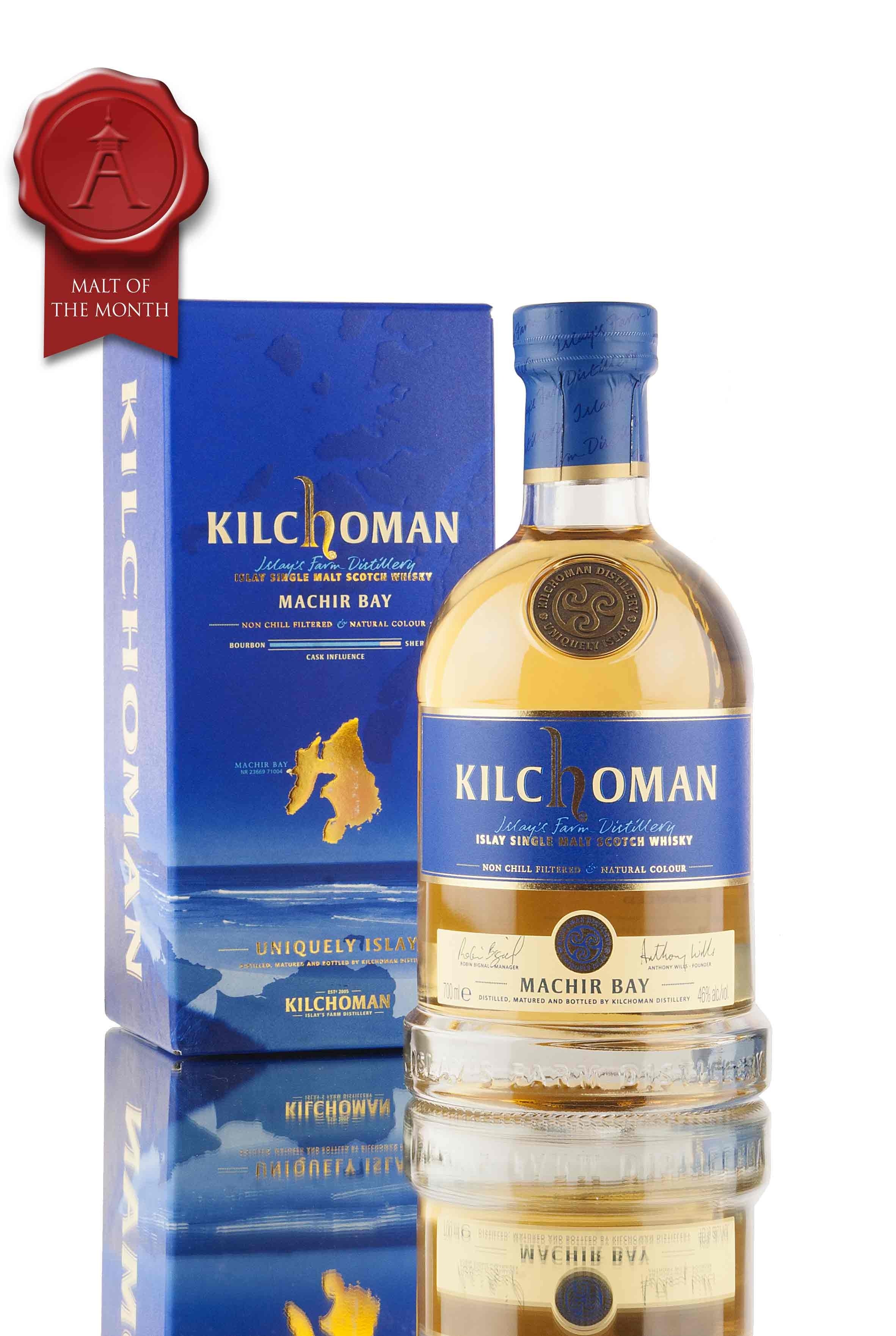
Kilchoman Machir Bay

Our malt of the month for September is this wonderful single malt from Kilchoman distillery, Islay. Part of the core range, Machir Bay is a vatting of single malt Kilchoman matured in both bourbon and sherry casks. Named after a beautiful beach on Islay, a delightful dram!

BUY NOW


Powered by WordPress