Join the world's finest malt whisky club, The Scotch Malt Whisky Society. Find your nearest branch

Welcome to WhiskyIntelligence.com where we'll be gathering information on the whisky industry and scotch whisky news in the form of press releases, newsletters, events, tasting notes and comments.

Please submit your press releases, newsletters, events, tasting notes or comments.

Journalist’s Canadian Whisky Primer – Canadian Whisky News

A 26-ounce Canadian whisky primer for journalists, editors, and publishers AND Whisky Intelligence Readers!

Davin de Kergommeaux

Hiram Walker Distillery, Windsor, Ontario, Canada. The largest distiller of beverage alcohol in North America.

1. The story of Canadian whisky offers a distilled and bottled history of Canadian settlement and commercial enterprise. 

2. When Jesuit missionaries arrived here in the 1600s they left no record of distilling, but they did try (with limited success) to make wine for use in their liturgies. 

3. Later, in the 18th and 19th centuries when large groups of settlers arrived in Canada they often brought small stills with them. 

4. Despite what you might expect, when the early Scottish and Irish settlers began distilling here in Canada it was rum and not whisky that they made. 

5. The history of distilling in Canada, like many things Canadian, varies province by province. For example, the shift from distilling rum to whisky began as settlers moved west into Ontario. Why? Because of its distance from the sea. This made it expensive for producers to acquire molasses, (which they preferred over grain) as sea-going vessels transporting Caribbean molasses to Canada could not navigate beyond Montreal. 

6. Whisky making in Canada is really an imported Scottish tradition, right? Not quite. The first commercial whisky distillers were mostly English and German. Not surprisingly, there were Americans of English or German descent who were keen to expand business opportunities here in Canada. As for those Scottish and Irish immigrants, they made no contribution to creating the Canadian whisky we know today. They were, however, enthusiastic consumers of rum. 

7. There is much conjecture that United Empire Loyalists arriving here from the U.S. late in the 18th and early 19th century were responsible for introducing distilling to Canada. Nice story, but not one supported by the historical record. There is no evidence that this happened or that they ever distilled commercially.


Three fine Canadian whiskies. Gibson’s Finest, Canadian Club Black Label (Japan only), Alberta Premium Dark Horse.

8. Although Scotch whisky enthusiasts will swear that Aeneas Coffey invented the column still, Coffey stills were not the norm here in Canada. Those early Canadian column stills were of American and European design, adapted to suit Canadian conditions. 

9. Canadian whisky was, from the start, an integrated commercial enterprise. The early distilleries were generally associated with flourmills from which they sourced their grist. 

10. With an abundance of locally grown wheat, it’s not surprising that for the most part, in the early days, the grain of choice for making Canadian whisky was wheat. In those days, wheat whisky was so common that it was actually called “common” or “straight” whisky. 

11. When and how was the switch made from common or straight whisky to rye? It was German and Dutch immigrants who wanted more flavour in their whisky. They suggested adding small amounts of rye-grain flour to the mashes. They called this new whisky style “rye” and it quickly became so popular that “common” wheat whisky all but disappeared. 

12. Several key figures were responsible for establishing the Canadian whisky style. James Gooderham Worts arrived here from England in 1831 and William Gooderham arrived the following year. Another immigrant from England was Henry Corby who arrived in 1832. Then, in 1841, Joseph Seagram was born here. He was of English descent but his whisky style was influenced by his German-Canadian customers. In 1857, J.P. Wiser crossed the border in to Canada from the U.S., bringing his German heritage and American distilling methods with him. Two years later and also from the U.S., Hiram Walker arrived, bringing with him his English family heritage and expectations of quality whisky. Gooderham, Worts, Corby, Seagram, Walker: these are the dynastic and iconic names of Canadian whisky.

 
Several Canadian distilleries produce whisky using only rye grain. Collingwood 21, Lot No. 40 and Mastersons are each 100% rye grain Canadian whiskies, as are Alberta Premium, Jefferson’s Rye, Lock Stock & Barrel, WhistlePig, Grand Grizzly and Pendleton 12.

13. Canadian whisky was and remains a southbound cross border enterprise. Early on, commercial Canadian distillers made inroads into American markets, and the U.S. quickly became the primary market for Canadian whisky. This is still the case today as American drinkers buy about 70% of the whisky that Canada produces. 

14. In 1865, two years before Confederation, Canadian whisky was the best-selling whisky in the U.S. period. And it remained that way until 2010 when bourbon overtook it. It is now number 2 in the U.S. market, and practically neck-and-neck with bourbon. Canadian whisky is still the best selling whisky in North America. 

15. Where there’s booze there’s legislation (and taxation) and Canada leads the way. In 1890, Canada became the first nation to pass legislation requiring that whisky be aged. More than a quarter of a century later the British government followed suit. The Scotch ageing legislation of 1916 was actually modeled on Canada’s. This is not an assertion but a fact. I have researched the official correspondence that confirms this. 

16. Canada’s whisky ageing legislation was intended to facilitate tax collection, and it had a dramatic commercial impact. It meant that it was no longer economical to operate small distilleries, leaving whisky production exclusively to the larger distilleries, most of which were already ageing whisky anyway. 

17. Prohibition may have had a moral tone to it in the U.S., but it also threatened the formerly lucrative cross-border sales of Canadian whisky. In 1920 when the U.S. declared Prohibition, Canada’s largest market suddenly dried up, creating serious financial difficulties for most of Canada’s commercial distilleries. They continued to export some whisky to the U.S. but in volumes so reduced that Corby’s, Gooderham & Worts, and Seagram’s faced near bankruptcy. Hiram Walker’s distillery fared slightly better but not for long. It was eventually sold for about half its commercial value. Moreover, much of the whisky reaching the U.S. from Canada was Scotch and Irish whisky imported to Canada for sale in the U.S. 

18. Fast forward to today. Canadian whisky sales are in a resurgence. The most recent statistics (from 2013) indicate that Americans bought almost 17 million 9-litre cases of Canadian whisky that year.  

19. And where does Canadian whisky come from? There are eight commercial distilleries in Canada and each one of them is undertaking expansion and/or modernization projects because of the continually increasing demand for Canadian whisky. Production is racing to keep pace with demand. 

20. Canada’s commercial distilleries span the country and include three in Alberta (Highwood, Black Velvet, and Alberta Distillers), one in Manitoba (Gimli), three in Ontario (Hiram Walker, Canadian Mist and Forty Creek), and one in Quebec (Valleyfield.) 

21. These are distinct distilleries. Each one follows its own production processes and methods making it meaningless to talk about whisky “regions” in Canada. 

22. What is it, then, that makes Canadian whisky so distinctive? Here is a 5-point overview of key production factors that, when taken together, distinguish Canadian whisky from all other whisky styles. 

a. Like single malt Scotch, Canadian whisky is generally the product of a single distillery. With occasional exceptions, Canadian distillers do not exchange barrels or buy whisky from each other. Thus, Canadian whisky can perhaps best be described as “single distillery whisky.” 

b. In general, unlike their U.S. counterparts, Canadian whisky makers do not use mash bills. In Canada each grain type is milled, mashed, fermented, distilled, and matured separately, and only then mingled together as mature whisky. American distillers combine their grains before making whisky. Canadian distillers combine them afterwards. Like all things Canadian, there are exceptions: Canadian Club and Black Velvet distil their spirits separately, like everyone else, but mingle these spirits before maturing them. 

c. Regardless of grain type, Canadian distillers generally make two whisky streams which they later combine after maturation. This is similar to how blended Scotch is made. 

One stream (called “base whisky”) is distilled to a high alcohol content and, although it still includes many grain-derived congeners, when matured it facilitates the full expression of congeners derived from the wood. (Congeners are the chemicals that give whisky its flavour.) Some distilleries make only one type of base whisky, while others make several. This base whisky is most often matured in barrels that have already been used one or more times. The first use reduces the influence of oak caramels, tannins, and vanillins, allowing other wood-derived congeners to contribute to the flavour in greater proportions. This is one source of the “elegance” of Canadian whisky. 

The second stream (called “flavouring whisky”) includes whiskies that are distilled to a low alcohol content in order to emphasize grain-derived congeners. These flavouring whiskies are commonly made from rye, wheat, barley, and corn – and each is distilled and matured separately. Flavouring whiskies are generally matured in new virgin barrels or in a mix of new and used barrels. 

d. Each type of grain spirit within each stream is matured in optimal conditions for that particular spirit. This requires the use of different barrel types and chars for each grain, as well as different periods of maturation depending on the characteristics of the particular spirit. 

e. The addition of non-whisky flavouring − the so-called 9.09% rule − is sometimes talked about on chat boards, although it is poorly understood. This is a practice that is not nearly as prevalent as some people suggest. It is more of a footnote to a discussion of the elements of Canadian whisky production. 

In a nutshell, to aid U.S. producers, American tax law provides financial incentives for foreign spirits that include some American-made spirits. For high-volume bottom-shelf whiskies this is a substantial tax break. For lower-volume whiskies it is often not worth the effort. Thus, some Canadian whiskies made for the U.S. market include American spirits even though the version of the same whisky made for the Canadian market (and the rest of the world) often will not. As well, in some cases, regardless of the intended market, small amounts of foreign spirit will be added to enhance certain flavours.  

This is further complicated by the use of the words “wine” and “sherry” to describe some of these additives, even though the actual liquid used bears little or no resemblance to what the general public perceives wine or sherry to be. Moreover, all spirits added to Canadian whisky under this rule must have spent at least 2 years maturing in wood.


Like single malt Scotch, Canadian whisky is generally the product of a single distillery and thus, can best be described as “single distillery whisky.”

23. In addition to the eight Canadian distilleries mentioned above, two small Scottish-style distilleries (Glenora and Shelter Point) have been established in Canada in the past two decades. Recent years have seen a burgeoning of a craft distilling movement in Canada and there are some 30 of them at the last count. About half a dozen of these micro-distilleries are already making − or are planning to make − whisky. 

24. One issue that confuses some whisky writers is that unlike in the U.S. and the U.K., Canada does not unify all of its whisky laws, rules, and regulations in one tidy legislative place. Distilling in Canada is a matter, first of all, of provincial regulation even though many aspects of its production and export fall under federal regulation. Consequently, two levels of government and many provincial and territorial government departments and agencies, share these responsibilities. Each of them makes rules specific to its areas of legislated responsibility. To complicate matters further, provincial rules vary across the country. While it is not incorrect to rely on the basic definition of Canadian whisky from the Food and Drug Act, it is incorrect to draw the conclusion that this is the only regulation that whisky makers must comply with in Canada. 

25. The Food and Drug Act includes this definition:

Canadian Whisky, Canadian Rye Whisky or Rye Whisky 

a. shall:

i. be a potable alcoholic distillate, or a mixture of potable alcoholic distillates, obtained from a mash of cereal grain or cereal grain products saccharified by the diastase of malt or by other enzymes and fermented by the action of yeast or a mixture of yeast and other micro-organisms,

ii. be aged in small wood for not less than three years,

iii. possess the aroma, taste and character generally attributed to Canadian whisky,

iv. be manufactured in accordance with the requirements of the Excise Act and the regulations made thereunder,

v. be mashed, distilled and aged in Canada, and

vi. contain not less than 40 per cent alcohol by volume; and 

b. may contain caramel and flavouring. 

26. Finally, a key resource for all these matters of history, production, commerce, regulation, and − perhaps most important of all: the delicious taste of Canadian whisky − my book, Canadian Whisky: The Portable Expert, published by McClelland & Stewart 2012 and 2014 is a well stocked bar of valuable information.  

This primer is a carefully researched overview of key points about Canadian whisky to assist journalists and others writing about it. These points may be quoted freely with credit to the author. Davin de Kergommeaux is also the author of Canadian Whisky: The Portable Expert, the definitive book about Canadian whisky. 

These notes were first published in this format, September 3, 2014.

WINNER, GOURMAND BOOK AWARDS 

BEST SPIRITS BOOK CANADA 2012 

WINNER, 2013 IACP BOOK AWARDS

WINE, BEER AND SIRITS 

Canadian Whisky: The Portable Expert is published by McClelland & Stewart and distributed by Penguin Random House. It is available from most book shops and on-line book sellers.

Jim Beam® Unveils Latest Expressions of Ultra-premium Jim Beam® Signature Craft Innovations – American Whiskey News

Jim Beam® Unveils Latest Expressions of Ultra-premium Jim Beam® Signature Craft Innovations

Deerfield, Ill. – September 2014 – Today, Jim Beam®, the world’s No. 1 bourbon, announces the release of two rare, ultra-premium expressions as part of its Jim Beam® Signature Craft line – Jim Beam® Signature Craft Quarter Cask and Jim Beam® Harvest Bourbon Collection™. The Jim Beam Signature Craft line is a series of innovative, limited released, small batch bourbons that showcases some of the finest hand-crafted and rare liquids to come from the Jim Beam distillery. 

“With the newest batch expressions in our ultra-premium line of craft products, we are honoring traditions of the past while charting new waters for bourbon distilling,” said Fred Noe, Jim Beam’s 7th Generation Master Distiller. “I’m very proud of these new expressions and am eager to continue experimenting and innovating in search of future batches for the Jim Beam Signature Craft line.” 

Jim Beam® Signature Craft Quarter Cask
Jim Beam Signature Craft Quarter Cask is the third edition from the Jim Beam Signature Craft line and second limited-edition expression. This full-bodied Kentucky Straight Bourbon is bottled at 86 proof, starts with premium Jim Beam Bourbon aged at least five years and is finished with a variety of fine quarter cask bourbons, and all aged at least four years in smaller barrels. By building on a base of mature liquid and finishing it with quarter cask aged liquid, the inspired distillers at Jim Beam were able to craft just the right balance of rich vanillas of a mature bourbon profile and the extra oak notes of the quarter cask bourbon.

Perfect for whiskey drinkers who enjoy trying unique expressions, this bourbon is an excellent addition to the Jim Beam Signature Craft family. Jim Beam Signature Craft Quarter Cask joins Jim Beam Signature Craft 12-Year, the permanent expression in the line, which was released in September 2013.

Jim Beam Signature Craft Quarter Cask is now available in select bars and retailers nationwide and has a suggested retail price of $39.99 for 750mL. 

Jim Beam® Signature Craft Harvest Bourbon Collection™
In 2003, a group of daring distillers at Jim Beam thought “outside the barrel” and experimented with a variety of obscure grains and non-traditional recipes and ultimately settled on a range of harvest grains such as Brown Rice and Soft Red Wheat (among others) to complement the majority grain of corn. These innovative distillers, many of whom have since currently retired, distilled a handful of liquids and laid them down in rackhouses to rest, untouched, for years…until now. More than a decade later, Fred Noe discovered these lost barrels and gave them a taste; and while a few batches from the lot did not make the cut, he was delighted to find six delicious bourbons, ready to be bottled and released.

Jim Beam Harvest Bourbon Collection is a series of six hand-crafted bourbons that celebrate the distinctive tastes imparted by the distillation of different grains. More than 11 years of aging have brought out the nuances of these unique ingredients to create some of the rarest, most unique whiskey expressions to ever leave a Jim Beam rackhouse.  

The first two grain representations – Soft Red Wheat and Brown Rice – are being released in extremely small quantities beginning today. The four remaining expressions – Whole Rolled Oat, Triticale, High Rye and Six Row Barley – will be released with limited quantity throughout 2015.

Jim Beam® Signature Craft Soft Red Wheat Bourbon

•Bottled at 90 proof, Jim Beam Signature Craft Soft Red Wheat is a light-bodied and very approachable bourbon that has been aged for 11 years 

•The finest Soft Red Wheat from Kentucky and Indiana gives this bourbon a gentle spice with a slight, light brown sugar sweetness and a light-bodied finish that is best enjoyed straight (neat or on-the-rocks)

•Jim Beam Signature Craft Soft Red Wheat has a slight and soft aroma with mild oak notes, and has a range of color from golden honey to amber

Jim Beam® Signature Craft Brown Rice Bourbon

•Also bottled at 90 proof, Jim Beam Signature Craft Brown Rice is a full-bodied bourbon that has lasting flavor from its 11 years of aging

•This bourbon contains a taste of toasted grain with sweet oak and rich vanilla flavors and is best enjoyed straight (neat or on-the-rocks)

•Jim Beam Signature Craft Brown Rice has an aroma with notes of sweet potato and brown sugar with a slight oaky spice and a deep, rich amber color 

Jim Beam Signature Craft Soft Red Wheat and Brown Rice are now available in select bars and retailers nationwide and have a suggested retail price of $49.99 for a 375mL 

Fred Noe, Master Distiller of the world’s No. 1 bourbon, celebrates a variety of rare production methods with the release of Jim Beam® Signature Craft Quarter Cask and the unique expressions of the Jim Beam® Signature Craft Harvest Bourbon Collection™

For more information about the Jim Beam Signature Craft Line or the Jim Beam Harvest Bourbon Collection, like our Facebook page (www.facebook.com/JimBeam) follow us on Twitter (@jimbeam) or visit www.jimbeam.com/signature-craft.

About Beam Suntory Inc. 

As the world’s third largest premium spirits company, Beam Suntory is Crafting the Spirits that Stir the World. Consumers from all corners of the globe call for the company’s brands, including the flagship Jim Beam bourbon and Yamazaki Japanese whisky, as well as world renowned premium brands including Maker’s Mark and Knob Creek bourbons, Hakushu and Hibiki Japanese whiskies, Teacher’s,  Laphroaig, and Bowmore Scotch whiskies, Canadian Club whisky, Courvoisier cognac, Sauza tequila, Pinnacle vodka, and Midori liqueur.  The company generates annual worldwide sales of approximately $4.6 billion excluding excise taxes. 

Beam Suntory was created in 2014 by combining the world leader in bourbon and the pioneer in Japanese whisky to form a new company with a deep heritage, passion for quality, innovative spirit and entrepreneurial culture.  Headquartered in Deerfield, Illinois, Beam Suntory is a subsidiary of Suntory Holdings Limited of Japan.  For more information on Beam Suntory, its brands, and its commitment to social responsibility, please visit www.beamsuntory.com and www.drinksmart.com.

Scotch Malt Whisky Society of Canada “September Outturn and October Tasting” – Scotch Whisky News

ALL SIGNS POINT TO GREAT SCOTCH!

September’s seven spectacular single malts await your discovery, so follow the signs – you won’t be misled! Bottle notes are below; for full tasting notes and to purchase please visit http://www.smws.ca/

Also, remember to sign up for the October First Friday tasting! Join Colin and Rick at The Strath Ale, Wine & Spirit Merchants on Friday, Oct. 3rd at 6:30pm for another fun night of good scotch and good company. Contact The Strath now to register ($35 members/$45 non-members): 250-370-9463.

Cask No. 36.62 The Italian job
21 years old; 2nd fill hogshead; 51.3%
A fresh, chalky and slightly sweet nose neat with a fizzy mouth feel turning juicier with time. Adding water almost flinty like an austere Lombardian wine and the taste has an intriguing balance of sour cream chips and honey yogurt ice cream.

Cask No. 17.35 Very fruity, very tasty
11 years old; refill barrel; 56.1%
The nose – plentiful fruit (tinned pineapple, three-fruit marmalade), toffee, honey, vanilla and Battenberg cake; also tarragon, straw and stationery cupboards. The palate – very tasty, very fruity; gummy bears, ‘soor plumes’ candies, Moffat toffees and coke with lime, traces of salt and ginger.

Cask No. 94.4 Ode to autumn
24 years old; refill hogshead; 52.3%
Warm and dusty, like a hayfield at harvest time on a sunny afternoon. The taste has the sweet richness of Italian biscotti with hazelnuts and dark cherries. With water – roasted red peppers and salty/sweet flavours of a quality olive oil and balsamic bread dip.

Cask No. 7.97 Cedar, sandalwood and cinnamon
20 years old; refill hogshead; 53.9%
The nose balances deep wood, dark honey, chocolate, coconut, menthol and leather against tropical fruits and gardens of flowers and herbs. The palate tingles with leather, orange zest, aniseed and ginger, before finding sexy traces of floral perfumes and sweet tobacco.

Cask No. 4.181 A muscle man from Orkney
16 years old; refill sherry butt; 54.6%
Rustic, grizzly and animalistic at first sight, this muscle man has lots to offer. Burnt coconut syrup, Dundee marmalade, smoked pork buns and Demerara sugar; smouldering and rich to taste. Water gave coffee liqueur and sweet molasses.

Cask No. 33.130 The farmyard and the chip shop
11 years old; 2nd fill barrel; 56.1%
The tasting panel divided into two camps. Malt in burlap sacks, sillage, tomatoes and compost in one, versus fish and chips and lobster pots in the other. Coal buckets and barbecue smoke. Blankets with mothballs and laundry day at the beach.

Cask No. 127.38 Enticing fume of a peak reek
10 years old; refill sherry butt; 66.3%
Sweet smoke, pork cracklings, honey and soy sauce, oily mackerels and Germolene. The taste is simply huge! A peat fire blazing in a croft house. Water releases herbal aromas of fish stock and the taste Mediterranean pork with sage plums and oven-roasted tomatoes rolled in herbs.

 http://www.smws.ca

BUFFALO TRACE BOURBON ANNOUNCES EIGHT FINALISTS FOR ITS BATTLE OF THE BANDS – American Whiskey News

Buffalo Trace

BUFFALO TRACE BOURBON ANNOUNCES EIGHT FINALISTS

FOR ITS BATTLE OF THE BANDS

$10,000 Grand Prize at Stake in Final Month of Contest

FRANKFORT, FRANKLIN COUNTY, KY (Sept. 2014)

Buffalo Trace Bourbon

Whiskey is excited to announce the finalists for its fourth annual Battle of the Bands Contest. The eight-month qualification round has ended, with eight bands competing for the grand prize in the month of September. This year, a panel of judges will choose a $10,000 grand prize winner from the top three bands that receive the most fan votes in September.

The finalists for the 2014 Battle of the Bands are Jimmy Honeyman Quartet, Copious Crush, The Number 9 Blacktops, Niel Nasset, Gun Metal Gray, Black Heart Saints, Rexford and We Are the Riot. Each band earned the most votes in its respective month and has already received a $500 monthly prize.

“This year’s contest resulted in one of the most diverse group of musicians we’ve seen yet,” said Bourbon Marketing Director Kris Comstock. “Bands from all over the country with very unique styles. I’m excited for the voting in September. The music is killer!”

The Battle of the Bands music and contest details can be accessed at: http://www.buffalotracesaloon.com/battleofthebands . Must be 21 years or older to enter.

About Buffalo Trace Distillery

Buffalo Trace Distillery is an American family-owned company based in Frankfort, Franklin County, Kentucky. The Distillery’s rich tradition dates back to 1786 and includes such legends as E.H. Taylor, Jr., George T. Stagg, Albert B. Blanton, Orville Schupp, and Elmer T. Lee. Buffalo Trace Distillery is a fully operational Distillery.

Whiskies of the World Events in Austin, Atlanta & San Francisco – Whisky News

 wow1

September is also a perfect time to get those tickets to your Whiskies of the World destinations:

WoW Austin, September 27.
WoW Atlanta, November 8.
WoW SF, March 28, 2015. The sale is on till Sept. 30.


Whisky Dinner – The Anchor Distilling VIP Dinner @ Freedman’s BBQ Featuring Westland and BenRiach

With special guests Emerson Lamb, President of Westland Distillery; Stewart Buchanan, Global Brand Ambassador of The BenRiach Distillery Co; and David King, President of Anchor Distilling Co.

Where? Freedman’s BBQ, Austin, TX
When? Friday, September 26th, 6:30pm
How much? $70 all inclusive
What do I get? See the menu & buy tickets here

Ralfy Publishes Whisky Review #484 – American Whiskey News

ralfy

www.ralfy.com bourbon-trips with Whisky Review 484 – Rock Town Young Bourbon Whiskey Batch 17

Ballantine’s Unveils Winning Night Market Bar Concept at Exclusive Launch Event – Scotch Whisky News

BARPROJ

Ballantine’s Unveils Winning Night Market Bar Concept at Exclusive Launch Event

When Ballantine’s launched The Bar Project in France earlier this year, young mixologist Abderrahim El Asfar – known as “Abdou” – could only dream of his entry reaching the final stages and eventually being brought to life by Europe’s leading whisky brand. However, last night, Abdou’s bar concept became reality, unveiled at a special launch event attended by some of Paris’s leading media and socialites.

“L’Epicerie” – Abdou’s imaginative bar concept which won the entrepreneurial competition with more than 50% of the public vote – is open to the public at popular Parisian nightspot “Le Chacha” now, opening Tuesday to Sunday for an exclusive six-week period.

Every week, customers will be able to join various sessions that will explore the characteristics of Ballantine’s, including the opportunity to sample some of the mixologists’ delicious concoctions that have been inspired by the whisky and its taste profile.

The bar is the product of a challenge set by Ballantine’s, inviting entrepreneurs from across France to submit their own vision for a dream bar. The project saw more than 100 entries submitted via Facebook, which were whittled down to just three by a jury including Simon Baldeyrou, CEO of Deezer in France, and Laura Leonard, a renowned interior designer, the public vote then deciding the overall challenge winner.

El Afsar’s design is inspired by a traditional night market, in which customers are able to browse the ‘market’s’ evocative shelves, selecting their own ingredients which will then form the base of their cocktail. The mixologists behind the bar will then create an innovative whisky cocktail with these ingredients, selecting the most appropriate expression from the Ballantine’s range to match, which customers will be able to drink around the large host table that forms the centrepiece of the bar.

Peter Moore, Global Brand Director for Ballantine’s, said: “Given that our Founder George Ballantine is known to have created his first whisky in an ‘épicerie’ or delicatessen, it seems very fitting that it is this concept which we have been able to bring to life for the first time.

“The project has been so well received that it is to be repeated again in France next year and we have a number of other key markets who are also planning to run the competition. This means that more entrepreneurs around the world will have the chance to bring their own dream bar concept to life.”

Notes

About The Bar Project by Ballantine’s

The Bar Project by Ballantine’s launched in France in February 2014, offering French consumers the chance to create the bar of their dreams, with the winning design to be brought to life by Ballantine’s for a limited period in the heart of Paris. More than 100 designs were submitted, which were then reviewed by a panel of experts; Simon Baldeyrou, CEO of Deezer France, Laura Leonard, renowned interior designer, Hirmane Abdoulhakime, Artistic Director, and Mathieu Deslandes, Marketing Director of Pernod. Three finalists were chosen – “L’Epicerie”, “The Charlatan” and “Ball Cocktail” – and were put to the public vote, with “L’Epicerie” being crowned the overall winner. Ballantine’s will now work with the winning designer, Abdou El Asfar, to bring his design to life for a limited period in Le Chacha Club. The bar officially opened to the public on the 4th September 2014 and will remain open for a period of six weeks. For more information about The Bar Project by Ballantine’s, visit www.ballantinesbarproject.fr About Le Chacha Club Le Chacha is situated in the heart of Paris’s first district, a key feature of the nightlife scene. A restaurant, bar and nightclub, the décor evokes a 1930s apartment with the various rooms lending themselves to a range of uses, from showrooms to fashion shoots and even music studios. The winner of The Bar Project by Ballantine’s was given the opportunity to transform the first floor of Le Chacha; 45 square meters has been converted into a new look in line with the winner’s vision.

About Ballantine’s

Ballantine’s is the No 1 Scotch whisky in Europe and the world’s No 2 Scotch whisky by volume, and the range sells over 70 million bottles a year worldwide. Ballantine’s has won more than 120 trophies and medals at international competitions in the past 10 years for quality, as a result of its unique richness of character and perfect balance. The range, from Ballantine’s Finest to the exclusive 40 Year Old, is the most extensive in the world of Scotch and is maintained by the latest in a tradition of Master Blenders that dates back to 1827.

About Chivas Brothers

Chivas Brothers is the Scotch whisky and premium gin business of Pernod Ricard – the world’s co-leader in wine and spirits. Chivas Brothers is the global leader in luxury Scotch whisky and premium gin. Its portfolio includes Chivas Regal, Ballantine’s, Beefeater Gin, The Glenlivet, Royal Salute, Aberlour, Plymouth gin, Longmorn, Scapa, 100 Pipers, Clan Campbell, Something Special and Passport.

New Arrivals & Back in Stock at K&L California – Whisky News

kl_logo_trans

TOP PICKS

  • Nikka 17 Year Old Taketsuru Pure Malt Japanese Whisky 750ml ($139.99)
    Named for Nikka’s founding father Masataka Taketsuru, the 17 year old has long been coveted by the American market, which could only read the bombastic tasting notes from international travelers and whisky fans living abroad. The Nikka 17 is one of the most celebrated of the available portfolio and really brings the goods flavorwise — round and soft with dried fruits and an earthy, meaty flavor on the profile, this is not only of the best Nikka whiskies we’ve ever carried, but one of the best Japanese whiskies period.

BACK in Stock

United States – Bourbon and Rye

  • Old Potrero Single Malt Straight Rye Whiskey 750ml (1 btl limit) – 2 available ($69.99)
  • Tuthilltown Hudson Manhattan Rye (375ml) – 12 available ($49.99)

K&L Wine Merchants
http://www.klwines.com/
Phone: 877-KLWines (toll free 877-559-4637)
Email: wine@klwines.com
San Francisco, Redwood City, Hollywood CA

Just Whisky “Silent Distilleries” – Scotch Whisky News

jw-logo_whiskyintelligence

Hopefully you enjoyed our recent guide to approaching whisky auctions and points to consider before making a bid. One area that was only briefly touched upon is what to consider collecting or investing through auctions? It’s a topic many pundits could easily devote thousands of words to given the current whisky boom. 

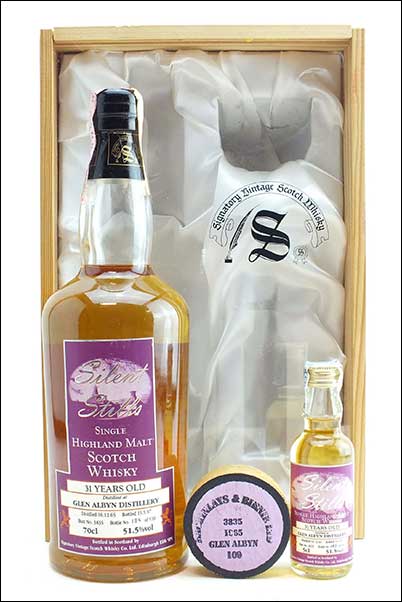
In essence what we’re doing with this piece is focusing on a specific bottle in our upcoming September auction which is a distinctive Glen Albyn from independent bottler Signatory, who now own Edradour distillery. At the same time we can also highlight the growing popularity of the independent bottlers who have become the main source (excluding some of Diageo’s annual special releases and the odd official release) of whisky from closed distilleries. As a side note it is worth visiting Edradour as the distillery shop always stocks a great of Signatory releases. And if you take the distillery tour, then the warehouse visit will confirm the independent bottler has an impressive array of casks. 

AA JW 1

Now we say ‘closed’ but other popular terms include ‘silent’ and ‘mothballed’ to name but two. Generally, the terminology applies to distilleries that are no longer in production. The distillery may have been completely bulldozed from existence (Glen Mhor), kept in suspended animation (Glen Keith which has only recently reopened) or still stands in some form today such as Convalmore or Rosebank. It is worth highlighting that while Convalmore and Rosebank distilleries still have a physical presence, the equipment within may have been sold off, stolen or been left to the elements, to decay such as Brora. 

Many of these distilleries closed during the early 1980’s when the whisky industry experienced a surplus in demand. Over 3 decades later and we are nearing the end of the potential lifespan for what few intact casks remain. Diageo for instance do not comment on how much they have left to bottle for Brora, Port Ellen etc. and the same veil secrecy applies to rest of the industry. Eventually we will reach a point where the only remnants of certain distilleries are in unopened bottles – it very likely that for some we’re already at this point. 

This means that there is a growing interest and demand in acquiring whisky from a distillery such as Glen Albyn, which was 1 of 3 distilleries in Inverness that no longer exist today. Closed in 1983 and subsequently demolished in 1986, this Signatory release was distilled in 1965 before being bottled at 31 years old. Even in 1997, Signatory it seems appreciated the rarity of its casks by releasing the bottle with an accompanying miniature – although from the lots we’ve seen over the years these tend to be unopened anyway! At least the option exists if you wish to experience what Glen Albyn can offer without having to open up the full bottle. The final piece of the jigsaw is a decorated cask bung, which completes the edition that numbered just 530 in total. 

Whisky from Glen Albyn does have a variable reputation … Read more at Just Whisky’s Blog

Two New Single Cask Releases From Kilchoman For The USA – Scotch Whisky News

 Impex 2014


Two New Single Cask Releases From Kilchoman

We’re delighted to announce that two single cask releases, the ex-Sherry matured and the PX finish, are both now available in the US. Both have been selected by and exclusively bottled for ImpEx Beverages USA.

Impex 1

The ex-Sherry Matured

The ex-Sherry matured cask #85/09, bottled at cask strength of 57.9% ABV, has been personally recommended by Tony Rozga, the Distillery production manager. This whisky was distilled in 2009 and spent over 5 years in a first-fill Oloroso Sherry Cask.

Tasting notes:

Colour – Dark burnished copper.

Nose – Deep sherry, smoke and leather notes.

Palate – Rich, luxurious sherry flavours. Viscous almost syrupy, lots of cooked fruits and citrus peel.

Finish – The finish is excellent, for a young whisky this has all the characteristics of great age.

RRP: $130

Impex PX

The PX Finish

The PX Finish is a first-fill ex-Bourbon cask #394/09, bottled at cask strength of 59.2% ABV. The Bourbon cask was chosen by the Distillery manager, John Maclellan, and was then transferred into a PX cask. It was bottled once the additional layer of complexity and a balance of what the Kilchoman and ImpEx teams were looking for were achieved.

Tasting notes:

Colour – Golden amber.

Nose – Strong vanilla with citrus fruits, caramalised brown sugar and sultanas.

Palate – Sweet toffee up front with a hint of marmalade, dryness and a long peaty finish.

Finish – The finish is long and clean with rich smoke and dried fruit.

RRP:$130

For further details please contactImpEx Beverages, Inc. at office@impexbev.com or call (650) 872-1113.

ImpEx encourages responsible drinking.


Powered by WordPress