Ralfy Publishes Whisky Review #466 – Scotch Whisky News
June 24th, 2014

www.ralfy.com talks about ships in bottles with Whisky Review 466 – Dimple 15yo Blended Scotch Whisky

www.ralfy.com talks about ships in bottles with Whisky Review 466 – Dimple 15yo Blended Scotch Whisky

The relationship continues with the Cutty Sark Clipper ship…
Having been originally named after the Cutty Sark Clipper ship, our two brands have always had a relatively close relationship.
After an extensive six-year conservation project, the Clipper was re-opened two years ago and is maintained by the Cutty Sark Trust as part of Royal Museums Greenwich. Much like our whisky brand, the Trust is constantly looking for ways to stand out from the other visitor attractions in London and has taken a pioneering approach to its marketing.
Several international sponsors, including ourselves (Cutty Sark), have supported the Trust to ensure the ship is open for visitors all year round.


FAIRGROUND THRILLS: THE BIG DIPPER
An adventure unlike any other: get ready to experience spikes of adrenaline and intenstine-twisting thrills, we’re dipping the prices on our summer selection of fairground flavours. Hold on tight for a white-knuckle ride – thrill-seekers can enjoy a 20% saving on these Panel-picked bottlings. Leave behind your everyday world and go head-first into flavour… enter ‘BIGDIPPER’ at our online checkout.
Be first in the queue, this fairground attraction ends Thu 26 June
Sweet, fruity & mellow
94.4 Ode to Autumn
WAS £92.40 BUY £73.92
Browse more old & dignified sale bottles HERE
Spicy & sweet
72.35 Pink Grapefruit Granita
WAS £110.30 BUY £88.24
Browse more spicy & sweet sale bottles HERE
Spicy & dry
28.24 Curiouser and curiouser
WAS £82.80 BUY £68.64
Deep, rich & dried fruits
9.76 Out of Africa
WAS £92.40 BUY £73.92
Old & dignified
35.101 Oh How Joyfully
WAS £280.00 BUY £224.00
Browse more old & dignified sale bottles HERE
Light & delicate
7.96 Subtle quality in a lady’s handbag
WAS £85.30 BUY £68.24
Browse more light & delicate sale bottles HERE
Juicy, oak & vanilla
64.51 Tuck-time in a stately home
WAS £87.20 BUY £69.76
Lightly peated
44.59 Lime marinated grilled chicken
WAS £87.20 BUY £69.76
Something different: Grain Whisky
G4.5 Sweet and Spicy
WAS £83.10 BUY £66.48
The Scotch Malt Whisky Society, The Vaults, 87 Giles Street, Leith EH6 6BZ Contact: sales@smws.com or call 0131 555 2929 (Mon-Fri 9am-4.45pm). Visit the Society at here for membership information This is your chance to join and to take advantage of their great offers!
Spot the SMWS bottles in this amusing You Tube video

Longrow 14 Year Old Burgundy Finish 56.1%
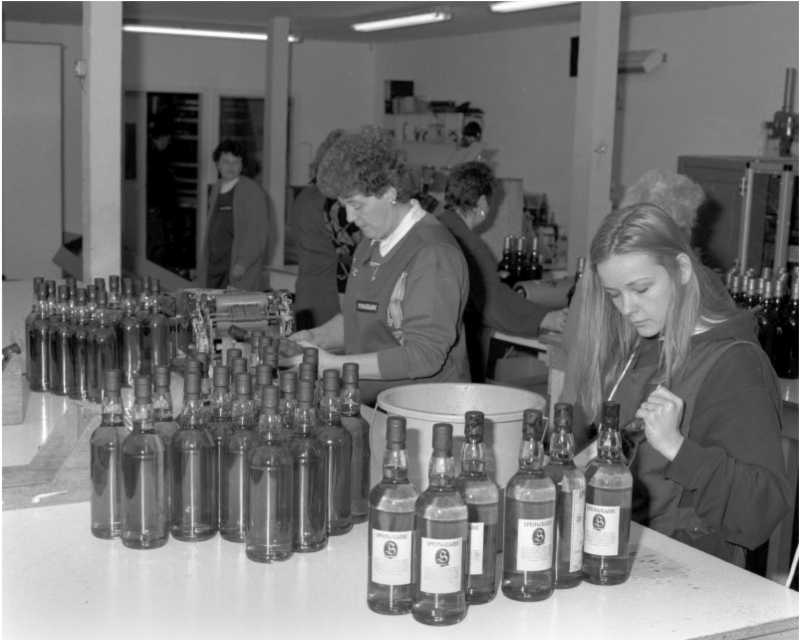
Springbank’s Bottling Hall, located in a former bonded warehouse used by the actual Longrow Distillery which closed in 1896
Springbank is one of only three distilleries in the Campbeltown whisky region. With 130 distilleries in Scotland, it seems strange that one of the five regions should contain but three distilleries. This was not always true.
Campbeltown was once the capital of the whisky world, home to more than 30 active distilleries.
In deference to that lost diversity, the Springbank distillery makes whisky in three distinct styles. Their Springbank brand is moderately peated double distilled spirit. Their Hazelburn is an unpeated spirit, 2.5 times distilled and classically Lowland in style. Longrow is their twice-distilled spirit which has been heavily peated in the Islay tradition.
Longrows are very special single-malts that are rare to come by. I’m thankful to be able to offer one you may have not had the chance to try. This heavily peated whisky was aged in an old bourbon cask for eleven years before being transferred for a final three years rest to a cask that once held red wine from Burgundy. It’s been bottled at cask-strength, 56.1%. Everyone who has bought one so far has been very happy with it, and we have only ten bottles left. I expect it to go quickly.
Regularly $136.99 – On Sale $124.99
Check our website for more whisky offers
Joe Howell
Federal Wine & Spirits
________________________________________
Email: joe@federalwine.com
Phone: 617-367-8605
Web: http://www.federalwine.com/

The Ardbeg Auriverdes is nearly here. It will be in store at KWM, North America’s first Ardbeg Embassy, on Wednesday June 25th. Demand for the whisky, which was first sampled at Ardbeg Day Festivities coordinated by KWM, has been very strong, and pre-order requests have been brisk. It is not too late to reserve your bottle. My tasting note can be found below. We also still have a little stock left of the Ardbeg Galileo which was surprisingly re-released in Alberta a couple of weeks ago.
There are also a couple of exciting new whiskies available from KWM. The Gordon & MacPhail Glentauchers 1994 is perhaps the most interesting, $114.99. Very few bottlings are seen from this Speyside distillery, and this one caught our attention when it scored 96.5pts in the Whisky Bible. It is a KWM exclusive. There are also some very tasty left over bottles of Berry’s Linkwood 1993 from a single cask bottled for the Companions of the Quaich. The club took most of the bottles, but there are a few left over for the public to sample and purchase at $125.
I hope you enjoy this Malt Messenger Bulletin, and I hope we’ll see you in store soon to share a dram and check out some of our exciting new offerings.
In this Edition:
1. Ardbeg Auriverdes Due This Coming Wednesday
2. Introducing Gordon & MacPhail’s Glen Tauchers 1994
3. Berry’s Linkwood 1993 CofQ Cask Available to the Public
4. Lagavulin 37 Year
5. Finally the New Whiskies from Bruichladdich are Here!
6. Ardbeg Galileo is Back
Slainte!
Andrew Ferguson
Kensington Wine Market
PS- PS – Don’t forget you can follow me on Twitter: twitter.com/scotch_guy and Facebook: facebook.com/scotch.guy.1 .
www.fergusonwhiskytours.com
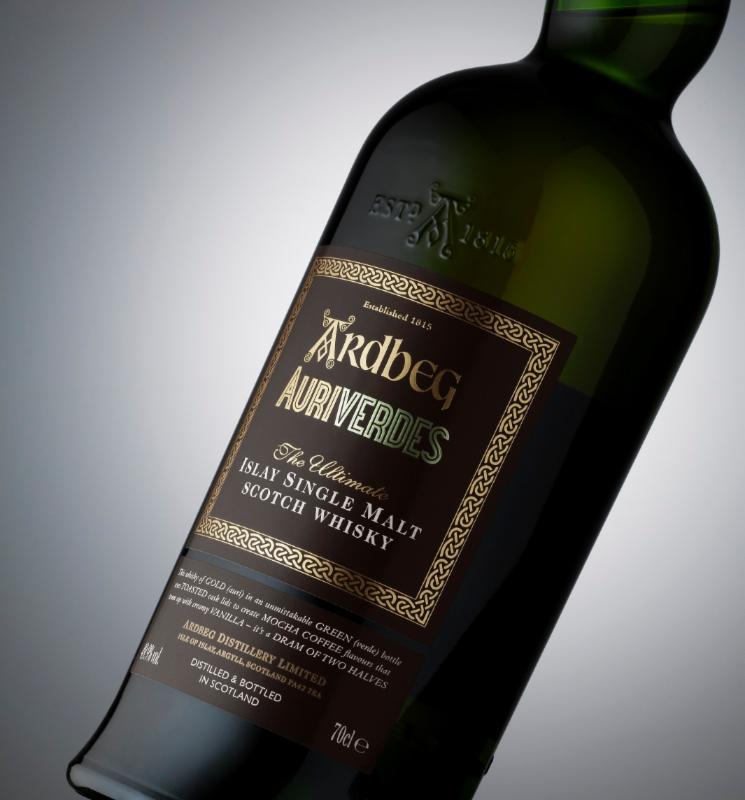
Ardbeg Auriverdes in-store Wednesday June 25
Ardbeg’s tasty 2014 Ardbeg Day Release is Nearly Here!
Demand has been strong for Ardbeg’s 2014 Ardbeg Day special release Auriverdes. The whisky will be available from Kensington Wine Market, North America’s first Ardbeg Embasssy on Wednesday June 25. The limited release was first tasted at Ardbeg Day in Calgary at events held by the brand and KWM. A soccer match was held on Saturday May 31 followed by release celebrations for the Auriverdes later that afternoon at the Bow Valley Lawn Bowling club. The whisky was a hit.
Auriverdes is Latin for Green & Gold, a nod to Ardbeg’s classic green bottle and precious golden nectar. Green & Gold is also the nickname of Brazil national soccer team, and so a tip of the hat at 2014’s World Cup. Distilled in 2002 the whisky is a tweak on the distillery’s flagship 10 year old bottling. The whisky was matured in 2nd Fill American oak barrels, fitted with custom toasted heads (barrel ends). Bottled at 49.9% it is creamy, fruity and decadent Ardbegian.
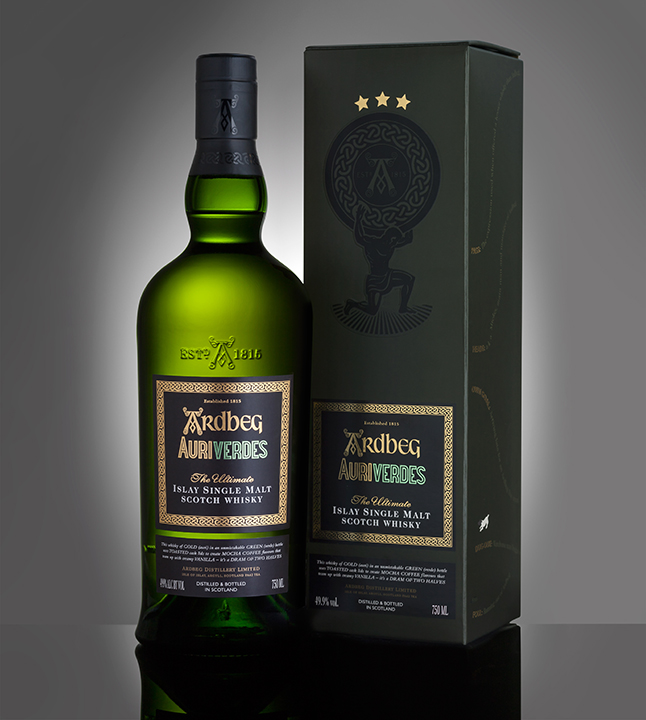
Ardbeg Auriverdes – 49.9% – My Tasting Note: ‘Nose: honeyed, fruity and subtly floral with decadent sugars and toffee, coconut butter and a hint of mocha; soft earthy peat, tinges of sea salt, spice and juicy malt lie beneath; both white and tropical fruits; Palate: still honeyed, lots more tropical and white fruits and decadent sugars with more mocha; the salty peat is very soft, and the barley is held well in check considering its age; light sugary spices dance all over while some licorice notes evolve; Finish: long, fresh and fruity with fading spices and soft-salty-peated-malt. $129.99
The Auriverdes is not expected to last long. It is already sold out in the UK, and it was only released just over 2 weeks ago. We are still taking pre-orders, and will have a bottle open for customer sampling on Wednesday. The whisky is exclusive to Ardbeg Embassies for 2 weeks, and will be available in limited quantities thereafter.
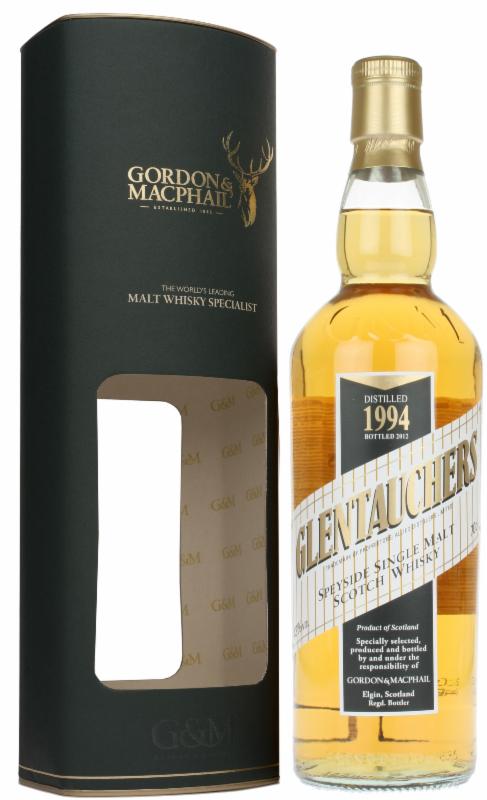
Introducing Gordon & MacPhail Glentauchers 1994
Exclusive to KWM, 96.5pts Whisky Bible!
Glentauchers distillery was built in 1898 at the height of what became known as a the Pattison Whisky Crash, the devasting bursting of a late 19th century industry bubble. Unlike many of the distilleries founded around that time it survived and has been in production for the most part ever since. From the bottler: ” The Glentauchers Distillery Company started as a joint venture between James Buchanan, the creator of the “Black & White” and “Buchanan” blends and WP Lowrie. The distillery was designed by local architect John Alcock.”
The distillery is currently owned by Pernod Ricard, and there are virtually no official bottlings. The closest thing available are those released by Gordon & MacPhail, such as this 1994 vintage which scored 96.5pts in the last edition of the Whisky Bible. On a recent visit to Gordon & MacPhail in Elgin, Scotland, I had a chance to sample it. My tasting note from that visit is below. The whisky is available exclusively from KWM in Alberta, and is a lovely summer dram!
G&M Glentauchers 1994 – 43% – Refill Sherry Butts & Recharred American Oak Hogsheads – My Tasting Note: “Nose: melons, pinapple and kiwi fruit; lots of honey, beeswax and citrus, subtle honey and soft floral tones; Palate: creamy, honeyed and still floral with smooth decadent oak and gentle spices; more melon and pineapple with a building creamy oakyness; Finish: long, clean and sweet, still fruity, soft and decadent.” – $114.99
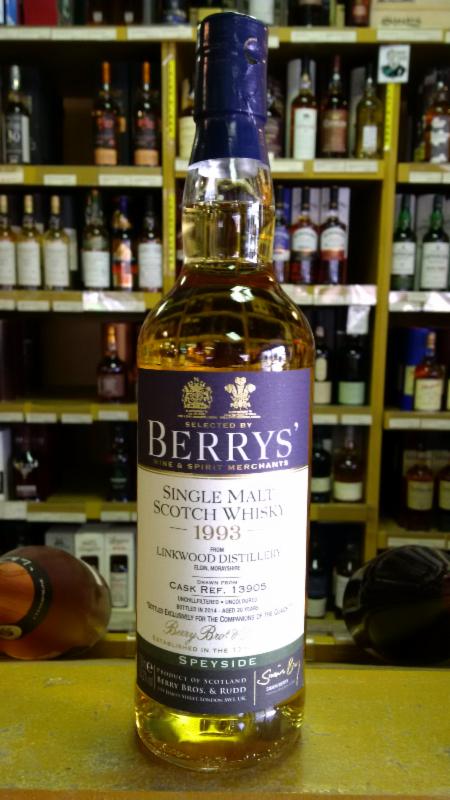
Berry’s Linkwood 1993 Companions of the Quaich Cask now available to the Public
Only a couple dozen bottles of this soft and tropical whisky available!
This independently bottled single cask of Linkwood is excellent value for a cask strength 20 year old whisky. Selected by and bottled for Canada’s Companions of the Quaich whisky club, there were a few bottles leftover after the members had their share, and these are now available to the general public.
Berry’s Own Linkwood 1993 CofQ Cask – 20 Year – 53.2% – Refill Hogshead – My Tasting Note: “Nose: very soft, decadent and sugary with toasted oak, citrus and some silky floral tones; honey dew melon, marmalade and clotted cream with mint leaves sprinkled in powdered sugar; Palate: round, creamy and toasty with more sugars, citrus and floral notes; this is a sweet, decadent whisky and very soft; more melon, orange and clotted cream, but with pineapple, toasted oak and building spices too; Finish: long, coating and creamy with fading sugars and fruits.” – $124.99
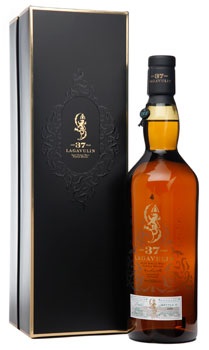
Lagavulin 37 Year
Only 6 bottles coming in to KWM this Wednesday, all but 1 are sold!
The window is closing to acquire a bottle of the oldest Lagavulin ever bottled for your collection.
Lagavulin 37 Year – 51% – Distilled 1976 – Bottled 2013 – 1868 Bottles – Tasting Note by Serge at http://www.whiskyfun.com/: ” the oak feels a bit (astringency) but only for fraction of a second, because lemons, smokes and especially lapsang-souchong tea are soon to come to the rescue. I think we’re really in the world of tea here, it’s sharing many similarities with an old pu-erh, the soft kind of woodiness (incense once again, sandalwood, ‘sweet’ cinnamon), the mild fruitiness around kumquats and dried papayas, the earthy smokiness… Then there’s some honeydew, lemon pie, a faint camphory touch, certainly some cough syrup ‘as always’, some black chocolate, oysters, lemon balm… We’re experiencing the same phenomenon as on the nose, it keeps changing. Oh, and there are lovely touches of ripe melon.” 94pts Read the full tasting note here. – $2749.99 (priced over CAD$3,500.00-4,500.00 in other countries)
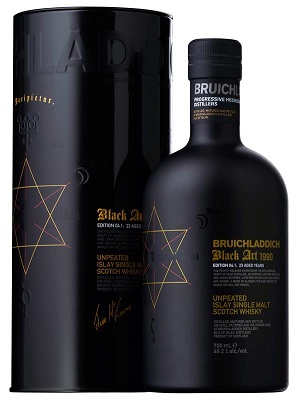
Finally the New Whiskies from Bruichladdich are Here!
Bruichladdich Scottish Barley, Port Charlotte Scottish Barley, Bruichladdich Black Art 4 & Octomore 6.1
All four of Bruichladdich’s new expressions came in to KWM this week, and while our most of our initial order has sold we have more of each on the way this coming week! I hope to get my own tasting notes up on them soon. In the meantime, here are some details:
1. Bruichladdich Scottish Barley – 50% – From the Distillery:Made from 100% Scottish barley, trickle distilled, then matured for its entire life by the shores of Lochindaal in premium American oak, it is a testament to the quality our ingredients. – $60.99
2. Port Charlotte Scottish Barley – 50% – From the Distillery: “This whisky is testament to our belief that raw ingredients matter. Trickle distilled from 100% Scottish Barley the spirit gently matures in the lochside village of Port Charlotte before being bottled here at the distillery using Islay spring water.” – $81.99
3. Bruichladdich Black Art IV – 49.2% – From the Distillery:”
Working with the very finest American and French oak to explore that most esoteric relationship between spirit and wood, Black Art is Master Distiller Jim McEwan’s personal voyage into the heart of Bruichladdich.” – $174.99
4. Octomore 6.1 – 57% – From the Distillery:”The world’s most heavily peated whisky, this is the sixth edition of the uber-experimental cult Octomore. Titanic amounts of peat but with a light, delicate complexity and a beguiling finesse. Young, yet eminently mature, it defies us. It remains an enigma. We embrace that. Here, we pay tribute to its pedigree, to the land from which it came and the raw materials that gave it life: Octomore Scottish Barley. We believe challenging convention matters.” – $131.99
The Black Art and Octomore aren’t expected to last long!
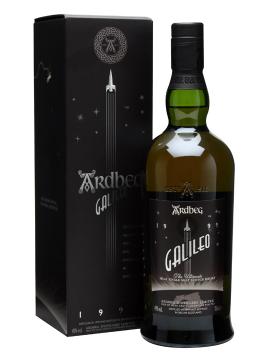
Ardbeg Galileo is Back!
But only for a very limited time…
A limited Ardbeg 11 Year old distilled in 1999, and released to celebrate the first whisky sent into space! Bottled in 2012 after maturing in Bourbon and Marsala cask, it is 49%. This whisky sold out very quickly in the Fall of 2012, and we were thrilled to get some back. Only 30 bottles left, they won’t last long!
Ardbeg Galileo – 49% – 11 Year – 1999 – My Tasting Note: Nose: surprisingly mellow for Ardbeg (but not Blasda mellow), lots of barley sugar, biscuitty peat, chocolate orange and candied coated fennel; very fruity with raisins and figs, ripe oranges and grape fruits, and mixed berries; Palate: creamy, earthy, peaty, sweet and spicy all at once; the citrus fruits, creamy vanilla and chocolate are all there but loosely buried under the surging peat and barley; more candied fennel along with oily-heathery-peat; Finish: drying, peaty and still sweet showing more chocolate, fennel and orange and lime peels; Comments: this whisky will take off like a rocket! – $119.99
Please send me an email or call the store 403-283-8000 to order! Thank You for Reading the Malt Messenger!
Contact & Disclaimers
If you have any whisky questions or comments concerning The Malt Messenger please contact me by e-mail, phone, or drop by the store.
All of the products mentioned in THE MALT MESSENGER can be purchased in store, over the phone or from our website at www.kensingtonwinemarket.com. All prices quoted in the Malt Messenger are subject to change, don’t include GST. In the case of discrepancies in pricing, the price in our in store point of sale will be taken as correct.
Thanks for reading the Malt Messenger.
Slainte!
Andrew Ferguson
Manager & Scotchguy
Kensington Wine Market
403-283-8000
Calgary, Alberta, Canada
www.kensingtonwinemarket.com
Owner & Opperator
Ferguson’s Whisky Tours
www.fergusonwhiskytours.com
scotchguide@fergusonwhiskytours.com
Kensington Wine Market
403-283-8000

I know, I know, you just got an note from us last week, but you can never get enough of a good thing! Besides this latest series definitely demands and deserves your attention…
We love all kinds of whisky here at TWL HQ. Be it from Scotland, Ireland, India, Japan, England, Taiwan, and so on.
However, from time to time, we yearn for the fatherland of whisky!
What we are looking at in this series are some incredible quality single-cask, single malts from the fabulous ‘Single Malts of Scotland’ label from Speciality Drinks.
These are brand new bottlings, never before seen, and you will be among the first to taste them. Added to this a new venue in Brighton and our ‘tasting at home‘ pack, there’s plenty to get excited about!
Just look at what you will be tasting…
Clynelish 1995, 18yo, 57.5% £75
Glen Grant 1992, 22yo, 57.5% £75
Glenrothes 1990, 23yo, 49.4% £90
Longmorn 1992, 21yo, 49.7% £80
Tobermory 1994, 19yo, 55.8% £70
plus a mystery dram…
That’s some serious bang for your buck, but you best be quick as some venues are nearly full already!
DATES & VENUES
LONDON Wednesday 2nd July The Red Lion, Crown Passage, 7pm
LEEDS Wednesday 9th July The Cross Keys, Water Lane, 7pm
LIVERPOOL Wednesday 9th July Jenny’s Bar, Fenwick St., 7pm
NEWCASTLE Friday 11th July Blackfriars, Friar St., 7pm
MANCHESTER Friday 11th July Britons Protection, Gt. B’Water St., 7pm
YORK Saturday 12th July Brigantes, Micklegate, 7pm
SHEFFIELD Tuesday 15th July Sheffield Tap, Platform 1B, S’field Station
BRIGHTON Thursday 17th July Lord Nelson, Trafalgar Lane, 7pm
BRAND NEW FOR 2014 – TASTING AT HOME PACK!
If you’re not able to make it to one of the above dates, new for this tasting – and going forward – we are offering a limited number of mail-order tasting sets. Within this you will find a sample of each whisky, a tasting mat and printed info on the whiskies. Click here for more detail…

Just as an aside, the write-up of our tall ship tastings during the Feis Ile (Islay Festival) is now up if you’re up for a read. It can be found here. We will be going back next year and will be releasing details soon, so keep an eye out…
Don’t forget to follow us on Twitter – @thewhiskylounge – and like and share our Facebook page to keep bang up to date with the latest news about our events and more.
We look forward to seeing you over a dram or two soon.
Sláinte!
Eddie & Team Whisky Lounge

www.ralfy.com gets sweetified with Whisky Review 465 – Advice on Scotch Whisky Liqueurs


If you’re looking for an entry level single malt, that will introduce you to the delights of Islay whisky; look no further than the Bowmore 12 Year Old. Islay whisky is predominantly characterised by the smoky peat that grows rich across the island. Add to that the crashing salty waves that batter against the rocky coast and you can begin to imagine the tastes and aromas that you should expect to encounter.
The distillery itself describes its 12 year old single malt as the “raw essence of Bowmore”, perfectly capturing the nature of Islay and the generations of tradition forged within the distillery and by its whisky making process. It has also gathered much acclaim throughout the whisky community, highly regarded and much respected whisky writer Michael Jackson said that it was “remarkably long and complex”.
For me, Bowmore 12 Year Old is about simplicity. This is the marriage of the land to the distillery, the smoky peat and salty air of Islay and the trademark fruitiness that the distillery has become known for. There are no secrets here; this is just good old humble whisky distilling and maturation. Aged for 12 years within American ex-bourbon casks and presented in a simple yet bold bottle.
As I pour myself a dram, the warm amber appearance of this malt starts to spark and alight the senses.
On the nose, true to its origin, those smoky, peaty Islay aromas fill the glass. This breathes and allows room for a sweetness, vanilla, honey and toffee come to mind.
On the palate, again the smoke and vanilla come together. A fruitier, citrus taste follows, breathing new life and sensation into this whisky. The overall texture is smooth and easy, the flavour well balanced and highly enjoyable.
As for the finish, I am reminded Jackson’s description “remarkably long and complex”. The finish is indeed long, but for me, the Islay characteristics of smoky peat and salty sea breeze leave me with a sense of warmth and comfort.
This is in my opinion what Islay whisky is all about; connecting the dram with the land. Each individual character should evoke the senses in a way that paints a vivid picture of that whisky’s journey and story; and that’s what Bowmore have achieved with their 12 year old.

NEW ARRIVALS
Canada – Rye
BACK IN STOCK
Scotland – Single Malt Scotch
K&L Wine Merchants
http://www.klwines.com
Phone: 877-KLWines (toll free 877-559-4637)
Email: wine@klwines.com
San Francisco, Redwood City, Hollywood CA