News

The (now) Traditional TWE Blog Review of the Year – Whisky News

Whisky-Exchange-Vinopolis

The (now) traditional TWE Blog Review of the Year

Starting traditions is easy. Firstly, you declare that something is a tradition, and then you do it more than once. Bingo: tradition. On that note, here’s the (now) traditional TWE Blog Review of the Year!

AA TWE 1

Tastings at TWE Vinopolis

It is traditional to feature a picture of Colin Dunn in our yearly round-up

While we at TWE HQ hide away in west London, occasionally glancing out of the window at Wembley Stadium, it seems that the folks in our London Bridge shop do real work. Throughout 2014, they hosted the usual cracking range of tastings, covering the whole world of spirits. We kicked off the year with the much-anticipated Diageo Special Releases tasting, with Colin Dunn, Diageo’s brand ambassador and part-time Johnnie Walker impersonator. From there we jumped around the world, including stops in Japan for the launch of the Suntory Distiller’s Editions, the Netherlands to try the Zuidam range, and Scotland for some treats from Springbank. Shop stalwart Duncan Ross ran us through his whisky heroes in his Magnificent Seven tasting and we even hosted the launch of what would become Whisky Advocate Magazine’s Japanese Whisky of the YearHanyu Joker. And to top it all, we ended the year with the selection and crowning of our Spirit and Whisky of the Year 2014-15. On that note…

AA TWE II

Spirit and Whisky of the Year 2014-15

Coming out on top were Cocchi Vermouth di Torino (yes, we know it’s not a spirit) and Glendronach Revival 15 Year Old, two very deserving winners. You can find out more about them on our Spirit of the Year and Whisky of the Year pages.

AA TWE III

On the blog

Photoshopping Rocky’s face into pictures has also become a tradition

We’ve been prolific here on the blog, with new editor Stu kicking Rocky and me into shape. From our most successful April Fool’s Day post yet (both in number of hits and number of people who emailed us panic stricken having believed it), to distillery profiles from Rocky (our resident traveller) of Bruichladdich, Benromach, Glen Moray, Mackmyra and Hven, and a series on ‘sherry’ casks from me, we’ve covered a wide range of topics.

On the way Rocky has been accused of being a tool of the Kummel marketing board, Stu got to combine football with drinks and I got be geeky about grain whisky. All in all, a productive year, even if our Christmas post revealed too much about the inner workings of our minds.

AA TWE IV

Events

The whisky year is chock full of happenings, and we got involved throughout the year. Despite running the shops at Whisky Live London and around the country with The Whisky Lounge’s shows, we also had a little bit of time in October to throw a little shindig of our own: The Whisky Show 2014.

Lots of stuff happened at the show. Here is some of it. Bonus points if you spot yourself

Our biggest show yet, with 2,500 people through the doors over the weekend, we had great whisky, great food, and lots of fantastic people on both sides of the counter. Our headline masterclasses this year were the best yet, and you can read all about them here on the blog: Glenfiddich, Gordon & MacPhail, I Did It My Way, and Aurora Brorealis.

AA TWE V

New website

Shiny…

The biggest thing of the year for us was the launch of our new website. Many months in development, it finally broke free of the testing server in mid-October and has been presenting a much prettier Whisky Exchange to everyone who visits. As ever, comments and suggestions are gratefully received – just drop us a line through the site.

AA TWE VI

Releases

Some great whiskies have appeared this year. The expected new Glenmorangie Private Collection entry, Companta, shot off the shelf thanks to the reputation of 2013′s Ealanta, Jim Murray’s World Whisky of the Year 2013 (97.5pts), despite bearing little resemblance to its predecessor – Jim gave Companta a 74 in this year’s Whisky Bible. Ardbeg continued their run of popular special releases with both the World-Cup-alluding Auriverdes and the revived Supernova 2014. Kininvie’s single malt finally hit the general market to a burst of apathy from the whisky geeks and a flurry of activity that meant it sold out immediately; Bowmore Devil’s Casks 2 broke the impressive sales records of the first edition; and Bruichladdich produced Octomore 6.3 and Port Charlotte 2008, both using locally grown barley and in the case of the former, peated to the highest levels yet seen.

Many, many tasty things…

Our sister company Speciality Drinks relaunched the Single Malts of Scotland range, with a new look and a raft of new whiskies, as well as a pair of Elements of Islay releases, including four bottles approved by a certain bearded whisky blogger (me).

As usual, Diageo picked up a lot of the new whisky limelight thanks to three launches: the Special Releases, the revamped Mortlach range and Haig Club. All three caused much chatter on the internet, with the Beckham-backed Haig Club getting both endorsement from new whisky drinkers and abuse from the connoisseurs.

AA TWE VII

TWE exclusives

We have a whole page of exclusives over on the main site, but we’ve had a few standouts through the year. We kicked off 2014 with a pair of Gordon & MacPhail exclusives that were previewed at The Whisky Show 2013: A Glentauchers and a Ledaig. They sold out quickly, but we now have an excellent G&M Caol Ila instead.

The Whisky Show was greeted by the usual flurry of special show bottlings, with a heavily sherried Clynelish garnering most praise – it looked amazing and tasted even better. We also had a pair of Karuizawas up for grabs, with show guests queuing from early in the morning to be in with a chance of getting one. If you didn’t get one, don’t fret – there are still more Karuizawas to come. Watch this space…

2014 also marked our 15th anniversary, with thewhiskyexchange.com coming online at the end of 1999. So far we have released three special editions: a heavily sherried Balblair 2000, a heavily sherried Arran 1996 and a heavily sherried Glen Garioch 1973. You may notice a theme…

What next?

There are a few things on the horizon that I can mention and even more that I can’t. In January we should see details of The Whisky Show 2015 appearing and some special Japanese whiskies. Our Shop tastings start again shortly and more wisdom will be presented here on the blog throughout the year. Here’s to 2015 and whatever it brings.

Colonel E.H. Taylor, Jr. Small Batch Bottled in Bond Straight Kentucky Bourbon at K&L California – American Whiskey News

AA K&L 1

Colonel E.H. Taylor, Jr. Small Batch Bottled in Bond Straight Kentucky Bourbon 750ml ($39.99)

This bourbon, bottled in bond, was aged for seven years in the famous Colonel Taylor’s warehouse built in 1881. It is the latest from the sought-after E.H. Taylor line from Buffalo Trace Distillery. Soft and subtle, this is easily the most approachable and affordable of the recent Taylor releases. The Bottled in Bond Act of 1897 means that the bourbon come from barrels all produced at one distillery, in a single season, and then stored in a bonded warehouse for at least four years before being bottled at 100 proof.

Sarah Covey | K&L Staff Member | Review Date: January 08, 2015

Fans of soft, supple, easy-sipping bourbon should snap this puppy up immediately. Sweet corn, vanilla, spice and light caramel with a long, lingering finish. You will absolutely want to have this on your bar for sipping on the rocks, or as a killer component in any bourbon cocktail. It’s awesome!

David Driscoll | K&L Staff Member | Review Date: January 03, 2015

The E.H. Taylor series is an interesting side project from the Buffalo Trace distillery portfolio (Eagle Rare, Weller, Elmer T Lee, Pappy, etc) offering a drier, less sweet profile than what many of us expect from Bourbon. For me, the Taylor Small Batch 100 proof is the most intriguing of the series; truly a grainy and evocative Bourbon that goes from oak, to oil, to sweet corn, and then back to a dry grainy finish. For me personally, the whiskey is great on the rocks, but really shines in a Manhattan or Old Fashioned. The 50% helps bump up the flavor, allowing it to hold its own with the added sweetness, and the drier profile doesn’t add too much extra sugar. The oak and corn flavors are really well balanced as well, creating a back and forth of sweet vanilla and baking spices that goes on forever even after you drink it down. It’s a fun change of pace from the standard Bourbon fare and a chance to really delve deep into the complexity that Bourbon can offer. There’s a lot going on in this whiskey; perhaps more than you’re really looking for. Each time I taste it I find something I didn’t taste the previous time. It’s almost like the Boigneires Armagnac equivalent; that’s a brandy that cuts out all the sweetness and gets right down to the core flavor. It’s the Bourbon version of that.

K&L Wine Merchants
http://www.klwines.com
Phone: 877-KLWines (toll free 877-559-4637)
Email: wine@klwines.com
San Francisco, Redwood City, Hollywood CA

KL-emailheader

Whisky Wednesday Reviews Springbank CV – Scotch Whisky News

Joseph

This week Joe Ellis begins his vertical tasting of the Springbank whiskies and reviews Springbank CV.

http://youtu.be/7lkhzBWf25A

http://Twitter.com/whiskytube

https://www.facebook.com/whiskytube

Highland Queen 1561 30 Year Old Blended Whisky 40% Off at Single Malts Direct – Scotch Whisky News

SMD LOGO

AA SMD 2.png

Highland Queen 1561 30 Year Old Blended Whisky

Save over 40% (RRP £120.00)

IWSC Gold Medal Winner 2014

Highland Queen 1561 has been produced using traditional cask maturation, where the malt and grain whiskies are blended together and then recasked into barrels for further maturation for a period of at least six months.

This allows the whiskies to marry together perfectly to give us an incredibly smooth blended whisky. This is a superb example of a vintage, traditionally produced super premium Scotch whisky.

“The result we leave, with confidence to your judgement”

Tasting Notes

The sweetness from the sherry cask comes through on the nose, together with notes of butterscotch, leather and spices. We can also detect hints of cinnamon and apple. In the mouth the whisky is exceptionally smooth and elegant, there are hints of smoke and an underlying flavor of cinnamon apple crumble. The finish is long and elegant.

Price:£58.33 ex VAT
£70.00 inc VAT
ABV:40%

BUY

Ralfy Publishes Publishes Whisky Review #513 – Scotch Whisky News

ralfylarge

www.ralfy.com examines average quality in a good presentation with  Whisky Review 513 – Tamnavulin 21yo @ 48.2%vol (TSMOS)

Back in Stock at K&L California – Whisky News

kl_logo_trans

Back in Stock

Scotland – Single Malt Scotch

  • Balvenie Tun 1401 Batch #3 Single Malt Whisky 750ml (Elsewhere $1700) – 1 available ($1,499.99) Named for the marrying 2000 liter tun where these 10 casks were mingled before bottling. Very rare and highly allocated. Pretty much the only option to taste small batch Balvenie. A definite throwback to an older style. The barrels in questions were all layed down by Master Blender David Stewart and their marriage is designed to capture the unusual and mystical atmosphere in Balvenie’s famous Warehouse #24. In all, 7 bourbon casks and 3 sherry butts went into batch three. The oldest dating to 1967 and the youngest from 1989, the majority of the whisky comes from the 70s and early 80s. Cask strength and true to form, this is the Balvenie at its best. -David Girard, K&L Spirits Buyer
  • Balvenie Tun 1401 Batch #6 Single Malt Whisky 750ml – 1 available ($799.99) Here is the new batch of Balvenie’s well received NAS small production vatting: nine casks–seven traditional whisky cask (perhaps they mean hoggies?) and two sherry butts–from various vintages, all finished in the Tun 1401, a traditional marrying vessel. Some are close to 30 years old. This limited release will not be around for long. The distillery describes it as “fragrant and fruity with barley sugar sweetness and soft vanilla. The liquid is sweet at the start, followed by a luscious explosion of tangy citrus and gentle spices. Notes of honey combined with rich vanilla syrup and hints of oak tannin give a rich finish with a lingering sweetness.”
  • 2001 PC6 – Port Charlotte 6 year old “Cuairt-Beatha” Islay Single Malt Whisky 750ml (Elsewhere 600) – 1 available ($400.00) Best New Whisky and Best Whisky 12 Years and Under (Jim Murray’s Whisky Bible, 2009) The Port Charlotte 6 Year is a thoroughly original, heavily peated whisky (40ppm) distilled, matured and bottled at Bruichladdich Distillery. It is the same whisky as the PC-5, just a year older, a little mellower and a little lower in alcohol (2%). Called Cuairt Beatha, which translates to “Walk of Life,” the name was given to represent the spiritual journey of both the whisky and the men who made it. Distiller Jim McEwan says: “Opens beautifully balanced on malt, peat and young spirit. The youth and strenght of the spirit infusing the aromas of green apple, mild mint, clove, bayleaf and forest greenwood. Given a dash of water and time little notes of meadowsweet, iris and honeysuckle…as the next wave of bracken and smoke with a slipstream of vanilla is about to overload the olfactory senses. The Madeira cask influence lies deep in the glass and brings the rich notes of syrupy dates and raisins…it’s got an effervescence of spindrift and smoke, sweet citrus–the texture of the spirit is awesome due to trickle distillation. It’s the integration of all the characters of this island…that gives this spirit a 100% Islay DNA.”

United States – Bourbon and Rye

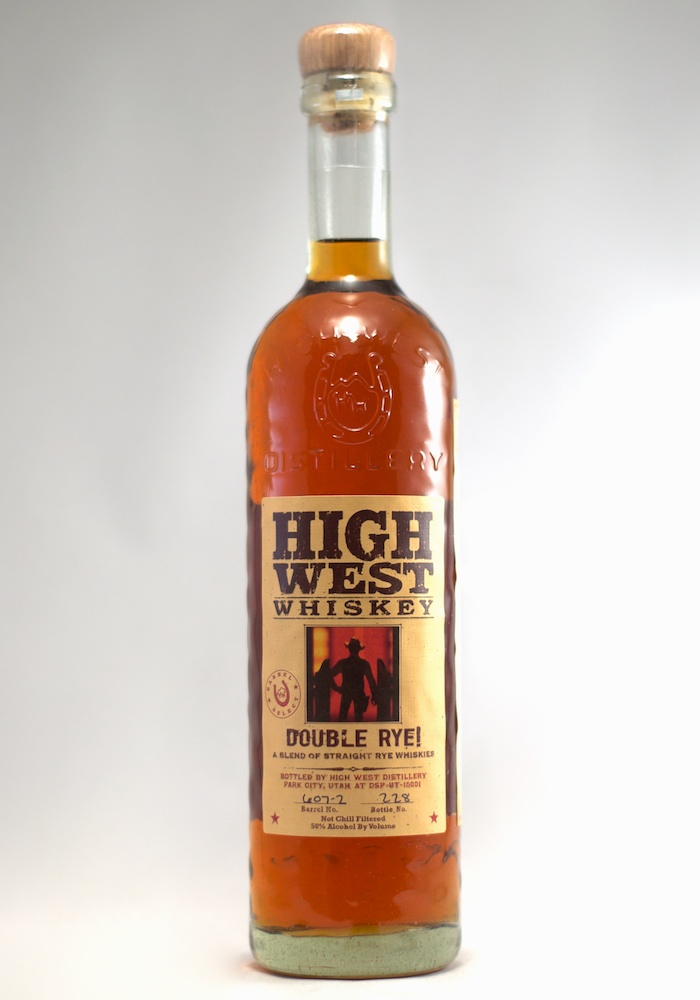
  • High West Bourye Bourbon/Rye Whiskey 750ml ($79.99)

K&L Wine Merchants
http://www.klwines.com
Phone: 877-KLWines (toll free 877-559-4637)
Email: wine@klwines.com
San Francisco, Redwood City, Hollywood CA

KL-emailheader

The Whisky Shop Dufftown January 15% Off Sale – Scotch Whisky News

AA WSD

January 2015 15% Off Sale

Someone said to me that it’s been a long time since The Whisky Shop Dufftown had a January sale.  Having done our stocktake we can change that and we certainly need the room.  There’s just nowhere else we can put another shelf.  So we have decided to put over 100 different products on sale with at least 15% off to mark the start of 2015.  The full list is below.   We have also kept some of our festive offers on for January.  All our sale items are listed on the SPECIAL OFFERS page.

These are all limited stock so do not delay if you are interested.

The Whisky Shop Dufftown Ltd

1 Fife Street, Dufftown, Keith, Scotland AB55 4AL

Telephone: +44 (0)1340 821097

AA WSD III

AA WSD II


GLENDRONACH – A History by Mark Davidson – Scotch Whisky History

Glendronach logo

GLENDRONACH

by

Mark Davidson

The Jolly Toper

We whisky lovers have a lot to thank the 5th Duke of Gordon for, in Elgin a statue to this far sighted defender of the dram stands tall on a column, elevated to the high esteem he was held in by the locals. As an influential early nineteenth century land owner he was instrumental in heralding changes in governmental attitudes towards licensing and taxing within the whisky industry. Thanks to his concern in the welfare of his estates changes were wrung which ultimately made legal distillation more attractive than the illicit alternative. However not everyone wanted change- better to pay no tax or licence fee at all and do as you please rather than accept the gauger’s authority. At first anyone thinking of swapping sides in the war between court and crofter was threatened into submission. Eventually common sense prevailed and all but the staunchest rebel was persuaded to go legitimate. The most famous ‘turncoat’ was the first – George ‘Smith’ (his real name was Gow) of Glenlivet, in 1824. However there quickly followed others, notably James Allardes and his three farmer partners.

As the son of William, the owner of the Boynsmill estate, Allardes, nicknamed ’Cobbie’, was surely aware if not even directly involved with smuggling in the Huntly area- beyond the eastern fringes of Speyside. It is a matter for conjecture what exactly his relationship with the Duke was but stories survive of him enjoying favour with the peer. Pivotal in the Duke delivering the goods on his proposals was having his tenants’ cooperation. Perhaps Allardes was himself a persuasive character and by introducing him to the rewards of civility the Duke may have played a strategic game when making honest men of the many ‘sma still’ workers on his land.

Situated about five miles north east of Huntly in the Forgue valley the current distillery has grown over nearly 200 years from humble beginnings as a converted meal mill. Glendronach takes its name from the river its still house now straddles, the Dronac, meaning ‘bramble’. Adjacent is Glen House which was built in 1771 and for years has been a fine venue for much hospitality. The house possibly once had its own brewery and hence distillation allowed for some of the local barley to be skilled into a seasonal prize.

Allardes’s time with the distillery was not particularly enduring (although his initials are still stencilled on cask ends) and some cite his attraction to society life as being his downfall. Initially he would travel promoting his ‘guid Glendronach’ – one episode has our hero attempt to persuade Edinburgh taverns to stock his wares but finding no luck he had resigned to failure when two ladies of the night in the Canongate area encouraged him to buy them a drink. Having brought samples he felt he no longer had a need for he decided to share his pride and joy. Very soon the girls had spread word of how good the stuff was and their influence over Edinburgh landlords soon had orders for stock arriving at the distillery. Returning north, an unfortunate, and second, but more devastating fire in 1837 was to destroy nearly the whole site and saw James Allardes connection to Glendronach end due to his subsequent bankruptcy in 1842. At this point both he and his brother had to hand over their share of the company. Also at this time most parties of the original consortium chose to leave, their spaces being filled by new investors.

Subsequently one Walter Scott originally from Falkirk took command from the three remaining partners becoming a managing partner from 1852. Coming from duties at Teaninich distillery Scott was known as an agriculturalist, cattle breeder and entrepreneur. His generosity included the gifting of a hall for the use of the local community. Under his guidance the 1850s saw major rebuilding and enlarging at the distillery and many of today’s buildings date from this refit. By 1860 Scott was joined by an Alexander Ross, their partnership lasting until 1878. Around this era it is said that Glendronach was the largest duty paying distillery in the Highlands with more than 50 people living close to the site. From 1881 Scott was the sole proprietor, he passed away in 1886.

From this date the distillery operated under the control of Glendronach Distillery Company being leased to John Sommerville and McCallum a combine of two Edinburgh wine merchants and a Campbeltown distiller based at 45 Quality Street, Leith. This situation continued until 1914 after which the distillery was acquired by the crown in 1916 at which point production ceased.

For the next episode in the Glendronach saga we turn to the Grant’s of Glenfiddich. When William Grant left his managerial position at Mortlach distillery, bought second hand stills from Cardhu and started to build by hand his own distillery he had his family to help with the labour. The youngest of 5 sons Captain Charles Grant (b. 1872) worked as the tunman at Glenfiddich later he was first the manager at Glenfiddich and subsequently the company’s sister distillery Balvenie. He bought the silent Glendronach along with the whole estate at auction from the Crown for £9,000 in February 1920. Three months later it was once again operating. Charles had served in the Gordon Highlanders during WW1 and perhaps it was injuries suffered in the conflict that led to his early death at 54 in August 1926. During his tenure he oversaw many improvements reshaping a great deal of the distillery. He also bottled the make as a single malt but later changed this tact to concentrate on four blends: Glen Dronach Liqueur, Old Vatted Glendronach, Sir Walter and Huntly Royal.

Moving forward to 1960 we see the distillery once again changing hands when it is sold by George Grey Grant to William Teacher Ltd. Once again the 1000 acre farm was in the deal including a herd of highland cattle. The long established family owned company had marketed their eponymous brand ‘Teachers Highland Cream’ since 1884 enjoying successful export trade almost straight away. Until 1976 they were the largest whisky company still in the hands of the founding family. In the mid 19th century they were the biggest single licence holder in Glasgow owning 18 ‘dram shops’ moving into blending and wholesaling around this period. By the 1890s it was necessary for the company to build its own distillery, Ardmore – 16 miles from Glendronach, in order to guarantee fillings for its brands. Helping with the new distillery was James Innes from Glendronach. Perhaps this was the first time the two companies connected or maybe this was just a sign of an existing relationship. Come 1923 the Teachers had become a private limited company having survived the first world war with some enviable stocks due to some strict self rationing. By 1949 the company was public. At its height Teachers was the second best selling brand in the UK commanding 16% of the domestic market with 55% of stock being sold at home the rest exported. At the time of their purchase of Glendronach they also invested in a new, large and modern blending and bottling plant at Craig Park in Glasgow. Also at the point of the takeover it was decided to drop the suffix ‘-Glenlivet’ from the distillery and brand, perhaps a mark of the confidence in the provenance of the distillery. In order to bankroll the distillery purchase there was an issue of 150,000 shares and the last of the dram shops were sold. Around this time a large portion of stock was swapped with DCL for grain via the broker Stanley P. Morrison while the blends previously mentioned were withdrawn.

By 1966 it was time for a restructuring and increase in capacity. A list of improvements runs to: the two original stills were joined by a pair of new pots, a new still house being constructed to a contemporary design straddling the Dronac burn and occupying the site of the old mash house, a new filling store, automatic coal stokers for the firing of the stills, a new mash tun in a new mash house on the site of the reconstructed and extended old still room which Alfred Barnard had identified in 1887 as being the oldest part of the distillery – perhaps this part of the buildings survived the fire of 1837, malt storage space increased, a new mill room, new yeast room, toilets, showers and changing rooms, 3 new wash backs of six thousand gallons brought the total to seven, a new warehouse capable of storing 6,800 butts/puncheons. One piece of equipment which didn’t require improvement was the reliable Porteus will used in the production of grist for the mash tun. The new distillery was opened on the fourteenth of December 1967. Later a pig sty, farm sheds and outhouses were converted for hospitality use. By 1969 confidence was high enough to restart the bottling of Glendronach as a single with some 8yo becoming available on the export market. At its peak Glendronach was the fifth best selling single malt in the world. From the re-opening for the next thirty odd years the management of Glendronach and Ardmore was split between Mr Massie and Ronnie Mennie.

It is interesting to note that as with the new sister distillery at Ardmore Glendronach’s stills remained coal fired until April 2005 when E.U. regulations prevented continuation of this traditional practice. After a six month shut down to convert to steam heating the distillery returned to work in September. Throughout the industry the dirty, dangerous and difficult to control direct firing of stills by coal had gradually been replaced with the cleaner, safer and more easily controlled internal heating method via a boiler producing steam or in a very few examples a live gas flame: although harder for the shift worker to cook his bacon and eggs on a shovel! However it would appear the more traditional method seemed to be considered too much a part of the fabric of the Allied products that they were ultimately the last distilleries in Scotland to use this method. Maybe the action of the rummager within the wash still preventing the burning of solids on the hot copper from the live flame meant the continually brushed and exposed metal added a certain benefit to the spirit. Another perhaps surprising practice maintained at Forgue was the continuation of hand malting. Latterly 15% of the required barley, equating to about 10 tons a week, was prepared on the floors via the kiln with its curious oblong pagoda, once again was there a belief that the contribution from the more labour intensive alternative left its mark on the finished result? Another production detail keeping a link to past practices is the use of Oregon pine in construction of the 9 wash backs. Many distillers feel the easy cleaning and longevity of stainless steel is more helpful than any potential benefit from wooden fermenters. But for some the tried and tested method of using mother nature’s materials with the many qualities of wood such as its insulating properties to lend a relatively consistent temperature throughout the year is just too tempting. Likewise the absence of an up to date Lauter mash tun and the retention of the relatively small rake and plough tun with its copper canopy fits in well with the other old school processes. Turning to the stills one aspect which didn’t survive the occasional upgrades were the worm tubs. When exactly these were replaced with the more modern shell and tube variety is not clear but it is perhaps surprising that what can be such a full bodied dram as Glendronach doesn’t owe a proportion of its weight to the stage at which spirit vapour is converted back to liquid. When vapour is more rapidly returned to liquid and hence does not enjoy prolonged exposure to cleansing copper it can be expected the resulting spirit will have a more robust nature, such is the case with quickly condensing worms, the opposite being true of the shell and tube method. Another feature of the equipment is the presence of a boil ball on all four stills. This chamber at the base of the still necks acts as promoter of reflux – where heavier and less volatile alcohols find progress up the still neck delayed by a slight drop in temperature within the ball. Perhaps the fuller body of Glendronach spirit may be thanks to the relatively steep angle of the lyne arm on the wash stills. At 45 degrees any vapour drifting to the top of the still will have little chance to recycle downwards back into the still body to be redistilled, an action which would encourage a lighter spirit, rather the spirit vapour would easily tip over the balancing point at the top of the still neck and find its way down the condenser keeping more of its heavier elements. The spirit stills have a more modest 20 degree incline and are typically filled with a 6KL charge. Combine this with a relatively slow distillation then altogether the spirit can be considered as one of the more thoughtfully produced in Scotland today. Yet another time served influence apparent at Glendronach is the preference for maturation in ex-sherry cask over ex-Bourbon wood. At one time most all Scottish whisky would have been matured in a cask which originally contained European wine fortified or not. Strong trade with, particularly France, but also Spain and Portugal would have seen many importers of Claret, Sherry and Port. Scottish ports took delivery from quality vinyards and houses where the respect for the maturation qualities of fine European oak ultimately benefited the whisky producer as Scottish oak might be good for ship building but fell short of suitable for nurturing the national drink. Typically a whisky left in a European oak ex-sherry cask will become full bodied and rich often with notes of raisins, nuts and cocoa. However with a downturn in sherry consumption, the requirement for sherry to be shipped in bottles from Spain and the option of high volumes of much more affordable ex-Bourbon American white oak casks les than 10% of Scotch whisky is now matured in old sherry casks. It appears if the cost and effort of acquiring such casks is what is necessary to make the best Glendronach then happily company accountants have for the most part been persuaded by the whisky makers. Having said that a relatively recent period saw the policy shift to nearly exclusively ex-Bourbon filling. This led to the current owner’s policy of sourcing enough sherry casks to re-rack approximately half the 9,000 casks acquired at the point of purchase of the distillery into fresh oloroso casks. The program is set to cost seven figures and take 3 years to complete while an ongoing policy of filling new spirit into sherry casks will further add to the budget required to fill as many as possible of the potentially 45,000 cask the three dunnage and three racked warehouses on site can accommodate into sherry wood.

Returning to the ascendancy of ownership of Glendronach, 1976 saw a significant development. Seeking better financial stability Teachers approached Allied Breweries and a take-over was agreed. This was also the year that saw an early example of a distillery visitor centre opening, a feature which has remained at Glendronach even during periods of closure. During this time Glendronach was second only in sales to Laphroaig within the Allied portfolio of malts which also included Scapa, Tormore and Miltonduff. The subsequent sale, on 26th July 2005, of the then current incarnation of Allied, Allied-Domecq, saw Beam/Fortune Brands acquire Teachers and Ardmore while Pernod/Chivas took over Glendronach. Chivas Regal and Ballantines were now sister brands alongside the second biggest collection of malt distilleries after Diageo.

Coming up to date the current chapter in the history of Glendronach is being written by Billy Walker and his team. Ex-operations director for Burn Stewart. Billy had known his now partners, Geoff Bell and Wayne Kieswetter, since the 1980s when the South Africans were buying whisky from Burn Stewart for their blending operations in South Africa. The pair were also heavily involved in shipping, trucking and electricity supply as well as being agents for Diageo and Chivas. Although initially concerned with securing significant volume supplies when Benriach was acquired from Pernod in 2004 interest was peaked in the quality and diversity of stock purchased alongside the distillery. Encouraged by the success of the re-launched Benriach the company went on to purchase another Chivas distillery, Glen Dronach, in July 2008, at the time Chivas‘s smallest plant. Having been carefully mothballed the equipment needed minimum work before being put back into use. By April 2004 the company was ready to release its first expression from their new acquisition – a 12yo. A target of 150,000 bottle sales in the remainder of the year proved more than realistic as ultimately twice this number was achieved. By July 2010 an extension to the range saw four ‘finishes’ join the 12yo, 15yo “Revival” and 18yo “Allardice“ (all Pedro Ximinez or Oloroso matured), these were, Sauternes, virgin oak, both at 14yo as well as Moscatel and Tawny Port. Although Benriach had been a bottled product before Walker et al took over it was far from as established as Glendronach so the new owners were able to take advantage of a well grounded and fine reputation. Also a deal to supply blending stock to Pernod also meant the future demand levels were reassuring.

Currently managing production is Alan McConnochie, former positions held by Allan include White Horse and Long John bottling plants, roles at Laphroaig, Ben Nevis, Bunnahabhain and Tobermory. He joins a distinguished list of distillers dating way back to the 1820s and John Bulloch Jnr the son of the founder of Duntocher distillery who later moved to Glen Ury distillery to be in charge of distilling. Another former manager of Glendronach was John Duff, later to establish Glen Lossie in 1876.

Rummager : a copper mesh rotated within the still to remove any material from the internal pot surface which may be burned due to the high temperatures experienced by the copper due to direct firing by live flame.

Worms : a coiled copper pipe with diminishing diameter through which passes spirit vapour from the lyne arm leading from the top of the still neck. The pipe is immersed in cold running water within a tub to encourage a drop in temperature of the gasses in order to condense swiftly.

Reflux : the condensing and subsequent return to vapour of spirit within the still. Actively promoting reflux will create a lighter spirit, the heavier compounds being gradually broken down into lighter components. Avoiding reflux produces a more robust spirit.

www.jollytoper.com

Ralfy Publishes “Extra Whisky Knowledge” – Whisky Knowledge News

Ralfy_zpsf0666f22

www.ralfy.com share something you won’t discover from Distillers with Whisky Review – extra whisky knowledge!

Whisky Ramblings Via Video #101 – Scotch Whisky News

mark

Whisky Ramblings Via Video #101

Mark Dermul, Belgian Whiskyblogger, tries the latest limited release from Auchentoshan, a 25 Year Old beauty from 1988. It matured for 8 years on bourbon casks before it was transferred to red wine casks for a finish of no less than 17 years, the longest in the industry. This is more a double maturation than a finish, in my book. Auchentoshan is one of the few distilleries that really succeeds in getting the red wine cask finish right. The delicate nature of the triple distilled spirit no doubt has a lot to do with that. Oh, and did I tell you that it is a beauty, yet? Yes, it is!

http://youtu.be/fQobOF1E4bI


Powered by WordPress