News

Distillery Profiles: Millburn by Mark Davidson (aka The Jolly Toper) – Lost Scotch Whisky News
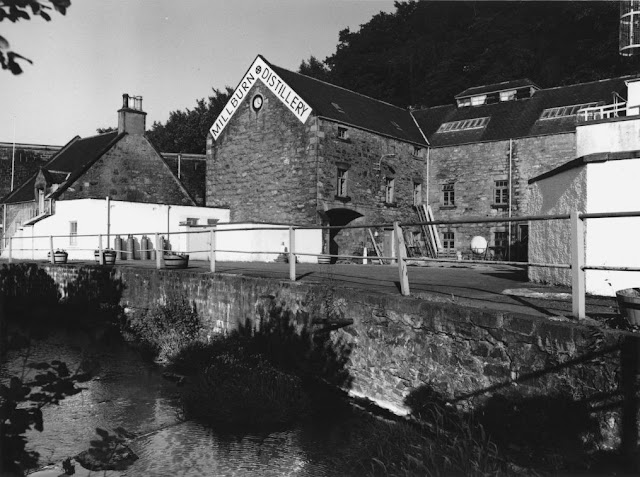
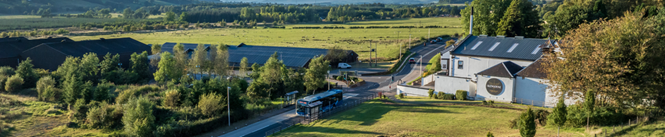
Photo Credit www.millburnwhisky.com

Distillery Profiles: Millburn

Millburn distillery may have started as ‘Inverness Distillery’ and was possibly founded or at least owned by a Mr Walsh from 1807 but it is not certain if this distillery was indeed an earlier version of the one we understand today. Regardless, for the distillery that can, in the main, still be seen a location about one mile east of the centre of Inverness was chosen in order to take advantage of the stream from where it took its name.

What is known is that :

Alexander McCallum & Co. were registered owners between 1817 and 1821.

Between 21.12.1825 and 1829 ownership was with James Rose and Alexander McDonald under the trading name Rose & McDonald Co. This is the earliest recorded reference held by United Distillers.

The Millburn Distillery Company took over the lease of the property in 1829 on a 14 year agreement although it appears their tenure did not extend beyond 1837. Somewhat confusingly between 1829 and 1832 it was run by McDonald Leslie & Co., presumably the distillery was sub-let over this period.

Perhaps the same arrangement was in place between 1832 and 1837 when ownership was credited to McDonald & Co.

This stint of ownership was followed by another under Colin Chisholm from 1837 when the name appears to have reverted to Inverness Distillery. There was a recognised period of dormancy following Chisolm’s tenancy but I’ve been unable to establish if this started in 1837 or later.
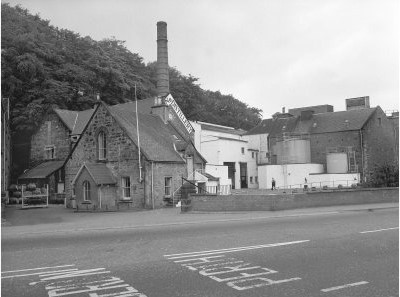
From 1853 Invernessian corn merchant David Rose “obtained a feu of the site” turning the building’s function to a flour mill. There were another 4 mills of various types using the same water source at this time.
In 1872 Swede Gottfrid Olsen visited a number of Scottish distilleries including Millburn to learn how to make whisky. He put his research to work producing whisky in Sweden in the 1880s, however according to references quoted earlier the site was used for milling in 1872 not distilling. See the link at the end of this post for more information on Olsen’s story.

The distillery was rebuilt in 1876 when Rose employed a local architect and builder by the name of Ross to design the new distillery. Production re-started on 28.9.1876. At this stage process water from the Mill Burn was augmented by a supply from Lochashie.

Encouragingly for trade in 1878 the distillery was awarded the contract to supply the British garrison in Cyprus.
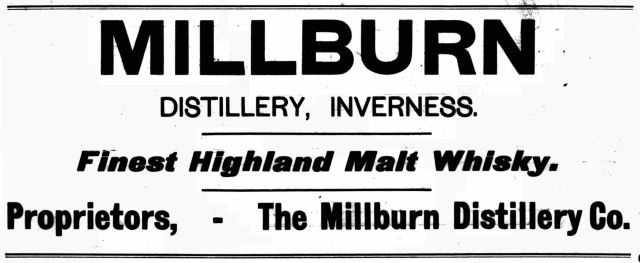
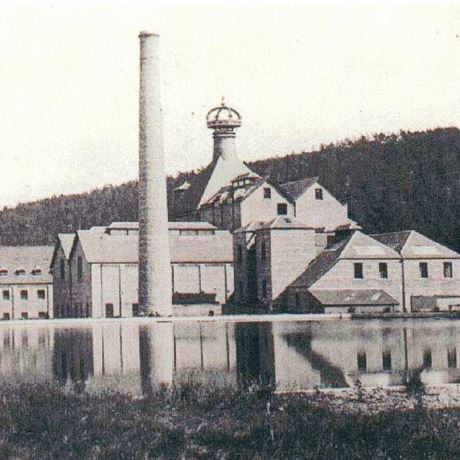
Photo Credit www.millburnwhisky.com

Between 1881 and 1892 George Rose, son of David ran the distillery. From 1892 two members of the Haig distilling dynasty, Alexander Price Haig and Lt. Col. David Price Haig, a territorial officer for 30 years, took charge of the business. Under this Andrew Haig & Co.’s ownership there were a number of improvements in 1898 in order to boost capacity. New utensils and a “remodelling” of the interior were the result, power was supplied by a steam engine and a water turbine. The business was renamed Millburn Distillery Co. from 1904.

From 1921 to 1937 Millburn was owned by Booth’s, the gin distillers, having purchased the distillery for £25,000 during a lull in the industry. ‘Cabinet’ was one of the company’s blended whisky brands. Booth’s also owned nearby Royal Brackla distillery and Stromness distillery on Orkney.

Fire broke out on 26 April 1922, but the local fire brigade, “greatly assisted” by the Cameron Highlanders, whose barracks were nearby, saved the stillhouse and warehouses, at the time storing £70,000 worth of whisky. Unfortunately most other buildings were lost, damage was put at £40,000.

In 1922 the distillery was rebuilt by Charles Doig’s company of architects although he himself had passed away in 1918. The new arrangements were capable of producing about 675kl per annum, two and a half times the output of the original distillery.

The four warehouses could store 1 million gallons of spirit. A gas engine was installed and a fire engine was also located on site. New maltings were required to be constructed following the fire.
Booth’s took over Wm. Sanderson & Sons Ltd in 1935 then were in turn bought by DCL in 1937.

The distillery was closed during the Second World War and used as a billet for troops. Another consequence of war was that a walk-in safe was installed in the manager’s office to store important Booth documentation from their London headquarters during the hostilities.
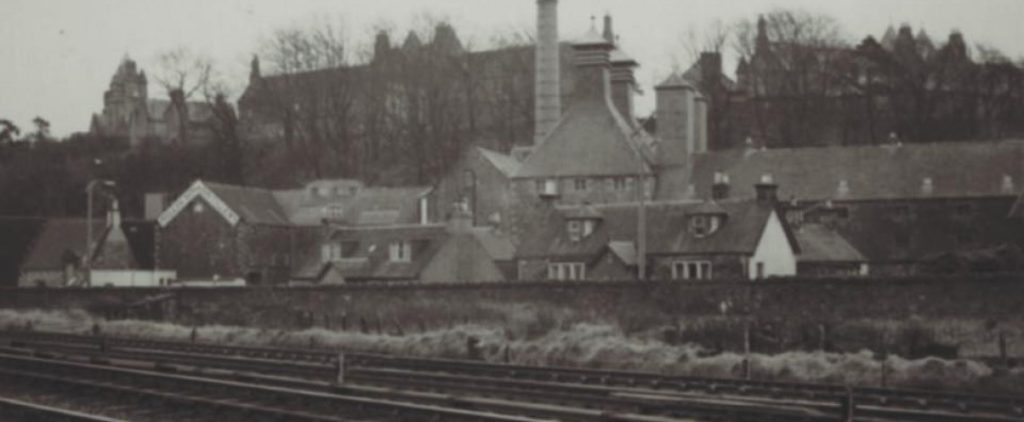
Control of the distillery was transferred to SMD in 1943 with production restarting about 1945.

Mechanical stoking of the coal fired stills was introduced in 1958 whilst also in this year the distillery was connected to the national electricity grid superseding the steam engine.

The floor maltings were replaced by Saladin boxes in 1964, not an uncommon development for the post war period of rising demand and the resulting pressure to increase output via mechanisation. Millburn supplied Royal Brackla and Teaninich with malt at this stage. A new receiver room was also built around this period. On site traditional warehousing accommodated 13,000 casks with Menstrie being used for surplus storage.

The Saladin maltings closed in 1984 with nearby Ord distillery subsequently supplying any malt requirements. Like other DCL facilities faced with declining demand production was latterly at 30% of capacity before the final closure of the site in March 1985. Maximum output was 2 MLPA. Acting against the distillery’s survival were the facts that the site it occupied was unsuitable for expansion being bordered by a road, the stream and a steep hillside. The outdated nature of the buildings and equipment would not have helped either.

At the time of the closure Golden Promise and Triumph strains of barley were employed. There was a Porteus mill, a cast iron mash tun and 4 wooden wasbacks. The two onion shaped stills were each about 13.5kl in capacity and were connected to worm tubs. The stills were heated by steam coils from 1966 when the stillroom was rebuilt. The coal fired boiler for heating the stills was converted to oil in 1970.

Latterly Loch Duntelchaig 8 miles south of Inverness, the town’s supply, was used for process water, the Mill Burn continued to be used for cooling water.

From 1943 the licence to distil was held by Macleay Duff, a subsidiary of DCL since 1933. This business was established in 1863 and had their registered office at 75 Hope St , Glasgow from 1943 to 1985. They bottled a 12yo vatted malt, The Mill Burn, which was a major brand in New Zealand.

The last manager, Mr Watson, had started his career at Linlithgow, moved to Glenesk then was assistant manager at Ord before running Millburn for 8 years.

Happily after closure the distillery escaped demolition, a fate which befell the other two Inverness distilleries, when it was sold for property development in 1988. The new owners, Beefeater, converted the buildings into a steak house. At this point all equipment was removed and the kiln and pagoda were demolished. The spirit safe was ‘recycled’ when Benromach reopened in the 1990s.
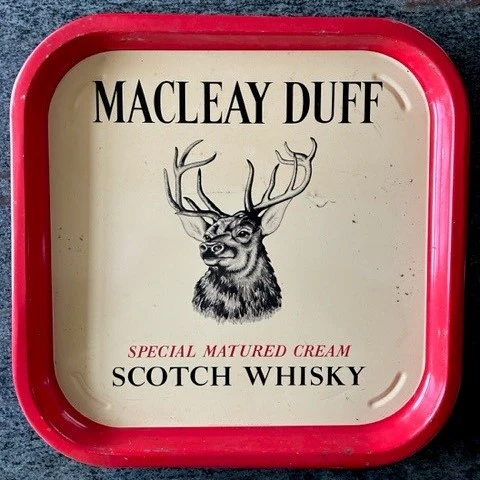
As regards official bottlings: there were 3 expressions in the Rare Malts series: 1975 18yo 58.9%, 1975 25yo with the final bottling being a 35yo from 1969 which was released in 2005 at 51.2%. The make also featured in the blend Macleay Duff.

Mark Davidson, aka The Jolly Toper Profile

Glengoyne Distillery Nominated for Climate Action Award – Scotch Whisky News

Glengoyne Distillery Nominated for Climate Action Award

We are proud to share that Glengoyne has been shortlisted as a regional finalist in the Climate Action Award at this year’s Scottish Thistle Awards.

Sustainability is woven into every aspect of our distillery operations, from our zero-waste-to-landfill policy to our gravity-fed distillation process. This recognition is a testament to the passion and commitment of our entire team, and to our belief that exceptional whisky and environmental responsibility go hand in hand.

As we celebrate our new Mizunara Oak release, we are proud to be recognised for our environmental commitment as a regional finalist in the Climate Action Award at the Scottish Thistle Awards. Together, flavour and sustainability shape the future of our distillery.

Slàinte Mhath,

The Glengoyne Team

VISIT GLENGOYNE

“Easily the Greatest Scotch Deal K&L has Offered in its 40 Year History” – Scotch Whisky News

The Crowning Achievement of K&L’s Scotch Program
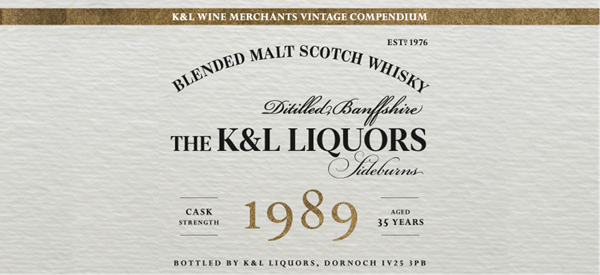
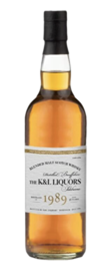
1989 The K&L Liquors’ 35 Year Old “Sideburns” (Balvenie) K&L Exclusive Single Vintage Speyside Blended Malt Scotch Whisky (750ml) ($250.00)
“I am confident in saying this is easily the greatest Scotch deal K&L has offered in its 40-plus year history.”— David Othenin-Girard, K&L Spirits Buyer

After 18 years of buying spirits for K&L, this special parcel may be my crowning achievement. Just a few years ago, it would have been almost unimaginable that we could gain access to stocks of this quality at such low prices. Of course, we’ve bottled similar whiskies before—years back we secured a 1991 version from Hunter Laing, and only last year we offered a Faultline barrel from 1998 that sold out almost immediately. Now we bring you another “Single Vintage Blended Malt,” a full decade older than that barrel, offered at exactly the same price.

It is an absolute coup and, if I’m honest, may get me into a little trouble—but that has never stopped me before. My style has always been to ask forgiveness rather than permission. The true challenge with stocks like this is deciding how to label them. We cannot, under any circumstances, place the distillery name on the bottle, even though it is beyond doubt where the whisky comes from. The once-accepted trade name “Burnside” belongs to our dear friends at Cadenhead, and out of respect (and good sense, given their famously litigious nature) we would never infringe on it. So the question became: what do we call this whisky?

Our friends at Duncan Taylor once sold us a wonderful barrel for our Faultline label that they dubbed “The Huntley,” after their hometown. That option was off the table for us. After some consideration, we settled on a playful nod to our friends in Campbeltown: “The Sideburns.” We are not the first to use the name, but ours is plural—because who on earth needs just one sideburn?

Needless to say, this is one of the most outrageous deals I’ve ever had the honor of brokering for our shop. It represents the pinnacle of my ongoing effort to push back against one of the most damaging trends in our industry: the erosion of value for the end consumer. If you destroy the primary market for great whisky by pushing prices beyond reason, you eventually destroy the market itself. Too many producers have forgotten the first rule of selling anything: give customers what they want at a price they can afford. Start with the customer’s experience and build the system backward from there, rather than forcing corporate projections and marketing jargon down their throats.

And what do customers want? Great old malt whisky. But in today’s marketplace, finding a bottle over 25 years old that delivers real value in the glass is nearly impossible. Yes, brands can create other kinds of value—through lifestyle, image, luxury packaging, or grand storytelling—but if the true measure is taste (and for me it always is), you would struggle to find another whisky that offers what this one does at anywhere near this price.

This parcel is, without exaggeration, one of the finest opportunities ever presented to lovers of Scotch worldwide. I hope this is only the beginning. If we can continue to secure parcels like this through new channels, perhaps we can begin to chip away at the barriers keeping customers from enjoying extraordinary old whisky rather than simply admiring it on a shelf. For now, I am confident in saying this is easily the greatest Scotch deal K&L has offered in its 40-plus year history.

David Othenin-Girard, K&L Spirits Buyer

1989 The K&L Liquors’ 35 Year Old “Sideburns” (Balvenie) K&L Exclusive Single Vintage Speyside Blended Malt Scotch Whisky (750ml) ($250.00)

This product is estimated to be available by 04/30/2026.

K&L Notes: This exciting parcel of Scotch is evocative of everything K&L stands for. Since 1976, K&L Wine Merchants (originally K&L Liquors) has been committed to providing our customers with the absolute finest products available in the world at the very best possible prices. Our team of buyers travels the globe to secure these coveted stocks, and it is through these decades-long relationships that we are able to offer such extraordinary parcels.

This unprecedented release marks a completely new phase in K&L’s Scotch program. We have bottled countless stocks under our own “Faultline” label, but this is the first parcel that K&L has been able to access directly from the source. The result is truly unparalleled in our history.

Our 35 Year Old Sideburns have no equal in today’s marketplace. Blue-chip malt of this caliber, whether teaspooned or not, simply does not trade anywhere near the prices we are offering. These stocks represent the absolute pinnacle of aged Scotch malt available today, and we are presenting them at nearly one-tenth the price of the distiller’s own 30-year-old expression. Bottled at full cask strength and drawn from ex-sherry hogsheads, there is no better way to buy old malt whisky today.

It is almost unimaginable that these stocks are available to us at such an incredible price, and we believe every Scotch lover should take note of this extraordinary opportunity—because one thing is certain: K&L’s customers will not let this last.

Email: wine@klwines.com
Phone: (877) KL-WINES (Toll Free 877.559.4637)
K&L Wine Merchants 3005 El Camino Real Redwood City, CA 94061 USA
San Francisco, Redwood City, Hollywood CA

Distillery profiles: Imperial by Mark Davidson (aka The Jolly Toper) – Lost Scotch Whisky News

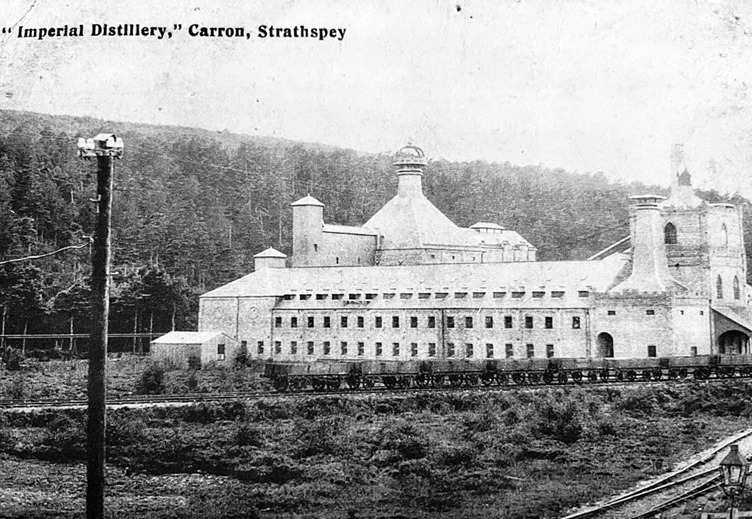
Photo credit scotchwhisky.com

Distillery profiles: Imperial

Imperial distillery was designed by Charles Doig and was, unusually, built using bricks.,There was also an iron framework and walls 2ft thick in places to resist fire damage. All internal doors were iron for the same reason. There was quite a community on the site with 24 company houses built for use by employees. The distillery was located in the hamlet of Carron by the Spey taking advantage of the railway line and had it ‘s own substantial sidings which extended to nearby sister distillery Dailuaine. The year of construction, 1897, was Queen Victoria’s diamond jubilee year hence the name. To mark the occasion a gilded crown adorned one of the kiln roofs.

Imperial was established by farmer’s son Thomas Mackenzie in 1897 Thomas’s father, William, founded nearby Dailuaine distillery. Upon his father’s passing Thomas expanded the business having become a partner. He also had interests in Talisker distillery and merged the two creating Dailuaine-Talisker Distilleries Ltd in 1898, a company for which he was both chairman and managing director. The capacity of the three distilleries meant the company had the highest potential output of any Highland distilling company. The business’s offices were located at Imperial. When investment in the Scotch whisky business slumped after the collapse of Pattison’s Imperial was closed after only a single season in 1899 having just started production in July 1898.

Distilling only restarted 20 years later in 1919 after the death of Mackenzie. As he had no family of his own a take-over of the company in 1916 was arranged by a consortium of its customers: Dewars, Distillers Company Limited (DCL), W. P. Lowrie and Johnnie Walker. It was not long, 1925, before the business was subsumed into the mighty DCL. This followed the amalgamation of the ‘Big Three’: Buchanan’s, Dewar’s and Walker’s with DCL. The 3 distilleries were however operated as a separate company within DCL until as late as the early 1980s. When Dailuaine-Talisker Distilleries Ltd. was taken over the company also owned the closed Bon Accord distillery in Aberdeen.

The Wine & Spirit Trade Record’s visit in 1925 used words like: “mammoth”, “huge”, “massive”, “exceptionally large” and “immense” to describe the operation at Imperial. The journal also noted use of an Abernethy mill, rather than the almost ubiquitous Porteous or Boby appliances. An “almost unique” “double decker” kiln I can’t quite get my heid round is mentioned as well as a two floored mash-house with the lower floor accommodating No. 2 mash-tun “for draining purposes”.

The re-opening in 1919 didn’t last long due to issues of waste disposal despite the installation of large filter beds to purify waste before entering the Spey. Imperial shut again in 1925, this time for 30 years although malting continued on site.

Like other distilleries in times of hostilities Imperial was used as a billet for troops during the Second World War. Another occasion when the distillery’s facilities were employed for uses other than whisky production was when the Caledonian swimming club used the distillery dam for summer galas.

Early trials of converting distilling waste products into food for cattle were conducted on site before a processing plant was established. Once this dark grains plant overcame the problems of disposing of by-products Imperial was again able to commence production. At this time the whole industry was gearing up in response to the rise in demand for blended whisky in the post war era. A refit managed by new DCL subsidiary Scotch Malt Distillers (SMD) in 1955 heralded this recommissioning on 19th December. Due to poor condition the famous crown was removed. I have read one reference to “electric distilling plant” at this time from author Michael Brander but have found no more about this interesting feature. During renovations the mash and still houses were updated and No.4 warehouse was built. It is possible that shell and tube condensers replaced worm tubs at this juncture although this change may have came about later. Perhaps it was also at this juncture that a Porteus mill was installed.

Ten years after reopening the stills were increased from 2 to 4 boosting capacity to 3ML. The stills were amongst the largest in the Scottish industry, the wash stills had 36KL capacity with a 18KL charge while the spirit stills were just under 34KL capacity with a 21KL charge. The lantern style wash stills’ lyne arm had no angle but the onion shaped spirit stills’ arms descended. The 6 larch wash backs held 56.6KL of wash and latterly the yeast used was a combination of brewer’s and distiller’s. In 1967 Saladin maltings were added which also helped meet the needs of nearby sister distilleries Cardhu and Benrinnes. Additional storage capacity was also required for peat, barley and malt.

In 1969 still heating moved from coal to internal steam heating and the swap in condensing method mentioned earlier may have actually been during this period of improvements. The original rake and plough cast iron mash tun was later replaced with a stainless steel model using mechanical paddles and a copper top although I haven’t confirmed the date of this change. Production and cooling water was piped from the Ballintomb Burn which flows from the Aldach springs in the Mannoch Hills. At one time the burn also powered a turbine.

Dailuaine-Talisker Distilleries Ltd was wound up in 1982 and the distillery properly became part of SMD with the licence to distil being transferred to Peter Dawson Limited. Annual output was recorded as being reduced to 1.6ML in the 1980s which was a difficult decade for the industry. By 1986 only 2 of the 24 company houses were occupied by staff.

Yet another closure came in March 1985 ending the longest unbroken period of production at Imperial : 30 years. The Saladin maltings had closed the previous year which reduced staffing from 30 to 20.
After DCL was acquired by Guinness the distillery was sold to Allied Distillers Limited (ADL) in 1989/90, Glentauchers was also included in the sale. Upon refurbishment Imperial restarted in 1991 but shut for the final time 7 years later. James Scott was the last manager and John MacDougal tells a story of catching several staff stealing whisky during this period. Some of the misappropriated spirit was later sold, those responsible lost their jobs.

In total the distillery operated for only 43 years, 40% of its lifespan. On the sale and dismantling of Allied in 2005 the distillery ended up belonging to The Chivas Brothers in turn owned by Pernod Ricard. In spring 2005 estate agents were instructed to sell the buildings with the intention of conversion to apartments.

In December 2007 thieves were interrupted by Chivas staff attempting to steal copper from the utensils on site. Imperial was demolished in 2013 after the news of a new distillery was announced in 2012 : the building of Dalmunach distillery commenced in 2014 on the site with the plant entering commissioning in 2015.

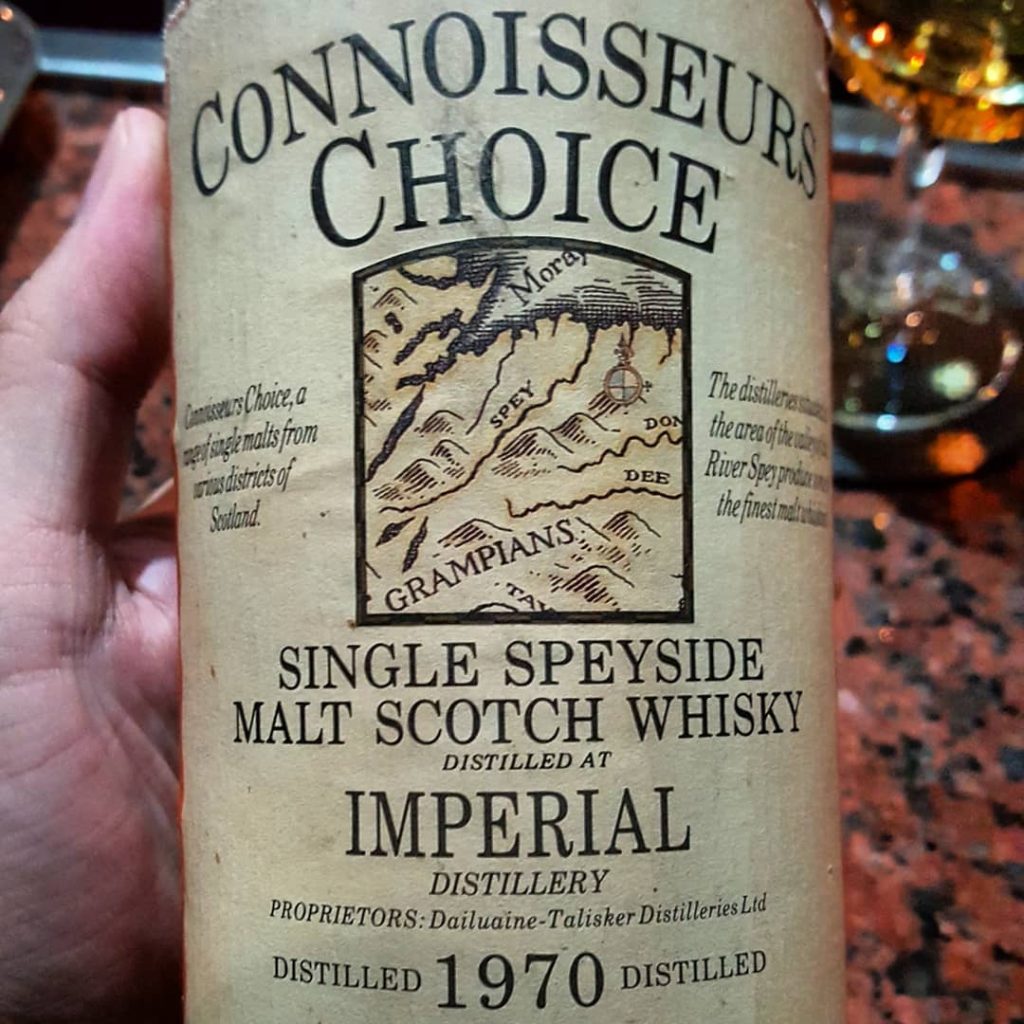
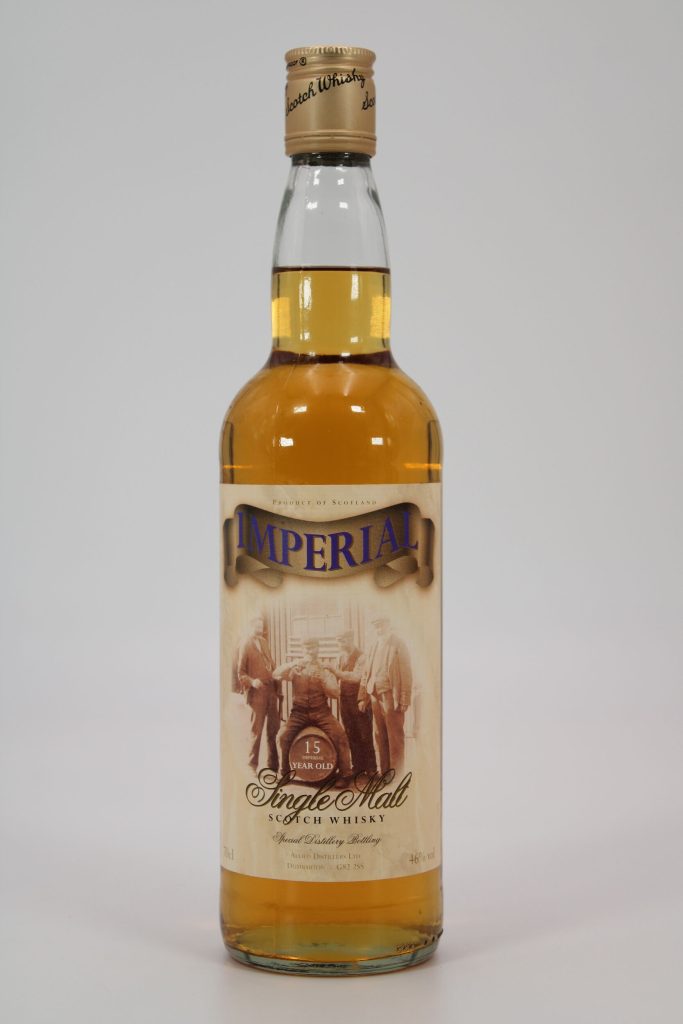
Official bottlings are rare although a 15yo 46% version appeared around 1999 alongside 5 other distilleries from Allied. Gordon and MacPhail notably regularly bottled vintage expressions for a period. Over time and through the changing owners Imperial was used for a variety of blends including Black Bottle whilst under Allied who later sold the brand to Highland Distillers, Old Smuggler, Teachers, Long John and Ballantines.

Mark Davidson, aka The Jolly Toper Profile

The Whisky Exchange “Perfect whiskies for sunset” – Scotch Whisky News

WHISKIES FOR SUNSET

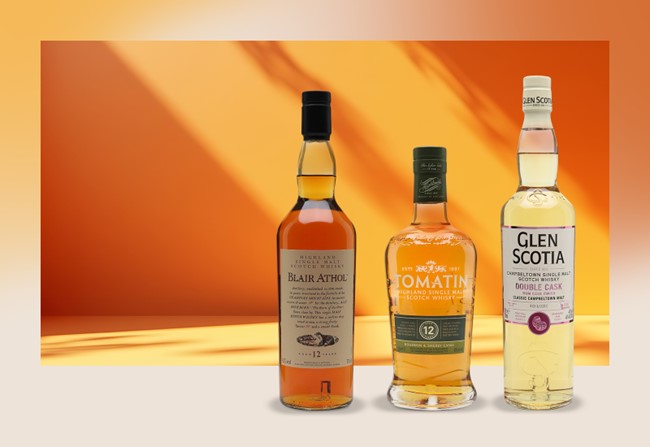
A summer sunset makes the perfect backdrop for the right dram, as you take time to slow down, reflect on your day and enjoy the cool evening breeze. We’ve gathered a pleasing selection of whiskies that complement the occasion. So as the sun scatters into hues of lavender and orange, you can savour the moment with just the right whisky.

 SHOP NOW 

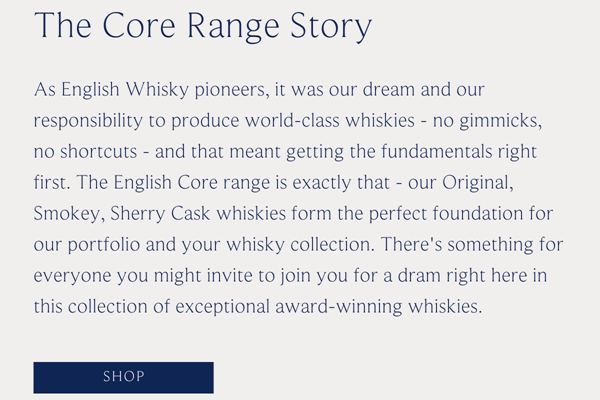
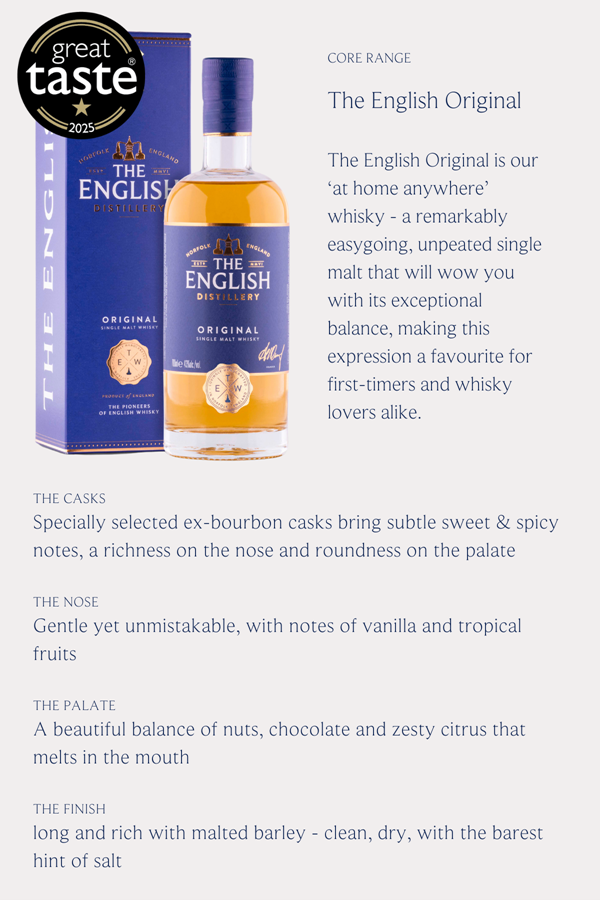
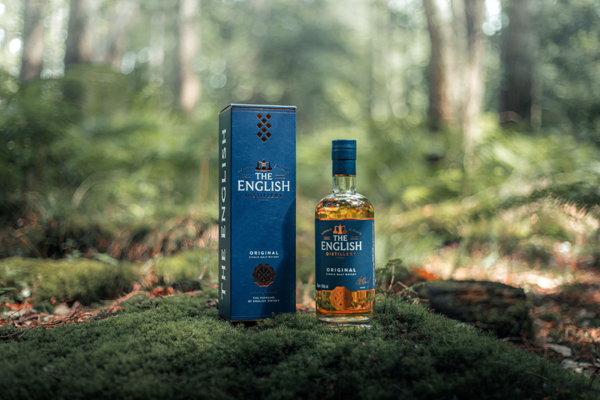
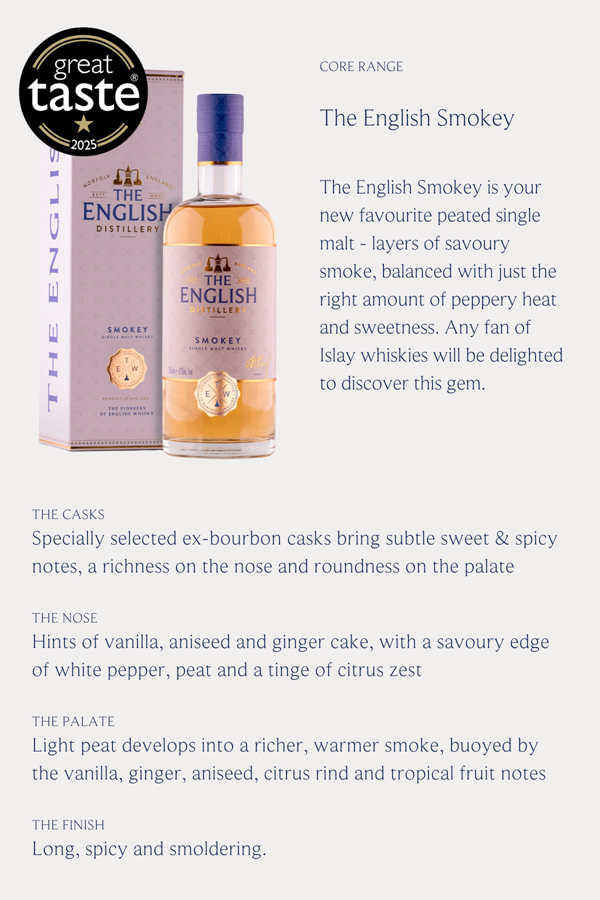
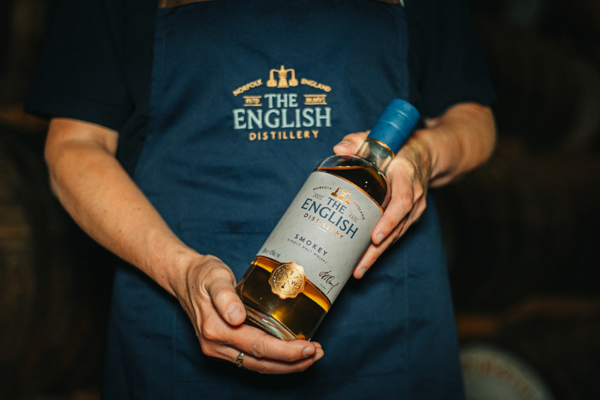
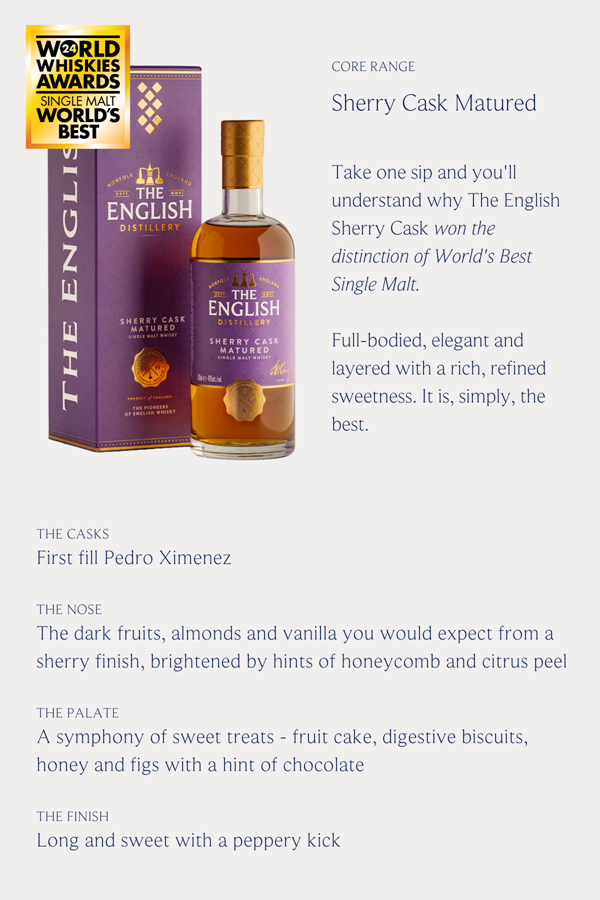
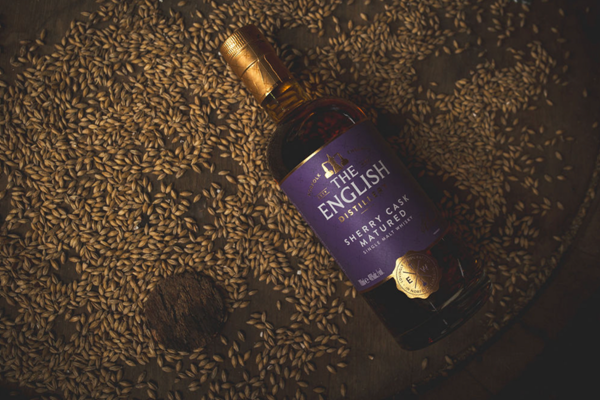
The English Distillery: Core Range Spotlight ✨ – English Whisky News

Distillery profiles: Glen Esk by Mark Davidson (aka The Jolly Toper) – Lost Scotch Whisky News

Distillery profiles: Glen Esk

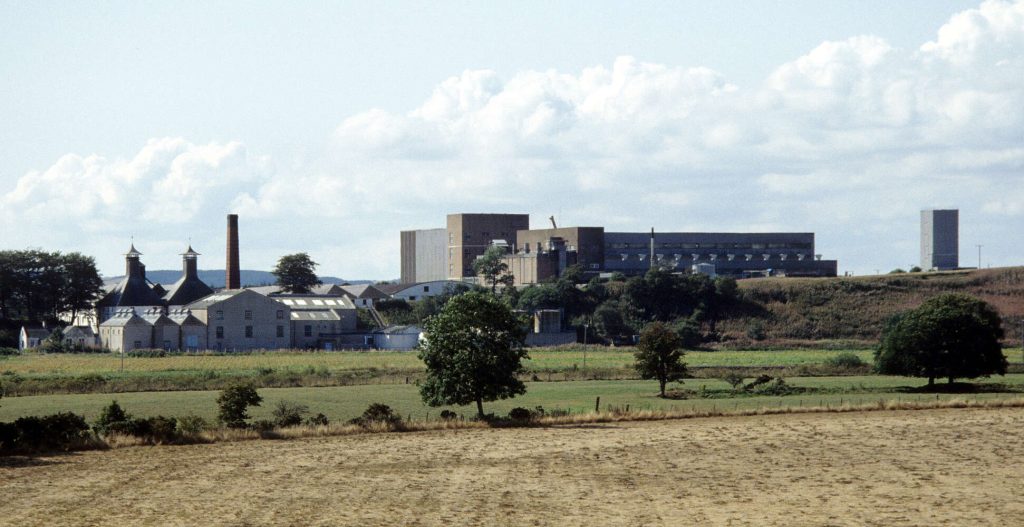
Glen Esk was commissioned in 1897 and was located just north of Montrose on the east coast of Scotland between Dundee and Aberdeen not far from Hillside station on the North British railway line. Dundee wine merchant James Isles and his business partner London wine & spirit merchants Septimus Parsonage combined to commission the distillery. The extant buildings on site were converted from a flax mill for the purposes of distilling, flax canvas being used for sails. The original choice of name was Highland Esk, ‘esk’ being derived from ‘uisge’ Gaelic for ‘water’.

Changing hands in the run up to WWI it was run by distillers J. F. Caille Heddle when Parsonage hit cash flow problems. At this point the name North Esk Distillery was adopted. There was a fire in 1910 although production resumed swiftly. Like other similar facilities the distillery was closed during the First World War and used as a billet by the army. After the war the halt to distilling continued although it was used for malting from 1919 after acquisition by Thomas Bernard & Co. The distillery was converted to grain production in 1938 when entrepreneur Joseph Hobbs, managing Associated Scottish Distillers Ltd part of Train & MacIntyre themselves a subsidiary of National Distillers of America took over. At this point the distillery’s name was changed to “Montrose”, employment level was around 30 staff. The promise of jobs and the boost to the local economy crucially persuaded the local council to grant wastewater disposal from the distillery into the area’s sewage network. This was a practice not appreciated by the fishing board which also had reservations over whether the system was adequate to deal with the additional pressure on the waste water facilities.

During WWII there was a forced closure between 1941 and 1945 and the distillery was once again used as a barracks by the military. DCL took over in 1954 although initially only making use of the warehousing and malting facilities. Grain distilling operations restarted in 1959 then there was a return to the making of malt whisky with the removal of the small column stills and installation of 4 new steam heated pot stills which started production in November 1964. At this point the distillery had yet another name change, this time to ‘Hillside”, the distillery was now under the wing of DCL’s Scotch Malt Distillers (SMD). Large drum maltings were added to the site in 1968 further increasing to 24 drums in 1973. Each drum held an impressive 31 tonnes of barley. DCL also had maltings at Burghead, Muir of Ord, Port Ellen and Roseisle. Floor maltings at their distilleries were stopped in the 1960s when rising demand called for output greater than could be met by traditional hand malting methods. Another name change, “Glen Esk” came on 1.5.1980 just 5 years before the distillery finally closed on 31.5.1985. The license was cancelled in 1992 however malting continues on site. Paul’s Malt Ltd acquired the plant in 1996, they were then taken over by Greencore Malt in 1998.

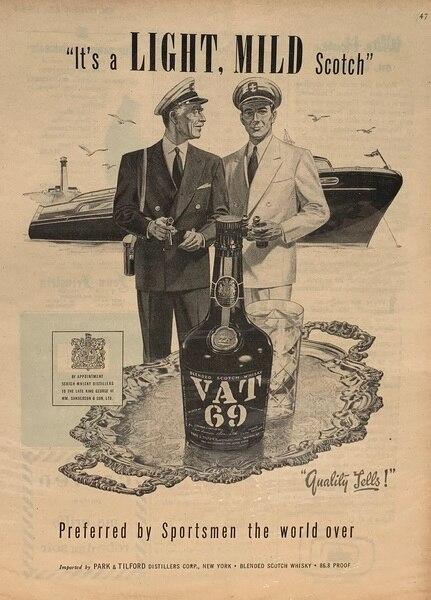
Only some crumbling warehouses remain of the distillery, the main buildings having been demolished in 1996. The make was associated with the successful blend Vat 69, the distillery being registered to brand owner William Sanderson & Sons of Queensferry during its DCL days.

Equipment at the time of closure: a copper domed mash tun, 8 wooden washbacks, 2 pairs of large stills which were based on Craigellachie distillery’s design. These were steam heated on installation in 1965, an early example of the method and had internal condensers. Output was 2.5ML. On-site storage was around 28,000 casks over 6 warehouse.

The last manager was G. Pirie, a Mr Dykes managed from 1965-1979.

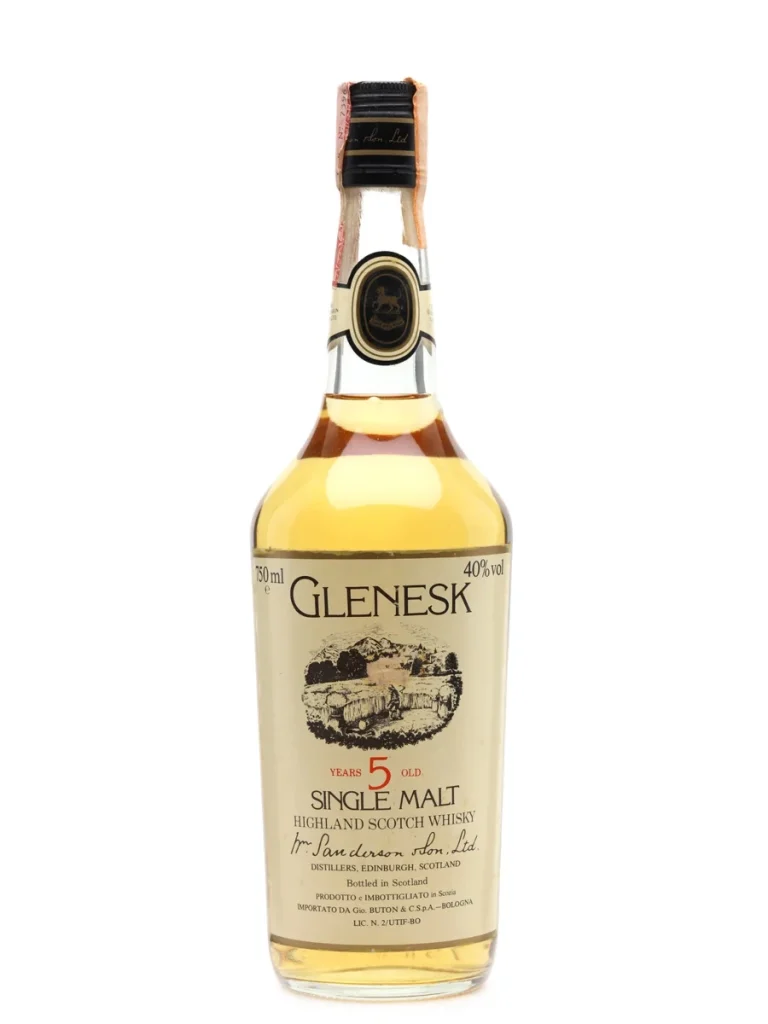
photo credit whisky.auction

Official bottlings : there was a 5yo for Italy and a 12yo for the domestic market.

The 25th anniversary of the maltings in 1983 was marked with the bottling of a 24yo 1969 Glenesk at 60%. In the Rare Malt range there were 4 editions of Hillside: a 25yo 1969 at 61.9%, two from 1970 both at 25yo one at 61.1% and the other 60.1% as well as a 1971 again at a high strength, 62%.

Mark Davidson, aka The Jolly Toper Profile
Islay Big Peat Hameldaeme from Douglas Laing – Scotch Whisky News

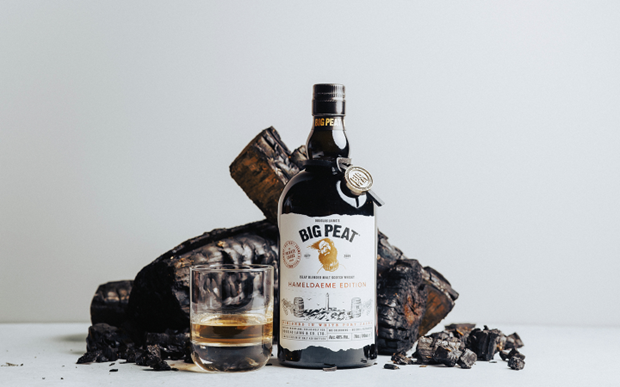
Big Peat White Port Cask Finish

Anticipate Islay peat smoke combined with spiced fruit, toffee, and honey, fused with waves of almond and vanilla. Islay. Big Peat Hameldaeme. ABV: 48% As part of Big Peat’s Private Cask Series, this specialist release of no more than 420 bottles has been created exclusively for Douglas Laing & Co. We have finished this rare marriage of Islay Single Malt in specially selected White Port Casks. The resulting Big Peat Blended Malt delivers a defined Islay peat smoke combined with spiced fruit, toffee, and honey, fused with waves of almond and vanilla. Sip, savour and enjoy this unique taste of Islay.

£54.54

Big Peat is a marriage of Single Malt Scotch Whiskies only from the island of Islay. With Caol Ila spirit bringing sweetness, Bowmore the perfect balance, Ardbeg a medicinal, earthy quality and Port Ellen, a degree of elegance, Big Peat represents all that is Islay in a bottle. Part of the Remarkable Regional Malts range, the ultimate distillation of Scotland’s Malt Whisky Regions.

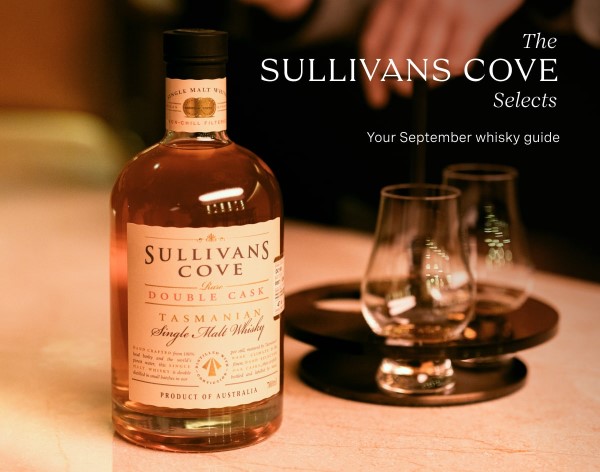
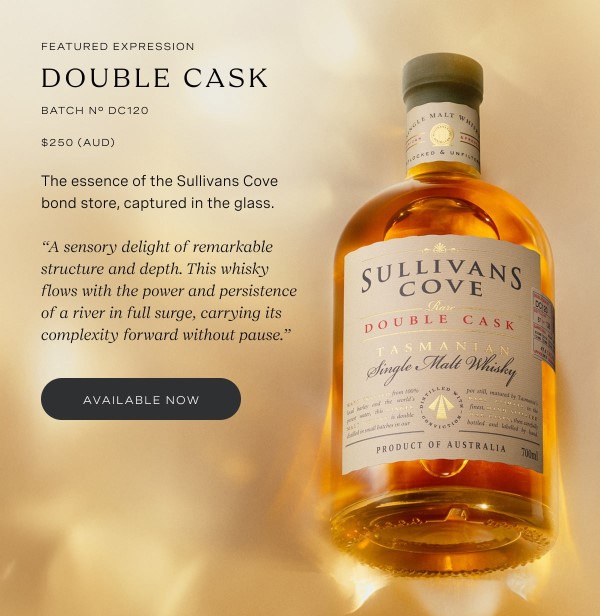
Start your Sullivans Cove collection with Double Cask – Tasmanian Whisky News

Start your Sullivans Cove collection with Double Cask

DramFool Bruichladdich 11YO at K&L California – Islay Scotch Malt Whisky News


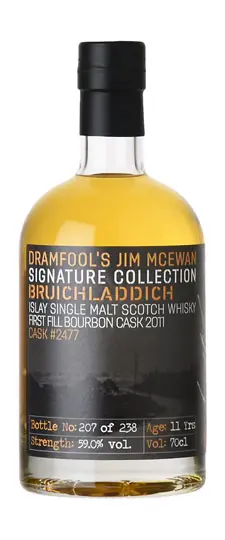
2011 Bruichladdich 11 Year Old “Dramfool’s Jim McEwan Signature Collection 5.1″ First Fill Bourbon Cask #2477 Islay Single Malt Scotch Whisky (700ml) (Previously $325) $225.00 View

Jim McEwan

Colour – Primrose Yellow, Aromas – Opens beautifully on a combination of Primrose, Myrtle, Lily, Marigold and mint. It’s like walking through the peat fires next to the Atlantic Ocean! Then the sweetness of the toasted barley and mellow oak drift in bringing with them little hints of bourbon spiciness laid down by the first spirit matured in the cask. “Its gentle on my mind” Taste – The spirit is balanced & restrained on the palate. This is pure Islay; No smoke, just barley & oak and time by the Ocean. The opulent flavours seduce the taste buds with mellow oak and barley sugars. The Maritime Islay character is with you all the way, fresh and clean and packed with passion & traditional skills from a dedicated team of Distillers who bring the magic to the spirit. No computers, no colouring, no chill filtration, just a special spirit from a special place.

According to the bottler: “Distilled on 11th July 2011 this whisky spent its whole 11-year life maturing in cask #2477. This maturation took place in a 1st fill bourbon cask from an unknown American Distillery. Bottled in July 2022 as Release 5.1 of the Jim McEwan Signature Collection, like all bottlings within the collection, it was bottled un-chill filtered, with no added colour, and at natural cask strength of 59.0% (as we always say, Jim would have it no other way!), it yielded only 238 bottles.”

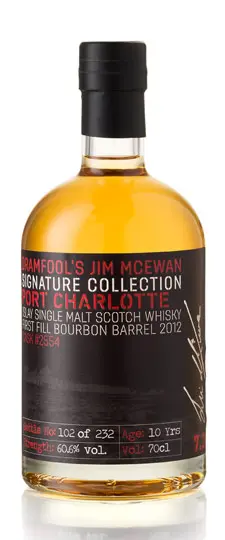
2012 Port Charlotte 10 Year Old “Dramfool’s Jim McEwan Signature Collection 7.2″ First Fill Bourbon Barrel Cask #2554 Islay Single Malt Scotch Whisky (700ml) (Previously $370) $258.10 View

Jim McEwan

Aromas – Opens on a beautiful combination of peat smoked barley with tantalising hints of lemon & honey then waves of heather in bloom drift by. Little notes of juniper and pine mingle beautifully with the spiciness of bourbon residue and sweetness of malt extract. It’s Islay at its best, in the early summer with the warm winds from the Atlantic Ocean caressing the barley fields and depositing the salty moisture on the land that give the barley its unique flavour. Palate – The sweetness of malt extract is in harmony with the smokiness from the peat and also the spicy residue from bourbon-soaked staves, it evolves slowly creating the flavour profile that makes this spirit unique. The most important element of this spirit is that it is distilled by Islanders who simply walk in the footsteps of their fore-fathers; no computers, no chemists, no BS, just passion pride and patience.
This release was distilled on July 18th, 2012 after spending its entire 10-year life maturing in cask #2554, a first-fill Bourbon barrel from the Jack Daniels distillery. It was bottled in February 2023 without chillfiltration and no added color, at a natural cask strength of 60.6%. Only 232 bottles were produced. Tasting notes from Jim McEwan: “Aromas – Opens on a beautiful combination of peat smoked barley with tantalising hints of lemon & honey, then waves of heather in bloom drift by. Little notes of juniper and pine mingle beautifully with the spiciness of bourbon residue and sweetness of malt extract. It’s Islay at its best, in the early summer with the warm winds from the Atlantic Ocean caressing the barley fields and depositing the salty moisture on the land that give the barley its unique flavour. Palate – The sweetness of malt extract is in harmony with the smokiness from the peat and also the spicy residue from bourbon-soaked staves, it evolves slowly creating the flavour profile that makes this spirit unique. The most important element of this spirit is that it is distilled by Islanders who simply walk in the footsteps of their forefathers; no computers, no chemists, no BS, just passion, pride and patience.”

Email: wine@klwines.com
Phone: (877) KL-WINES (Toll Free 877.559.4637)
K&L Wine Merchants 3005 El Camino Real Redwood City, CA 94061 USA
San Francisco, Redwood City, Hollywood CA


Powered by WordPress