News

The Whisky Exchange “Acorn to Oak Tree: How wood affects your whisky” – Whisky News

Acorn to Oak Tree: How wood affects your whisky

In honour of this year’s Whisky Show and its theme – The Journey of the Cask – we’ve put together a brief rundown of the various types of wood used in whisky maturation, and what effect they might have on spirit.

OAK

The primary function of oak in whisk(e)y – apart from the positives of being both readily accessible in lots of places that make whisk(e)y, and the fact that it’s pretty good, structurally, at being formed into shapes – is to impart flavour. But the way in which the modern whisky industry functions means that, rather than the wood itself, we’re increasingly familiar as consumers with how oak has been altered since its harvesting. Which is to say, what the barrel has previously contained.

The journey of the cask starts, however, with unadulterated wood, so let’s have a quick look at how different varieties might affect our spirits. Individual casks can be as different and varied as the trees they come from, but here are some general themes you might expect from different types of oak, which we’ve grouped not by individual species but as they’re likely to be labelled on your bottles.

American Oak

American oak is by far the most prolific wood when it comes to ageing spirits. Most of it, though, has been used to age bourbon first, before being sold to third parties to age everything from Tequila to Scotch single malt, to which it most often imparts flavours of vanilla and fresh fruit.

New, or ‘virgin’ American oak, however, offers up a subtly different, yet distinct flavour profile of its own: sweet-vanilla flavours are prevalent, but are balanced by spicy, woody notes, and any fruitiness is likely to be melded with a certain vegetal bitterness.

European Oak

European oak generally refers to wood originating in France or Spain. Whisky drinkers often encounter its influence through sherry casks, however it is also commonly used to age spirits like Cognac and Armagnac.

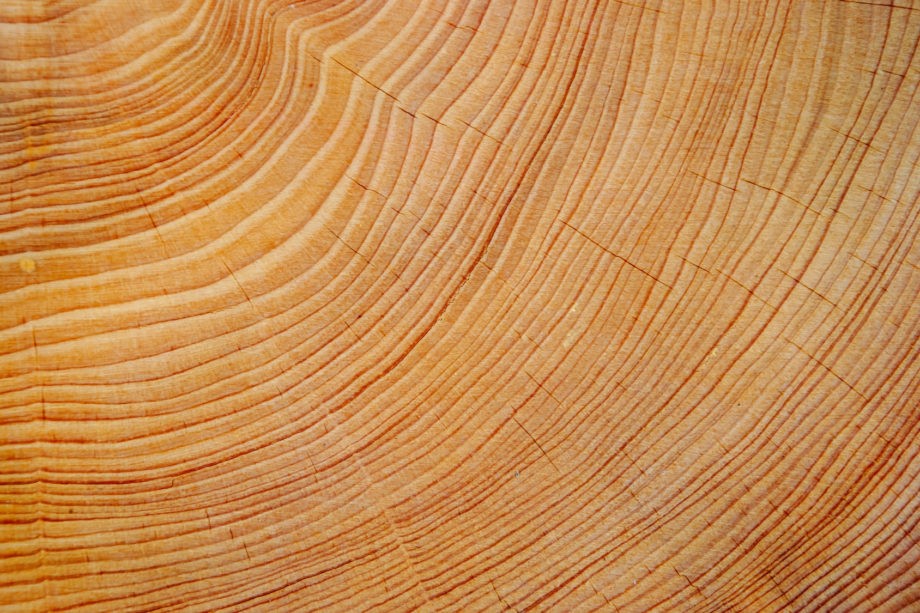
European oak tends to have a much tighter grain than American oak, leaving it less porous and thus taking a little longer to impart its flavour; but the flavour itself is also wildly different. Leaning less toward vanilla and fresh fruit and more towards tannins, stewed-citrus notes, a woody, spicy character and more sedate dried-fruit flavours, European oak is often said to lend spirits a ‘darker’, deeper profile.

Variation is also a huge factor in European oak, with different strains popping up all over the continent, and where Spanish oak might be relatively open and impactful on new spirit, denser strains like oak from colder climes such as Ukraine or Russia might have little-to-no porousness, and thus have a minimal impact on flavour.

Scottish Oak

Scottish oak is particularly rare when it comes to the ageing of spirits; the tree itself is scarce due to centuries of slow deforestation, and almost always wild rather than farmed, which can cause it to be particularly knotty and gnarly in nature, and thus difficult to manipulate and build into casks.

On the odd occasion when it is obtained by coopers though, Scottish oak is reckoned to provide spirit with a warming, spicy character – perhaps more akin to that provided by European than by American oak.

Irish Oak

Similarly to Scottish oak, Irish oak has seen very little exposure when it comes to whisky maturation – primarily, it would seem, due to lack of resource. Midleton Distillery’s recent experiments with it, however, suggest that this particular strain imparts sweet vanilla, caramel and chocolate notes, alongside a healthy dose of woody, oaky spice – differing quite considerably, it would seem, from its Scottish relative.

Hungarian Oak

Particularly uncommon in whisky maturation, the impact of Hungarian oak on spirit seems to strikes an intriguing balance between vibrant, oaky spice, soft berry-fruit flavours and more traditional European-oak depth.

Mizunara Oak

Often linked to the aromatic complexity of Japanese whisky, Mizunara wood is native to the Japanese islands. A protected and slow-growing species of tree, Mizunara oak casks are difficult to make and particularly rare. The effect such casks have on whisky is both spicy and softening, bringing notes of sandalwood, incense, coconuts and a drying, tannic edge.

OTHER

As people look for new ways to add different flavours to whisky, it’s not just oak that’s getting a look in on spirit maturation. There are a couple of examples out there, but our favourite ‘new’ wood finish type we’ve seen is…

Amburana

Native to the Brazilian rainforest, Amburana is one of the lesser-known woods to recently penetrate the sphere of whisk(e)y maturation – perhaps most notably in our 12-year-old, exclusive, amburana-finished WhistlePig rye whiskey.

Typically used to age cachaça – a Brazilian sugarcane spirit – amburana lends spirit a powerful tonka bean character; think vanilla turned up to eleven, rounded out with notes of aromatic coconut and cinnamon.

The Whisky Exchange “Understanding Cask Sizes” – Whisky News

Understanding Cask Sizes

How big is a barrel? Or a hogshead, or a butt? Casks play a big part in the making of some of the most famous wines and spirits in the world, but navigating what they are can be confusing. With many different types and sizes in use, each with its own name, how can you tell your hogsheads from your puncheons?

CASK SIZES IN A NUTSHELL

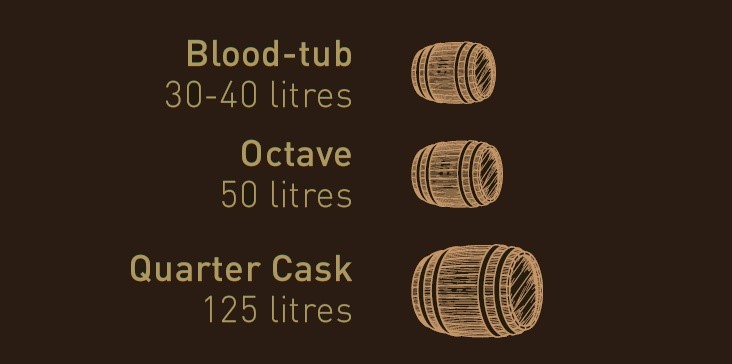
Blood-tub

Starting with the smallest casks, blood-tubs are between 30 and 40 litres in size and are almost never used commercially. Mostly these are used for private casks, allowing for a small, more manageable number of bottles for an individual, but the spirit’s intense interaction with the wood limits how long the maturation can be.

Octaves

Just a quarter of the size of an American standard barrel, these 50 litre casks offer intense interaction between wood and spirit, are mostly used for short maturations and finishes.

Quarter casks

A quarter of the size of a butt, these small casks offer a lot more interaction with the wood than larger casks, but still allow for longer maturation times.

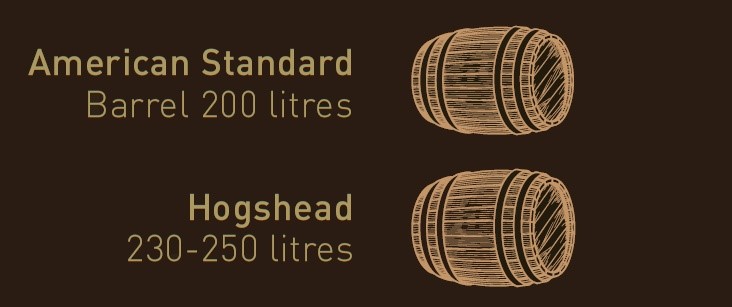
American Standard Barrel

Predominantly used to mature bourbon, these 200 litre casks are most commonly made using American white oak.

Hogshead

Once a measure for wine and ale, these 230-250 litre casks are nowadays popular for maturing whisky. The size of hogsheads means that there is less interaction with the wood than in smaller casks, allowing for a longer maturation period.

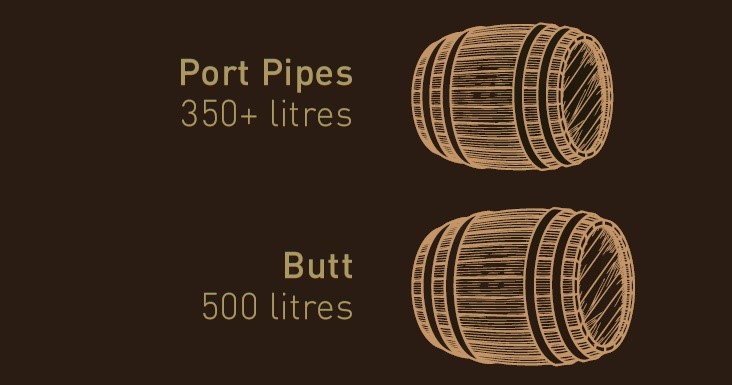
Port Pipe

Anything from 350 litres up, Port pipes rank among the biggest casks used and are usually around the size of a butt. Named for the Portuguese word ‘pipa’ – meaning cask – these are used to mature port, and have been used to mature whisky more and more in recent years.

Butt

Famously used to mature sherry, Butts are 500 litre casks that have found immense popularity with whisky makers and are often the largest casks in a dunnage warehouse.

Puncheon

At 500-700 litres in size, puncheons are possibly the most varied type of cask. Their size usually depends of what they are being used to mature – sherry puncheons tend to be larger than rum puncheons. On rare occasions, however, you might come across a puncheon that looks completely different, as the name is sometimes used to describe casks made from left-over barrel staves.

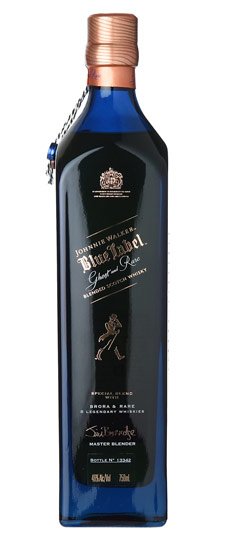
Johnnie Walker Blue “Ghost and Rare – Brora Edition” at K&L California – Scotch Whisky News

Johnnie Walker Blue “Ghost and Rare – Brora Edition” Blended Scotch Whisky (750ml) $249.99 View

The Whisky Exchange “Roll out the barrel: a brief history of casks” – Whisky News

Roll out the barrel: a brief history of casks

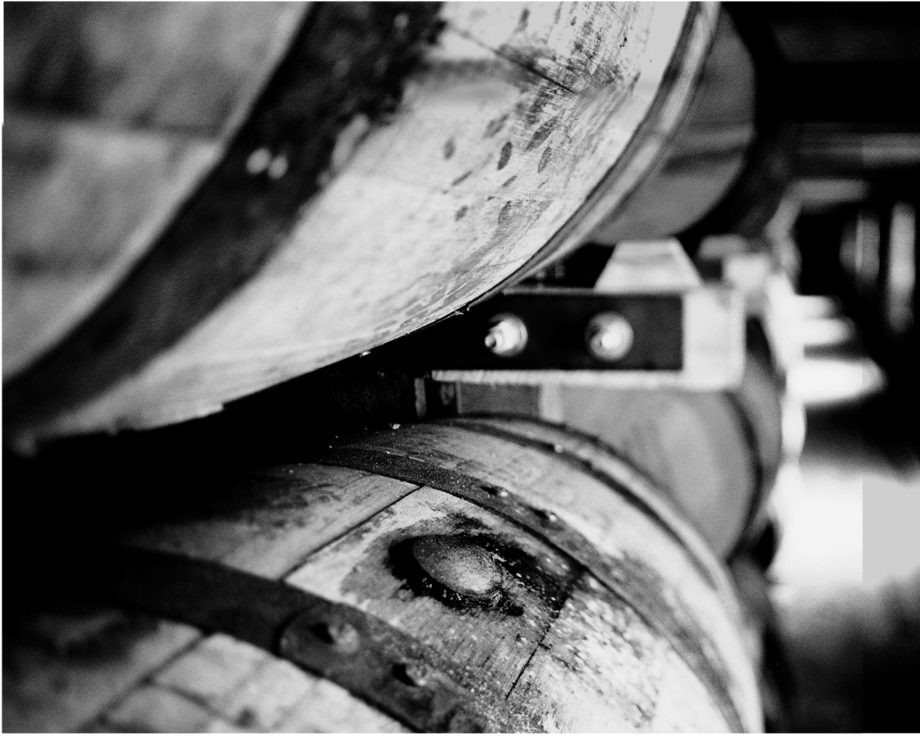
Barrels at Jack Daniel’s

We take casks for granted. In fact, we take all waterproof containers for granted. I think it’s fair to say that in all of human history it’s never been so easy to transport liquids, from the soon-to-be-less-ubiquitous plastic water bottles and coffee cups to IV bags and fuel tankers.

Yet despite all these inventions the cask is still special, and it’s been special ever since people smashed their amphorae with joy at the realisation they’d found something leak-proof that was easier to stack. So when did the cask, to which booze owes so much, come into use, and who invented it?

In the beginning…

…there was pottery. The earliest recorded booze humanity has thus far found was scraped off a piece of pottery that dated to around 7000 BC, and as anyone who’s seen one of those wibbly-wobbly Greco-Roman vases can attest, pottery was a preferred option for thousands of years.

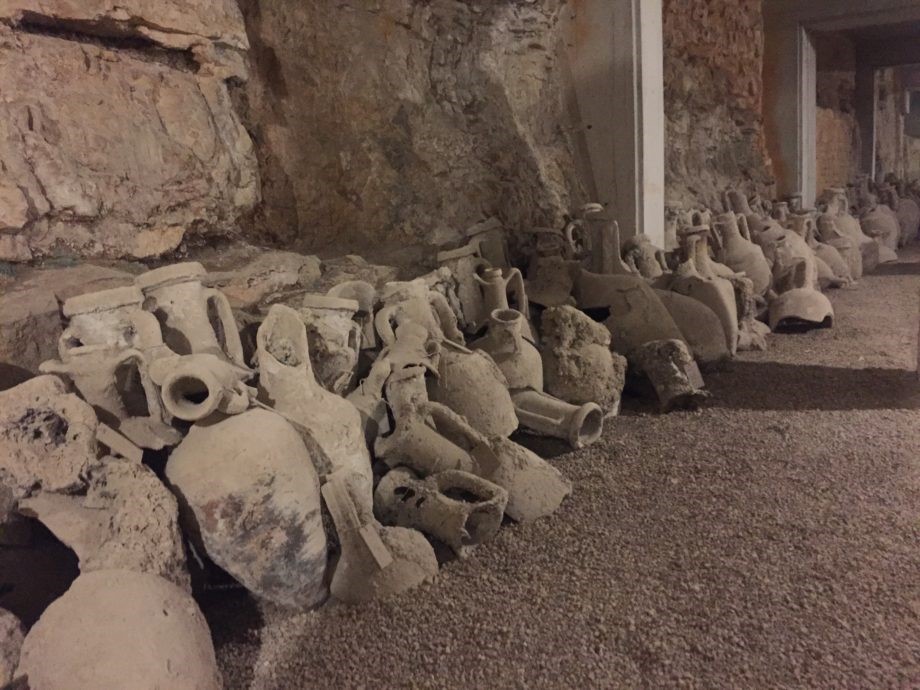
Amphorae under the Roman arena in Pula, Croatia. Image copyright: Caroline Roddis

There were two main types of pottery used. Alcohol was fermented and aged in large earthenware jars called dolia, while the smaller amphorae were used to store it. Their ability to be tightly sealed meant they could keep wine in good condition for years, and they are a key factor in the evolution of the wine cellar in the classical era. These vessels weren’t unique to ye olde swords and sandals times, either: similarly-shaped Georgian kvevri date back to at least 6000 BC, and amphorae crop up in China around 4800 BC too.

Yet pottery wasn’t the only option. Three-thousand-year-old tightly-lidded bronze vessels have been found in China, both in Anyang and the Yellow River Basin, containing wines made from rice and millet that had been flavoured with various herbs and flowers. And of course there was always the biblical favourite, the wineskin, ideal for smaller amounts and personal use – or maybe some kind of soggy hemp version if you were vegan.

Basket, vulture, cloth, basket

Or something…

Historians haven’t yet pinned down who exactly invented the cask, not least due to the unhelpful fact that wood degrades and old stuff repeatedly gets smashed up and / or used for other things over time.

The earliest traces that have thus far been found are from the burial place of Third Dynasty surgeon Hesy-Ra, which features carvings depicting barrel-like storage containers full of grain, dating them back to at least the 2600s BC. Wall paintings from 700 years later, found in the archaeological site of Beni Hassan, also depict similar tubs of raisins, albeit white-coopered ones – those with straight sides rather than the curves we normally associate with casks.

At this point, however, there’s no evidence of liquid involved – unless those raisins are an elaborate Egyptian metaphor for heavily-sherried whisky?

The oars of Babylon

Things get a bit easier to trace when we get past 500 BC, when writers get involved. (Writers, obviously, being the best of all people.) Herodotus, famed Greek historian and unexpected protagonist in the Assassins Creed game I’m currently playing, visited Babylon around 450 BC and described watching wine casks made of date palm wood be ferried down the river on row-boats.

It’s not clear, however, whether or not the Mesopotamians used hoops to secure these barrels, and given that they waterproofed their leather-and-willow row-boat hulls with pitch, it’s possible they did the same to their barrels. If anyone can correct me on this conjecture I’d love to hear from you.

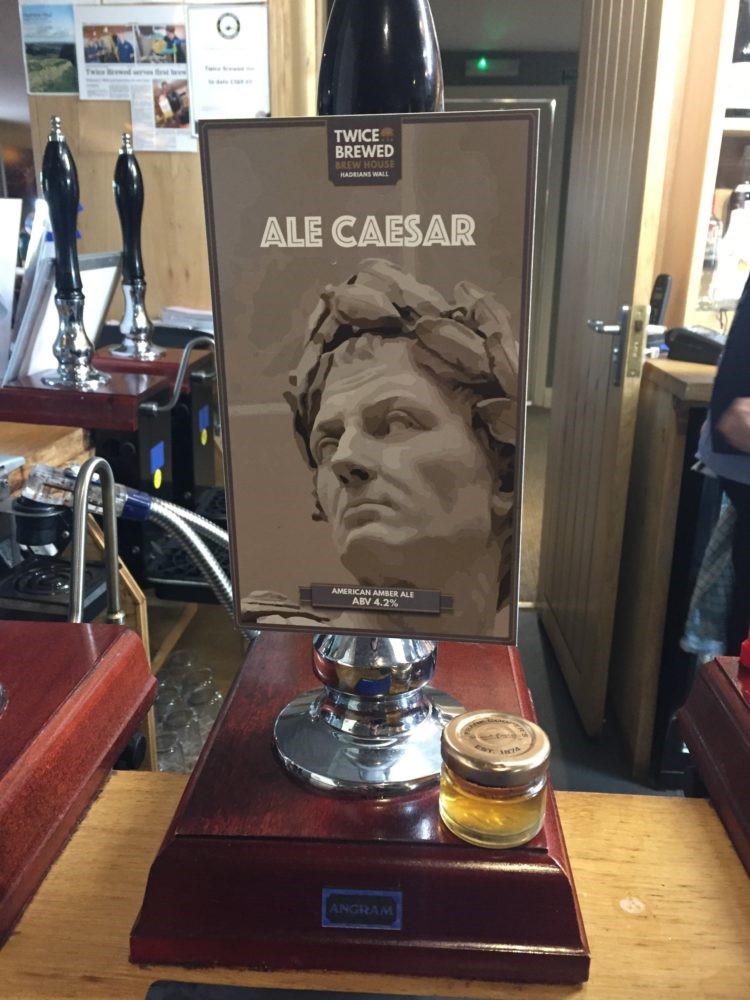
Ale, Caesar!

I stole this joke from the lovely Twice Brewed Inn brewpub in Northumberland

Just after BC turns to AC, we find a number of classical writers passing comment on the Celts and their wooden casks. Strabo, the Greek historian known for writing the Geographica, mentions the ‘wooden Pithoi’ of the Celts being larger than houses, coopered to an excellent standard, and sealed with pitch. Rome’s Pliny the Elder, meanwhile, states that ‘In the vicinity of the Alps, they put their wines in wooden vessels circled with hoops’.

It seems that, over the next hundred or so years, the Greek and Roman world adopted the wooden cask and in particular the hooped oak version they discovered from the Celts, for whom the art coopering was often a family or tribal secret, something that perhaps explains why they took some time to be adopted elsewhere.

It’s not hard to see why the switch from clay to cask was made: casks are less likely to break in transit, can be easily (ish) moved by rolling, and are easier to clean and reuse than pottery vessels. Like clay, wood also allows for the exchange of oxygen, and we can only assume the added influence of oak character on the booze inside was found to be an extra benefit.

Quo cadis?

Today it’s impossible to imagine a wide variety of drinks without the influence and benefits that casks bring to them. It would seem, however, that identifying the original creator of the cask is, at present, impossible – although during my research I’ve encountered some wonderfully inventive theories, including the idea that the first casks were made of bamboo. (Based solely on the idea that they’re hollow, waterproof and therefore most of the way there anyway.)

Yet what we can do, for now, is identify the people who should really be singled out for praise in all this: the coopers, who for millennia have been building and improving on this marvellously simple yet complex invention – one to which we, and our drinks, owe so much.

Royal Challenge whisky: pushing the boundaries for women in India – Whisky News

Royal Challenge whisky: pushing the boundaries for women in India


Over half a million people have signed the #ChallengeAccepted petition, including some of India’s top cricketers

In India, our local star brands each have their own unique cultural identity that connects with Indian consumers’ passions. Our Royal Challenge whisky connects through cricket, India’s most-watched sport. It owns the Royal Challengers Bangalore cricket team, who play in the Indian Premier League (IPL) and boasts India’s men’s cricket captain in its ranks.

Royal Challenge has a strong brand identity that is not afraid to take on stereotypes. Through purpose-led marketing, it created the #ChallengeAccepted campaign, which sets out to achieve a more progressive and inclusive space for women everywhere.

Royal Challenge is asking India’s millions of cricket fans a crucial question: given the enormous talent of India’s women cricketers, why shouldn’t they play in the same top sides as men? The campaign sees India’s leading women cricketers and India’s men’s team captain demand that the boundaries be pushed. And it is calling on consumers to get real and support the first ever mixed-gender T20 cricket match by voting on its website – aiming to reach one million votes.

And people are responding. There was a 300% increase in engagement in the brand’s social media channels in the first four weeks of the campaign and over half a million have so far votedin favour of holding the match in September 2019.

1 As of 24 July 2019.

Cadenhead’s International 27th Small Batch Release (August 2019) – Scotch Whisky News

International 27th Small Batch Release (August 2019)

This is the last bottling of the summer.
Well kind of – given Autumn really starts September 21st)

Before we start, let’s answer a typical question we get with every release! “Why some products have sold out before they get a chance to buy?”

This can happen as it will with the gold label bottles in this release. Especially Benrinnes 21yo we will only have 3 bottles available at best.

So why so few? It’s all down to how many bottles we get from a cask and in the case of the small-batch, it’s going to more than 9 shops, unlike the Authentic collection. Small Batch is a worldwide release so a lot more shops to divide the stock between.

We will be saying this time and time again in the future as much as we did in the past,
“Look beyond the label and age statement”, otherwise you can miss out on some incredible drams.

Be honest, how many of you will read this newsletter and see an age statement of say 8 years, and move on to the next ignoring the information about the cask! I know I do it even myself when the release sheets come in. I am like the rest of you – get excited about the older vintages or what gold label is coming in next? I then go back and read the notes, over and over again to make sure I have not missed anything.
Such as the amazing Paul John 6 small batch from last winter, or Benrinnes 23; that stunning small batch from a few months back.

Let’s not dwell on the things you can’t get, but rather on the things you can! First, let’s look back to Small Batch No 26, as it was the start of the summer releases with the most incredible selection of small-batch whiskeys.

The list below contains the ones we in at the London Shop think are the best examples of whisky you can get, especially if you are trying to put together a home bar or small tasting selection.
Far too many people get caught out trying to get the same style or older vintages because they see others do the same thing!

Variety is best especially if you want to avoid being so dedicated to one brand style or expression, just to realize that you need deeper and deeper pockets.

DAILUAINE 2004 14 Y/O 46% Pineapple with orange on the nose with butterscotch lemon and lime toasted almonds with a finish of mint and green tea – a truly enjoyable dram.

CAMBUS 1988 30 Y/O 46.1% Closed distillery. (yes we have another out today) One of the best examples of how good a vintage grain whisky can be with the most enjoyable palate of Rich soft Banana bread with raisin butter on the nose. The palate gives incredible hints of dark chocolate sauce with some ginger ice cream blueberries and summer fruits. The finish is superb with the perfect balance of honeycomb and praline, with sugar coated almonds, as this goes even smoother than we can list with any tasting note review.

Check out our web shop for more Small Batches you might have missed.
Now the Authentic Collection!

GLENTAUCHERS 2007 12 Y/O 59.3% Nose: Vanilla cream sponge, spearmint and a hint of rosemary. Taste: Very creamy but with satsuma notes, dried bananas, toffee sweets and strawberry yoghurt. Finish: Long and creamy with inter mingling fruits. This is one of the most enjoyable younger vintages we have had from this respected distillery.

FETTERCAIRN 11yo (2007) 57.6% Nose: Milk chocolate, sponge cake and lemon curd. Green olives and pecans. Taste: Spiced apple chutney, lemon meringue pie and hints of cranberries and greek yoghurt. Finish: Toasted pine-nuts, marshmallows and custard creams with a touch of eucalyptus.What a great dram this turned out to be and a worthy addition to the range of vintages we have released over the years from this distillery.

GLEN SPEY 17yo (2001) 54.5% Nose: Cinnamon buns, apple strudel and dried fruits with a hint of lemongrass and dandelions.Taste: Creamy and nutty, nougat, salted peanuts and the some mint notes and dry white wine. Finish: Lemony with hints of flint and basil.

DISTILLERY FOCUS
Glen Spey distillery founded as the Mill of Rothes distillery in 1878 by James Stuart & Co, who later in 1886 purchased the Macallan distillery. The distillery was sold around 1887 for the sum of £11,000 – ignoring the inflation, sounds less than a price of a modern car! Around 1920, the distillery has the obligatory fire that seems to have happened to so many distilleries. This malt is one of the main components of some of the world’s great blends, being one that any master blender should enjoy using when crafting a blend.

GLEN SPEY 2001 17 YEARS OLD 53.3% VOL – 70CL – SPEYSIDE
NOSE: Custard creams, hints of pork crackling, candy floss and traces of peanut butter.
PALATE: Coconut flakes, dried banana chips, hint of pickled ginger, watercress and milk chocolate with yoghurt covered raisins.
FINISH: Long and creamy with hints of wasabi and green tea.

AN IRISH DISTILLERY SINGLE MALT 10 YEARS OLD 47.4% – 70CL – Distilled in 2006
NOSE: Vanilla with pineapple, almonds, peaches and lemongrass.
PALATE: Creamy with tropical fruits, kiwi, papaya and passion fruit. Hints of mango and toffee sauce.
FINISH: For something so fresh the finish is big and syrupy with bags of fruit. Dangerously drinkable.

BALBLAIR 2011 8 YEARS OLD 57.8% VOL – 70CL – HIGHLAND
NOSE: Rich fruity nose, dried fruits with hints of cinnamon and nutmeg.
PALATE: Thick and chewy, obvious sherry influence but still with some toffee in the background. Dark chocolate shavings with raspberries and dark cherries.
FINISH: Long dry sherry notes with some marzipan and maraschino cherries and gingerbread.
This was originally a Puncheon that was re-racked into two fresh sherry hogsheads in August 2017, before being vatted together for this bottling.

GLENROTHES 1996 22 YEARS OLD 50.1% VOL – 70CL – SPEYSIDE
NOSE: Eucalyptus, orange zest, peach skins and green olives.
PALATE: Lime zest, mango, lychee and apricots with golden syrup and butter popcorn.
FINISH: Big and fruity but lots of golden syrup and soft flinty notes.

KNOCKDHU 2010 9 YEARS OLD 56.2% VOL – 70CL – SPEYSIDE
NOSE: Gingerbread smothered in melting salted butter, apricot yogurt with pineapple fritters and banana bread.
PALATE: White chocolate buttons, lemon drizzle cake, and almond flakes. Soft lime zest and green apple skins.
FINISH: Spiced apples with runny honey and butterscotch sweets.

ORD 2006 13 YEARS OLD 53.3% VOL – 70CL – HIGHLAND BOURBON / MADEIRA WOOD
NOSE: Vibrant fruits, strawberries, raspberries, red-currants and banoffee pie.
PALATE: Mix of creamy vanilla along with sweet syrupy fruits. Marzipan, cola cubes and lemongrass.
FINISH: Mixed fruit yoghurt with whipped cream and pine nuts
This is a vatting of one bourbon Hogshead of 2006 Ord, married with another cask of 2006 Ord, that had been re-racked in a Madeira cask since 2017.

CAMBUS 1991 28 YEARS OLD 55.8% SINGLE CASK CLOSED DISTILLERY
NOSE: Honey, spice, marshmallows and crunch nut cornflakes. Creamy with a lemon balm note running through the middle
PALATE: Caramel wafers, honeycomb, satsumas and peaches in syrup.
FINISH: Long lingering honey, apple juice and star anise.

GLENBURGIE 1992 27 YEARS OLD 48.8% VOL – 70CL – SINGLE CASK
NOSE: Oily and herbal, fennel, fried sage and a hint of coriander – mix with olive oil, lemongrass, and chorizo.
PALATE: Some dry smoke mixed with ripe fruits, kiwi, mango, peaches, and dried apricots.
FINISH: Long lingering syrupy fruits with a hint of dry smoke.

BOWMORE 2002 17 YEARS OLD 53.6% VOL – 70CL – ISLAY SINGLE CASK
NOSE: Really creamy and oily, with paraffin smoke, lime pickle, and petrol lawnmowers.
PALATE: Dry smoke gives way to initially sour apples then becomes creamier with gooseberries and licorice.
FINISH: Oily smoke and fruit – a classic.

BENRINNES 1997 21 YEARS OLD 58.7% VOL – 70CL SPEYSIDE SINGLE CASK
NOSE: White crab meat, black olives, overripe fruits and pork pies.
PALATE: Olive oil, cream cheese, pineapple, a hint of paprika.
FINISH: Long and chewy a little dusty, some popping candy and orange bitters.

CREATIONS 1987 31 YEARS OLD 50.1%VOL – 70CL – BLENDED MALT
NOSE: Juicy fruits, faint warming spices and apricot jam.
PALATE: Proper old school mouth feel, chewy and fruity with passion fruit, guava and blood orange.
FINISH: More chewy fruit with soft spice that fades away – a dram to savour. A blended malt bottled from a single cask that was married together in 2004.

That’s it for now! We might be in touch again soon, as we head into the new whisky season of 2019/20 – oh and we might be in touch with some other exciting news as well !! For those who like a surprise or 2 keep checking the web shop around September 14th you never know what will arrive.

All the best Cadenhead’s London

Cadenheads Whisky Shop & Tasting Room
26 Chiltern Street, London, W1U 7QF


Springbank Society Newsletter: August 2019 – Scotch Whisky News

Springbank Society Newsletter:  August 2019 

We’re delighted to say it is time for the next Society Quarterly Newsletter. Throughout this email you will learn about Distillery developments, get the first look at upcoming releases and follow the Sales Team event schedule.

As we approach the end of summer we are busy bottling our core range and our exciting new release of Springbank 15 year old Rum Wood, which we’re sure you are all eager to try. Campbeltown and our distilleries have enjoyed being busy with many summer visitors who we suspect are bringing the good weather.

This month we have details of where our Sales Team will be travelling to over the next few months and a round-up of distillery news, letting you know what has been happening (and what we are planning for the future) at Springbank and Glengyle, in Campbeltown and beyond.

Distillery News

We enjoyed having a variety of scholars on site over 10 weeks to complete the whisky school, with this year being the first to have the ‘blend your own’ Springbank as part of the week long learning. June 3rd saw our first ever ‘Barley to Bottle’ tour guests, which was a great experience for staff and guests alike, and we look forward to welcoming many more over the coming years.

Production has continued at Springbank, with malt floors having to be worked extra carefully as we move into the hottest part of the year and the challenge of keeping the germination temperatures under 20 degrees celsius becomes more difficult. The traditional way of doing things invariably involves a lot of extra work, but it’s definitely worth it.

Mashing and distilling at Springbank has settled down after a few equipment issues earlier in the year. The 1,000th cask of 2019 was filled on the 11th of June and we are on course to fill around 1800 casks this year, which means that progress on the new bonded warehouse is important so that we have somewhere to house them in the coming years. We expect the new warehouse to be completed sometime in 2020 but it has been fascinating to watch the removal of the old ruined walls, the excavation and piling of the ground, and now the foundations going in.

Glengyle continues to wait patiently until we return to production in September, the equipment is receiving some TLC with washbacks one and two due to be replaced in August and the boiler serviced around the same time.

Sales Team Events

We kicked off the summer with our Malts Festival where lots of fun was had by all, especially the Sales Team. I’m sure you are all still thinking about that Springbank Society tasting. We would like to give everyone a massive thank you for joining us at our Malts Festival and we hope to see you next year.

At the beginning of May we welcomed Cara Wilson to the Springbank and Kilkerran Sales Team. Cara is a local girl from the island of Gigha and was part of our whisky school when she was studying at Campbeltown Grammar School. Last summer Cara worked on the Springbank Tours Team before returning to University to complete her degree in International Business Management. We have now enticed Cara back to Campbeltown to join our Sales Team and she is excited to meet all the Springbank and Kilkerran supporters on her trips home and abroad.

Once again we have been travelling far and wide to share the story of Springbank and Kilkerran. David has been across the globe from South Africa to the west coast of the USA. Melanie continued our Kilkerran focused tours in Germany and France where she survived 40 degree weather. Although it was when she returned to sunny Campbeltown Melanie managed to get sunburnt on the golf course. Ronan had many Kilkerran adventures to Seoul, London and finishing on the Cannongate hosting a tasting with the Cadenhead Edinburgh shop. Grant got to the Ayrshire coast for the day.

In the upcoming months you’ll be able to catch us all around the world again.

August:   

25th – 1st: David Allen will be jetting off to China on Kilkerran duty, with further visits to Hong Kong and Macau.

31st: Grant Macpherson will be in at the Spirit of Alba Gin & Whisky Festival in Kirkintilloch with our Kilkerran products.

September:

2nd – 4th: Cara Wilson will be in Amsterdam visiting a few top mixologists with Journalist, Sharon van Lokhorst, along with some Springbank tastings around Amsterdam as well.

6th – 7th: Ranald Watson and Cara Wilson are in Malzfabrik, Berlin presenting Springbank and Kilkerran masterclasses at the beer and whisky festival.

7th: Grant Macpherson will be dramming under the railway arches of ‘the Loco Klub” at Whisky Bristol’s Underground.

14th: Melanie Stanger will be at Oban Whisky Festival with Kilkerran, while Grant Macpherson visits Aberdeen Whisky National.

19th: Melanie Stanger will be holding a Kilkerran tasting at The Clydeside Distillery.

22nd: Melanie Stanger and Cara Wilson will both be in Paris at Salon Dugas whisky show presenting Springbank and Kilkerran.

27th – 29th: Ranald Watson, David Allen, Grant Macpherson and Cara Wilson will be at The Whisky Show in London pouring some Springbank and Kilkerran drams.

October:

5th: Grant Macpherson will be at the Whisky Lounge in York, while David Allen is at the Alhambra Whisky Festival both presenting Kilkerran.

4th – 5th: Cara Wilson will be flying off to Geneva Whisky show to present Kilkerran.

8th – 12th: David Allen will be visiting Denmark for a Springbank tasting tour. While Cara Wilson will be travelling around Belgium for a Kilkerran tasting tour.

11th: Grant Macpherson will be in Kirkcaldy for the evening holding a Springbank and Kilkerran tasting.

12th: Grant Macpherson will be in Dundee at the Whisky Social presenting Kilkerran.

17th: Melanie Stanger will be attending the M&P Festival in Warsaw with Springbank and Kilkerran.

19th: Grant Macpherson will be pouring Springbank and Kilkerran at Wee Dram Fest in Bakewell.

23rd – 25th: Cara Wilson is flying off to Denmark to host a series of Kilkerran tastings.

23rd: Grant Macpherson will be attending the Inverarity121 Wine & Spirits Fair in Glasgow.

25th – 26th: Grant Macpherson is at the Manchester Whisky Lounge for Kilkerran.

28th – 29th: Cara Wilson is in Austria at Vienna’s Bar & Spirits Festival and then will be hosting a Springbank tasting in Innsbruck on Tuesday 29th.

27th – 3rd November:  Melanie Stanger is jetting off to Alberta Canada, holding tastings in Willow park and presenting Springbank and Kilkerran at Calgary Co-op Whisky festival.

November

1st – 3rd: Springbank and Kilkerran will be presented at Whisky Life Prague.

2nd: Grant Macpherson will be showcasing Kilkerran at Nottingham Whisky Lounge.

9th: Grant Macpherson and Donald Brown will be enjoying Glasgow Whisky festival, pouring both Springbank and Kilkerran.

9th – 10th: Cara Wilson and David Allen are in Belgium at Spirits in the Sky with Springbank and Kilkerran stands and a Springbank Masterclass. The rest of the team will be in both Villlngen Whiskymesse and Whisky Live Taipei.

16th: Grant Macpherson will be at Leicester Whisky Festival, whilst Melanie Stanger is at Liverpool Whisky Lounge both presenting Kilkerran.

18th – 22nd: David Allen will be flying to Israel to hold a series of Kilkerran tastings.

22nd – 23rd: Grant Macpherson is in Dublin pouring Kilkerran and Springbank at Whiskey Live. 

22nd – 24th: The team will be presenting Kilkerran and Springbank at Interwhisky in Frankfurt.

28th – 30th: Melanie Stanger and Cara Wilson will be jetting off to Switzerland to join Whiskyschiff in Zurich.

30th: Ranald Watson and Grant Macpherson are at Drambusters in Dumfries pouring Kilkerran and Springbank.

Events taking place further in the future will be included in the next Quarterly Newsletter and, please remember, the Events Section of the Springbank Website is updated whenever we have new information to share with you all.

Springbank Website – Events Page

New Releases

As we approach Autumn we have some exciting new releases and a brand new addition to our core range.

September/October  2019 

Springbank 12yo cask strength.

The next addition of our 12yo cask strength series will soon be available.  This batch will depart from the usual sherry dominant maturation recipe, with a greater bourbon influence.

Springbank 15yo Rum Wood. 

An exciting rum matured Springbank bottled at cask strength.  9,000 bottles will be available worldwide.

Kilkerran Peat in Progress – Batch 2. 

The next installment of Kilkerran’s heavily peated series is almost ready to bottle and we can’t wait for you all to try it.

Given the uncertainty of Brexit on 31st October, we are also looking to bring forward a number of our winter releases to ensure we can despatch them to our customers all over the world without delay. These will include an exciting new whisky for our core range; Longrow 21yo! We love it and can’t wait for you to try it too.

There will also be new editions of Springbank Local Barley and Kilkerran 8yo cask strength. Look out for Society alerts and social media updates for more information on when these will be available.

We are sure you will all be anticipating the next Society bottling which is scheduled later this year. We are currently pilfering samples from our warehouses to find something suitable; any special requests?

Kilkerran 

This year we are celebrating Glengyle Distillery’s 15th anniversary after we re-opened it in 2004. To commemorate our achievement this we are releasing a series of 15 year old single casks to a number of selected markets. Some of you may also have seen the 15 year old Kilkerran rum wood which was exclusively sold at our Springbank Distillery and Campbeltown Cadenhead shop.

Glengyle distillery tours are now stand alone and no longer an added extra to our Springbank tours, which has been popular with Kilkerran fans. Further a field our sales team have been busy with Kilkerran tasting tours bringing along past and future releases to share the evolution of Kilkerran.

Social Media

You can follow Springbank on Social Media:

Facebook – Official Springbank Whisky

Twitter – @Springbank1828

Instagram- springbank1828

You can follow Kilkerran Single Malt on Facebook and Instagram too.

Slainte

The Springbank Team

To join the Society contact them at Springbank Society society@springbank.scot


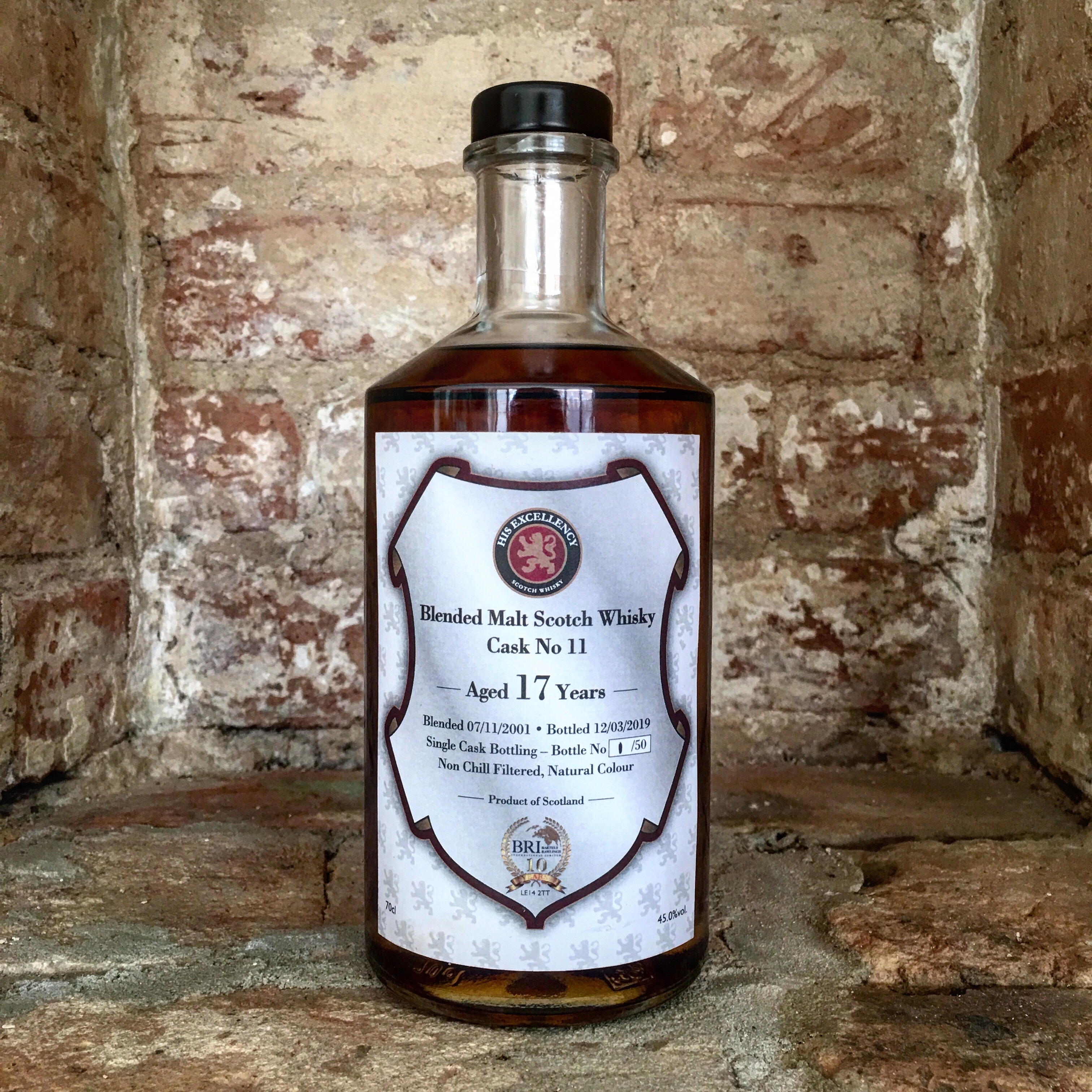
Blended Malt Scotch Whisky – Aged 17 Years at Bartels Whisky – Scotch Whisky News

– Blended Malt Scotch Whisky –
Aged 17 Years

£36.00

Blended 2001 – Bottled 2019 – 45.0%vol – Cask No. 17- 50 bottles

We are so excited to release our new bottling.  To celebrate ten years of brokering as Bartels Rawlings Int Ltd.  Natural colour, cask strength (as always) and from a single cask (cask no. 17) just 50 bottles are available for sale on our website.

All bottles are Free, Next Day Delivery.
(Anything purchased over the bank holiday weekend will be despatched Tuesday for delivery Wed in UK)

Abbey Whisky “Fantastic Whisky Specials | Shipping Sale!” – Whisky News

We’re continually adding great offers to our whisky specials page, most are very limited and don’t last for long.

Make sure you head over to Abbey Whisky daily and catch some fantastic deals!

Glenrothes 1988 Connoisseurs Choice – Save £18
Octomore 10 Year Old 3rd Edition –  Save £16
The Perspective Series 21 Year Old –  Now £79.98
GlenAllachie 18 Year Old – Save £13.20

Shop all whisky specials

Shipping Sale

We ship worldwide daily!

Netherlands, Belgium, France, Germany, Denmark… £9.00

Sweden, Italy, Spain, Portugal  £16.00

Breakthrough products that recruit new consumers – Scotch Whisky News

Breakthrough products that recruit new consumers


“White Walker by Johnnie Walker” recruited new consumers to the brand

We look to innovate in three ways: recruit, re-recruit or disrupt. Our focus is increasingly on ‘recruit’ innovations that are grounded in strong consumer insights and bring new consumers into our brands.

Our willingness to take our established brands to new places is helping whisky win new consumers. The launch of the limited edition ‘White Walker by Johnnie Walker’, a collaboration with HBO’s hit TV series Game of Thrones, shows that with the right balance of consumer research, insight and creativity a 200-year-old brand can reach a new audience. In the run up to the final series of Game of Thrones, Johnnie Walker became the most talked-about whisky on social media1.

We also launched our Ketel One Botanical innovation in the United Kingdom this year. It is a 30% ABV spirit drink infused with real fruit, bringing Ketel One to new consumers in a new occasion for the brand, the early-evening occasion. In the United States, it was the industry’s top-selling spirits innovation in the 2018 calendar year2.

1Sprinklr, 10.4 – 16.4.19

2Nielsen.


Powered by WordPress