News

The History of Johnnie Walker with Dr Nick Morgan – Scotch Whisky News

The History of Johnnie Walker with Dr Nick Morgan

For those in the drinks industry and numerous whisky fans around the world, Dr Nicholas Morgan is a well known figure. With a thirty-year career working for Diageo – starting there even before they company took that name – he’s been most recently known as the public spokesman for the world’s largest whisky maker. However, the past few years have seen him take a break from his role as ‘Diageo’s Human Shield’, to quote the Whisky Sponge, to focus on a different project: writing the history of Johnnie Walker ready for its 200th birthday – A Long Stride: The History of the World’s No.1 Scotch Whisky.

We sat down with Nick before the book hit the shelves to find out more about how a history lecturer became one of the best-known voices in whisky, and what lessons the rise of Johnnie Walker has for both the whisky industry and whisky drinkers.

The origin of Dr Nicholas Morgan

Billy Abbott: Your background is in history and academia – how did you get involved with Scotch whisky in the first place?

Nick Morgan: I was teaching Scottish history at Glasgow university and had been away on a sabbatical doing a piece of work on Glasgow urban history, and I came back and – most people may not understand this now as it was 1989 – I had a massive pile of correspondence on my desk. I spent about two days sifting through all this stuff, and in the middle of it was a letter from a company called United Distillers asking me if I’d like to come down to London to talk to them about taking the position of archivist with the company, which I found quite intriguing. So, I went down and spoke to them and was offered the job of setting up a historical archive for United Distillers.

I was taken on to do that job and I wasn’t an archivist, so I was lucky enough to be able to appoint proper archivists to come and work for me, and spent about three-odd years putting that together. But in addition to doing the archive work, I was pulled into doing marketing work right from the start, and after three or four years discovered that I wasn’t an archivist any more and had some sort of marketing role in a department in London. The rest is history.

A Long Stride: a long-awaited project

BA: How did the book come about?

NM: I’ve had the idea of writing a book almost since joining the business thirty years ago, and certainly in my rather meagre annual performance reviews, when I had to state my ambitions, I can honestly say that for about the past twenty years I’ve simply put every year ‘Write the history of Johnnie Walker for 2020’. So, I made it very clear to people that’s what I wanted to do.

I was also able to talk to some really bright people and explain to them why it would be a good idea to have a history of Johnnie Walker, and people like David Gates, who was running Scotch whisky for Diageo at the time, was a very keen sponsor of this. So the only sort of disagreement was when I would start doing it, and I would have loved to have started a bit earlier than I did, because I could have done a bit more work.

I started about three-and-a-half years ago, spending about 85% of my time researching and then writing the book.

Researching the book

BA: Where did you find the information?

NM: Obviously, the starting point was the Diageo archive, which is a phenomenal resource and brilliantly managed by a team of professional archivists – it’s best in class. In that archive, the Johnnie Walker collection is by far the largest, albeit far from complete, but it’s absolutely huge. In that collection we have a few fragmentary very early records which were very important for piecing together the early history of the business.

From 1857, when Alexander Walker – who was John Walker’s son – took over the business, we have his annual account book, and that’s every year’s stock taking. At the beginning that’s quite detailed stock takes, but as the business gets bigger and bigger and bigger, you can’t fit it all in the book. So, that’s invaluable for seeing how a grocery business that blends whisky grows into an international whisky business in twenty or so years, which is quite phenomenal.

We have correspondence from Alexander Walker in that collection as well, and a whole range of other stuff once it becomes a limited company and there was more legal obligation to keep records. Lots of blending material from the twentieth century, and quite a lot of export-related material as well.

So, there’s a huge amount in there. But in writing the book, we also wanted to put it in a broader context. There was a very clear agreement when I started writing that this wasn’t going to just be a conventional company history, when you start off with the founder and end up with a picture of the chairman in his office and all that – we were doing a proper book to place Johnnie Walker in the context of Scotch whisky and Scotch whisky in the context of whatever else was going on. Very often whisky history is seen through a tunnel vision, and I wanted to expand on that.

To do that from the booze business perspective, I spent a lot of time looking at trade journals, not all of which have been used in the past. Some have – Harper’s, for example – but I found a few that had not been used and were highly informative. Not so much about Johnnie Walker, but more about the Scotch business and the context of that. Also, I looked at newspapers, which has been transformed with all the digital libraries, which Laura Chilton spent a lot of time working on for me. Again, she didn’t find out much about Johnnie Walker, because they hid themselves so very well, but it was really valuable.

Then also a whole range of stuff to put Scotch in the context of popular culture – a whole range of weird and wonderful journals, some of which you’ll see in the footnotes, and others that aren’t there but really informed what we could say about it. Finally, advertising journals, which really unlocked the story of the development of the Johnnie Walker brand through the twentieth century.

Lessons of the past

BA: One of the things that struck me about the history of whisky through the Walker lens are the parallels with the present day. Some of the comments in the book on the early days of whisky are things that you have discussed before about more modern situations. Are there any particular lessons from the history of Johnnie Walker that we need to pay attention to in modern Scotch whisky?

NM: There’s one that people seem to be particularly preoccupied with at the moment. About four or five months ago people started phoning me up from different bits of Diageo saying, “Is there going to be anything in the book about how the brand came through hard times?”

There is a theme of resilience, which is important for today, because I think it would be easy to look at the circumstances we are in and think that the sky’s falling in, but the sky’s fallen in on Scotch many times before, and on the Johnnie Walker brand. While not all brands survive – for example, after the First World War lots of brands disappeared – every time Johnnie Walker’s gone through one of those situations, it’s come back stronger, bigger and better, bouncing back. I think that’s an important message for everyone to have.

I think maybe there’s also a parallel today with the way that people think about the relationship between malts and blends. I was very struck by that coming out of the discussion of the ‘What is Whisky?’ case, and you’ll see there’s quite a lot in the book about it. Also, there are similarities with elitism in the world of whisky, and the idea some whiskies were far superior to others, and particularly that malt whisky was better than blends.

Culturally, that argument becomes quite complicated in the early twentieth century, not least because of the Aeneas MacDonald book [Whisky by Aeneas MacDonald, a pen name for journalist George Malcolm Thomson], which people today consider to be a sort-of bible about whisky. Not only was the book plagiarised, broadly speaking, from a whole range of other people, but it was a polemic, and a polemic written by a not very nice person – Scotland’s best-hated man, as he was known.

The views that he pronounced and his dismissal of people that drank blended whisky – a view that is very elitist and that I find quite offensive – do echo some of the comments that you still hear today from people, and the way they dismiss blends and praise themselves, of course, and single malts. I wanted to make people aware that there is a theme that is there and hasn’t gone away. I’ve also tried to suggest that it’s not really a very pleasant way to think about the category, broadly speaking.

What is Whisky?

BA: I’ve read about the ‘What is Whisky?’ case many times before, but always from the perspective of the malt producers. It’s very interesting to see it from the other side for once.

NM: That was quite an important bit for me. When I went into it, I had certain preconceptions, as you might imagine, writing from the perspective of the blended Scotch business. But I hadn’t really understood the full complexity of the situation and the degree to which these new proprietary brands of Scotch whisky were absolute disruptors in a whole range of very well-established relationships, and they blew all of that apart. The culmination, and if people read the book they’ll see this, is that by the time of ‘What is Whisky?’ everyone was asking ‘Why are these guys still trying?’. The boat has left and they were not on it. But that was the culmination of twenty or thirty years or more of these deeply vested stakeholders struggling to claw back this sort-of preeminence in the business, in the retail trade, in agriculture. I think it has to be seen like that.

BA: The history of whisky seems to have quite a circular nature, with malts back in the early days as the entrenched part of the business and blends as the disruptors. Now blends are the entrenched part of the business…

NM: …and malts are the disruptors! They’re getting their own back.

BA: The final comment in my notes on that section was ‘the power of the consumer palate’: the focus in whisky-making to create something that people like and want.

NM: What surprised me in the research – and this is the stuff that comes through from the trade journals – is that many people emotionally clung to the idea that single malts were better, and that Highland whisky was better than grain whisky, and all of that stuff. But at the end of the day, they all just had to say, “But this is what people want to drink – this is what consumer tastes are”.

Even with blended whisky, you have to remember that styles of blends changed enormously. From the mid-to-later 19th century, you have what I would call ‘toddy whisky’, because for respectable drinkers that was how you would drink it, with hot water and sugar and lemon – if you were lucky: you could never get lemons in Glasgow, people would complain, but that was how it should have been drunk. These were really heavy whiskies – there’s a great description of them in the book – oily and heavy and peaty. Of course, as soon as you start drinking whisky with soda, which became the craze from the late 1890s, then you want a lighter drink.

Styles are always going to change, to reflect what consumers want. I think that’s the same as Walker today: is it the same as it was a hundred years ago? Well, no of course it isn’t, for so many different reasons, but the principle one is what people like to drink.

Insights for drinkers

BA: Are there any insights into whisky from the story of Johnnie Walker for whisky drinkers?

NM: One of the things I think people should be aware of, which I think they’re sometimes a bit dismissive of, is the – I don’t apologise for using this word – obsession that whisky makers have with the quality of their whisky, and it sings through in the Johnnie Walker story. It’s not marketing bullshit, it’s all there, it’s absolutely real. Walker’s, more than anyone, thought that it was quality that sold their whisky, almost to their cost at different points, as they refused to advertise until they were dragged into that in the Edwardian era.

I think…no, I know, from my thirty years experience in the business, that the people who make whisky today, whether they’re distillers or blenders – and they might be quite different people from the ones that were doing it even when I joined the business, and certainly from thirty or forty years before that – they’re equally passionate about what they do, and put their all into delivering the best quality product they can, whether it’s a blended Scotch or a single malt or a single grain. I know, for what it’s worth, that sometimes they’re very hurt personally when they read some of the thoughtless comments that people put on social media in particular now about different brands and different products and different companies.

I think that passion for quality still is at the heart of all of Scotch, and if we lose that, what have we got? We’ve got nothing. And certainly for a brand to be as big as Johnnie Walker and to have persisted for this long, quality, and the consistency that goes with it for a global brand, is absolutely critical.

A Long Stride: The History of the World’s No.1 Scotch Whisky hits the bookshelves on 29 October.

Johnnie Walker Celebrates 200-year Journey – Scotch Whisky News

Johnnie Walker celebrates 200-year journey

Iconic Scotch brand Johnnie Walker is celebrating 200 years since founder John Walker first threw open the doors to a small grocery store in rural Scotland in 1820, beginning a journey that took Johnnie Walker whiskies to the four corners of the world.

John’s spark, vision and entrepreneurial fire were the impetus to a hugely successful business and ultimately a new future for Scotch whisky. Today, Johnnie Walker whisky is sold in over 180 countries and is the best-selling Scotch whisky in the world.[1] Over the last 200 years Johnnie Walker has been defined by its dedication to quality and its commitment to progress – symbolised by the famous Striding Man logo.

“The Johnnie Walker brand is truly one which has stood the test of time, and the knowledge that Johnnie Walker cuts across cultures, borders, languages, and tastes is a humbling thought. Everyone who works on Johnnie Walker is dedicated to upholding our reputation for quality and continuing our founder’s spirit of innovation. This 200-year milestone allows us to pause and reflect on how far we’ve come already, as well as what more we want to achieve in the next 200 years.”

Julie BramhamGlobal Brand Director for Johnnie Walker

This year and into 2021, Johnnie Walker will be marking this incredible milestone with a series of exciting cultural events, exclusive limited-edition product releases and the opening of a new multi-sensory, immersive Johnnie Walker visitor experience in Edinburgh.

The new Johnnie Walker experience, which is part of a wider £185 million Diageo investment into Scotch whisky tourism, will guide visitors through the 200-year history of Johnnie Walker and take them on a journey through the flavours of Scotland. Rooftop bars will provide visitors with stunning views of Edinburgh Castle and across the city skyline.

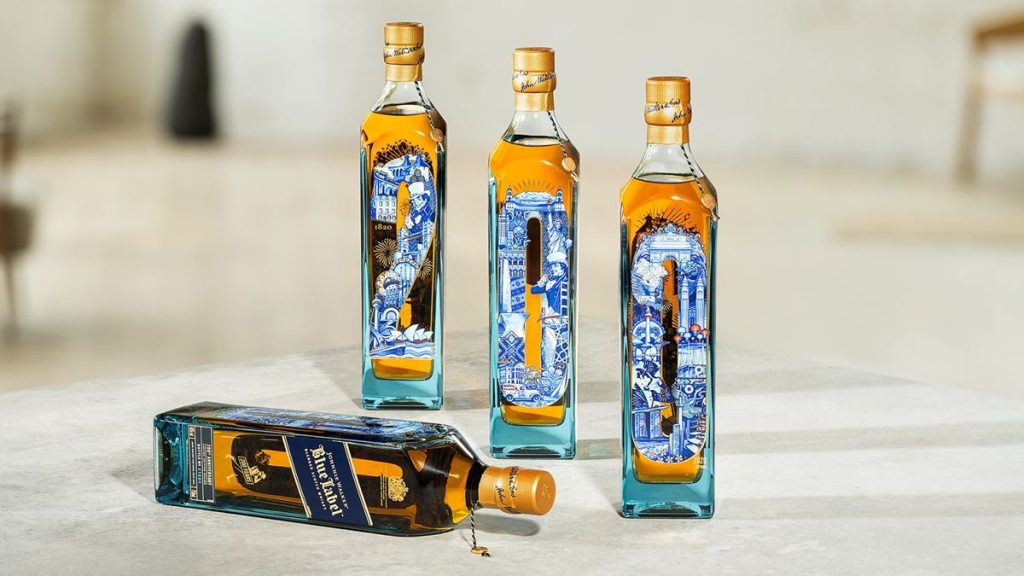
Johnnie Walker also welcomed the release of four exclusive new Johnnie Walker limited editions hitting shelves globally. Each exclusive release – a new bottle design and three newly crafted whiskies – is a celebration of the incredible journey, pioneering spirit and dedication to quality that was started by John back in those early days.

Johnnie Walker has also unveiled three new limited-edition bottles for its iconic Johnnie Walker Red Label, Johnnie Walker Black Label and Johnnie Walker Gold Label Reserve whiskies. Each one is a bold and eye-catching reimagining of the classic Johnnie Walker square bottle, fit for the 200th Anniversary.

Next month, the Discovery Channel will air a feature documentary directed by Oscar-nominated filmmaker Anthony Wonke exploring what has led Johnnie Walker to become an icon in popular culture. And Canongate Books have recently announced the publication of A Long Stride by Nicholas Morgan, a book charting the remarkable story of how Johnnie Walker became the world’s number one Scotch[2].

““Celebrating the 200th anniversary of the Johnnie Walker journey is such a proud moment for us all. The company was pioneered by three generations of the Walker family and those who followed in their footsteps, and the business continues to embrace their distinctive spirit. In looking back and celebrating the first steps John Walker took when he founded the business, we are inspired to look forward to the next 200 years as we honour the legacy of John and his family’s achievements and open the door to new possibilities in Scotch for Johnnie Walker.”

Christine McCaffertyArchive Manager at Diageo

[1] IWSR 2020

[2] IWSR 2020

Key Milestones

  • 1820 – The doors to John Walker’s grocery shop are opened and the Johnnie Walker story begins
  • 1857– John’s son Alexander takes over the business following John’s death and transforms the company
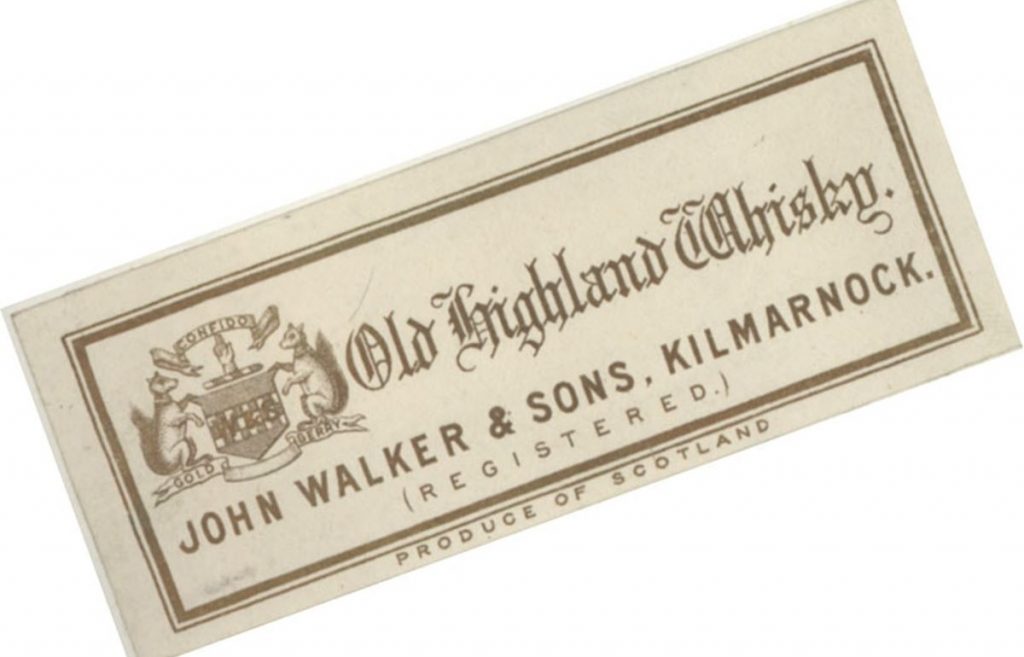
  • 1860s – First commercial blend ‘Old Highland Whisky’ created and slanted labels introduced

  • 1870s – The business becomes one of the first to produce whisky in square bottles, changing from the original round bottles
  • 1906 – White, Red and Black Label variants available
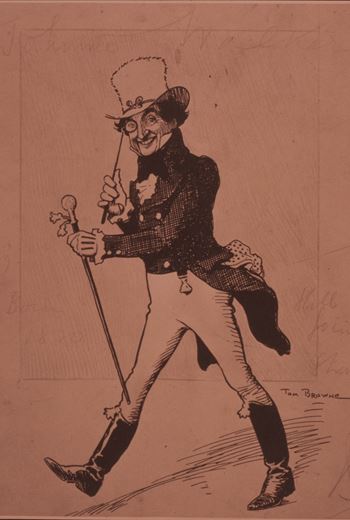
  • 1908 – The ‘Striding Man’ figure is drawn by renowned cartoonist Tom Browne, and the first time the business formally adopts the name Johnnie Walker

  • 1920 – Johnnie Walker whisky available in over 120 countries
  • 1934 – John Walker & Sons granted a Royal Warrant by King George V to supply whisky to the royal household, an honour still held today
  • 1945 to 1955 – Johnnie Walker’s exports increased by 115 per cent to just over 1 million cases
  • 1982 – Johnnie Walker appears in the original Blade Runner movie
  • 1992 – Johnnie Walker Blue Label launches, an exquisite combination of Scotland’s rarest and most exceptional whiskies
  • 1999 – First ever Johnnie Walker global advertising campaign ‘Keep Walking’ launches

  • 1999-2007 – Bottles of Johnnie Walker make regular appearances in The Sopranos, including an episode in which Salvatore Bonpensiero gives a bottle of Johnnie Walker Gold Label as a gift
  • 2005 – Johnnie Walker Green Label is launches, crafted from a palette of Speyside, Highland, Lowland and Island malts matured for at least 15 years
  • 2007 – Johnnie Walker Gold Label Reserve launches, a tribute to the harmonious partnership of Speyside and Highland whiskies, with just a hint of smouldering embers from the West Coast
  • 2013 – Johnnie Walker sells 20 million cases for the first time.
  • 2017 – Johnnie Walker appears in the Blade Runner sequel Blade Runner 2049
  • 2018 – Johnnie Walker collaborates with HBO to launch White Walker by Johnnie Walker

  • 2018 – Diageo announces biggest single investment in Scotch whisky tourism which includes the creation of a new state-of-the-art Johnnie Walker immersive visitor experience based in Edinburgh
  • 2019 – Johnnie Walker Master Blender Dr Jim Beveridge receives an OBE for services to Scotch
  • 2020 – All six Johnnie Walker variants tasted at this year’s International Spirits Challenge received gold medals
  • 2020 – Plans to release new environmentally-friendly paper bottle announced – set to debut in early 2021 to be the world’s first 100% plastic free paper-based spirits’ bottle

Free Smokehead Skull Mask – Scotch Whisky News

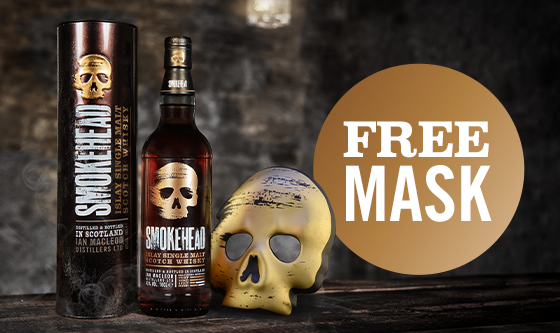
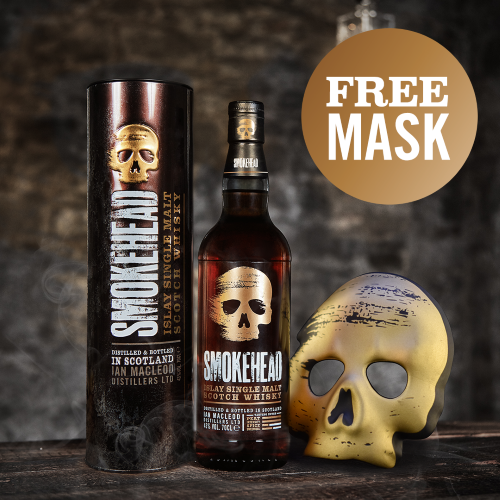
Smokeheads, we’ve got Halloween sorted.

Buy any 70cl bottle online and receive a FREE Smokehead Skull mask.
Choose from Smokehead Original, Rum Rebel, Sherry Bomb or High Voltage to have your mask added to your basket.

This will only last from Wednesday 21st October until Saturday 31st October while stocks last, so make sure you don’t miss out.
T&Cs apply.

SHOP NOW

Free UK delivery on all orders over £30


Festive Gift Guide: Craft Whisky Club – Membership and Gift Boxes – Whisky News

Craft Whisky Club 

Delivering the next whisky classics – directly to your door 

From casks to pairings, locally-produced to the exotic, learning and exploring the world of whisky is a fundamental part of the whisky experience. Resident experts at the Craft Whisky Club handpick the finest small batch and artisan whiskies, carefully selecting exciting and innovative distillers from Scotland and beyond. An exciting way to create home tasting sessions over the festive period.

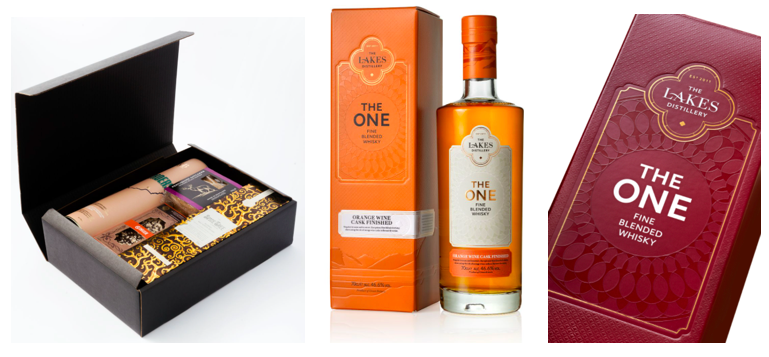
Each box includes up to two full size bottles, as well as a specially selected food pairings to match with the whiskies, alongside plenty of information about the distillery and how the whiskies are matured, developed and brought to life. Choose from either 1 bottle or 2 full sized bottles of whisky every 2 months.

Bottles this Winter come from picturesque Cumbrian distillery, The Lakes. Both boxes will feature the distinctive, The One Orange Wine Cask Finish, a whisky that is finished in orange wine casks from Andalucía, with notes of fresh lychee, marmalade and hints of tobacco on the nose. For those opting for two bottles, The Lakes Distillery will also be providing the unique and flavourful Sherry Cask Finish bottle. Being part of the Craft Whisky Club community means any member will also receive a distillery tour voucher of the Lakes Distillery for two alongside their box, enabling whisky enthusiasts and newcomers alike to experience the heart of the whisky making process.

When the New Year hits, Craft Whisky Club will be delivering bottles from award-winning Kingsbarn Distillery and Craft Whisky Club members will be amongst the first to receive their brand new release.

Gift Boxes: 2 boxes over 4 months (£125), 3 boxes over 6 months (£185), 6 boxes over 12 months (£365)

Memberships: 1 bottle every 2 months (£29.95 / Month) or 2 bottles every two months (£55.95/ month)

www.craft whisky club.com

A Compass Box gift to say thank you! – Scotch Whisky News

The Arcana of Whiskymaking: Revealing a New Limited Edition – Compass Box Whisky News

AN ADVENTURE INTO THE ARCANE

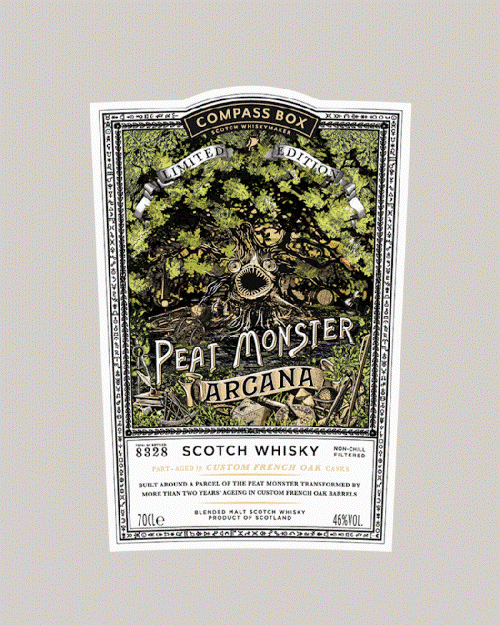
Sometimes whiskymaking means asking questions and seeing where the answers take you. What would happen if a cask strength version of The Peat Monster was further matured for years in French oak custom casks? It was a mystery too tempting to leave unexplored, and we’re glad we embarked on the experiment as the results revealed a whole new side to this charismatic whisky.

BUILDING THE BEAST

Ten per cent of Peat Monster Arcana is the richly spicy, more subtly smoky version of The Peat Monster that emerged from the French oak custom casks. Malt whisky from the Talisker Distillery makes up the majority with notes of honey, green apple and log fire embers. Then there’s malt whisky from the Ardbeg Distillery, boosting the tarry and chocolatey smoke profile, perfectly extending the rich toasty notes of the French oak. To complete the recipe, sweet and citrusy malt whisky from the Miltonduff Distillery heightens the creaminess and perfume.

A NEW MONSTER FOR OUR BIRTHDAY 

Rounding off our 20th anniversary limited edition releases is, Peat Monster Arcana. The first Compass Box creation to include peated whiskies experimentally matured in French oak

HOW TO BRING OUT THE MONSTER

Serve Peat Monster Arcana neat and you’ll experience the interplay of spice and dry peat at its most intense. Adding a little water teases out greater oak sweetness and orchard fruitiness, while mixing it in a highball will emphasise its waxy texture. A whisky that certainly rewards repeat investigation.

DISCOVER MORE

Join our Founder John Glaser for a live interactive tasting dedicated to this new limited edition on 22nd November 2020 at 8pm (GMT). Please, click below to sign up and reserve your seat.

For availability of Peat Monster Arcana, please contact your local specialist spirit store or visit our online shop.

Ardbeg Wee Beastie at Tyndrum Whisky – Scotch Whisky News

TyndrumWhisky.com

Brings you

Ardbeg Wee Beastie

Ardbeg Wee Beastie has been matured for just 5 years, making it the untamed enfant terrible of the whisky world. Whereas most single malts seek the smoothness and balance of older age, they know that more time in cask tends to subdue the smokiness that so many whisky fans love. By boldly proclaiming the whisky’s relative youthfulness, we invite consumer curiosity and promise a monstrously smoky experience.

Order Now >

CHRIS FLETCHER TAKING THE REINS AS JACK DANIEL’S MASTER DISTILLER – American Whiskey News

CHRIS FLETCHER TAKING THE REINS AS JACK DANIEL’S MASTER DISTILLER

Seasoned Whiskey Maker Will Oversee Quality of Iconic Tennessee Whiskey From “Grain to Glass” 

LYNCHBURG, Tenn. (October 7, 2020) — The Jack Daniel Distillery announced today that seasoned whiskey maker Chris Fletcher will take over the reins as Master Distiller of the iconic Tennessee Whiskey brand.

Fletcher, 39, had previously served for six years as Assistant Master Distiller, and will be responsible for the overall quality of Jack Daniel’s from grain to glass, innovation and serve as a global ambassador.  In addition, he will oversee the distillery’s new “Distillers in Training” program which aims to recruit, teach, and mentor the next generation of whiskey makers.  

Born and raised in Lynchburg, and now carrying on a family tradition, Fletcher is the grandson of former Master Distiller Frank Bobo, who served in the role from 1966 until his retirement in 1989.

“For the past six years, Chris has been right there and involved in every major distillery innovation, product and enhanced production process while ensuring our Tennessee Whiskey is of the highest character and quality,” said Larry Combs, Jack Daniel Distillery SVP and General Manager.  “Chris has whiskey making in his blood, but he also has this incredible and unique combination of knowledge, expertise and creativity that will position us well into the future.  Folks like Chris don’t come along every day, and backed by our tremendous senior leadership team, I have no doubt that he will flourish in this new role.”

 “It’s an honor to be named Master Distiller here at Jack Daniel’s and join a line of folks who’ve made the best whiskey in the world,” said Chris Fletcher.  “Over the last 17 years, I’ve been able to learn and work alongside so many talented whiskey makers, and I am very grateful for the mentors I’ve had, including Jeff Arnett who taught me so much.  Our distillery and team here in Lynchburg are the best in the business, and I cannot wait to continue to work with them crafting the world’s favorite Tennessee Whiskey.” 


Fletcher’s work at Jack Daniel’s stretches back to 2001 when he worked as a part-time tour guide while attending college.  He graduated with a B.S. in Chemistry from Tennessee Technological University in 2003 and began work as a chemist with Brown-Forman in Research & Development for eight years.  Following several years working in the bourbon industry, Fletcher came back home to the Jack Daniel Distillery and was named Assistant Master Distiller.

Chris, his wife, Ashley, and three-month old son, Payne Thomas, live in Lynchburg, Tennessee.

About Jack Daniel’s

Officially registered by the U.S. Government in 1866 and based in Lynchburg, Tenn., the Jack Daniel Distillery, Lem Motlow, proprietor, is the first registered distillery in the United States and is on the National Register of Historic Places. Jack Daniel’s is the maker of the world-famous Jack Daniel’s Old No. 7 Tennessee Whiskey, Gentleman Jack Double Mellowed Tennessee Whiskey, Jack Daniel’s Single Barrel Tennessee Whiskey, Jack Daniel’s Tennessee Honey, Jack Daniel’s Tennessee Fire, Jack Daniel’s Tennessee Apple, Jack Daniel’s Tennessee Rye, Jack Daniel’s Sinatra Select and Jack Daniel’s Country Cocktails. Today, Jack Daniel’s is a true global icon found in more than 170 countries around the world and is the most valuable spirits brand in the world as recognized by Interbrand. 

Your friends at Jack Daniel’s remind you to drink responsibly.

JACK DANIEL’S and OLD NO. 7 are registered trademarks. ©2020 Jack Daniel’s. Tennessee Whiskey 40% Alcohol by Volume (80 Proof). Distilled & Bottled by Jack Daniel Distillery, Lynchburg, Tennessee. JackDaniels.com

Barrell Craft Spirits 15 Year Old Cask Strength Blend of Straight Bourbon Whiskey – American Whiskey News

Barrell Craft Spirits 15 Year Old Cask Strength Blend of Straight Bourbon Whiskey (750ml) (Previously $250)

Barrell Craft Spirits, based in Louisville, Kentucky, is an independent blender and bottler of aged, cask strength sourced whiskey and rum. According to the producer, “This complex 15-year-old bourbon was blended and bottled at peak maturity so you can experience its true flavor. It is a perfect union of grain and barrel, with an old, oaky nose and a deep, honey- maple palate that reveals the lushness of the grain.”

Price: Hidden View

Create a K&L account to view price & purchase!

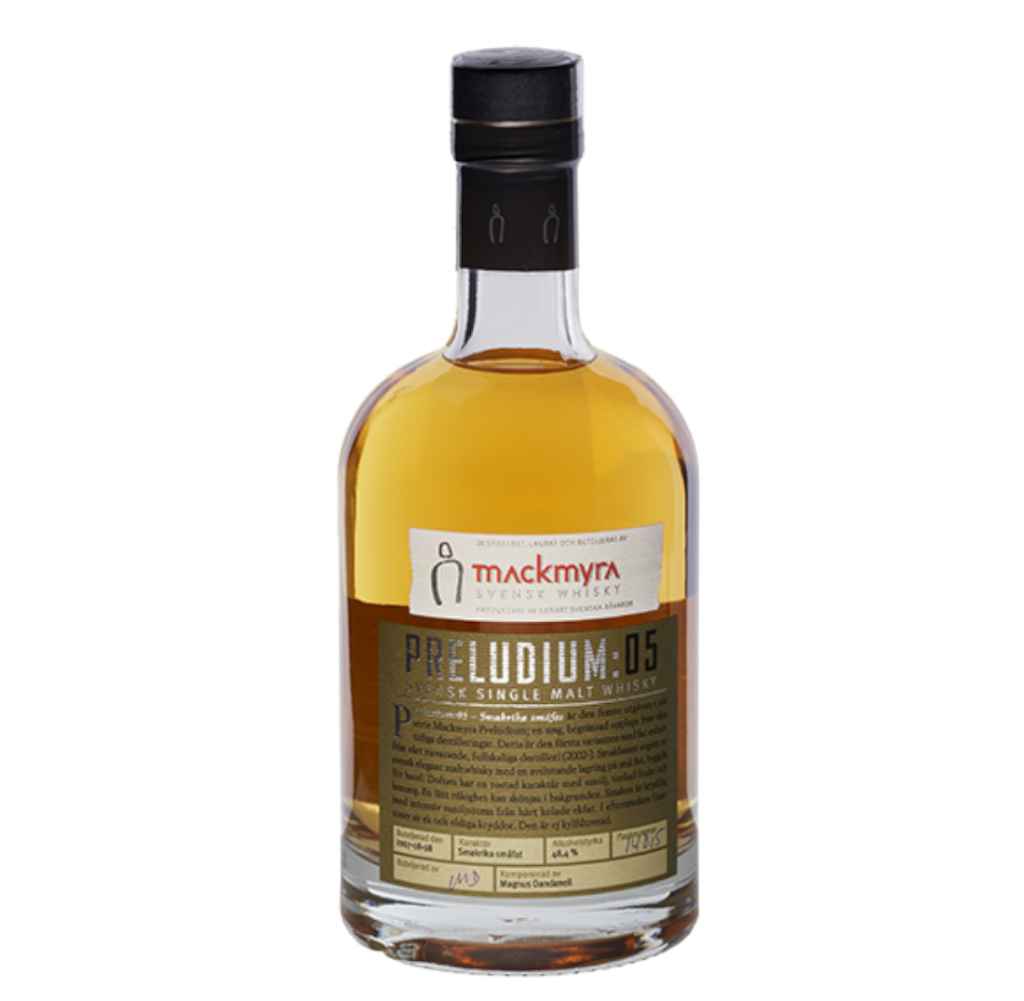
Mackmyra RELUDIUM:05 Tasty Small Casks – Swedish Whisky News

Preludium:05 Tasty Small Casks

“Tasty Small Casks” – the beginning of Mackmyra’s small cask finishes that customers know and love today.

Purchase A Bottle Of Preludium:05 Tasty Small Casks

Today Friday 16th of October, at 7 PM (BST) we are releasing the final 20 distillery bottles of Mackmyra Preludium:05 Tasty Small Casks. Here you can own your very own bottle of the Preludium series, a key member of Mackmyra has chosen. Magnus Dandanell, original Founder and former CEO was selected for this expression’s representative. Preludium:05 Smakrika småfat (Tasty small casks) showcases the use of small cask maturation in our flavour profile. First matured in 200-litre ex-bourbon casks, the whisky was then finished in hand-made 30-litre casks for a final six months. These 30-litre casks have gone on to create our Reserve Cask Program, allowing customers to create their own, personalised whisky expression.

Mackmyra Preludium:05 Tasty Small Casks, will be available to our UK and European Customers from Mackmyra.co.uk 


Powered by WordPress