Distillery profiles: Caperdonich
Caperdonich ‘Tobar-Dhomhnaich’ in Gaelic meaning ‘Secret Well’ or possibly ‘Sunday Well’, ‘Sabbath Well’ or ‘Lord’s Well’.
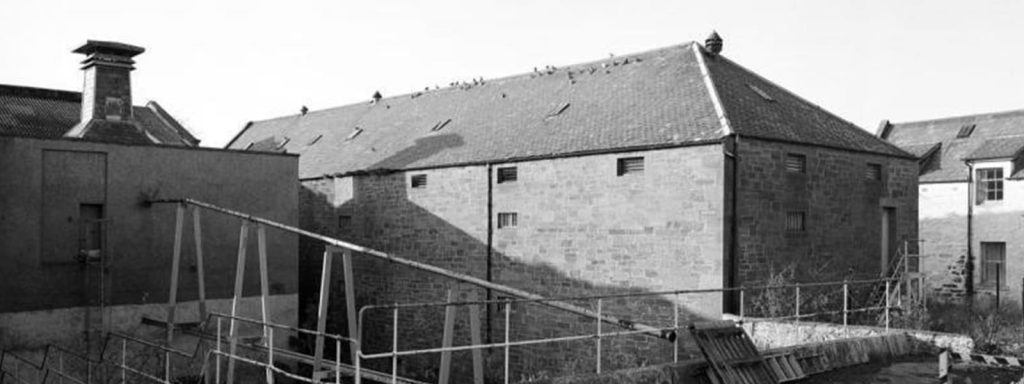
Opened as Glen Grant #2 in Rothes in Speyside in 1898 by Major James Grant, construction work had begun the previous year. It was the last of the 5 distilleries to be built in the town. A pipe fed new make, during the hours of daylight, from #2 to #1 where the spirits were combined to be recorded as Glen Grant on the insistence of customs and excise. It was not until the 1980s that the pipe was removed. As was often the case for the period a railway siding serviced the site. Due to a sudden slump in the industry resulting from over production the distillery closed in 1901.
After mothballing floor malting and kilning continued in order to augment Glen Grant’s own supply.
Likewise the warehouses were also taken advantage of.
Over time pieces of equipment were taken as spares for Glen Grant and presumably other distilleries. Production restarted in 1965 after a rebuild which saw it as the most modern distillery in Scotland. At this point there were 2 stills and 4 steel washbacks. A lot of the different parts of the stills were original and included riveting at joins rather than the modern practice of welding. The stills were at least latterly indirectly fired by steam (from 1967) in contrast to Glen Grant which maintained direct firing by coal for some of its stills at least until the 1980s, maybe as late as 1996 when gas firing was installed. Spirit vapours were condensed by shell and tube although again worm tubs would have originally been used at Glen Grant.
From Charles Maclean’s Whiskypedia “the original two stills were duplicates of the old small stills at Glen Grant; in 1967 two more stills were installed and all changed to boil-pot design; in the mid-1980s they were changed again to the ‘German helmet’ design found at Glen Grant.”
Misako Udo states that the wash stills had ‘cylindrical reflux bowls’ while the spirit stills had more conventional reflux bowls. As regards size: 11.5KL for the wash stills and 8KL the spirit stills. The number of stills were doubled to four in 1967, these required installing 2 more washbacks with another pair being added later. Of the 8 washbacks 6 were cast iron and 2 stainless steel. Glen Grant famously uses purifiers to lighten the spirit, a practice that was also employed at Caperdonich. Output has been recorded as 2.2mlpa. About a third of the distillery’s malt requirement was provided by Glen Grant at the time of the reopening and up until 1971 when Glen Grant’s drum maltings were closed.

Despite intending to be a second Glen Grant Caperdonich’s spirit was a degree lighter than its ’parent’. This is despite the malt and process water being the same.

Sir Dennis Malcolm
The first ‘modern’ manager was Ernie Sherret who was also the cashier at Glen Grant. He would later manage both distilleries. Dennis Malcolm succeeded him in 1983 with Willie Mearns was in charge from 1993.
The name ‘Caperdonich’ was adopted upon the distillery’s reopening, it came from the name of one of the wells that via the Back Burn supplied reducing water to both distilleries. It seems the well has only run dry on one single recorded occasion. The well was considered to have healing properties and was thought of as holy. Both distilleries took water from the Glen Grant Burn for other uses.

The gradual amalgamating of several whisky business eventually saw the distillery being owned by Glenlivet Distillers Ltd. This company also owned Glenlivet Distillery itself, Longmorn Distillery and Hill, Thomson & Co.. owners of the successful blend Queen Anne. The business had offices at 45 Frederick St. Edinburgh.
Some peaty spirit was also made at the distillery from around the early 1990s on for blending purposes. Seagram similarly used Benriach and Glen Keith as sometime sources for this purpose, the company did not have an Islay distillery. “Glen Isla“ was used to identify smokey malt from Glen Keith.
In 1977 Seagrams of Canada took over Glenlivet Distillers then 1987 saw a period of shut down whilst Glen Grant was being refurbished. Later, in 2001, Pernod Ricard of France became owner, mothballing Caperdonich in 2002 alongside other new acquisitions from the Seagram take over: Allt a Bhainne (re-opened 2005) and Braeval, formerly known as Braes of Glenlivet (re-started 2008). Glen Keith and Imperial were also later closed by Pernod, the former re-opened whilst Imperial is now another lost distillery.
Glen Grant itself was sold to the Italian company Campari in 2006.
The site was razed in September 2011 by coppersmiths Forsyth’s after they bought it in n 2009 from Pernod Ricard with the intention of expanding their works which were adjacent to the site.
Upon demolition most of Caperdonich’s utensils were recycled so although the ever reducing quantities of the spirit left in cask will eventually get bottled it is some consolation that both the land the distillery once occupied and parts of its equipment are involved with whisky production.
Wolfburn uses Caperdonich malt intake apparatus and two stainless steel wash backs and an iron one, one used as a water tank the another an effluent tank. One reference states Glenallachie has two stainless steel washbacks and certainly Falkirk distillery uses 2 stills as well as the rake and plough mash tun. The other 2 stills and the spirit safe went to the Belgian Owl Distillery. Some other washbacks apparently went to a German company whilst Annandale distillery also took some items including the Porteus mill.

Photo Credit McTear’s Auctioneers
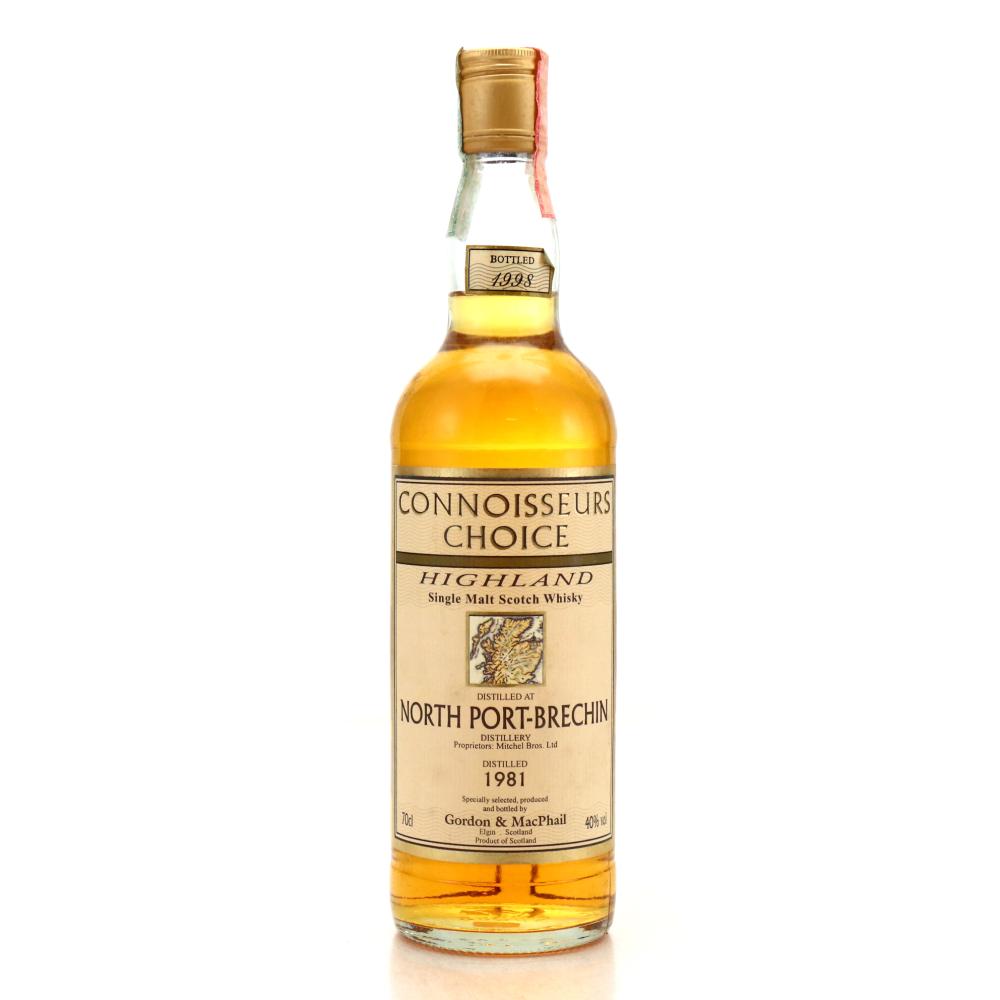
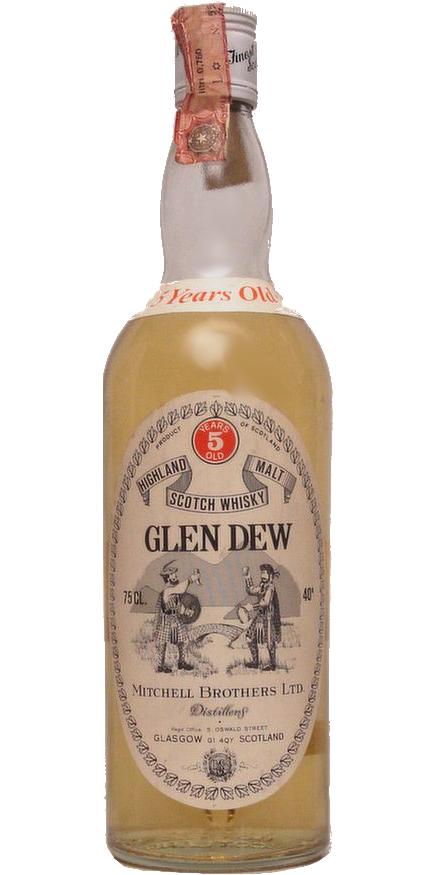
Until recently official bottlings were rare, a 5yo for the Italian market in the 1970s and a version in Chivas’s 50cl cask strength range at 16yo and 55.8% was released in 2005. Blends contributed to: Chivas Regal, Passport, Queen Anne and Something Special.
Mark Davidson, aka The Jolly Toper Profile