20-tonne Pictish Masterpiece Takes the High Road – Scotch Whisky News
20-tonne Pictish Masterpiece Takes the High Road
— After two years’ continuous carving, latest Barry Grove sculpture is transported 200 miles from Tain to The Glenmorangie Company’s new state-of-the-art bottling plant in Livingston —
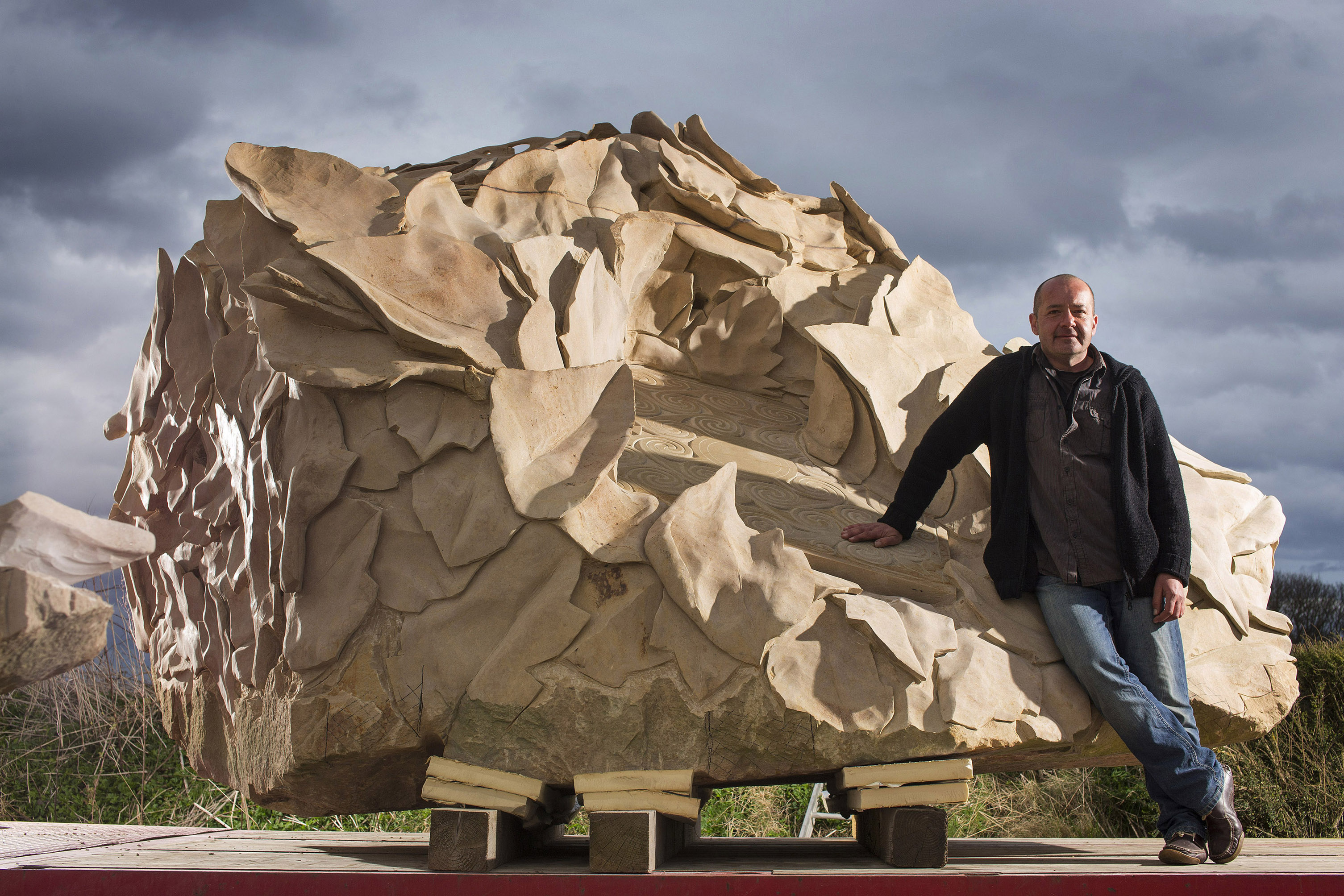
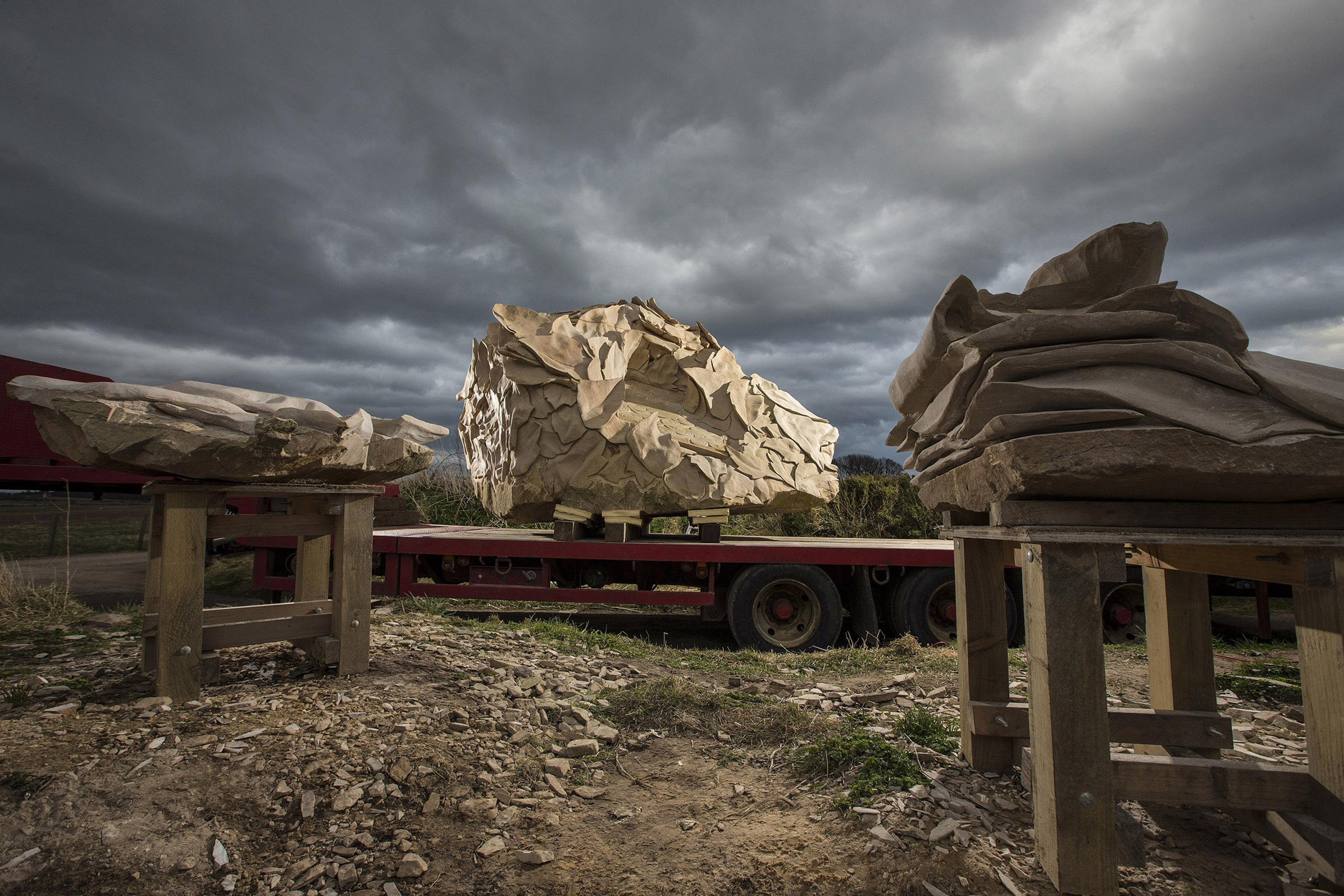
A 20-tonne sculpture – commissioned by The Glenmorangie Company to stand outside its new bottling plant in Livingston as a permanent reminder of its Highland roots – has been transported by a low-loader lorry from Glenmorangie’s distillery in Tain.
Ross-shire-based Barry Grove – internationally regarded as one of the finest large stone sculptors working today – was asked by the company behind Scotland’s favourite malt whisky to create a sculpture which explored the country’s Pictish heritage.
Created over two years using only traditional hand tools, the sculpture explores the theme of re-discovery and depicts blowing leaves revealing a symbol of Pictish design and intricate knot-work, the origin of which dates back to 800AD.
The sculpture was carved from 300-million-year-old sandstone sourced from the area around Glenmorangie’s Tain distillery.
The public artwork stands two metres high and is just over three metres long, and is two-and-a-half times the size of his previous re-creation of the Hilton of Cadboll Stone, an eighth century Pictish Stone with incredible engravings which was discovered near the Glenmorangie Distillery in Ross-shire. This national icon is on permanent display at the National Museum of Scotland in Edinburgh.
Barry Grove said: “I am passionate about creating pieces of public art that will last for generations. The sheer size and scale of this project has presented a real challenge but I wanted to stay true to the spirit of the enterprise by using traditional stonemason’s tools.
“Like Glenmorangie I am fascinated by our past, and creating this sculpture is all about rediscovering our connection with the Picts and Scotland’s early history. This sculpture brings the past to life.”
Paul Skipworth, President and Managing Director of The Glenmorangie Company, said: “For The Glenmorangie Company, craft and heritage are essential to creating Scotland’s favourite single malt. We are very grateful to Barry for his hard work in creating this impressive sculpture.
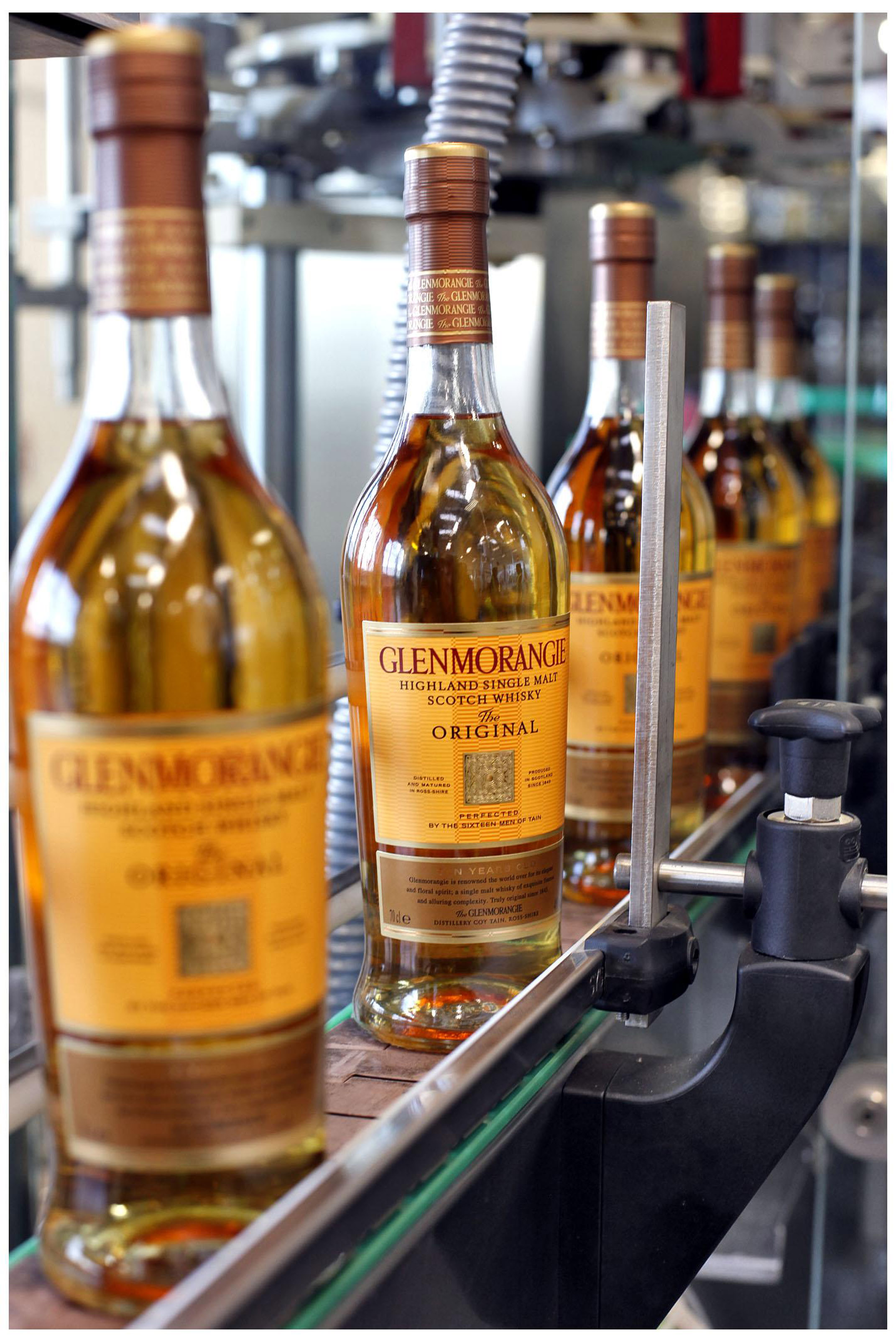
“The Hilton of Cadboll Stone, originally found near the Glenmorangie Distillery, is a national treasure from this period and the inspiration for our company logo – the Signet – which proudly adorns our whisky bottles around the world. This new sculpture will be a notable landmark at our bottling plant at the Alba Campus in Livingston, and a permanent reminder of our Highland roots.”
Grove is keeping alive the art of stonemasonry in Scotland using traditional tools and techniques. He is based near Tain in the Highlands, where many Pictish artefacts have been discovered and where Glenmorangie’s iconic single malt has been distilled since 1843.
Notes
About Glenmorangie
Glenmorangie single malt Scotch whisky originates in the Scottish Highlands where, at the Glenmorangie Distillery, it is distilled in the tallest malt whisky stills in Scotland, expertly matured in the finest oak casks, and perfected by the Men of Tain. The Distillery was founded in 1843 and is renowned as a pioneer in its field uniting tradition with innovation to create Unnecessarily Well Made single malt whiskies.
About The Glenmorangie Company
The Company is one of the most renowned and innovative distillers and marketers of Scotch whisky brands worldwide and is part of Moët Hennessy, the wine and spirits division of Moët Hennessy Louis Vuitton (LVMH). Headquartered in Edinburgh, Scotland, the Company produces Glenmorangie Single Highland malt whisky and Ardbeg Single Islay malt. It also owns The Scotch Malt Whisky Society.
Responsible Drinking
The Glenmorangie Company advocates responsible drinking and suggests that drinkers savour Glenmorangie whiskies in moderation and in line with recommended daily guidelines for alcohol consumption.
About Barry Grove
Barry Grove has been carving large stone projects for over 20 years and since graduating with a BA (Hons) in Design from Dundee Art College in 1989 has been specializing in traditional Scottish carving. Barry is internationally regarded as one of the finest large stone sculptors working today. He has worked closely with Historic Scotland and respected experts in this field on a variety of projects over the years as well as accepting numerous private commissions including the Royal family, large international corporations and high-net-worth private clients. Barry currently lives and works on the Tarbat Ness peninsula, Ross-shire.