Angels Whisky Club INTERVIEW Caroline Martin, Master Blender, Diageo – Scotch Whisky News
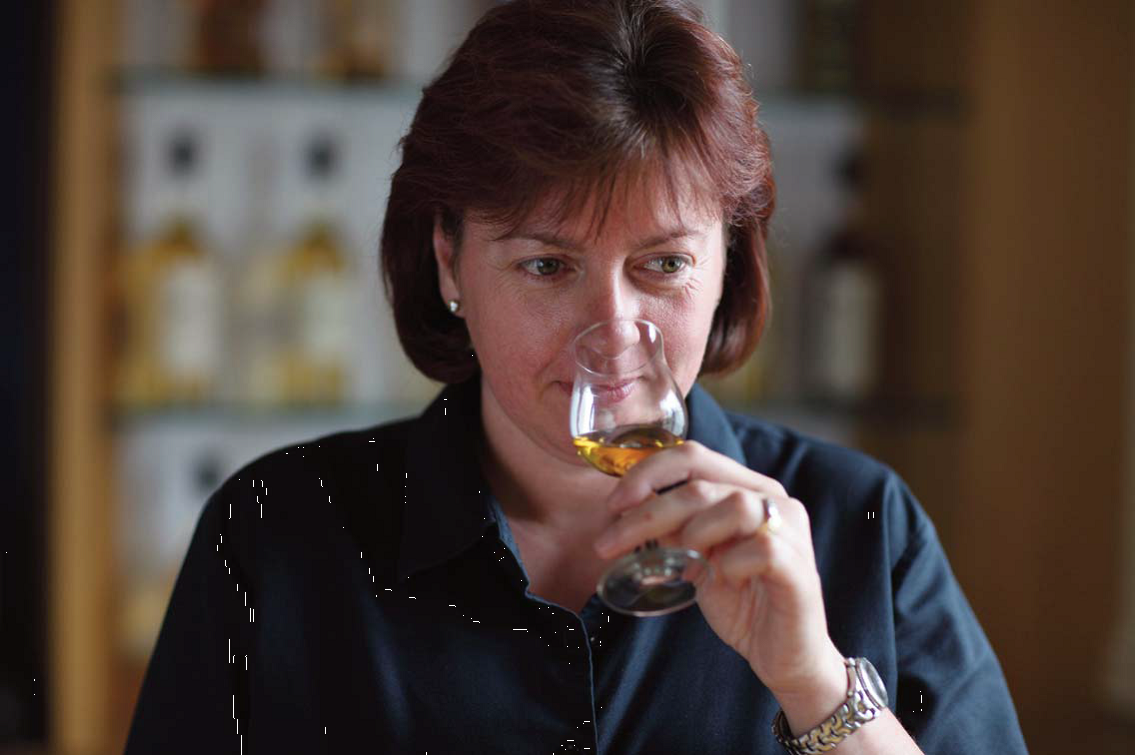
Caroline Martin, Diageo.
Hi again Caroline, your tasting session recently in Edinburgh prompted me to ask you more questions! (asks Paul Mclean)
I know you have been with Diageo for umpteen years, but – What first got you interested in whisky? I started working with the company in the New Products Innovation area in 1986, primarily working with flavours, colours, thickeners and different spirit types. From that starting point I became involved with whisky from the perspective of developing whisky liqueurs. I enjoyed being able to blend different flavours together as I had done previously when I studied Home Economics at Queen Margaret College, Edinburgh with food recipe development.
What exactly does a whisky master blender do? A wide variety of things on a daily basis, there is no “typical” day at work. Mostly I ensure the consistently high quality standards of our established brands are fully met – including Johnnie Walker, Bell’s J&B Rare. I also am involved in the creation , crafting and innovation of new whisky blends. The key skill required is the ability to nose, taste and describe whisky attributes – known as sensory capability. I manage a small team of highly motivated whisky technical specialists too.
How did you become a master blender? My journey to become a Master Blender happened over quite a few years. I built up of lots of experience of nosing whisky samples over time. Being knowledgeable and keen to understand the new make whisky characters and then appreciating what the different casks can bring to the flavour styles in the maturing spirit. The ability to then craft new blends by understanding how the different whisky flavours interact to produce something exceptional and unique.
When did you realise you had a “nose” and “taste” for whisky? I was always keen to be able to put descriptors to what I nosed and tasted in different whiskies. In fact my interest in this area took me on a different career path for a while, where I actually managed and trained sensory panellists for the company. Sensory skills are paramount for a master Blender and I benefitted greatly from investing my time in this role. I also had a keen interest in aromatherapy, blending essential oils, around this time and qualified as a Clinical Aromatherapist after two years of studying and completing case histories.
How hard is it to nose/taste so many whiskies each day? Most whiskies are nosed and not tasted. With experience you learn to be aware of your own tolerances to nose effectively and I pace myself accordingly. If I feel my nose is becoming exhausted when nosing a large number of whisky samples, especially if they have strong peaty notes, then I will take a break and come back to them when my nose is refreshed and able to perform as required.
What happens if you have a cold? I have the reassurance that there are other expert whisky panellists onsite who perform as a trained sensory panel alongside me. So when I have a cold there is no real cause for concern – just frustration on my part!
What do you look for in a new whisky? A new whisky blend for me has to deliver something exceptional from an aroma and flavour perspective. Its ability to stand up to different serves on different occasions is also important to me – it should be adaptable! Once I’m intrigued enough to try it, and assuming I like it, the blend must then be consistent in quality.
Are you working on anything new/special just now? I’ve always got a few new projects in progress, but like all good Master Blenders they’re not spoken about until they’re available on the market!
What is the best blend you have achieved? I am delighted with the positive feedback I received on the Johnnie Walkers Directors Blend for 2011. I put considerable time and effort into this blend to create very soft, mellow fruity flavours with a subtle hint of smoke in the background. I’m glad that the guests invited to a recent Director’s Blend event in Edinburgh found it to be very enjoyable.
Can you briefly outline a typical day? The variety within my role means that there is no real typical day. I could be travelling to Elgin one day to nose new make malt whiskies and the next day travelling to Fife to nose new make grain samples. On other days I may be assessing mature cask samples with a view to using them to create new blends. Ongoing quality assurance is an important part of the role and training sensory panels at our production sites is crucial. I also manage a small team of 4 people who are also contributing to the world of whisky at Diageo.
What skills and qualities do you need to become a master blender? The key skill is sensory capability – you have to be able to nose and taste whiskies and describe them in detail. This skill either allows you to be able to create new blends or highlight when something is wrong in a blend –and more importantly why! Accuracy and repeatability are other important aspects of the role and an understanding of the inventory too!
Apart from our membership (of course) is there anyone in the whisky world you wish to meet? Past or present. I’d love the opportunity to meet up with the original Arthur Bell or Johnnie Walker and ask them what they think of the whisky industry today. I wonder what advice they would offer us……?
Many thanks for being honest and putting up with all of my questions, do you have a parting shot? Peoples’ tastes change over time – I’d encourage you to be aware of this. Because you don’t like a particular whisky today doesn’t mean this will always be the case. Keep trying new blends- they bring with them new flavours. And keep trying them on different occasions, in different serves. The world of whisky offers much in the way of variety of flavours. Finding your favourites is all part of the enjoyment!
Caroline Martin, Master Blender, Diageo, interviewed by Paul McLean, Angels Whisky Club.