The Tall Tale of Ben Nevis Distillery by Mark Davidson – Scotch Whisky News
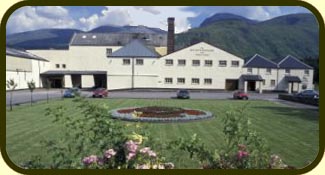
Photo compliments of Malt Madness
The Tall Tale of Ben Nevis Distillery
Ben Nevis is not lacking in the colourful history category. With a foundation date of 1825 the story starts just after sweeping changes to the stifling regulations and taxes governing whisky production led to a boom in distilling. ‘Long’ John MacDonald (b. 1796- he was 6 foot 4: not at birth you understand), from Wester Ross farming stock, with a partner was just twenty-seven years old when some Lochaber lairds chose him to head up their distilling project. Siting the distillery at the strategically located garrison town of Fort William at the foot of Ben Nevis using water from Scotland’s highest spring Buchan’s well (alt. over 1200 metres), it wasn’t long before his brand ’Dew of Ben Nevis’ became well respected. Its highest profile visitor was no less than Queen Victoria in 1848, she was gifted a cask for the future king George’s 21st birthday celebrations. Originally a single the brand later switched to a blend late in the nineteenth century.
Despite suffering a sequestration two years before the death of Long John in 1856, which saw a shut down common at the time for rural distilleries, the distillery soon blossomed thanks to his son Donald Peter’s enthusiastic rebuilding of 1863-65 at a time of general economic recovery and subsequent demand for stocks from blenders. Like his father Peter was youthful, twenty years old , when he took charge. Peter’s biggest contribution was the construction in 1878 of a new bigger distillery ‘Nevis’ (also referred to as ‘Lochaber’ and ‘Glen Nevis‘- the latter shouldn’t be confused with a Campbeltown distillery of the same name). Located close to the mouth of the river Ness the distilleries were very close to one another allowing the sharing of certain facilities like a pier for the company‘s own steamers which was constructed in 1887 during a further extension to the works. At this time the famed cataloguer extraordinaire Alfred Barnard reported ten thousand casks stored on site were all owned by customers, further evidence of the confidence brokers blenders and bottlers had in the distilleries’ quality. Thanks also to Barnard’s visit we can see a sketch of the Nevis still room which shows purifiers were employed on the wash still arms while he states one of the wash stills to have a considerable 16 000 litre capacity. Ten years after his father’s death Peter had increased the company’s output from 200 gallons a week to an impressive 3000 gallons. By 1889 the distilleries’ output was nearly twice that of their nearest rival at around quarter of a million proof gallons and boasted the largest maltings in the industry at the time. Around 200 people worked at Nevis giving some insight into the significance of the operation. A further boost to the well being of the area came in 1894 when the West Highland Railway reached the town providing many benefits such as a cheap route for coal deliveries via the distillery‘s own siding. Peter passed away in 1891 handing the company on to the third generation of the family. In 1908 the two distilleries were integrated with the maltings at Nevis trading as Lochaber Maltings while the storage facilities was under the title Lochaber Warehouses.
In 1921 the brand ‘Long John’ and the distilleries parted company when the London wine and spirit company W. H. Chaplin acquired the name. From this point Ben Nevis traded under the name ‘D. P. MacDonald‘. Come 1936 Chaplin were taken over by the long established (1805) English gin distillers and wine and spirit merchants Seager Evans. In 1927 Seager Evans built Strathclyde grain distillery in Glasgow, which was briefly home to the Kinclaith malt facility. They also bought Glenugie distillery in Peterhead (later parts from this distillery were to be recycled when used at Ben Nevis after Glenugie shut) as well as commissioning Tormore distillery in Speyside. In 1956 the American firm Schenley Industries acquired Seager Evans before passing S. E. on to Rapid America in 1969. The English brewer Whitbread purchased the subsidiary Long John International (as Rapid America was then known) in 1975.
Returning to the first half of the twentieth century we see the MacDonald family ownership of Ben Nevis come to an end in 1941. Enter a most intriguing individual- Joseph Hobbs. Hobbs went to Canada in 1904 and served in the navy during World War I. During his time in Canada he acted as an agent for Peter Dawson the Scottish distillers, he also ran Scotch into the US during prohibition, was involved in both the shipping and distilling businesses before moving to Scotland in the 1930s. Through the Glasgow based subsidiary of Associated Distillers of America, Train & MacIntyre, Hobbs oversaw the acquisition of Glenury-Royal, Bruichladdich, Glen Kinchie and North Esk (A.K.A. ‘Glen Esk’ and ‘Hillside‘, later converted to grain production under the name ‘Montrose’ and back again as well as being the home to a large maltings) in 1936-38. Also under the banner of Associated Scottish Distillers he purchased Strathdee (in Aberdeen), Fettercairn, Glen Lochy (including the Lochaber warehouses and maltings) as well as Ben Romach. Most of these stills were to pass on to DCL in 1954. An indication of Hobb’s business mind is given when shortly after the outbreak of World War II he bought a fire extinguisher company, not to mention acquiring the Norwegian patent for sub-sea welding equipment. By 1952 he had been elected chairman of an alternative ‘independent’ version of the Scotch Whisky Association representing 34 member companies rallying against what some felt was monopolistic influences within the industry. Selling his stake in Associated Scottish Distillers in 1955 allowed Hobbs to buy Ben Nevis distillery (from this point operated as ‘Ben Nevis Distillery (Fort William) Ltd.’) and Glen Lochy castle with 50 000 acres which he turned into a high class hotel. Legend has it that the very day he originally procured the distillery he sold the old Nevis warehousing for the same sum – £20K while moving the Nevis gates to Ben Nevis (they are now not big enough to meet when closed). At this stage he also set up the Great Glen cattle ranch. His whisky innovations include installing a patent still (the first post-war example) an addition repeated at his other distillery Lochside (opened 1957 in Montrose which he converted from a brewery). Also he introduced concrete mash tuns, ‘blending at birth’ (where malt and grain new spirit is mixed at the cask filling stage) and maturation in beer barrels. On a more local Edinburgh note it is thought a floating restaurant in Leith once belonged to Hobbs and took him across the Atlantic. Joseph Hobbs died in 1964.
The company stayed in the Hobbs family until his son sold out in 1981, three years after production ceased, to Long John International the spirits division of Whitbread plc, hence reuniting the distillery with the Long John brand which Whitbread possessed. The Coffey still was removed at this time, the new owners not immediately concerned with restarting distilling but most interested in the maturation facilities. After brief operations starting 18.04.1984 under current manager Colin Ross following a £2M refit when the curious concrete wash backs were replaced by more traditional wooden examples and a new mash tun replaced the old cast iron example production stopped in 1986. Ross spent a period at Laphroaig before returning in 1989 and is expected to retire in the near future. Ownership changed once again when it became the second Scottish distillery to be owned by a Japanese company, Nikka, currently owned by Asahi brewers, in 1989. The Japanese intervention came ten years after the passing of Nikka’s founder Masataka Taketsuru who was hugely influential in the Japanese whisky industry and who had studied distilling in Campbeltown not so far from Ben Nevis. Presumably the thought of his legacy leading to the ownership of such a prestigious Scottish distillery and the brand being the 7th best selling malt in Japan (in 2010) would have seemed quite fantastic to the young scholar.
Production has been constant since 1990. It appears an ancient 63 year old expression of 90 bottles was released in spring of that year but details are vague, a more accessible 10yo at a generous 46% has been available since 1996.
From a more technical view point the distillery now uses water from Allt a’ Mhuillinn (Mill Burn) and uses peated barley from Ord maltings, the Lauter mash tun feeds 8 large (42,000 litre) wash backs which in turn fill 2 wash stills with a 21,000 litre charge followed by two spirit stills fills of 12,500 litres. All stills are indirectly heated and their design dates from the 1865 refit and were installed in 1955. The substantial size of the stills, their wide and short necks followed by sloping lyne arms all contribute to a robust spirit suited to maturation in sherry and red wine casks. Although the use of shell and tube condensers presumably contribute a lightening effect of the spirit character, the worm tubs, removed in 1978, would surely created an even weightier style. A substantial spirit receiver of 50.000 litres is capable of filling around 200 hogsheads from it 50,000 litre capacity all of which are stored on site within the seven warehouses which are a mixture of old and new. Full capacity is in the region of 2 million litres but production is typically about half this. The distillery is popular with visitors, more than 30,000 take the tour annually.
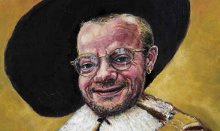
Mark Davidson…
Of a distinguished Banff 1968 vintage Mark Davidson has a short but full body and so marries well (& subsequently producing two limited editions), frequently seen at whisky fairs in Scotland yet curiously difficult to find outside his domestic market it is hoped his inaugural launch on the Canadian scene will be well received. He is at home in independant bottling circles being most commonly found in the William Cadenhead livery where he has enjoyed a 13 year finishing period, however as a stand alone single expression under the Jolly Toper brand he can come into his own while being a fine mixer.