An Article by Paul Mclean of MCLEANSCOTLAND – Whisky News
There’s an old saying (anon) “God invented whisky so the Irish would never take over the world”, well my Dad and his, and his and so on, all came from the west coast of Scotland, this Celtic area always loved a dram, more to the point, its history is a mix of Irish and Scot. This ancient kingdom is where “modern” history began. With history from the time of Moses, mingled with legends like St. Patrick and St. Columba, Dalriada was first the name for the land in Northern Ireland (Ulster). Founded by Cairbre Riadia who settled in this area, and later, the name was applied to the Scottish area where three brothers: Angus, Lorne and Fergus settled. There are several stories about the origins of Dalriada – a legend is a legend! “In the time of Moses”, so the legend goes, there was a man named Gaodhal Glas who had been bitten by a serpent. Moses is said to have cured him and to have promised that `no serpent or other poisonous thing should infest the happy western island’ that his descendants would one day inhabit (there are no snakes in Ireland). Could this be down to the famous quote by W. C. Fields; “Always carry a flagon of whisky in case of snakebite, and furthermore, always carry a small snake.” Was he actually Scottish?
The Isle of Destiny foretold by Moses. “Their leader at this time was Milesius whose wife was also named Scota. Scota and her eight sons, their families and followers finally set out on the voyage to their Isle of Destiny (Scotland). In later ages the land was called Scotia and the people were called Scotti. Scota brought from Egypt a stone of black marble on which strange runes were carved. They landed in Ireland and fought the people there. Scota died in Ireland and later there was a warrior of the Goidelic line called Tuathal. He founded a kingdom at Tara. By the fourth century the Scotti were assailing the Roman province of Britain. They filtered across to the Southern Hebrides and to the mainland of what is now Scotland, what was then Caledonia. Was that black stone what we now call “The Stone of Destiny”? see? back to Perth again (where I now live).
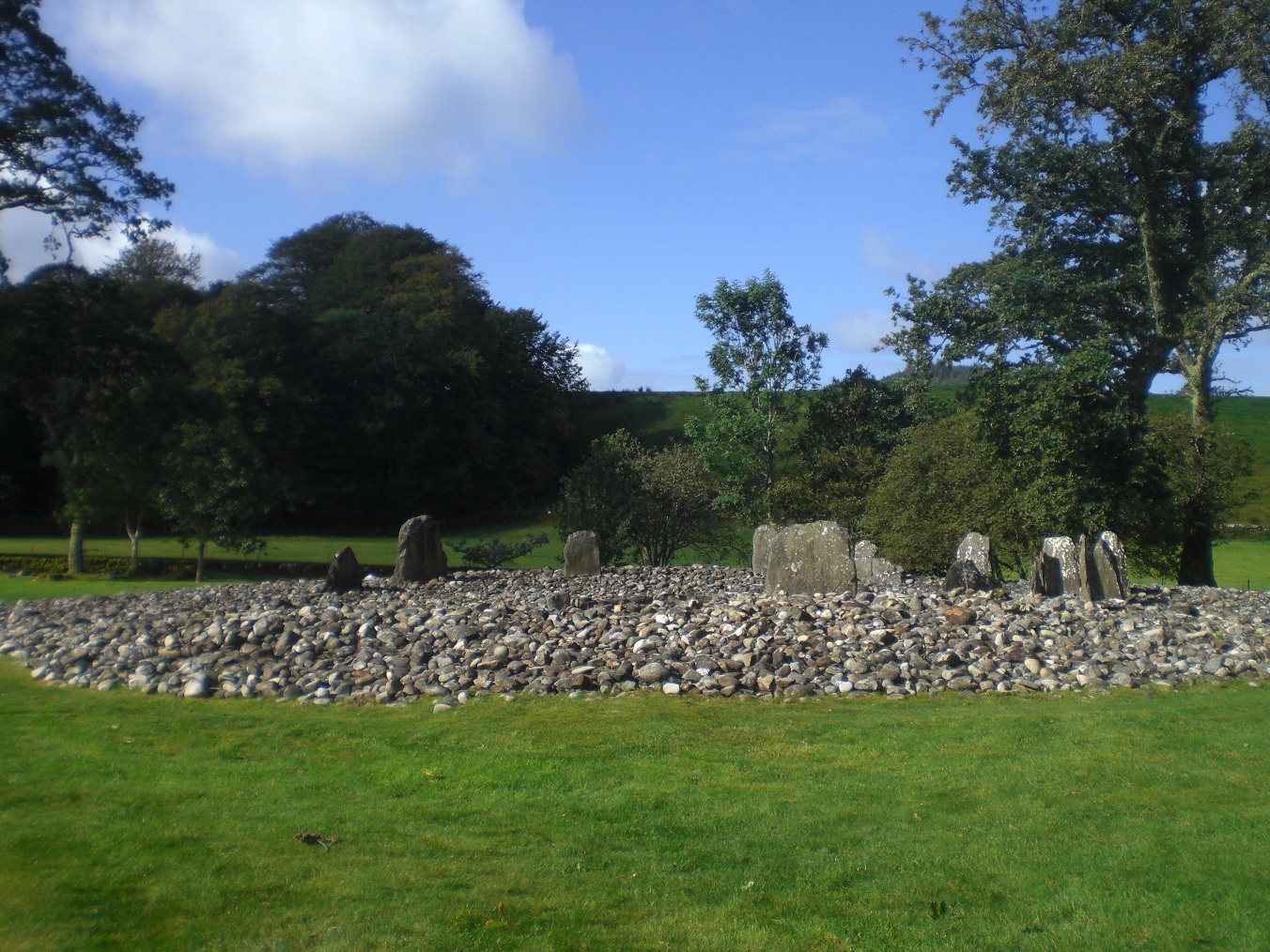
We return to Cairbre Riada, a descendant of Tuathal, had settled his people first in Munster (Ireland), but famine caused him to abandon this land (history repeats eh!). He established a kingdom between the Antrim Mountains and the sea. He obtained this territory between 254 and 273 AD. The word `Riada’, or `Righfadna’, means `the long-armed’. Cairbre Riada was a nobleman of high parentage. His father was Conaire II, King of the Province of Ulster from AD 212 to 220 and his mother was the daughter of the illustrious Warrior King, Conn of the Hundred Battles. The centre of his kingdom was the ancient Dunseverick Castle set on a great rock rising sheer from the Atlantic in the strongest defensive position of Ireland’s northern coast. Dal’ means ‘descendants’ and in a secondary sense `the territory of the descendant’. The word `Dalriada’ therefore signifies ‘the territory of the descendants of Cairbre Riada. Cairbre Riada’s heir, Eochach Dubhlein, married a Pictish princess, the daughter of the Albain King Obdaire. She bore him three sons, known in legend as the `three Collas’. The oldest, Colla Uais, aspired to the High Kingship of Tara but was defeated by a cousin. He and his brothers fled to Alba (Scotland -possibly to Colonsay). In due time they returned to Ireland and they won swordland and founded a Kingdom called Oriel. Cairbre Riada’s descendants ruled the coast area of Antrim until Colla Uais grandson, Erc of Dalriada, died. Erc had twelve sons, the youngest being Fergus, Lorn and Angus. The recorded history of Argyll begins in the 5th Century AD when it was invaded by the Scotti (Celts). The Scotti were the Gaelic-speaking people who had gained ascendancy in the north of Ireland. About the year 502 AD, Fergus, with Lorne and Angus, led a great organized invasion of the Scottish coast by the warriors of Dalriada. They successfully occupied the area now know as Argyll and some of the islands including Islay. Thus the Dalriadic settlement in Argyll was founded by the three sons of Erc. THUS, as it is known that the Irish invented whisk(e)y, and it was Irish who were the very first Scots, and my clan; Maclean is related to the High Kings of Ireland. The name Maclean – so history says – can link back to the kings of Dalriada. That’s one link, the other is Paul’s mum. She and her family are originally from Kilkenny in the Republic of Ireland. Yet more links: the Daly (Daley) coat of arms features a Lion, as does the Scottish Royal flag. Paul lived in a house is called Armagh, Paul’s mum lives in Portrush Street. We need go no further! Well, actually aye, please read on … so what has this all to do with whisky? I hear you ask. Easy; it is plainly obvious to me and any sane person, that it was a Maclean who invented whisky!
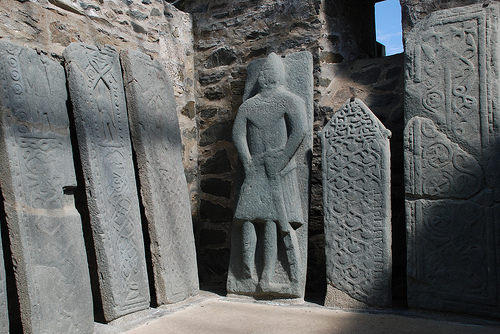
TO CONCLUDE; Conn of the Hundred Battles; well I have 100 whisky bottles at home, its sometimes a battle to decide what to down. Oban and area (where Dad came from) now has a distillery, so too Mull (Tobermory) with another being built over the water at Ardnamurchan. The Kingdom of Dalriada included Arran, Jura and Islay – see anything cropping up here related to whisky? Distillery plans also for Lewis and a wee distillery already there. Ok, my great ancestors were Irish, we all know that, my recent ancestors are Scottish, I am a Celt (is it any wonder I support Glasgow Celtic?), it is well known I love both Scotch and Irish drams, the mid ancestor Macleans were mixed with Vikings. The Norse have a great love for whisky. And then we have cousin Charlie (Maclean), so; to end, it must have been Maclean’s who invented whisky.
Story by Paul McLean; www.mcleanscotland.com whisky tours, www.angelswhiskyclub.com free to join worldwide online whisky club, Patron Charles Maclean.
Paul is from Connel near Oban, having also lived in England, Wales and Ireland, now in Perth.