Turning Time into Liquid Gold: The Deliberate, Patient Craft Behind Whisky Maturation – Scotch Whisky News


Turning time into liquid gold: the deliberate, patient craft behind whisky maturation
Making whisky is a slow process. Deliberately slow. How does time and expertise transform raw spirit into a mature, refined liquid?
A slow, transformative journey
It takes a minimum of three years of cask maturation for a whisky to be legally classified as Scotch. But at Diageo, we allow our whiskies to mature far longer than that, using patience and expertise to turn time into liquid gold.
We have always believed that the magic of Scotch whisky lies in its unique maturation process – a slow, transformative journey that takes place within the humble cask. For generations, our coopers, distillers, and blenders have relied on experience, intuition, and tradition to craft exceptional spirits.
Innovation partnership
The maturation journey
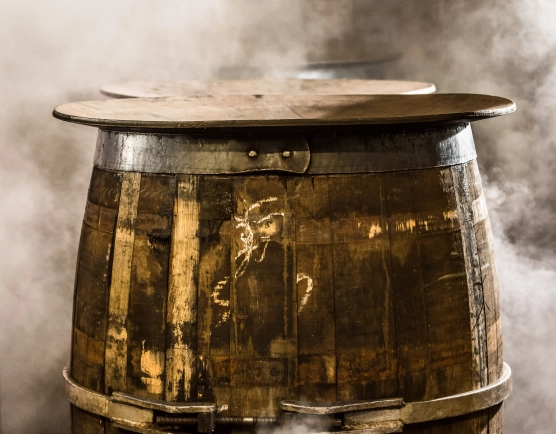
As whisky ages in oak casks, it transforms from a raw spirit into a complex, nuanced sip, extracting flavours and aromas from the wood and developing its signature character. The interaction between the spirit and cask impacts the whisky’s final flavour, making high quality oak casks essential to maturation. This process, often lasting decades, enriches the whisky’s profile and increases its market value.
At Diageo, we use oak casks which nurture and mature the spirit, adding sweetness, colour, and complexity. Most of our Scotch matures in former bourbon casks for vanilla and coconut notes, or seasoned European Oak and ex-sherry casks for richness. Cask selection, finishing, our investment in maturation technology, and the Master Blender’s expertise ensure each whisky reaches its full potential.
How do we use cutting-edge data and technology in Scotch production?
Producing a quality Scotch whisky is an art. The new Knowledge Transfer Partnership with Heriot-Watt and Diageo is particularly exciting because it combines traditional and novel methods to generate ‘big data’ that may be used to further understand whisky maturation.
Professor Annie Hill
Crafted with care
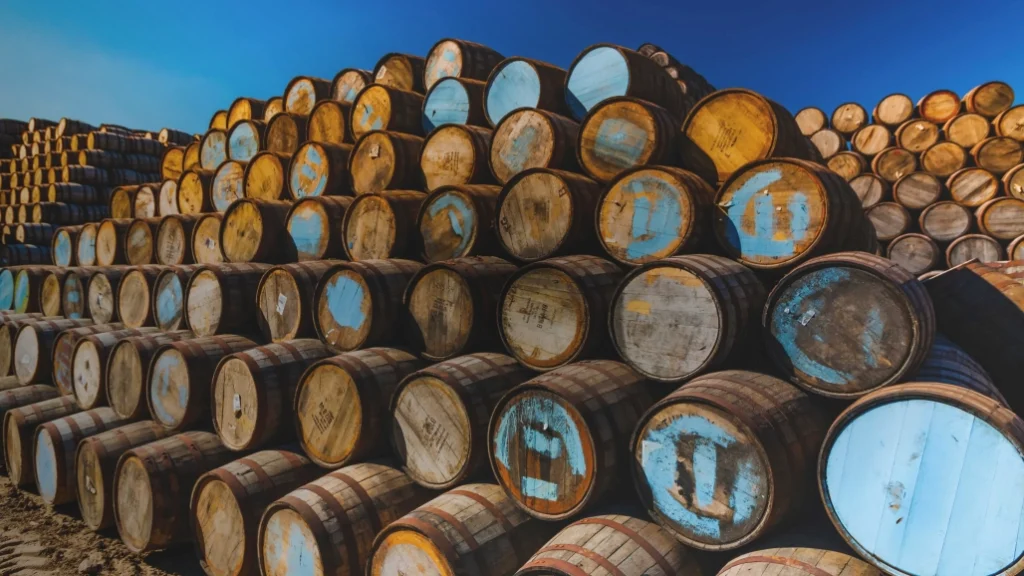
We currently have more than 10 million casks of whisky for our 100 brands maturing across Scotland, preparing for future celebrations around the world. Over the last decade, we have invested more than $1 billion dollars into Scotch whisky, including data insight and technology solutions, which put us at the cutting edge of Scotch production.
Our Scotch Intelligence Platform (SIP) is central to this process, with AI and increased scenario modelling allowing us to reclaim tens of thousands of litres of whisky from liquid losses during maturation. SIP also allows us to ship our bottles of Scotch around the world to the right markets, at the right time, to retain and recruit consumers. Craft, care and investment is what transforms our Scotch into liquid gold, both in terms of flavour development and value.
FIND OUT MORE ABOUT OUR SCOTCH BRANDS
From grain to liquid gold
What goes into the slow process to make our Scotches and iconic single malts? A good example is to look at the process behind Lagavulin 16, the definitive Islay malt, intensely flavoured, smoky, and rich and crafted for over 200 years in a small, picturesque bay. A legend takes time.
Craft and Cooperage
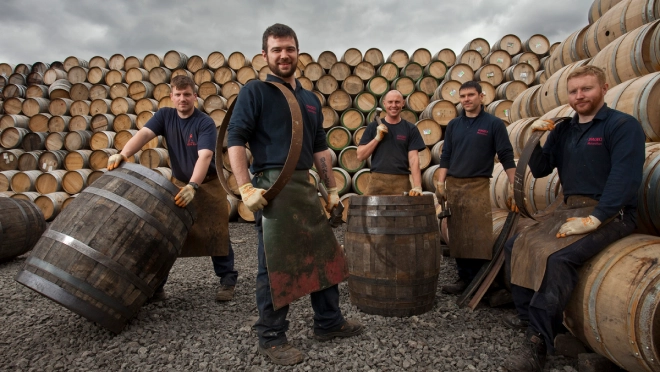
Craft and cooperage of the casks are essential to our maturation, and our generations of coopers skilfully repair and rejuvenate casks, ensuring each whisky develops its signature flavour, complexity, and character.
Our generations of coopers at Cambus Cooperage in Scotland skilfully repair and rejuvenate our oak casks, ensuring each whisky develops its signature flavour, complexity, and character while maturing. The traditional coopering skills take 10 years to master but once mastered, it lasts a lifetime