More than one million Jameson employee records spanning 100 years now available to search for free on Ancestry.ie – Irish Whiskey News
More than one million Jameson employee records spanning 100 years now available to search for free on Ancestry.ie
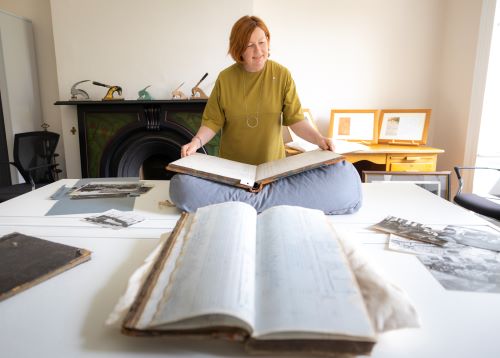
More than one million digitised wage book records from Jameson’s Bow Street Distillery in Dublin are now available on Ancestry and free to search throughout July
01 July 2021: Irish Distillers, producer of some of the world’s best loved Irish whiskeys, and Ancestry, the global leader in family history, are working together to share 100 years of Jameson employee records online.
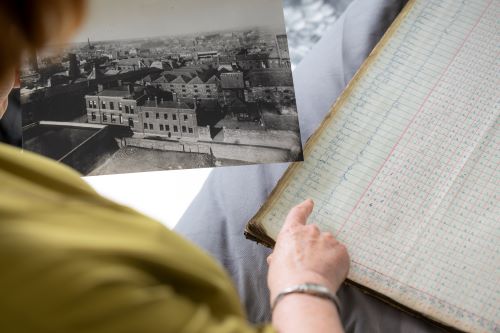
The historic Jameson Distillery Bow Street records, which are part of the Irish Distillers archive, contain detailed weekly wages books and include the employee names, as well as occupation, hours worked, and wages paid, spanning over 100 years from 1862 to 1969 (with records holding personal information available to view until 1937)[i]. The collection, which contains over one million indexed records, is now available to search on Ancestry and will be free of charge to access for the month of July[ii].
The records belong to Irish Distillers and the digitisation project with Ancestry will make them accessible to the public for the first time.
Every bottle of Jameson Irish whiskey features an emblem known as the ‘Barrelman’ which was first produced almost 100 years ago and symbolises the passion and team effort that goes into making every bottle of whiskey. The Jameson Distillery at Bow Street closed as an operational distillery in Dublin in the 1970s and production moved to Midleton, but today, the lives of its ‘Barrelmen’ can be explored through these digitised wage books – a potential treasure trove of information for those researching their Irish family history.
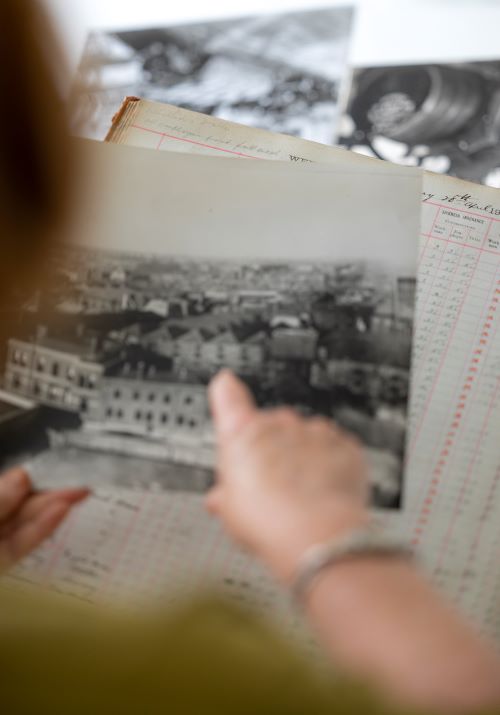
Additionally, the records show further insight into life in Ireland within the period covered. During the Easter Rising in 1916, the distillery on Bow Street was taken over by the rebels which meant no staff could get to work. By law, that meant the employer did not have to pay them. However, there is a note in the wage book to say: ‘Rebellion in Dublin, all employees paid full week’.
Carol Quinn, Archivist at Irish Distillers said: “We are incredibly proud to partner with Ancestry and bring these archives to a global public audience for the first time. These records are important for many reasons, but mainly because for many listed in the earlier volumes, there is no other surviving administrative record of their lives. Civil registration of births only began in 1864, so many may not have had birth certificates, and later records were destroyed in the bombing of the Four Courts in 1922.”
“While the archive is an internal resource for Irish Distillers and is not open to the public, I have always tried to answer any genealogical query that I receive. However, physically looking through the volumes – some of which are half a metre in size – isn’t good for the longevity of the records and leads to damage. Thanks to Ancestry and the team who came to Midleton to digitise the volumes, all of the records are available online and people can look up the records themselves and find out if their relatives worked at Jameson Distillery Bow Street and what their working life was like.”
Rhona Murray, Senior Content Acquisition Manager from Ancestry adds:
“Occupation records can be a key resource for those researching their family history as they often provide more detail and context on how their ancestors lived day-to-day. The Jameson Distillery Staff Wage and Employment Books are particularly important as they bring to life a time when the Jameson distillery played a vital role providing employment for the local community – and potentially your ancestors – in Dublin City. We are delighted to be working with Irish Distillers to preserve and provide online public access to this valuable collection, for people in Ireland and those with Irish heritage all around the world.”
Records in the collection span from 1862-1969, but in compliance with the General Data Protection Regulation (GDPR), records that hold personal details are only available to view up to 1937, to protect the privacy of any living people.
To access the records, click here.
About Irish Distillers
Irish Distillers is one of Ireland’s leading suppliers of spirits and wines, and producer of some of the world’s most well-known and successful Irish whiskeys. Led by Jameson, our brands are driving the global renaissance of Irish whiskey. Jameson is the world’s bestselling Irish whiskey, experiencing 30 years of consecutive growth and hitting sales of 8m cases in 2019. Our brands are exported to 130+ markets, with over 70 of those experiencing double or triple-digit growth.
Irish Distillers was formed in 1966, when a merger took place between John Power & Son, John Jameson & Son and Cork Distilleries Company. In 1988 Irish Distillers joined Pernod Ricard, gaining access to unprecedented levels of investment and an extensive global distribution network. Since 2012, we have invested over €400 million to double our production and bottling capacity to meet global demand for our products.
We employ over 600 people across our operations in Cork and Dublin.
About Ancestry®
Ancestry®, the global leader in family history and consumer genomics, empowers journeys of
personal discovery to enrich lives. With our unparalleled collection of more than 30 billion records and over 20 million people in our growing DNA network, customers can discover their family story and gain a new level of understanding about their lives. For over 30 years, we’ve built trusted relationships with millions of people who have chosen us as the platform for discovering, preserving and sharing the most important information about themselves and their families.
About Pernod Ricard
Pernod Ricard is the No.2 worldwide producer of wines and spirits with consolidated sales of €9,182 million in FY19. Created in 1975 by the merger of Ricard and Pernod, the Group has developed through organic growth and acquisitions: Seagram (2001), Allied Domecq (2005) and Vin&Sprit (2008). Pernod Ricard, which owns 16 of the Top 100 Spirits Brands, holds one of the most prestigious and comprehensive brand portfolios in the industry, including: Absolut Vodka, Ricard pastis, Ballantine’s, Chivas Regal, Royal Salute, and The Glenlivet Scotch whiskies, Jameson Irish whiskey, Martell cognac, Havana Club rum, Beefeater gin, Malibu liqueur, Mumm and Perrier-Jouët champagnes, as well Jacob’s Creek, Brancott Estate, Campo Viejo, and Kenwood wines. Pernod Ricard’s brands are distributed across 160+ markets and by its own salesforce in 73 markets. The Group’s decentralised organisation empowers its 19,000 employees to be true on-the-ground ambassadors of its vision of “Créateurs de Convivialité.” As reaffirmed by the Group’s three-year strategic plan, “Transform and Accelerate,” deployed in 2018, Pernod Ricard’s strategy focuses on investing in long-term, profitable growth for all stakeholders. The Group remains true to its three founding values: entrepreneurial spirit, mutual trust, and a strong sense of ethics. As illustrated by the 2030 roadmap supporting the United Nations Sustainable Development Goals (SDGs), “We bring good times from a good place.” In recognition of Pernod Ricard’s strong commitment to sustainable development and responsible consumption, it has received a Gold rating from Ecovadis and is ranked No. 1 in the beverage sector in Vigeo Eiris. Pernod Ricard is also a United Nation’s Global Compact LEAD company.
Pernod Ricard is listed on Euronext (Ticker: RI; ISIN code: FR0000120693) and is part of the CAC 40 index.
[I] Records in the collection span from 1862-1969, but in compliance with the General Data Protection Regulation (GDPR) and to protect the privacy of living people, records that hold personal details are only available to view up to 1937
[II] Free access ends 31 Jul 2021 at 11:59 p.m. To view these records, you will need to register for free with Ancestry with your name and email address. We will then send you a username and password to access the records. After the free access period ends, you will only be able to view the records in the featured collection using an Ancestry paid membership.