Distillery profiles: Imperial by Mark Davidson (aka The Jolly Toper) – Lost Scotch Whisky News
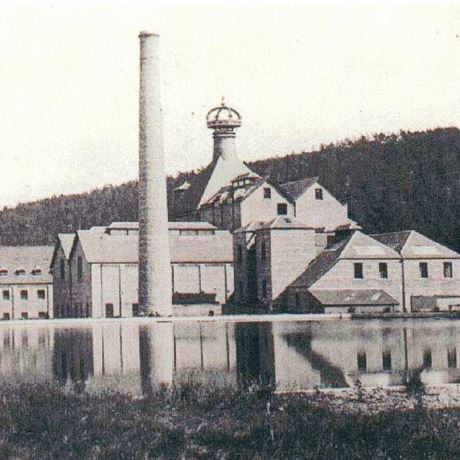
Photo credit scotchwhisky.com
Distillery profiles: Imperial
Imperial distillery was designed by Charles Doig and was, unusually, built using bricks.,There was also an iron framework and walls 2ft thick in places to resist fire damage. All internal doors were iron for the same reason. There was quite a community on the site with 24 company houses built for use by employees. The distillery was located in the hamlet of Carron by the Spey taking advantage of the railway line and had it ‘s own substantial sidings which extended to nearby sister distillery Dailuaine. The year of construction, 1897, was Queen Victoria’s diamond jubilee year hence the name. To mark the occasion a gilded crown adorned one of the kiln roofs.
Imperial was established by farmer’s son Thomas Mackenzie in 1897 Thomas’s father, William, founded nearby Dailuaine distillery. Upon his father’s passing Thomas expanded the business having become a partner. He also had interests in Talisker distillery and merged the two creating Dailuaine-Talisker Distilleries Ltd in 1898, a company for which he was both chairman and managing director. The capacity of the three distilleries meant the company had the highest potential output of any Highland distilling company. The business’s offices were located at Imperial. When investment in the Scotch whisky business slumped after the collapse of Pattison’s Imperial was closed after only a single season in 1899 having just started production in July 1898.
Distilling only restarted 20 years later in 1919 after the death of Mackenzie. As he had no family of his own a take-over of the company in 1916 was arranged by a consortium of its customers: Dewars, Distillers Company Limited (DCL), W. P. Lowrie and Johnnie Walker. It was not long, 1925, before the business was subsumed into the mighty DCL. This followed the amalgamation of the ‘Big Three’: Buchanan’s, Dewar’s and Walker’s with DCL. The 3 distilleries were however operated as a separate company within DCL until as late as the early 1980s. When Dailuaine-Talisker Distilleries Ltd. was taken over the company also owned the closed Bon Accord distillery in Aberdeen.
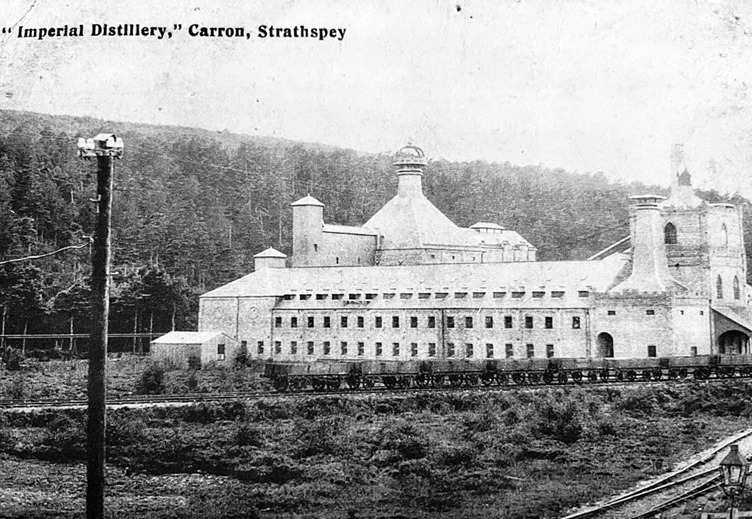
The Wine & Spirit Trade Record’s visit in 1925 used words like: “mammoth”, “huge”, “massive”, “exceptionally large” and “immense” to describe the operation at Imperial. The journal also noted use of an Abernethy mill, rather than the almost ubiquitous Porteous or Boby appliances. An “almost unique” “double decker” kiln I can’t quite get my heid round is mentioned as well as a two floored mash-house with the lower floor accommodating No. 2 mash-tun “for draining purposes”.
The re-opening in 1919 didn’t last long due to issues of waste disposal despite the installation of large filter beds to purify waste before entering the Spey. Imperial shut again in 1925, this time for 30 years although malting continued on site.
Like other distilleries in times of hostilities Imperial was used as a billet for troops during the Second World War. Another occasion when the distillery’s facilities were employed for uses other than whisky production was when the Caledonian swimming club used the distillery dam for summer galas.
Early trials of converting distilling waste products into food for cattle were conducted on site before a processing plant was established. Once this dark grains plant overcame the problems of disposing of by-products Imperial was again able to commence production. At this time the whole industry was gearing up in response to the rise in demand for blended whisky in the post war era. A refit managed by new DCL subsidiary Scotch Malt Distillers (SMD) in 1955 heralded this recommissioning on 19th December. Due to poor condition the famous crown was removed. I have read one reference to “electric distilling plant” at this time from author Michael Brander but have found no more about this interesting feature. During renovations the mash and still houses were updated and No.4 warehouse was built. It is possible that shell and tube condensers replaced worm tubs at this juncture although this change may have came about later. Perhaps it was also at this juncture that a Porteus mill was installed.
Ten years after reopening the stills were increased from 2 to 4 boosting capacity to 3ML. The stills were amongst the largest in the Scottish industry, the wash stills had 36KL capacity with a 18KL charge while the spirit stills were just under 34KL capacity with a 21KL charge. The lantern style wash stills’ lyne arm had no angle but the onion shaped spirit stills’ arms descended. The 6 larch wash backs held 56.6KL of wash and latterly the yeast used was a combination of brewer’s and distiller’s. In 1967 Saladin maltings were added which also helped meet the needs of nearby sister distilleries Cardhu and Benrinnes. Additional storage capacity was also required for peat, barley and malt.
In 1969 still heating moved from coal to internal steam heating and the swap in condensing method mentioned earlier may have actually been during this period of improvements. The original rake and plough cast iron mash tun was later replaced with a stainless steel model using mechanical paddles and a copper top although I haven’t confirmed the date of this change. Production and cooling water was piped from the Ballintomb Burn which flows from the Aldach springs in the Mannoch Hills. At one time the burn also powered a turbine.
Dailuaine-Talisker Distilleries Ltd was wound up in 1982 and the distillery properly became part of SMD with the licence to distil being transferred to Peter Dawson Limited. Annual output was recorded as being reduced to 1.6ML in the 1980s which was a difficult decade for the industry. By 1986 only 2 of the 24 company houses were occupied by staff.
Yet another closure came in March 1985 ending the longest unbroken period of production at Imperial : 30 years. The Saladin maltings had closed the previous year which reduced staffing from 30 to 20.
After DCL was acquired by Guinness the distillery was sold to Allied Distillers Limited (ADL) in 1989/90, Glentauchers was also included in the sale. Upon refurbishment Imperial restarted in 1991 but shut for the final time 7 years later. James Scott was the last manager and John MacDougal tells a story of catching several staff stealing whisky during this period. Some of the misappropriated spirit was later sold, those responsible lost their jobs.
In total the distillery operated for only 43 years, 40% of its lifespan. On the sale and dismantling of Allied in 2005 the distillery ended up belonging to The Chivas Brothers in turn owned by Pernod Ricard. In spring 2005 estate agents were instructed to sell the buildings with the intention of conversion to apartments.
In December 2007 thieves were interrupted by Chivas staff attempting to steal copper from the utensils on site. Imperial was demolished in 2013 after the news of a new distillery was announced in 2012 : the building of Dalmunach distillery commenced in 2014 on the site with the plant entering commissioning in 2015.
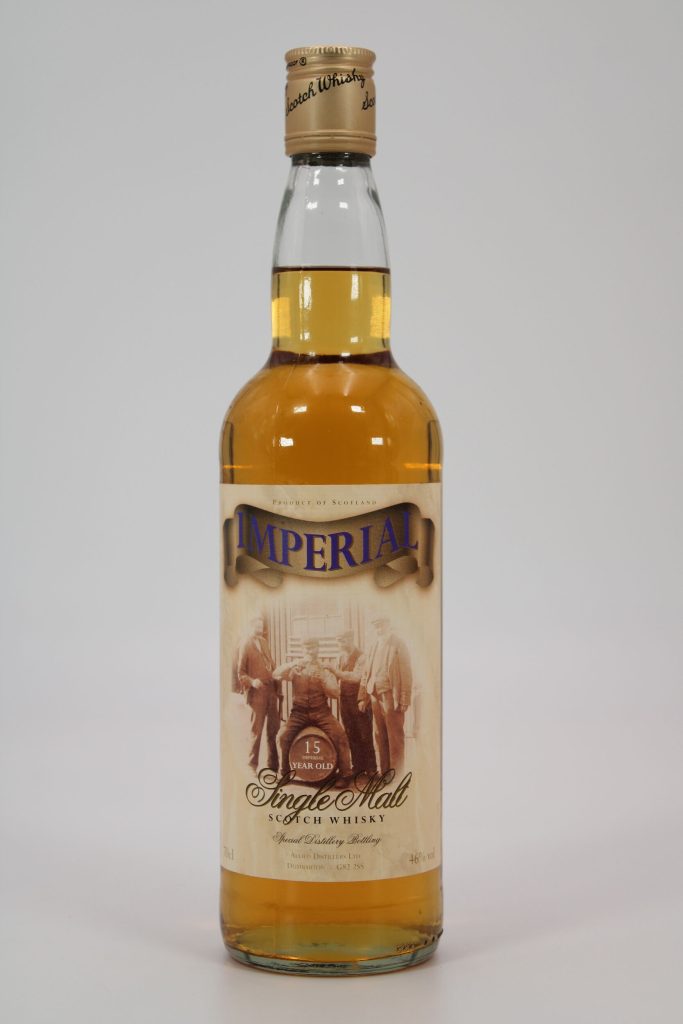
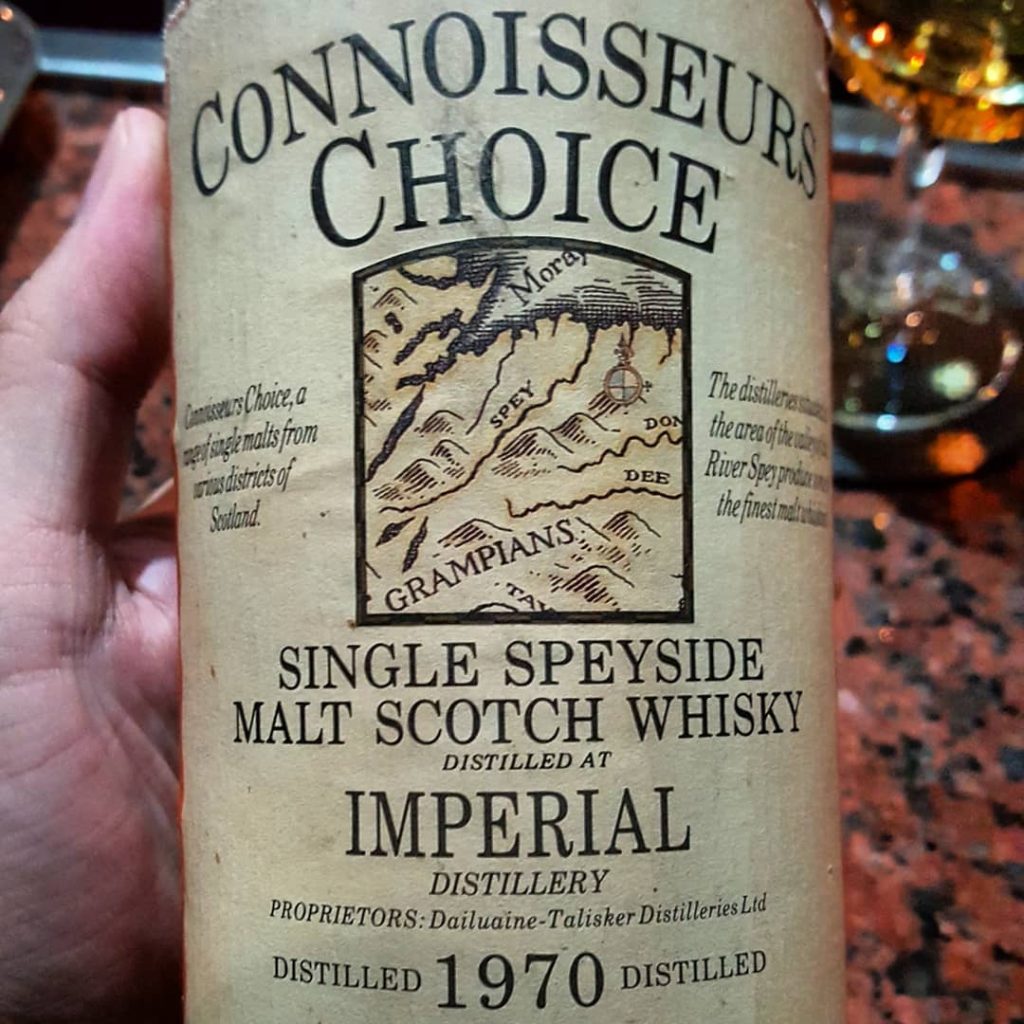
Official bottlings are rare although a 15yo 46% version appeared around 1999 alongside 5 other distilleries from Allied. Gordon and MacPhail notably regularly bottled vintage expressions for a period. Over time and through the changing owners Imperial was used for a variety of blends including Black Bottle whilst under Allied who later sold the brand to Highland Distillers, Old Smuggler, Teachers, Long John and Ballantines.
Mark Davidson, aka The Jolly Toper Profile