Distillery profiles: Glen Esk by Mark Davidson (aka The Jolly Toper) – Lost Scotch Whisky News
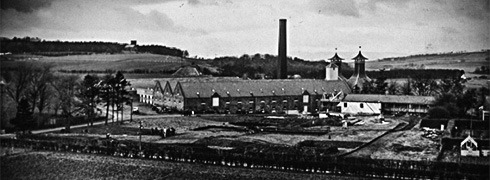
Distillery profiles: Glen Esk
Glen Esk was commissioned in 1897 and was located just north of Montrose on the east coast of Scotland between Dundee and Aberdeen not far from Hillside station on the North British railway line. Dundee wine merchant James Isles and his business partner London wine & spirit merchants Septimus Parsonage combined to commission the distillery. The extant buildings on site were converted from a flax mill for the purposes of distilling, flax canvas being used for sails. The original choice of name was Highland Esk, ‘esk’ being derived from ‘uisge’ Gaelic for ‘water’.
Changing hands in the run up to WWI it was run by distillers J. F. Caille Heddle when Parsonage hit cash flow problems. At this point the name North Esk Distillery was adopted. There was a fire in 1910 although production resumed swiftly. Like other similar facilities the distillery was closed during the First World War and used as a billet by the army. After the war the halt to distilling continued although it was used for malting from 1919 after acquisition by Thomas Bernard & Co. The distillery was converted to grain production in 1938 when entrepreneur Joseph Hobbs, managing Associated Scottish Distillers Ltd part of Train & MacIntyre themselves a subsidiary of National Distillers of America took over. At this point the distillery’s name was changed to “Montrose”, employment level was around 30 staff. The promise of jobs and the boost to the local economy crucially persuaded the local council to grant wastewater disposal from the distillery into the area’s sewage network. This was a practice not appreciated by the fishing board which also had reservations over whether the system was adequate to deal with the additional pressure on the waste water facilities.
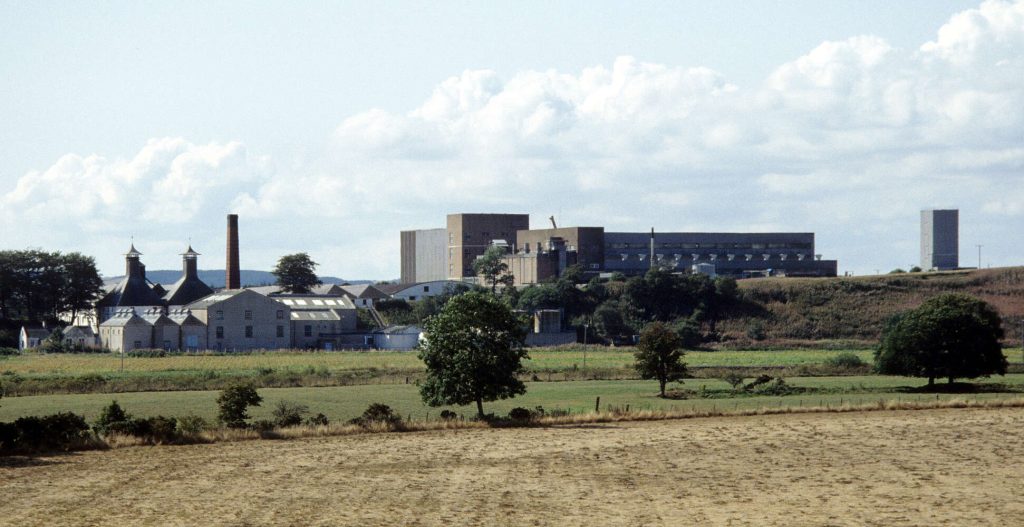
During WWII there was a forced closure between 1941 and 1945 and the distillery was once again used as a barracks by the military. DCL took over in 1954 although initially only making use of the warehousing and malting facilities. Grain distilling operations restarted in 1959 then there was a return to the making of malt whisky with the removal of the small column stills and installation of 4 new steam heated pot stills which started production in November 1964. At this point the distillery had yet another name change, this time to ‘Hillside”, the distillery was now under the wing of DCL’s Scotch Malt Distillers (SMD). Large drum maltings were added to the site in 1968 further increasing to 24 drums in 1973. Each drum held an impressive 31 tonnes of barley. DCL also had maltings at Burghead, Muir of Ord, Port Ellen and Roseisle. Floor maltings at their distilleries were stopped in the 1960s when rising demand called for output greater than could be met by traditional hand malting methods. Another name change, “Glen Esk” came on 1.5.1980 just 5 years before the distillery finally closed on 31.5.1985. The license was cancelled in 1992 however malting continues on site. Paul’s Malt Ltd acquired the plant in 1996, they were then taken over by Greencore Malt in 1998.
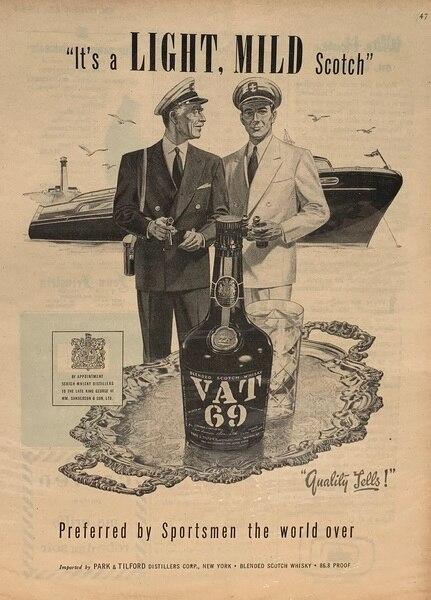
Only some crumbling warehouses remain of the distillery, the main buildings having been demolished in 1996. The make was associated with the successful blend Vat 69, the distillery being registered to brand owner William Sanderson & Sons of Queensferry during its DCL days.
Equipment at the time of closure: a copper domed mash tun, 8 wooden washbacks, 2 pairs of large stills which were based on Craigellachie distillery’s design. These were steam heated on installation in 1965, an early example of the method and had internal condensers. Output was 2.5ML. On-site storage was around 28,000 casks over 6 warehouse.
The last manager was G. Pirie, a Mr Dykes managed from 1965-1979.
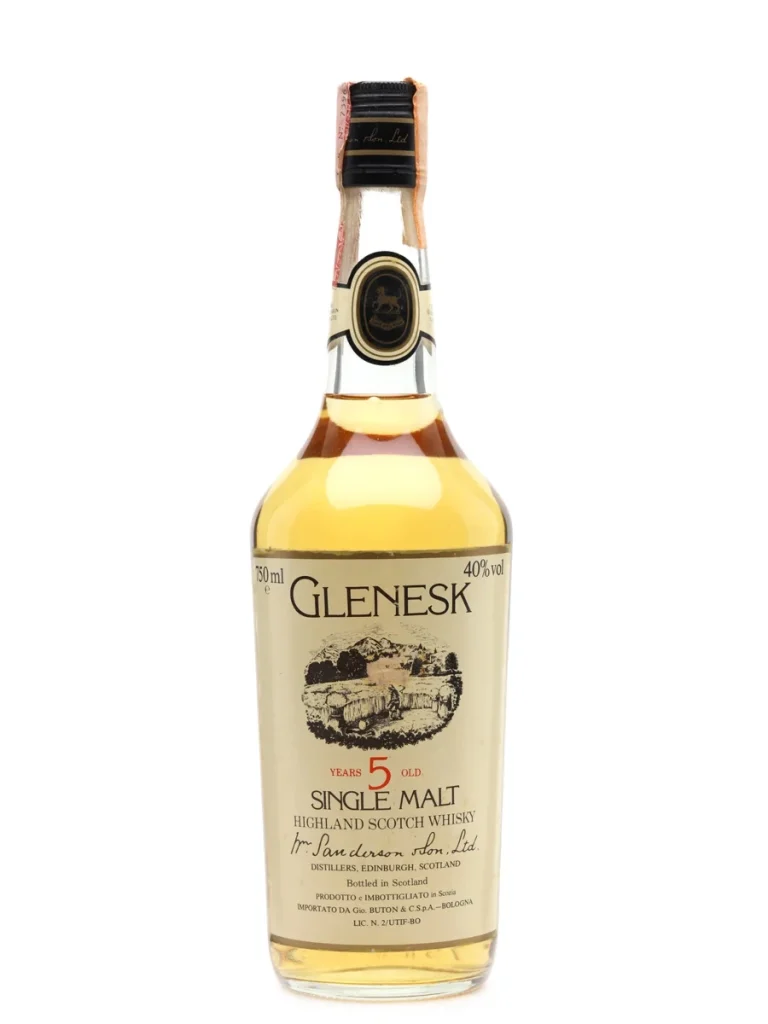
photo credit whisky.auction
Official bottlings : there was a 5yo for Italy and a 12yo for the domestic market.
The 25th anniversary of the maltings in 1983 was marked with the bottling of a 24yo 1969 Glenesk at 60%. In the Rare Malt range there were 4 editions of Hillside: a 25yo 1969 at 61.9%, two from 1970 both at 25yo one at 61.1% and the other 60.1% as well as a 1971 again at a high strength, 62%.
Mark Davidson, aka The Jolly Toper Profile