SCOTCH WHISKY DISTILLERIES UNVEIL UNIQUE SPIRITS BASED ON 1920S TECHNIQUES – Scotch Whisky News


SCOTCH WHISKY DISTILLERIES UNVEIL UNIQUE SPIRITS BASED
ON 1920S TECHNIQUES
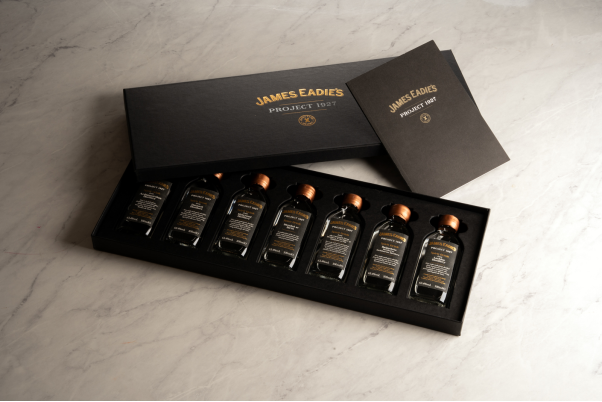
Six of Scotland’s most innovative distilleries have partnered with James Eadie to create a groundbreaking whisky collection, bringing nearly forgotten 1920s distillation techniques back to life.
Project 1927 is the first collaboration of its kind, uniting independent distilleries across Scotland to revive century-old production methods. Inspired by a historic early 20th-century guide to Scotch whisky production, this September marks the first time the public can experience these historic spirits, as each distillery’s unique new make spirit is released in a special collection, marking the beginning of their journey to becoming whisky.
The Distillation of Whisky, 1927-1931, one of the few available practical first-hand resources dating from Scotch whisky’s early history, was republished by James Eadie Ltd in 2023 in collaboration with the British Library, and illuminates lost whisky-making techniques from the interwar years.
Crafted at Ardnamurchan, Dornoch, Holyrood, InchDairnie, Lochlea, and ‘An Unnamed Farm Distillery in the Heart of the Kingdom of Fife’, with assistance from renowned whisky expert Dave Broom and Alan Winchester, former Master Distiller of The Glenlivet, the ground-breaking new make spirits were produced adhering to techniques derived from The Distillation of Whisky.
Each distillery has drawn its own inspiration from the book to imitate production methods from 100 years ago, blending tradition with modern expertise to produce spirits that offer a truly unique taste of Scotch whisky’s rich heritage. This collaborative effort not only revives lost techniques but also sets a new benchmark in today’s whisky industry.
The distilleries had exclusive use of locally grown barley or those varieties that were grown in the 1920s as well as exclusive use of brewer’s yeast for distilling, something which was standard at that time but is now almost unheard of.
New make spirit packs will also include a ‘blended at birth’ bottling containing spirit from each of the distilleries blended together. Each of the new make spirits have been bottled at 63.4% ABV, with an exclusive presale for buyers of The Distillation of Whisky launching on 4th September.
Leon Kuebler, Brand Director at James Eadie Ltd, commented:
“James Eadie is a business rooted in Scotch whisky’s rich tradition. Our dream was always to recreate the whisky of 100 years ago, even if the huge challenges involved meant that we doubted it could ever be done. To have the opportunity to develop this project on an industry- wide level with six of the best distilleries in Scotland today, in conjunction with Alan Winchester and Dave Broom, two of the most knowledgeable authorities on Scotch whisky, has truly been the privilege of a lifetime.
Project 1927 is not just about reviving the past; it is about celebrating the enduring legacy of Scotch whisky and the innovative spirit of today’s distillers. We believe whisky enthusiasts will find these spirits as fascinating as they are unique, and we look forward to experiencing the journey together as the spirit matures.”
Arthur Motley, Managing Director at Royal Mile Whiskies, said:
“Ever since Leon shared his brilliant idea to involve these six amazing distilleries, I knew it was something extraordinary to be a part of. As someone who deeply appreciates whisky history, this project is a rare chance to delve into Scotland’s distilling heritage like never before.
The dedication, ingenuity and expertise poured into these spirits genuinely excites me; they’re a true reflection of what makes the Scotch whisky industry so special today. At Royal Mile Whiskies, we’re honoured to be the chosen retailer for The Distillation of Whisky book and these exceptional spirit packs.”
Dave Broom, whisky expert and author, commented:
“This was an inspired idea from Leon, to not only discover the truths of how whisky was made in the 1920s – exploding a few myths along the way – but then turning the information contained in this must-have book into something tangible. It is one thing to read the theory, but whisky is about flavour. Here was a way to learn.
‘The Scotch industry is at a fascinating stage in its evolution with any number of forward-thinking distillers using ‘old’ techniques to maximise flavour and increase complexity. Here was a toolkit for them to continue those explorations. The new makes they have produced are remarkable and fascinating. Congratulations to all involved.’”
James Eadie Ltd plans to continue this series, maturing these new make spirits into whisky with future releases to follow in coming years.
The Distillation of Whisky, 1927-1931, is exclusively available for purchase at Scotland’s leading independent whisky specialist retailer, Royal Mile Whiskies. Customers who purchase the book can enjoy an exclusive presale of the new make spirits priced at £115.00 on September 17, 2024.
The new make spirits will be available for general sale at royalmilewhiskies.com starting September 24, 2024.
About James Eadie Ltd
First established in 1854, James Eadie Ltd is an independent Scotch whisky blender and bottler. Revived in 2016 by the founder’s great-great-grandson, Rupert Patrick, the company is building a reputation as a supplier of top quality specialist whiskies. James Eadie exports its single malts to sixteen international markets, as well as widespread distribution in the United Kingdom through specialist retailers.
James Eadie Ltd also owns a blended Scotch whisky brand, Trade Mark “X”. Dormant since its last bottling in the late 1940s, this brand was revived in October 2017, when Master Blender Norman Mathison used his fifty years’ blending experience to re-master this once famous Scotch. A key feature in this revival has been the discovery of the company’s original whisky ledgers from the mid to late 19th Century, which revealed a blend made from some of Scotland’s finest whiskies, then and now. Only whiskies from distilleries listed in the founder’s ledgers have been used.
James Eadie Ltd is a member of the Scotch Whisky Association, whose role is to advance the global interests and profile of Scotch whisky.
For further information, please visit https://www.jameseadie.co.uk
About Royal Mile Whiskies
Royal Mile Whiskies is one of the world’s most respected specialist whisky retailers. Established in 1991 on Edinburgh’s famous Royal Mile, it quickly gained a reputation as the go-to place to find new, interesting and hard-to-find whiskies and spirits.
In 2000, the company launched www.royalmilewhiskies.com, which made it one of the first to retail whisky online. Today, Royal Mile Whiskies ships thousands of whiskies each year to customers around the globe from their Scotland base. Royal Mile Whiskies’ worldwide reputation is largely due to its enthusiastic and knowledgeable team of whisky enthusiasts.
The Royal Mile Whiskies Trade department is seen as the pre-eminent wholesaler of specialist spirits into the Scottish bar trade, with an accounts list of some of the very best hospitality venues in Scotland and beyond.
The retail outlet sits under the Dormant Distillery Company (DDC) alongside Drinkmonger, a specialist wine and fine spirits retailer with bases in Pitlochry and Bruntsfield, and The Cigar Box.
About Dave Broom
Dave Broom has been writing about drink for 35 years and specialising in spirits for 28 of them. A Master of the Quaich, he has written 14 books (the most recent being 2022’s A Sense of Place) and made a couple of films, winning numerous awards in the process, including the 2013 IWSC Communicator of the Year Award, an Andre Simon place for his 2018 book The Way of Whisky, and Best Drinks Writer at the 2020 Fortnum & Mason awards. Originally from Glasgow, Dave now resides in England.
Distillery Inspiration Quotes
Ardnamurchan
Ardnamurchan has been a forward-focused distillery in every aspect of our production process since we started distilling in 2014. To have the opportunity to take cues from distillers of the past, and attempt to implement them within a modern distillery, was too intriguing a prospect to pass up.
The aim of the project is to replicate, as near as possible, the mashing, fermentation and distilling methods used between 1927 and 1931. This requires the adoption and, on occasion, omission of modern technological advances in our production process to authentically achieve this. Changes were also be made to temperatures, settling times, cut points and more. By looking to the past, we hope to learn something new that we can adopt in the future.
Dornoch
Here at Dornoch we have always taken inspiration from ‘old style’ production, with heritage barley varieties, spent brewer’s yeast, long fermentation times and cut points made by sense being amongst the cornerstones of our production. Our standard production model (which we adapted for this collaboration with James Eadie) is based heavily in production techniques common in the early twentieth century, and we frequently employ ingredients and techniques commonplace in the nineteenth century and earlier. With such a focus on historic distilling practices, the team here at Dornoch were incredibly excited when we were approached by James Eadie about the project, and used the information provided in this book to create something unique and explore aspects of ‘old-style’ we had not yet explored here at Dornoch.
Holyrood
For this collaboration with James Eadie, our inspiration came from the heritage malts themselves. At Holyrood, we have been working with a variety of heritage malts and with this project we have been able to reflect on our work so far. Our mashbill used 2 of our favourite heritage malts as the base, Chevallier and Plumage Archer, each chosen for the complex flavours and textures they impart on our spirit and as they were principal barley races of the 1920s.
We have selected Chevallier malt for the delicious bready and biscuity notes and chalky, viscous texture that contributes to a longer finish, allowing the more subtle flavours in the spirit to linger. Plumage Archer brings juicy, fruity flavours alongside hints of toffee, which marry beautifully with the bready notes of Chevallier. We layered this heritage base with a small inclusion of Highland peated malt, as a nod to the historic use of peated malt within Scotch single malt through the kilning process.
For this recipe, we exclusively pitched one of our most cherished yeast strains – Edinburgh Ale Yeast (EAY). EAY is a modern strain, which owes its origins to the homogenisation of historical Edinburgh yeasts shared amongst the breweries of the old city. We selected this yeast to pay homage to our home city and also for the tropical, fruity flavours it brings.
InchDairnie
We were struck by the Champonnois still (see pp. 354, 358 in The Distillation of Whisky, 1927-1931), which resembles our Lomond Hill still, and the barbet caps in this book (p. 335), which look very similar to our bubble caps on the six trays in the Lomond Hill still neck. The Champonnois still was a French construction, later adopted by German distillers, mostly used to rectify wines and marc. It was not a continuous still but a batch still, again like our Lomond Hill still. The question which therefore needs to be asked is to what extent did this design form any part of the design for the original Lomond still, which first appeared in Scotland in the 1950s.
Lochlea
We aimed to produce a spirit that the distillers and blenders from 100 years ago would recognise: one with a heavier creamier character, elegant floral and fruit forward tasting notes. We also plan to show some of the flavours that a winter whisky can bring – a subject mentioned often in this book. We hope that the liquid produced should have recognisable characteristics from 100 years ago but also that will allow current consumers to understand what the last century of change has made.
An Unnamed Farm Distillery in the Heart of the Kingdom of Fife
Many of the methods and parameters used back in the 1920s are exactly the same or very similar to what we are using today: long fermentation times, use of local farm-grown barley and traditional dunnage warehouses, for example. In my view, the big differences between now and then are the malt and yeast strains that we are using. It will be very interesting to see the differences that these things make to the final spirit and more interesting still to see if these differences remain as the spirit ages. Although you cannot replicate exactly what people did 100 years ago this is possibly as close as you can get.