Mark’s Whisky Ramblings 319: Cambus 23 Year Old 1991 Signatory Vintage
Mark Dermul, Belgian whisky vlogger, tries a grain from a closed distillery. Cambus is no more. The distillery, founded in 1813, closed in 1993 and was converted into a modern, semi-automatic cooperage. In 2014 Signatory bottled a refill sherry butt from 1991 in those beautiful decanters from their Cask Strength Collection.
TOURS AND VISITATION TO RESUME AT BUFFALO TRACE DISTILLERY ON JULY 1
Distillery to Create Safe Haven Bourbon Experience
Through Sanitization Measures and Limited Tours Sizes
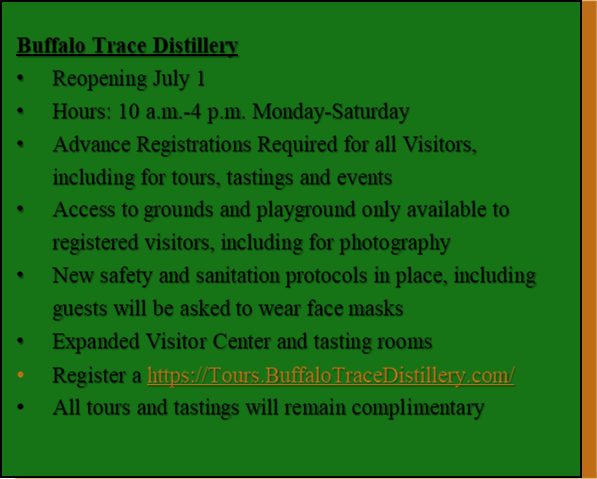
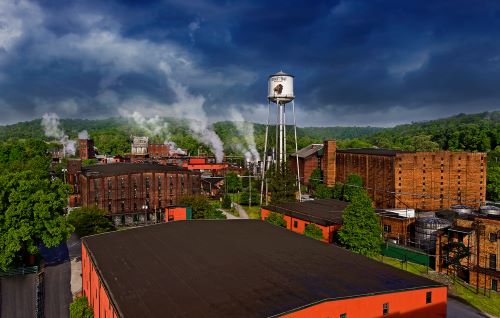
FRANKFORT, FRANKLIN COUNTY, KY (June 22, 2020) – Buffalo Trace will welcome guests back to the National Historic Landmark Distillery on July 1 with a distinct focus on offering visitors the safest possible environment for their bourbon encounter. Visitors can expect to experience the same rich history and to see the oldest continually operating Distillery in action, but with new measures in accordance with CDC guidelines and government recommendations.
Guests will be required to register for a tour or event in advance of their visit in order for the Distillery to efficiently manage tour and group sizes with respect to social distancing. The Distillery grounds and playground will only be available to guests who have registered and checked-in. This includes usage of the grounds for photography.
Arriving guests will need to check in, where their individual contact information will be recorded in the event contact tracing needs to be performed, and have their temperature taken. Guests will also be asked to wear a face mask. For anyone who forgets theirs, one will be provided. Visitors can take comfort in knowing that all employees at the distillery will also be wearing face masks and will have had their temperatures taken upon entrance.
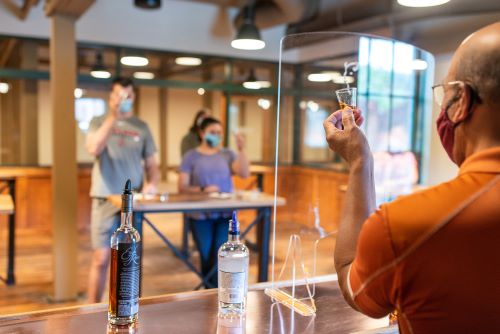
Tours and events will be kept to small, comfortable groups to allow for social distancing, and protective shields have been installed at the bars and cash registers. Gift Shop capacity will also be limited to allow for safe, enjoyable shopping experiences.
To make social distancing a little easier, Buffalo Trace will be reopening with a newly expanded Visitor Center, which triples the size of the original Visitor Center, and will allow ample space and comfort for guests exploring the Gift Shop or tasting in the new expansive tasting rooms.
With all of these safeguards, as well as the expanded Visitor Center, guests can expect to explore decades of bourbon making history, sample award-winning products, and experience the charm of this National Historic Landmark, as in the past. All tours and tastings remain complimentary.
“We are taking every step we can to address the health, safety and comfort of our guests to ensure the best experience possible,” Homeplace Development Director Meredith Moody said. “Our goal is to create a safe haven for all visitors while providing the same rich history and experiences for which we’re known. We can’t wait to reopen to the public and show guests our expanded Visitor Center and tasting rooms.”
Operating hours for Buffalo Trace Distillery will be 10 a.m.-4 p.m. Monday through Saturday. Registrations for the Trace Tour, Old Taylor Tour, Bourbon Barrel Tour and Expansion Tour can be made at https://tours.buffalotracedistillery.com/. Curbside sales will also continue. To place an order visit https://buffalotracegiftshop.com/.
A complete list of new safety procedures, along with information about enacted sanitation measures and protective equipment in use can be found here. Full details about what to expect will be provided to guests upon registration.
About Buffalo Trace Distillery
Buffalo Trace Distillery is an American family-owned company based in Frankfort, Franklin County, Kentucky. The Distillery’s rich tradition dates back to 1773 and includes such legends as E.H. Taylor, Jr., George T. Stagg, Albert B. Blanton, Orville Schupp, and Elmer T. Lee. Buffalo Trace Distillery is a fully operational Distillery producing bourbon, rye and vodka on site and is a National Historic Landmark as well as is listed on the National Register of Historic Places. The Distillery has won 35 distillery titles since 2000 from such notable publications as Whisky Magazine, Whisky Advocate Magazine and Wine Enthusiast Magazine. Its Col. E. H. Taylor, Jr. Four Grain Bourbon was named World Whiskey of the Year by “Jim Murray’s Whiskey Bible 2018” and its William Larue Weller and Thomas H. Handy Sazerac were named 2nd and 3rd finest whiskeys in the world, respectively, in the “Jim Murray Whiskey Bible 2020.” Buffalo Trace Distillery has also garnered more than 1,000 awards for its wide range of premium whiskies. To learn more about Buffalo Trace Distillery visit www.buffalotracedistillery.com
Ever since Waterford first spun up its mill and stepped into the world of distilling in 2017, it’s been disruptive; doing something different and challenging both the whisky industry and consumers. But now, after three years of talking a good game, the distillery team has finally released their first whiskies. How do they stand up to the rest of the whisk(e)y world, what do they taste like, and do they answer the question at the heart of the distillery: does terroir matter?
IN THE BEGINNING, WAS BRUICHLADDICH
Waterford founder Mark Reynier has been in the drinks industry for a long time: 40 years. He’s had an interesting career, divided in two by the year 2000 – the year where he led a group to purchase Bruichladdich. In the beginning, he was a wine man, focused on regionality, the vineyards and even the soil that the grapes were grown in.
He brought that same focus to the distillery and, before Bruichladdich was sold in 2012, the distillery team had started experimenting with different barleys. Not so much the different varieties of barley – a task that distillers do every year to see which will yield the most spirit and work best for their processes – but barley from different farms, an investigation into how terroir affects the grain and the spirit it makes. With Bruichladdich sold, Reynier’s focus intensified, and a few years later Waterford appeared on the scene.
A NOTE ON TERROIR
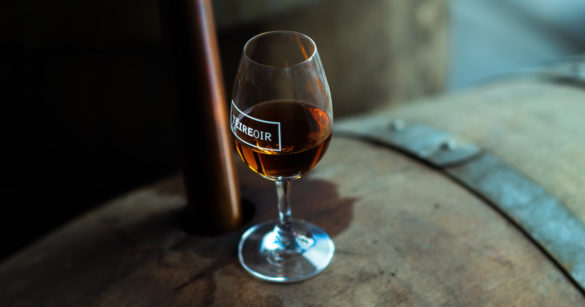
Terroir – or Teireoir as Waterford style it – is a divisive term in the whisky world. It’s a French word that simply means ‘region’ or ‘area’, or, if you dive into the agricultural, ‘soil’. In wine, it means a lot more than those simple translations suggest, bringing together all of the factors that make the grapes taste as they do, from soil type, to altitude, slope of vineyard, direction it faces and, depending on how deep you want to go, the attitude of the wine maker to growing. It’s the natural expression of the place where a grape is grown and the flavours that produces.
There are almost constant debates online – and even a famous in-person debate between Mark Reynier and Diageo’s Nick Morgan – as to whether it’s a concept that has any merit in whisky. The process of distillation is much more destructive than wine-making, and there is a strong argument that it can strip out any uniqueness from the barley. Waterford is the rebuttal.
WATERFORD DISTILLERY – FROM STOUT TO SPIRIT
Brewing has been going on in the town of Waterford for a long time. From the Strangman’s brewery of the 1790s to the Guinness factory it became in the 1950s, there is a long history of making beer on the site that is now Waterford Distillery. The last, ultra-modern, Guinness plant closed in the early 2010s, but it didn’t sit unused for long: Mark Reynier and his backers bought the site and Waterford Distillery was born in 2014.
BARLEY – ONE FIELD AT A TIME
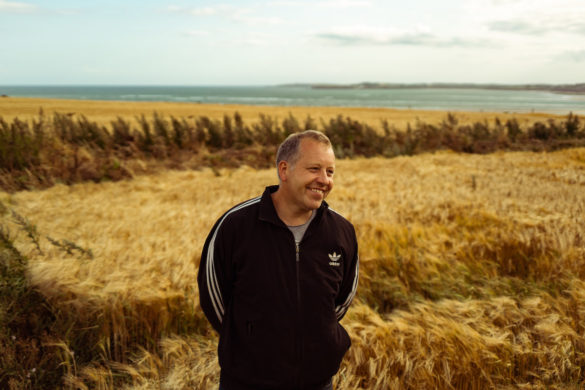
Farmer Ed Harpur on his seaside Bannow Island farm
Rather than buying in more generic malt, as most distillers do, Waterford is obsessed with the source of its barley. Each batch is sourced from a single farm and harvest, and is malted and stored separately in The Cathedral, the Waterford barley store.
The Cathedral has 40 bins, allowing the distillery to keep up to 40 batches separately at a time. Each of these is processed on its own, with the whisky-making process tweaked slightly every time to not only keep things fairly consistent between batches, but also to emphasise the flavour of the barley where possible – a bit of time added and subtracted, a tweak to a temperature, a balancing act to try and keep terroir rather than process at the forefront of flavour creation.
CRACKING MALT – ROLLERS AND HYDROMILLS
Retro-fitting a brewery to be a distillery isn’t as easy as it first seems. We may talk about whisky being distilled beer, but while the processes of making both are similar to a point, the outcomes of those processes are quite different – a beer that should be drinkable soon after brewing, versus a wash that will be distilled and aged.
Waterford was set up to be an incredibly efficient brewer of Guinness and was equipped with two very modern pieces of equipment to help with that aim: a hydromill and a mashfilter.
The first is unique, as far as I know, in the whisky world and works very differently to the more traditional mills seen across Scotland and Ireland. Rather than crushing dry grain between two closely set rollers, Waterford’s hydromill presses wet grain through a finely perforated plate. While the traditional mill creates a mix of different-sized particles – the famed husks, flour and grist – that are key to extracting the sugars within the grain in a mash-tun, this version creates a consistent and already ‘mashed’ paste.
And the differences don’t stop there.
MASH FILTERS AND MASH TUNS
Traditionally, you mix your milled grain with hot water in a large vessel called a mash tun. Once you’ve extracted your sugars, you filter the liquid somehow to remove the solids. In a lauter tun – the most commonly used type in whisky making – this involves a sieve built into the base of the tun, which is opened to allow the liquid through, husks from the milled grain helping to stop the holes in the filter from getting clogged.
At Waterford, they already have a sort-of mash from their innovative mill. (A monster mash? – Ed) To continue the process, their hydromilled malt is heated to promote gelatinisation of the starch in the grain – the dissolving of starch in water and part of the process of releasing the sugar in the grain so that we can use it to make alcohol – with the temperature varied with each batch of barley to optimise the process.
Next, rather than filtering out the solid grains, Waterford uses a mash filter. These are not common in whisky – Teaninich and Inchdairnie are the only other examples I can think of – but the idea is simple: fill your mash into a series of tea bags, and then squeeze them to extract the liquid. It’s a much more efficient process that pulls out more liquid (and thus dissolved compounds) than you’ll get from a mash tun.
In beer making, using a mash filter is a way of getting maximum sugar out of the barley to increase efficiency – more sugar out means more alcohol per ton of barley in. At Waterford, it’s used to get the most flavour from the barley.
FERMENTATION AND DISTILLATION – BUSINESS AS USUAL
Up until this point things have been a bit unusual, but from the moment the wort hits a washback, we’re firmly back in regular whisky-making territory, albeit at the more exacting end of the spectrum.
Waterford use a standard yeast – the team don’t want to change that variable yet, with an emphasis on ‘yet’ – and while fermentations are long to ensure that both primary yeast fermentation and secondary bacterial fermentations occur to maximise the flavours created, it’s very similar to how other distilleries operate.
Likewise, distillation is slow, but otherwise standard. The cut points are not fixed, shifting a little from batch to batch to pull out as much barley character as possible.
CASK CONSISTENCY
The resulting spirit is then filled to cask, and the breakdown of cask types used for each batch is as homogenous as the distillery can make it. While the very earliest batches don’t have any American new oak in the mix – the distillery had trouble getting hold of that type of cask at first – they’ve since used the same mix in roughly the same proportions:
This consistency is to ensure that they end up with a very similar selection of whiskies for each farm, allowing comparison between them – essential to the ongoing experiment of how each farm’s terroir will create different flavours.
SINGLE FARMS AND CUVÉES
When every batch you make is deliberately different, coming up with an actual whisky to sell is surprisingly difficult. Drinkers like consistency and being able to buy the same bottle more than once, but that is very much against the philosophy of production at Waterford. Here, it’s Mark Reynier’s wine background that again informs the decision – it’s all about cuvées.
When making wine, producers embrace the challenges each vintage brings, and we expect variation from year to year. Larger producers will pull together wines from many different terroirs to create a blend that both expresses an ongoing flavour profile and still reflects the character of the year. It’s this approach that Waterford hopes to one day use.
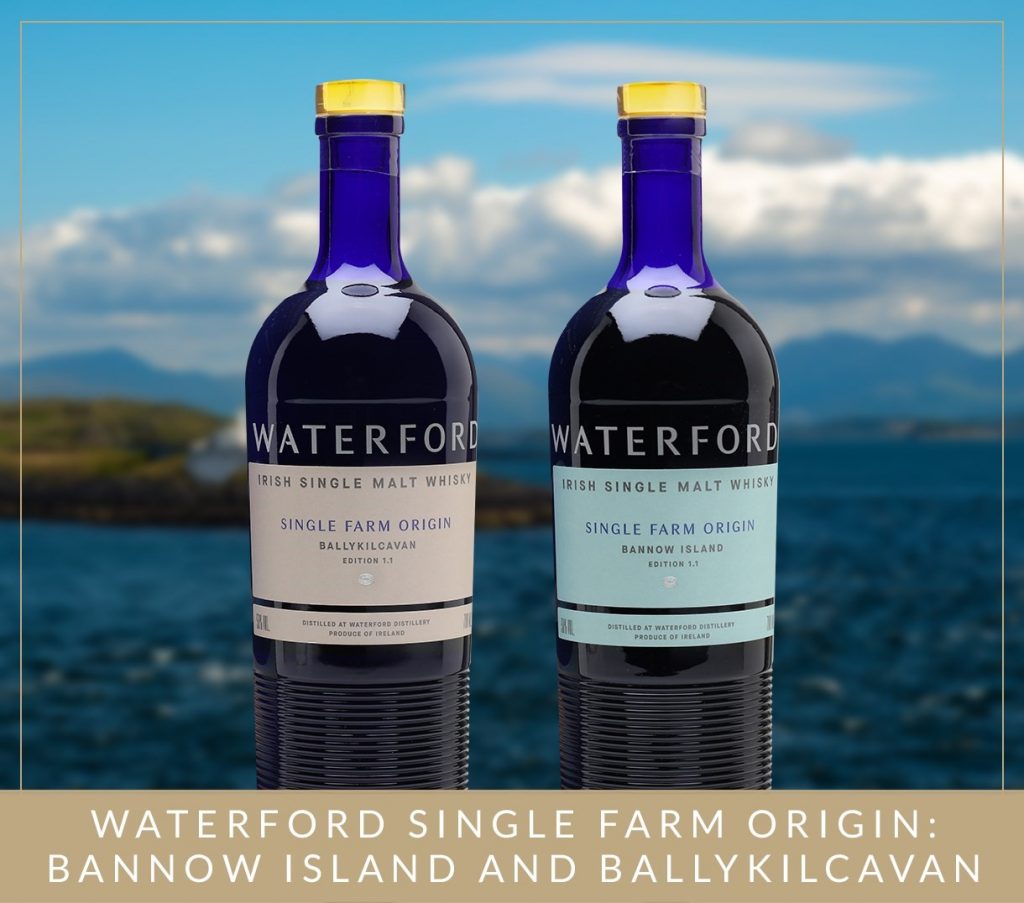
The first releases are single-farm, single-harvest editions – Waterford’s Single Farm Origin range – the elements that will one day be used as components of a cuvée. They give an insight into the way the components will differ and give us a chance to finally see what’s going on at Waterford.
Whether you believe in terroir in whisky or not, Waterford are making very interesting whiskies. Down the line, there will be spirit made from organic and biodynamic barleys, as well as well as some using older, heritage grains that are quite different from what is used today.
At the moment, the whiskies are very much aimed at the geeks – the curious, the experimenters, the people who want to dig deep into what makes their whisky what it is. But, further down the line, we will see the other results of the grand experiment – cuvées that amalgamate the best of what the distillery has, focusing on each terroir not solely for its unique characteristics but also what it brings to a blend: a blend that shows off the best of what Waterford can create.
Waterford Distillery is a major new Irish whisky project led by Mark Reynier, the man behind Bruichladdich’s whisky renaissance. The pioneering project uses Irish Barley, including organic and biodynamic, from selected farms with their own unique terroir. Each crop is harvested, fermented, and distilled separately using innovative, proprietary methodology to reflect the character of the grain sourced from each individual site. This unorthodox approach extracts every ounce of flavour from the malted barley, which can be discerned in Waterford’s unique and characterful single malt whiskies.
Please join us for a night with two of the industry’s biggest legends our very own Simo and the notorious Colin Dunn. Through the evening they will take you through some of their favourite bottlings from across Scotland, you will be spending the evening tasting through a range of six whiskies from some of the best distillers, independent bottlers, and a couple of our own tasty Milroys expressions.
Colin Dunn
Colin has been part of the whisky industry for 35 years having a hand in bringing Suntory to the UK while working for Morrisons Bowmore. Now he lays his hat with Diageo as the Global Whisky Ambassador. Colin’s enthusiasm for all things whisky is only surpassed by the stories he has. These will transport you to a damp peat bog or a still house with a scent of malt and spirit.
Simo
The one and only Simo owner of Millroys, rider of Harleys and seller of Whiskies.
Amongst running the shop and bars he has led the Milroys team to help bring some incredible liquid to market that spans the whisky world whether that would be a cloudberry wine cask Mackmyra or a 24-year Old Glenfarclas.
A little known fact is that Simo decided to buy Milroys after trying a Carn Mor bottling of a 1989 Bunnahabain, so we are very excited to include another Carn Mor, the Dailuaine 1995 celebration of the cask to this tasting.
This online tasting includes:
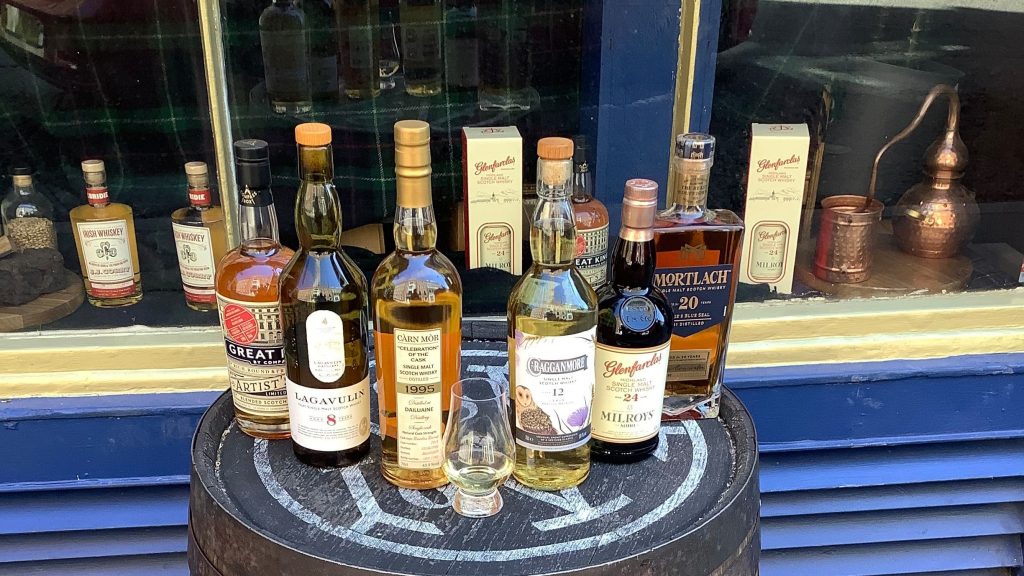
An invitation to join Colin and Simo on 8th July at 7:00pm (GMT) for an online tasting experience, also a flight of 6 25ml drams of :
Lagavulin 8 Year Old, 48%
Dailuiane 22 Year Old ,1995, Càrn Mòr, 43.6%
Mortlach 20 Year Old, 43.4%
Cragganmore 12 Year Old, (Special Release 2019), 58.4%
Compass Box, Great King Street Artist’s Blend: Milroys, 49.0%
Glenfarclas 24 Year Old, Milroys Exclusive, 50%,
Virtual Tasting: American Whiskey with Mark Gillespie
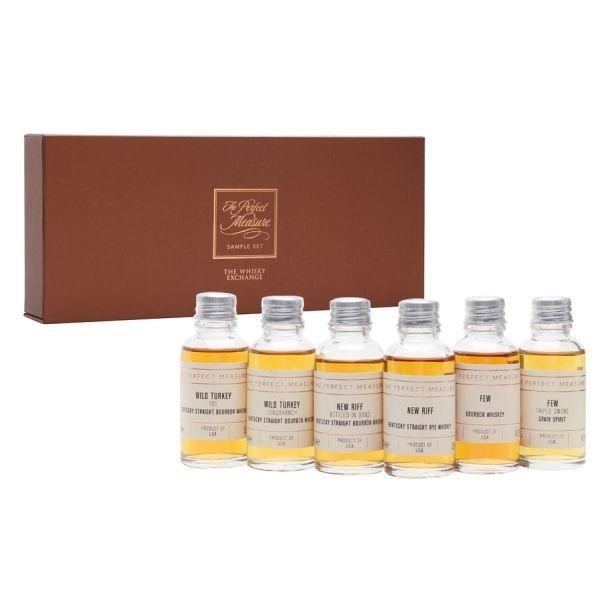
Ahead of Independence Day, we are delighted to welcome veteran whisky journalist, Mark Gillespie. Mark will be joined by the people behind some of our favourite American distilleries: FEW Spirits, New Riff and Wild Turkey. Join the guys as they chat through a selection of their favourites and take a deep dive into the world of American distilling.
Founded in 1881, Bunnahabhain has established itself as a beloved Islay malt, winning many accolades and legions of fans across the globe. In this live tasting and Q&A, The Whisky Exchange’s ambassador, Billy Abbott, will guide you through a selection of the distillery’s latest and greatest drams.
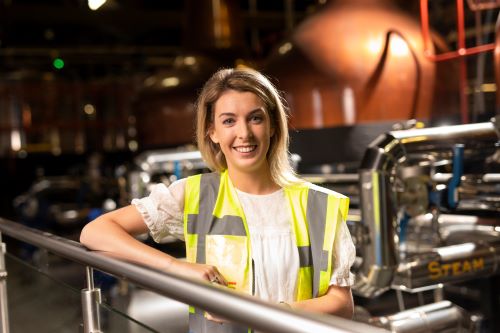
Katherine Condon is appointed Distiller at Midleton Distillery
Midleton, June 22nd, 2020 – Irish Distillers, producer of some of the world’s best loved Irish whiskeys, today announced the appointment of Katherine Condon as Distiller at Midleton Distillery, Co. Cork. Katherine will report to newly appointed Master Distiller, Kevin O’Gorman, with responsibility for the production process from brewing to distillation. Tasting all distillates daily, Katherine will oversee the quality of all new pot and grain distillates produced at Midleton, to ensure the correct balance of flavours are present, before being matured and bottled.
A chemical engineer, Katherine joined Irish Distillers in 2014 as part of the Graduate Distiller Programme. Upon successful completion of the programme, Katherine was appointed Distiller at the Micro Distillery in Midleton, Irish Distillers’ hub for innovation and experimentation with new distillate styles. From there she moved to the main distillery as a process technologist and, most recently, production supervisor. During her time with Irish Distillers, Katherine has played a vital role in the production of many new innovations, including the Method and Madness range.
Katherine holds a Bachelor of Engineering Degree in Process and Chemical Engineering from University College Cork and a Diploma in Distilling from the Institute of Brewing and Distilling. Katherine was awarded “The Worshipful company of Distillers award” in 2018 and 2019 for outstanding achievement by the Institute of Brewing and Distilling.
Kevin O’Gorman, Master Distiller at Midleton Distillery, added: “Katherine has consistently demonstrated a passion and exceptional skillset for the art of distillation. Her inquisitive nature and constant pursuit of excellence has made her one of the rising stars of world distilling and we are delighted to announce her appointment as Distiller at Midleton Distillery. I look forward to continuing to with work with her as she joins a lineage of the great Distillers who have gone before her.”
Katherine Condon, Distiller at Irish Distillers, said: “I am honoured to be appointed as Distiller. This role represents a time-honoured craft and it has been a privilege to learn about the art and science of distilling from icons of world whiskey like Brian Nation and Kevin O’Gorman. I look forward to using the wisdom and experience I have inherited to continue their legacy of quality, while driving innovation as I continue my career in Midleton. I am incredibly excited about the future of Irish whiskey and role I can play in it.”
Notes:
About Irish Distillers
Irish Distillers is one of Ireland’s leading suppliers of spirits and wines, and producer of some of the world’s most well-known and successful Irish whiskeys. Led by Jameson, our brands are driving the global renaissance of Irish whiskey. Jameson is the world’s bestselling Irish whiskey, experiencing 30 years of consecutive growth and hitting sales of 8m cases in 2019. Our brands are exported to 130+ markets, with over 70 of those experiencing double or triple-digit growth.
Irish Distillers was formed in 1966, when a merger took place between John Power & Son, John Jameson & Son and Cork Distilleries Company. In 1988 Irish Distillers joined Pernod Ricard, gaining access to unprecedented levels of investment and an extensive global distribution network. Since 2012, we have invested over €400 million to double our production and bottling capacity to meet global demand for our products.
We employ over 600 people across our operations in Cork and Dublin.
About Pernod Ricard
Pernod Ricard is the No.2 worldwide producer of wines and spirits with consolidated sales of €9,182 million in FY19. Created in 1975 by the merger of Ricard and Pernod, the Group has developed through organic growth and acquisitions: Seagram (2001), Allied Domecq (2005) and Vin&Sprit (2008). Pernod Ricard, which owns 16 of the Top 100 Spirits Brands, holds one of the most prestigious and comprehensive brand portfolios in the industry, including: Absolut Vodka, Ricard pastis, Ballantine’s, Chivas Regal, Royal Salute, and The Glenlivet Scotch whiskies, Jameson Irish whiskey, Martell cognac, Havana Club rum, Beefeater gin, Malibu liqueur, Mumm and Perrier-Jouët champagnes, as well Jacob’s Creek, Brancott Estate, Campo Viejo, and Kenwood wines. Pernod Ricard’s brands are distributed across 160+ markets and by its own salesforce in 73 markets. The Group’s decentralised organisation empowers its 19,000 employees to be true on-the-ground ambassadors of its vision of “Créateurs de Convivialité.” As reaffirmed by the Group’s three-year strategic plan, “Transform and Accelerate,” deployed in 2018, Pernod Ricard’s strategy focuses on investing in long-term, profitable growth for all stakeholders. The Group remains true to its three founding values: entrepreneurial spirit, mutual trust, and a strong sense of ethics. As illustrated by the 2030 roadmap supporting the United Nations Sustainable Development Goals (SDGs), “We bring good times from a good place.” In recognition of Pernod Ricard’s strong commitment to sustainable development and responsible consumption, it has received a Gold rating from Ecovadis and is ranked No. 1 in the beverage sector in Vigeo Eiris. Pernod Ricard is also a United Nation’s Global Compact LEAD company.
Pernod Ricard is listed on Euronext (Ticker: RI; ISIN code: FR0000120693) and is part of the CAC 40 index.
Fortified wines like sherry and port have long been an important part of the whisky industry. Casks previously filled with these wines impart rich, sweet flavours of dried fruit, spices and nuts when used for ageing. Read on to hear about the history of fortified wine casks in the whisky industry, and how Sullivans Cove uses them in our whisky making process.
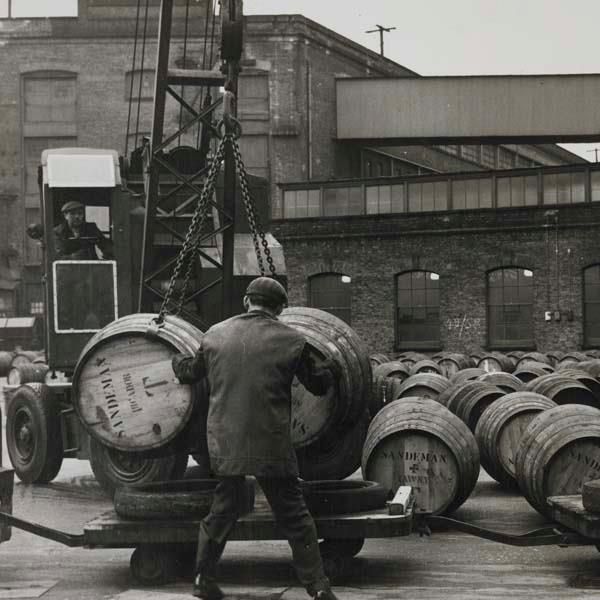
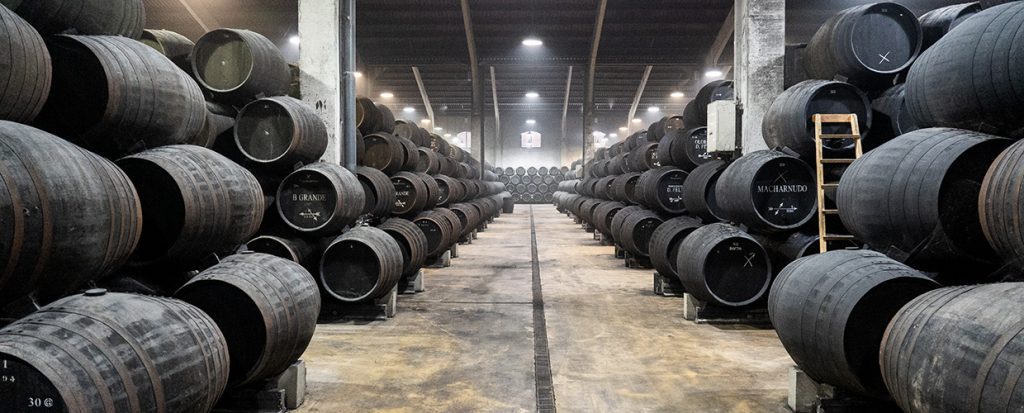
Loved by drinkers the world over, whiskies aged in fortified wine casks represent many of the most popular and highly awarded styles in the category. Fortified wines were particularly popular in the UK during the boom years of Scotch whisky production in the 19th century, so the casks were in plentiful and cheap supply. Scottish distillers would age their whiskies in the casks used to transport sherry and port from Spain and Portugal. Sherry and port cask-aged whiskies became the defining style of Speyside in particular, a region which still produces more than half of the single malt whisky in Scotland. Today, the world is in the middle of a malt whisky explosion, and the sherry and port influenced style popular in Scotland is now widely imitated by producers around the globe.
In Japan, Taiwan, Australia and elsewhere, modern distillers frequently employ fortified wine casks to create this style of single malt that whisky drinkers love.
But there’s a problem. These days, not as many people drink sherry and port, so there are less new casks of those wines being produced. Also, due to more modern transport methods, barrels are no longer used to move wines from one country to another. These factors mean that there are not nearly as many used port and sherry casks available for the booming whisky industry to use. As such, many casks are now “seasoned” with fortified wines specifically for the purpose of ageing whisky. This means that cheap sherry or port is stored in the casks for a short period of time, or in some cases is forced into the wood grain with high-pressure steam.
Many producers now also employ “finishing” to impart fortified wine character to their whiskies. This means the whisky is aged in another kind of cask (usually ex-bourbon) for the majority of its maturation, then transferred to a fortified wine cask for a short period of time before bottling. It’s also worth noting that even historically, the sherry and port casks used in Scotland for ageing whisky were not generally the casks actually used to age those wines, which would stay in Spain and Portugal to be used again, but were instead the casks used for storage and transportation on their way to the thirsty drinkers of the UK.
In Australia, our developing whisky industry is supported by the excellent fortified and other styles of wine produced here, which gives us access to a range of high-quality local wine casks.
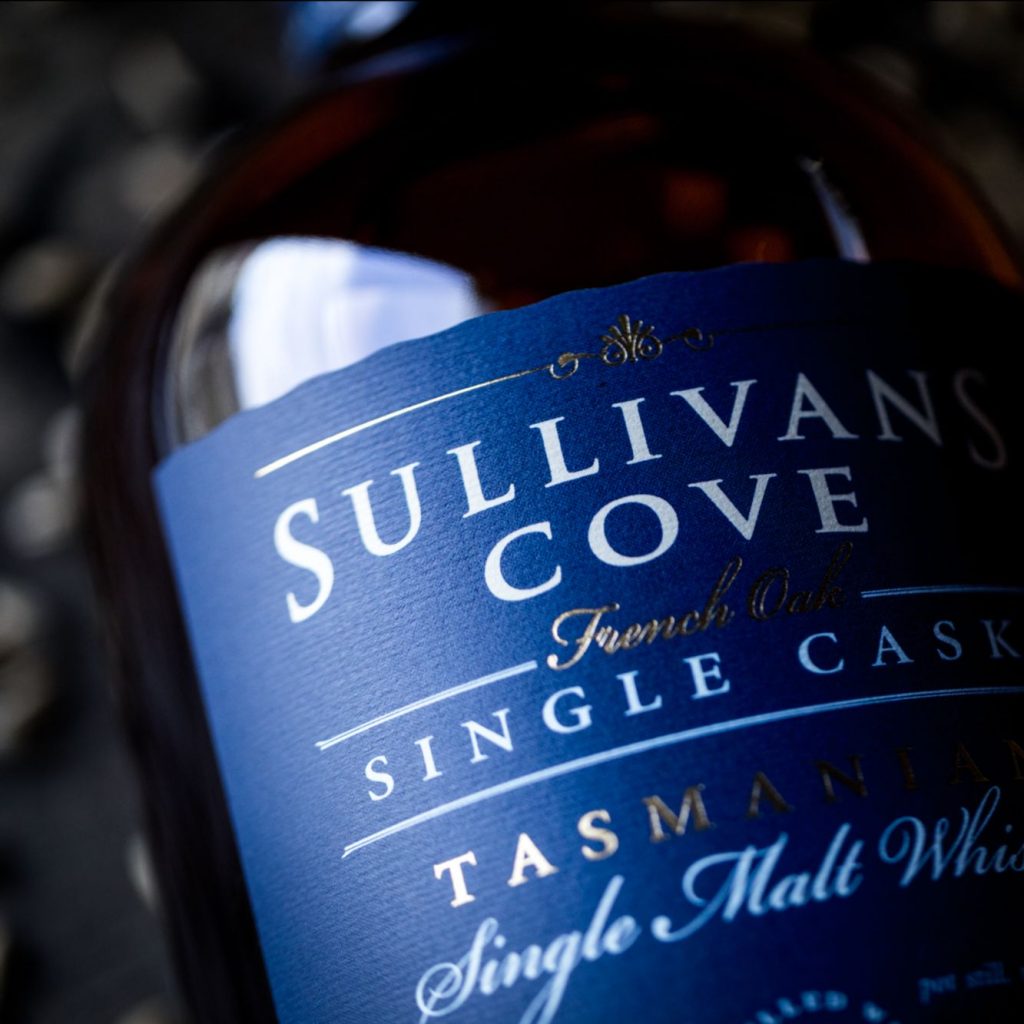
One of the best things about Australian whisky is that when we use fortified wine casks, they are often the actual casks used for ageing those wines, sometimes for decades. Australian whiskies like Sullivans Cove French Oak have made big waves both at home an internationally partly on the basis of these excellent casks. However, some Australian cooperages are now experimenting with seasoning casks, and as the local whisky industry continues to grow, genuine fortified wine ageing casks will be harder and harder to come by.
So if you like Australian whisky aged in fortified wine casks, get out there and drink some of these excellent Australian products. They’re great in a cocktail, after dinner, or with cured meats and cheeses. And if you don’t drink the wine, we won’t have the casks to make the whisky. Look at the bottom of this page for a list of some excellent Australian fortified wine producers to try.
What’s in a name?
Due to relatively new labelling laws, there’s also a bit of confusion around Australian whisky styles and the casks they’re aged in. The terms “port” and “sherry” are actually protected as specific geographic denominations of origin, like “Champagne”. This means that the term sherry can only be used for fortified wines from a specific area of Spain, and port can only be used for the sweet wines produced in the Douro valley of Portugal. In Australia, wine producers must now legally use the term “Apera” for sherry style wines, and “Tawny” for port style wines.
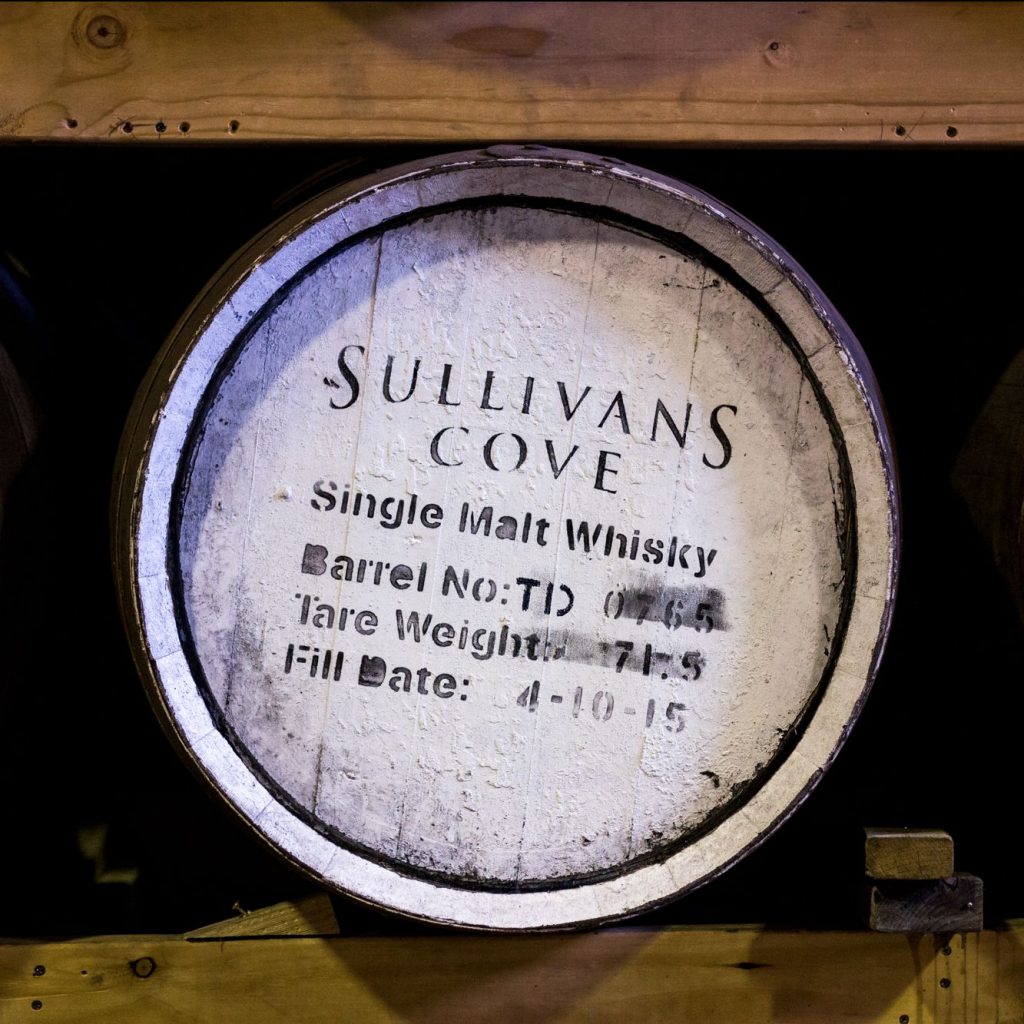
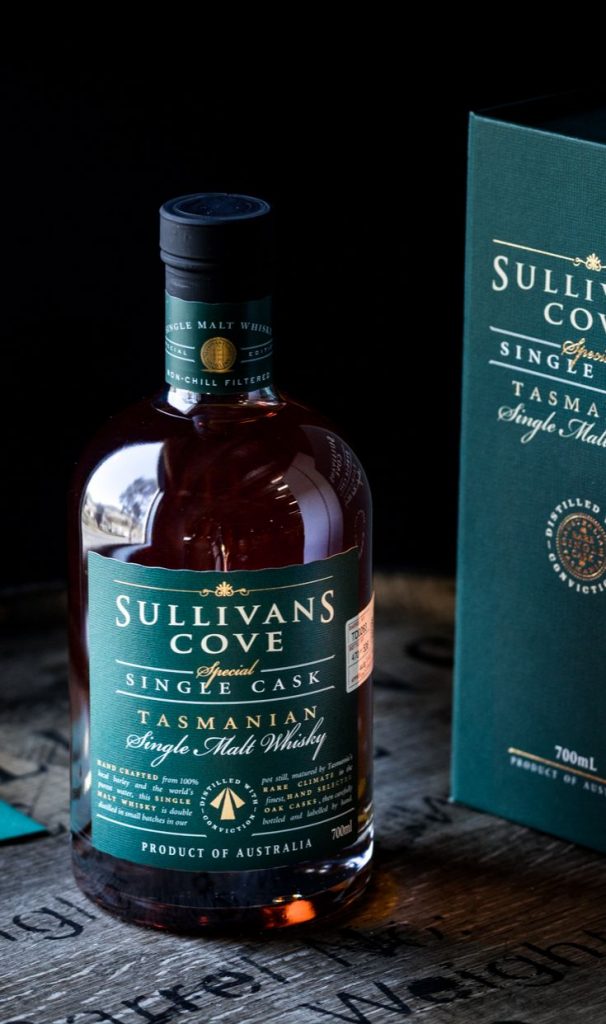
Sullivans Cove was the first distillery in Australia to label our whisky (specifically our French Oak Single Cask) as being aged in Tawny casks. It’s a recent change, so there are still some “port cask” labels floating around, but our newer labels will always say “tawny cask” where appropriate. At Sullivans Cove we always aim to be as transparent and accurate as possible with our labels, and we’re proud of the excellent Australian fortified wines that lend depth and character to our award-winning whiskies.At Sullivans Cove Distillery we never use seasoned or conditioned casks. Instead, we work with the best coopers in the country to find us only genuine ageing casks that have held Australian fortified wines for many years, infusing rich flavours deep into the oak. Furthermore, we very rarely finish our whiskies, choosing instead to use fortified wine casks for the entire duration of our whisky’s maturation.
So, when you see “Tawny”, “Apera” or some other fortified wine on a Sullivans Cove label, you can be sure that whisky has spent its whole ageing time in that kind of cask (on the rare occasions we do employ finishing, we’ll say so clearly on the label or in the cask descriptions online).
In the coming days, we’ll be releasing the latest single cask bottling from our Cask Variations series, American Oak Tawny Cask #TD0199. This whisky was aged in a single, 300 litre American Oak ex-tawny cask for 12 years, lending it the fresh oak, caramel and vanilla flavours generally associated with American oak, along with the rich, dark fruit of beautiful Australian tawny fortified wine.
Here’s a list of some great Australian fortified wine producers to try:
Pennyweight Winery makes outstanding certified bio dynamic fortified wines including fino, oloroso, manzanilla, and ruby styles.
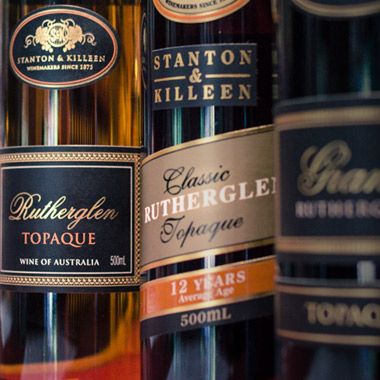
Stanton & Killeen has a range of prestige fortified wines including muscat, tawny and topaque, as well as less expensive white and ruby tawnies.
Buller Wines focuses on sweeter style premium fortified like muscat, tawny and Pedro Ximenez
McWilliamsproduces a wide range of fortified wines from flagons of cheap cream apera to premium 25yo muscat.
Penfold’s makes a range of premium tawny wines aged up to fifty years for a really special occasion.
Seppeltsfield Winery produces premium fortified wines ranging from dry aperas to rich, sweet tawny.
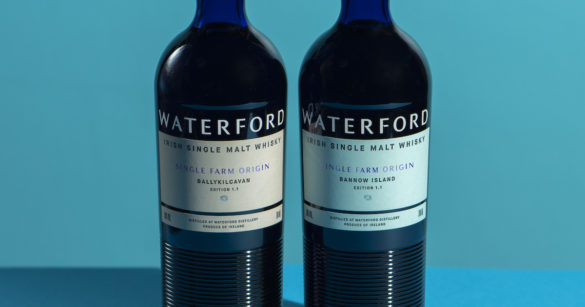
Limited to just 1500 bottles each worldwide, these first-release, Edition 1.1 bottlings of single malt from terroir-driven Irish distillery Waterford are, along with their counterpart – a third bottling available exclusively through Irish retailers – component single malts which will, in time, go on to form Waterford’s regular-release whiskies.
If you’d like to learn more about this exciting new producer and the whiskies themselves, check out The Whisky Exchange ambassador Billy Abbott’s deep dive into the distillery, its philosophy and its methodology over on the blog.
We anticipate that both of these bottles will sell out very quickly, so if you’d like one of the first ever releases from Waterford Distillery, speed may be of the essence.