GlenAllachie 12 & 15 Year Old at Abbey Whisky – Scotch Whisky News
November 2nd, 2020
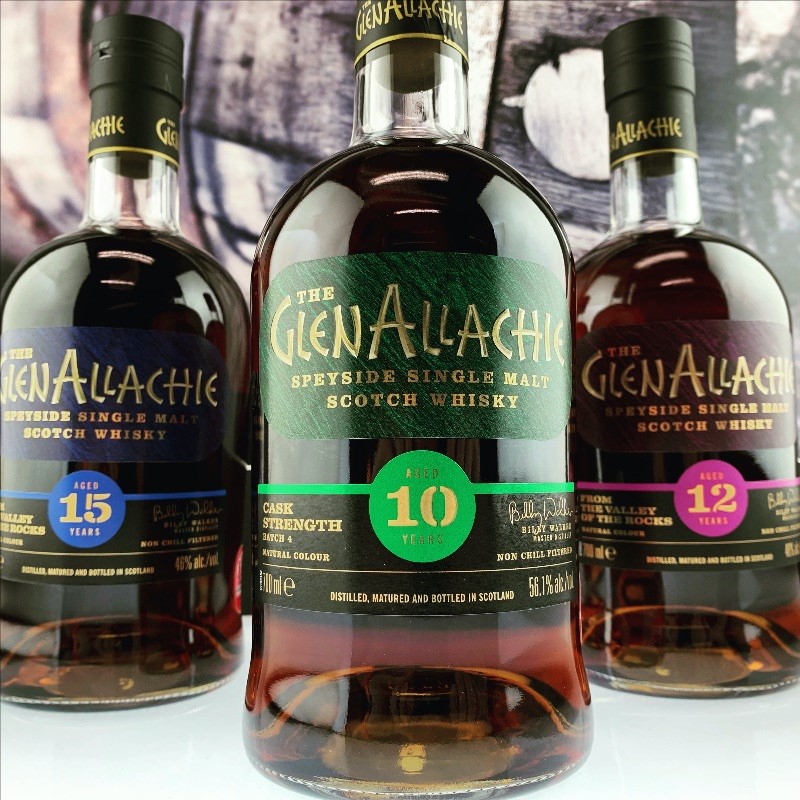
GlenAllachie 12 & 15 Year Old
The latest batch of 12 & 15 year single malts are now in stock.
Impressive colour on these latest expressions.


GlenAllachie 12 & 15 Year Old
The latest batch of 12 & 15 year single malts are now in stock.
Impressive colour on these latest expressions.

ralfy review 848 Extras – How did I get into single malt whiskies ?
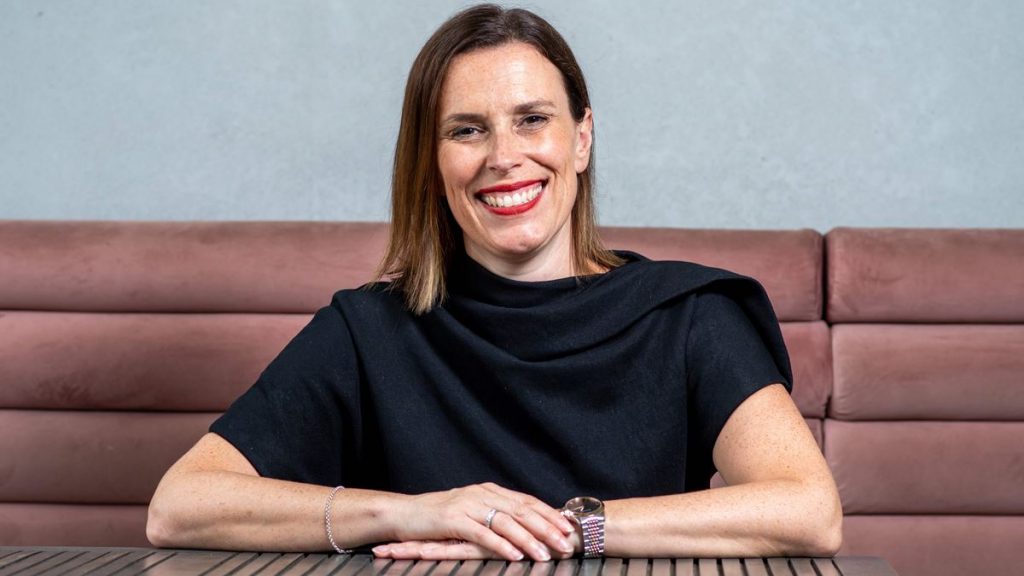
Global Brand Director Julie Bramham
Hear from our Global Brand Director Julie Bramham on Johnnie Walker’s 200-year journey
It is 200 years since John Walker sold up the family farm to open a grocery store, and quickly turned his hand to making high quality whisky. As I transition from CMO of Diageo India to Global Brand Director for Johnnie Walker, I’m reflecting on how John’s leap of faith led Johnnie Walker to become the world’s favourite whisky, and how we ensure Johnnie Walker’s success for the next 200 years.
There are some critical and consistent themes that have driven the brand’s phenomenal growth, and these are a framework that I believe will be the bedrock for Johnnie Walker’s future.
In 1887 Alexander Walker said ‘we are determined to make our whisky, so far as quality is concerned of such a standard that nothing in the market shall come before it’. This unrelenting commitment to quality is at the core of Johnnie Walker’s success. At the heart of a brand that can be found in virtually every country around the world is a small team of 12 expert blenders. Our blenders have curiosity in their veins and a commitment to the highest quality liquids in their hearts. At any one time, there are hundreds of experiments taking place, exploring a wide range of innovative flavours and influences, distillation conditions, cask finishes, and the different types of oak wood and grain used. Our blenders past and present have produced liquids that have been awarded a Royal Warrant by King George V in 1934 and each successive monarch since, taking us to today where all six Johnnie Walker variants received gold at this year’s International Spirits Challenge. As we build the brand for the future, our commitment to the highest quality liquids, packaging and innovation will be unwavering.
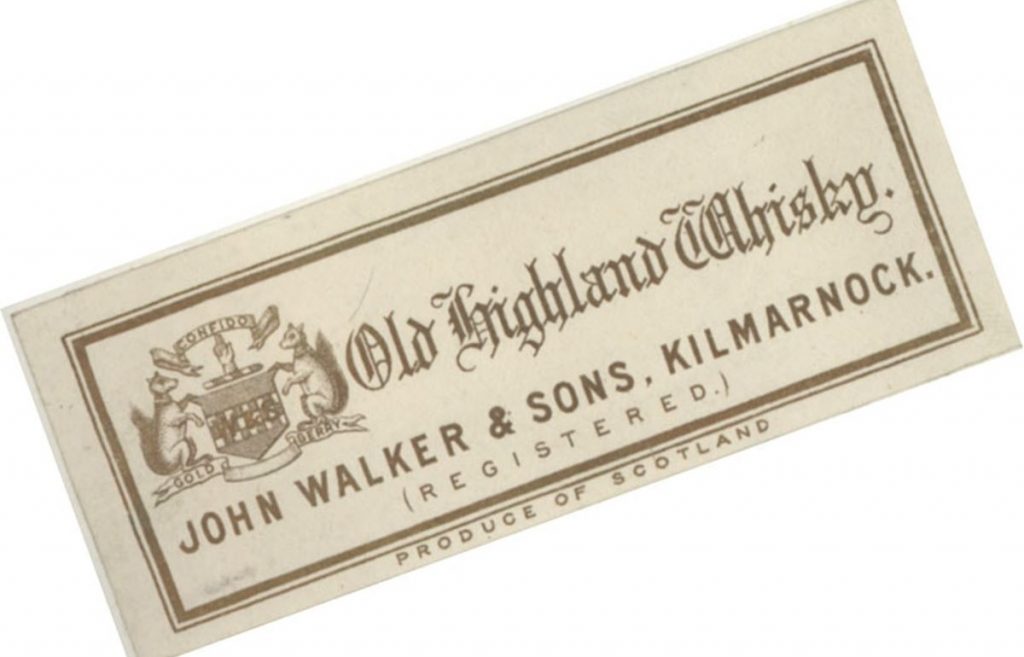
Johnnie Walker has been innovative from the start. John Walker created a blended whisky at a time when this was rare and new, packaged the liquid in square bottles when he realised that round bottles broke at sea and created slanting labels to stand out from competitors. It is innovation that drove Johnnie Walker from the four corners of Scotland to the four corners of the world and over 120 countries by 1920. Innovation continues to be a critical driver of how we build the brand, and we have had success with new liquids, Double Black, Sherry Cask Finish and our limited-edition Blender’s Batch series. In July we announced the creation of the world’s first ever 100% plastic free paper-based spirits bottle – made entirely from sustainably sourced wood that will debut in early 2021. As we move forwards, we know we cannot stand still. The innovative and entrepreneurial approach that launched the brand must sustain, and we will continue to push the boundaries of flavour innovation to create whiskies and serves that thrill your senses, packaging that’s better for the planet and experiences that are second to none.
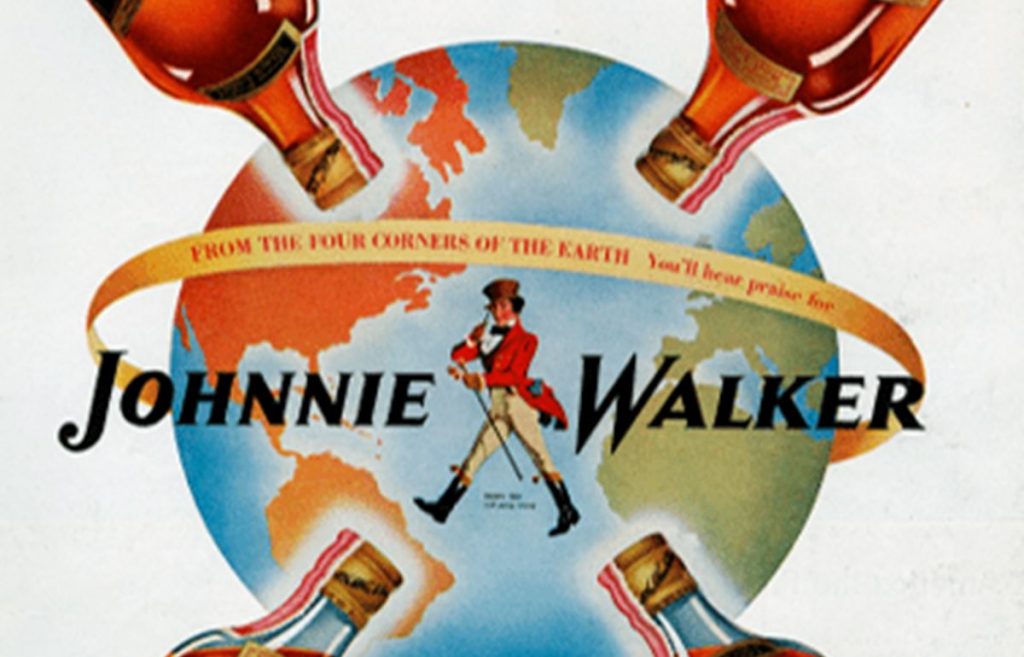
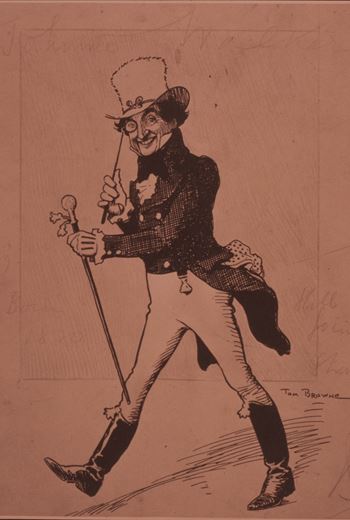
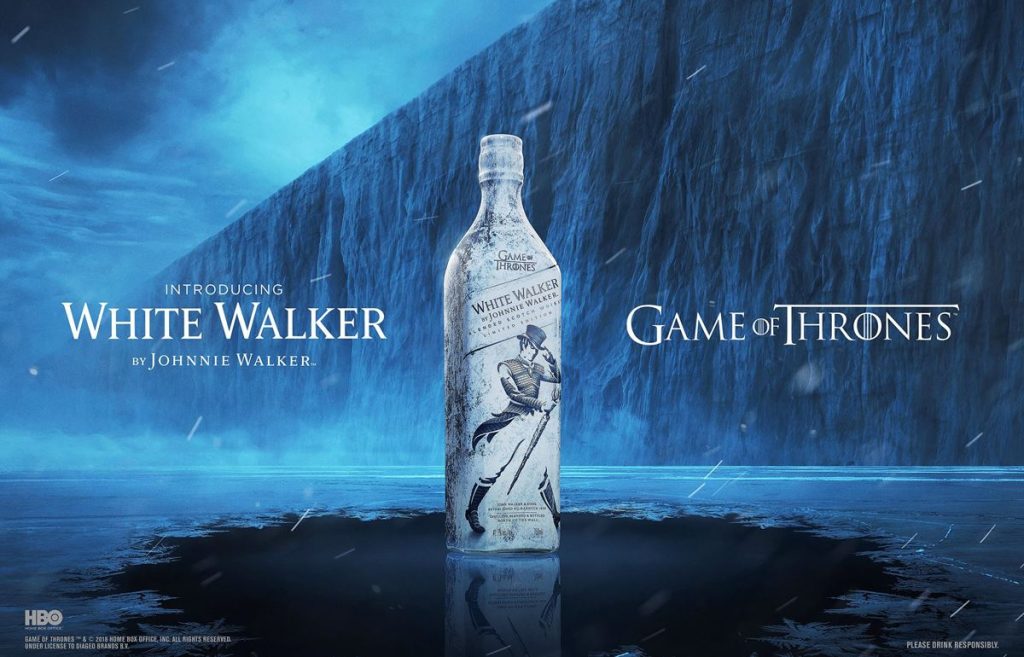
The spirit of progress is at the heart of Johnnie Walker – from the icon of the Striding Man, to the message Keep Walking. Our brand icon is in motion, full of momentum and leading the way. This value of progress has paved the way for great storytelling from Keep Walking Brazil, Ode to Lesvos and Without Walls. Some of the early brand advertising in the 1960’s was truly progressive in portrayal for advertising at the time. And the value of progress has opened doors for us to forge cultural partnerships that capture the zeitgeist from Blade Runner to Game of Thrones. And the value of progress inspires us to continue to raise the bar on consumer experiences. We are currently building a ground-breaking new flagship visitor experience on Princes Street at the heart of Edinburgh – eight epic floors, two world class bars and one spectacular roof terrace that will create an unforgettable whisky experience. Johnnie Walker Princes Street and some big brand initiatives in the pipeline will be part of how we will pave the way for the next 200 years. As the Johnnie Walker MD in 1908 James Walker said, ‘we are a progressive company’, and we have no intention of changing.
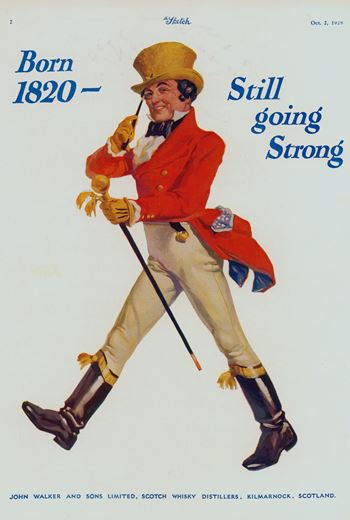
There is much of the Johnnie Walker story that we can connect to at this moment in time. The Johnnie Walker story is a story of relentless endeavor in the face of adversity. It’s not just a story of business success, but also of business survival. From its early years the business persevered through the great flood of Kilmarnock in 1852; the early death of two generations of its business leaders; exceptional volatility in its first export markets; the First World War, Spanish Flu, Prohibition, and the Great Depression (all within fifteen years); the Second World War and the long and painful road to economic recovery that followed; the Oil Crisis and the global and national recessions that trailed in its wake; and the Great recession of 2007-2009. Johnnie Walker demonstrated resilience, and came back stronger each time. From around a million and a half cases in 1924, to only seven hundred and fifty thousand cases in 1945, to a million in 1955, to ten million in 1975, and twenty million in 2016. The resilience of the brand is a remarkable tribute to that stubborn determination, and self-belief, that has been present since its earliest days.
Everyone who works on Johnnie Walker wants to leave it stronger than they found it, and as the years go on, and the bar is raised higher. So, as I embark on my own Johnnie Walker journey, I will be guided by that enduring 200 year strategy – a commitment to quality, innovation and the consistent value of progress.
Earlier I quoted our 1908 Johnnie Walker MD, and as look to the next 200 years it feels apt to revisit the advertising slogan that made him famous – ‘Born in 1820 – still going strong’.

The History of Johnnie Walker with Dr Nick Morgan
For those in the drinks industry and numerous whisky fans around the world, Dr Nicholas Morgan is a well known figure. With a thirty-year career working for Diageo – starting there even before they company took that name – he’s been most recently known as the public spokesman for the world’s largest whisky maker. However, the past few years have seen him take a break from his role as ‘Diageo’s Human Shield’, to quote the Whisky Sponge, to focus on a different project: writing the history of Johnnie Walker ready for its 200th birthday – A Long Stride: The History of the World’s No.1 Scotch Whisky.
We sat down with Nick before the book hit the shelves to find out more about how a history lecturer became one of the best-known voices in whisky, and what lessons the rise of Johnnie Walker has for both the whisky industry and whisky drinkers.
Billy Abbott: Your background is in history and academia – how did you get involved with Scotch whisky in the first place?
Nick Morgan: I was teaching Scottish history at Glasgow university and had been away on a sabbatical doing a piece of work on Glasgow urban history, and I came back and – most people may not understand this now as it was 1989 – I had a massive pile of correspondence on my desk. I spent about two days sifting through all this stuff, and in the middle of it was a letter from a company called United Distillers asking me if I’d like to come down to London to talk to them about taking the position of archivist with the company, which I found quite intriguing. So, I went down and spoke to them and was offered the job of setting up a historical archive for United Distillers.
I was taken on to do that job and I wasn’t an archivist, so I was lucky enough to be able to appoint proper archivists to come and work for me, and spent about three-odd years putting that together. But in addition to doing the archive work, I was pulled into doing marketing work right from the start, and after three or four years discovered that I wasn’t an archivist any more and had some sort of marketing role in a department in London. The rest is history.

BA: How did the book come about?
NM: I’ve had the idea of writing a book almost since joining the business thirty years ago, and certainly in my rather meagre annual performance reviews, when I had to state my ambitions, I can honestly say that for about the past twenty years I’ve simply put every year ‘Write the history of Johnnie Walker for 2020’. So, I made it very clear to people that’s what I wanted to do.
I was also able to talk to some really bright people and explain to them why it would be a good idea to have a history of Johnnie Walker, and people like David Gates, who was running Scotch whisky for Diageo at the time, was a very keen sponsor of this. So the only sort of disagreement was when I would start doing it, and I would have loved to have started a bit earlier than I did, because I could have done a bit more work.
I started about three-and-a-half years ago, spending about 85% of my time researching and then writing the book.
BA: Where did you find the information?
NM: Obviously, the starting point was the Diageo archive, which is a phenomenal resource and brilliantly managed by a team of professional archivists – it’s best in class. In that archive, the Johnnie Walker collection is by far the largest, albeit far from complete, but it’s absolutely huge. In that collection we have a few fragmentary very early records which were very important for piecing together the early history of the business.
From 1857, when Alexander Walker – who was John Walker’s son – took over the business, we have his annual account book, and that’s every year’s stock taking. At the beginning that’s quite detailed stock takes, but as the business gets bigger and bigger and bigger, you can’t fit it all in the book. So, that’s invaluable for seeing how a grocery business that blends whisky grows into an international whisky business in twenty or so years, which is quite phenomenal.
We have correspondence from Alexander Walker in that collection as well, and a whole range of other stuff once it becomes a limited company and there was more legal obligation to keep records. Lots of blending material from the twentieth century, and quite a lot of export-related material as well.
So, there’s a huge amount in there. But in writing the book, we also wanted to put it in a broader context. There was a very clear agreement when I started writing that this wasn’t going to just be a conventional company history, when you start off with the founder and end up with a picture of the chairman in his office and all that – we were doing a proper book to place Johnnie Walker in the context of Scotch whisky and Scotch whisky in the context of whatever else was going on. Very often whisky history is seen through a tunnel vision, and I wanted to expand on that.
To do that from the booze business perspective, I spent a lot of time looking at trade journals, not all of which have been used in the past. Some have – Harper’s, for example – but I found a few that had not been used and were highly informative. Not so much about Johnnie Walker, but more about the Scotch business and the context of that. Also, I looked at newspapers, which has been transformed with all the digital libraries, which Laura Chilton spent a lot of time working on for me. Again, she didn’t find out much about Johnnie Walker, because they hid themselves so very well, but it was really valuable.
Then also a whole range of stuff to put Scotch in the context of popular culture – a whole range of weird and wonderful journals, some of which you’ll see in the footnotes, and others that aren’t there but really informed what we could say about it. Finally, advertising journals, which really unlocked the story of the development of the Johnnie Walker brand through the twentieth century.
BA: One of the things that struck me about the history of whisky through the Walker lens are the parallels with the present day. Some of the comments in the book on the early days of whisky are things that you have discussed before about more modern situations. Are there any particular lessons from the history of Johnnie Walker that we need to pay attention to in modern Scotch whisky?
NM: There’s one that people seem to be particularly preoccupied with at the moment. About four or five months ago people started phoning me up from different bits of Diageo saying, “Is there going to be anything in the book about how the brand came through hard times?”
There is a theme of resilience, which is important for today, because I think it would be easy to look at the circumstances we are in and think that the sky’s falling in, but the sky’s fallen in on Scotch many times before, and on the Johnnie Walker brand. While not all brands survive – for example, after the First World War lots of brands disappeared – every time Johnnie Walker’s gone through one of those situations, it’s come back stronger, bigger and better, bouncing back. I think that’s an important message for everyone to have.
I think maybe there’s also a parallel today with the way that people think about the relationship between malts and blends. I was very struck by that coming out of the discussion of the ‘What is Whisky?’ case, and you’ll see there’s quite a lot in the book about it. Also, there are similarities with elitism in the world of whisky, and the idea some whiskies were far superior to others, and particularly that malt whisky was better than blends.
Culturally, that argument becomes quite complicated in the early twentieth century, not least because of the Aeneas MacDonald book [Whisky by Aeneas MacDonald, a pen name for journalist George Malcolm Thomson], which people today consider to be a sort-of bible about whisky. Not only was the book plagiarised, broadly speaking, from a whole range of other people, but it was a polemic, and a polemic written by a not very nice person – Scotland’s best-hated man, as he was known.
The views that he pronounced and his dismissal of people that drank blended whisky – a view that is very elitist and that I find quite offensive – do echo some of the comments that you still hear today from people, and the way they dismiss blends and praise themselves, of course, and single malts. I wanted to make people aware that there is a theme that is there and hasn’t gone away. I’ve also tried to suggest that it’s not really a very pleasant way to think about the category, broadly speaking.
BA: I’ve read about the ‘What is Whisky?’ case many times before, but always from the perspective of the malt producers. It’s very interesting to see it from the other side for once.
NM: That was quite an important bit for me. When I went into it, I had certain preconceptions, as you might imagine, writing from the perspective of the blended Scotch business. But I hadn’t really understood the full complexity of the situation and the degree to which these new proprietary brands of Scotch whisky were absolute disruptors in a whole range of very well-established relationships, and they blew all of that apart. The culmination, and if people read the book they’ll see this, is that by the time of ‘What is Whisky?’ everyone was asking ‘Why are these guys still trying?’. The boat has left and they were not on it. But that was the culmination of twenty or thirty years or more of these deeply vested stakeholders struggling to claw back this sort-of preeminence in the business, in the retail trade, in agriculture. I think it has to be seen like that.
BA: The history of whisky seems to have quite a circular nature, with malts back in the early days as the entrenched part of the business and blends as the disruptors. Now blends are the entrenched part of the business…
NM: …and malts are the disruptors! They’re getting their own back.
BA: The final comment in my notes on that section was ‘the power of the consumer palate’: the focus in whisky-making to create something that people like and want.
NM: What surprised me in the research – and this is the stuff that comes through from the trade journals – is that many people emotionally clung to the idea that single malts were better, and that Highland whisky was better than grain whisky, and all of that stuff. But at the end of the day, they all just had to say, “But this is what people want to drink – this is what consumer tastes are”.
Even with blended whisky, you have to remember that styles of blends changed enormously. From the mid-to-later 19th century, you have what I would call ‘toddy whisky’, because for respectable drinkers that was how you would drink it, with hot water and sugar and lemon – if you were lucky: you could never get lemons in Glasgow, people would complain, but that was how it should have been drunk. These were really heavy whiskies – there’s a great description of them in the book – oily and heavy and peaty. Of course, as soon as you start drinking whisky with soda, which became the craze from the late 1890s, then you want a lighter drink.
Styles are always going to change, to reflect what consumers want. I think that’s the same as Walker today: is it the same as it was a hundred years ago? Well, no of course it isn’t, for so many different reasons, but the principle one is what people like to drink.
BA: Are there any insights into whisky from the story of Johnnie Walker for whisky drinkers?
NM: One of the things I think people should be aware of, which I think they’re sometimes a bit dismissive of, is the – I don’t apologise for using this word – obsession that whisky makers have with the quality of their whisky, and it sings through in the Johnnie Walker story. It’s not marketing bullshit, it’s all there, it’s absolutely real. Walker’s, more than anyone, thought that it was quality that sold their whisky, almost to their cost at different points, as they refused to advertise until they were dragged into that in the Edwardian era.
I think…no, I know, from my thirty years experience in the business, that the people who make whisky today, whether they’re distillers or blenders – and they might be quite different people from the ones that were doing it even when I joined the business, and certainly from thirty or forty years before that – they’re equally passionate about what they do, and put their all into delivering the best quality product they can, whether it’s a blended Scotch or a single malt or a single grain. I know, for what it’s worth, that sometimes they’re very hurt personally when they read some of the thoughtless comments that people put on social media in particular now about different brands and different products and different companies.
I think that passion for quality still is at the heart of all of Scotch, and if we lose that, what have we got? We’ve got nothing. And certainly for a brand to be as big as Johnnie Walker and to have persisted for this long, quality, and the consistency that goes with it for a global brand, is absolutely critical.
A Long Stride: The History of the World’s No.1 Scotch Whisky hits the bookshelves on 29 October.

Iconic Scotch brand Johnnie Walker is celebrating 200 years since founder John Walker first threw open the doors to a small grocery store in rural Scotland in 1820, beginning a journey that took Johnnie Walker whiskies to the four corners of the world.
John’s spark, vision and entrepreneurial fire were the impetus to a hugely successful business and ultimately a new future for Scotch whisky. Today, Johnnie Walker whisky is sold in over 180 countries and is the best-selling Scotch whisky in the world.[1] Over the last 200 years Johnnie Walker has been defined by its dedication to quality and its commitment to progress – symbolised by the famous Striding Man logo.
“The Johnnie Walker brand is truly one which has stood the test of time, and the knowledge that Johnnie Walker cuts across cultures, borders, languages, and tastes is a humbling thought. Everyone who works on Johnnie Walker is dedicated to upholding our reputation for quality and continuing our founder’s spirit of innovation. This 200-year milestone allows us to pause and reflect on how far we’ve come already, as well as what more we want to achieve in the next 200 years.”
Julie BramhamGlobal Brand Director for Johnnie Walker
This year and into 2021, Johnnie Walker will be marking this incredible milestone with a series of exciting cultural events, exclusive limited-edition product releases and the opening of a new multi-sensory, immersive Johnnie Walker visitor experience in Edinburgh.
The new Johnnie Walker experience, which is part of a wider £185 million Diageo investment into Scotch whisky tourism, will guide visitors through the 200-year history of Johnnie Walker and take them on a journey through the flavours of Scotland. Rooftop bars will provide visitors with stunning views of Edinburgh Castle and across the city skyline.
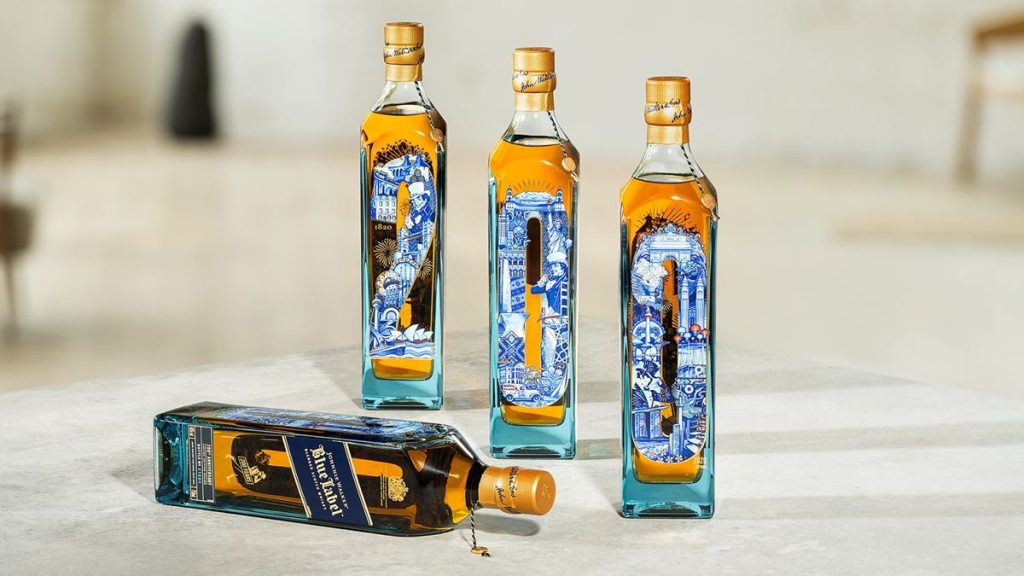
Johnnie Walker also welcomed the release of four exclusive new Johnnie Walker limited editions hitting shelves globally. Each exclusive release – a new bottle design and three newly crafted whiskies – is a celebration of the incredible journey, pioneering spirit and dedication to quality that was started by John back in those early days.
Johnnie Walker has also unveiled three new limited-edition bottles for its iconic Johnnie Walker Red Label, Johnnie Walker Black Label and Johnnie Walker Gold Label Reserve whiskies. Each one is a bold and eye-catching reimagining of the classic Johnnie Walker square bottle, fit for the 200th Anniversary.
Next month, the Discovery Channel will air a feature documentary directed by Oscar-nominated filmmaker Anthony Wonke exploring what has led Johnnie Walker to become an icon in popular culture. And Canongate Books have recently announced the publication of A Long Stride by Nicholas Morgan, a book charting the remarkable story of how Johnnie Walker became the world’s number one Scotch[2].
““Celebrating the 200th anniversary of the Johnnie Walker journey is such a proud moment for us all. The company was pioneered by three generations of the Walker family and those who followed in their footsteps, and the business continues to embrace their distinctive spirit. In looking back and celebrating the first steps John Walker took when he founded the business, we are inspired to look forward to the next 200 years as we honour the legacy of John and his family’s achievements and open the door to new possibilities in Scotch for Johnnie Walker.”
Christine McCaffertyArchive Manager at Diageo
[1] IWSR 2020
[2] IWSR 2020
OFFICIAL TRAILER LANDS FOR BAFTA-WINNING DIRECTOR ANTHONY WONKE’S NEW FEATURE DOCUMENTARY
“To come from nothing and make something of ourselves – that’s iconic in itself” Cappadonna,Wu-Tang Clan
“You’ve got to think about it as a movement, as a part of culture” Sir John Hegarty
Since its announcement back in the summer, anticipation has been building for BAFTA-award winner Anthony Wonke’s upcoming feature documentary about Scotch whisky icon Johnnie Walker – and today the official trailer has arrived. The 60 second preview for The Man Who Walked Around the World – which will premiere globally on Discovery’s portfolio of brands and services on November 12th – features contributions from Wu-Tang Clan’s Cappadonna, actress and activist Sophia Bush, rock musician Zakk Wylde, 88rising’s Sean Miyashiro, advertising legend Sir John Hegarty and many more.
Following his account of the world’s biggest sports star in “Ronaldo” and capturing the journey of Star Wars in “The Director & the Jedi”, Oscar-nominated director Anthony Wonke was inspired to turn his camera to the world’s largest Scotch whisky brand after seeing the famous Striding Man show up time and again in films, music videos and bars wherever he travelled in the world.
He said, “The symbol of the Striding Man seems to be everywhere in some shape or form and has taken on a significance of its own. It kind of transcended a brand to become truly iconic.”
“We’ve been on an amazing journey, going through years’ worth of footage and speaking to people from all walks of life to create this film – actors, musicians, barmen, artists, activists and a whole host more. It’s a fantastic story.”
The Man Who Walked Around the World is an independent feature documentary created by Something™ Originals and produced by multi-award-winning production company Partizan. The film explores everything from the brand’s origins to the part it has played in legendary Hollywood films and in the music that has defined generations. It goes deep into the whisky’s cultural impact globally and looks at how, 200 years into its journey from local grocer to global icon, Johnnie Walker remains as relevant as ever.
Discovery VP Content Sourcing and Acquisitions Myriam Lopez-Otazu said: “We are excited to see the first glimpse of The Man Who Walked Around the World and can’t wait to share the documentary with Discovery’s global audience of passionate fans.”
Diageo Global Scotch Director John Williams added: “We’ve been looking forward to this moment ever since we heard about the documentary’s creation. Johnnie Walker has an amazing story to tell and the way Anthony and Something™ Originals have crafted it is extremely exciting for us.”
Something™ Originals Managing Partner Andy Hewitt commented: “For Johnnie Walker to open themselves up to an independent production in this way was a bold move. It was a leap of faith on their part, but they believed in us and in what we were trying to do. Anthony’s brilliant and we were always confident that together we could create an outstanding documentary feature that will live long in the memory.”
You can watch the trailer for The Man Who Walked Around the World here: https://youtube.com/channel/UCKdI6o1Rx9BcFaQ1Ul5Xx6A
The full film will be broadcast on Discovery’s portfolio of brands and services from November 12. For more information visit https://themanwho.film.
Official Hashtag: #TheManWho
Notes:
About Anthony Wonke
Anthony Wonke is an Emmy and triple BAFTA winning director, and an Oscar nominated and Emmy winning Executive Producer. He’s also won, amongst other awards, the Prix Italia, Peabody, Grierson and RTS for his films. Past documentary subjects include Cristiano Ronaldo, Star Wars and AP McCoy.
About Discovery
Discovery, Inc. (Nasdaq: DISCA, DISCB, DISCK) is a global leader in real life entertainment, serving a passionate audience of superfans around the world with content that inspires, informs and entertains. Discovery delivers over 8,000 hours of original programming each year and has category leadership across deeply loved content genres around the world. Available in 220 countries and territories and nearly 50 languages, Discovery is a platform innovator, reaching viewers on all screens, including TV Everywhere products such as the GO portfolio of apps; direct-to-consumer streaming services such as Eurosport Player, Food Network Kitchen and MotorTrend OnDemand; digital-first and social content from Group Nine Media; a landmark natural history and factual content partnership with the BBC; and a strategic alliance with PGA TOUR to create the international home of golf. Discovery’s portfolio of premium brands includes Discovery Channel, HGTV, Food Network, TLC, Investigation Discovery, Travel Channel, MotorTrend, Animal Planet, Science Channel, and the forthcoming multi-platform JV with Chip and Joanna Gaines, Magnolia, as well as OWN: Oprah Winfrey Network in the U.S., Discovery Kids in Latin America, and Eurosport, the leading provider of locally relevant, premium sports and Home of the Olympic Games across Europe. For more information, please visit corporate.discovery.com and follow @DiscoveryIncTV across social platforms.

About Johnnie Walker
2020 marks 200 years since Johnnie Walker founder, John Walker, first threw open the doors to a grocer’s shop in Scotland and began a journey that brought the brand from the four corners of Scotland to the four corners of the world.
Today, Johnnie Walker is the world’s number one Scotch whisky brand (IWSR 2019) enjoyed by people in over 180 countries. Since the time of its founder, those who blend its whiskies have pursued flavour and quality above else. In those early days of John Walker, the business that became Johnnie Walker carried the name of the founder and during the 19th century the business was selling whiskies under the name of John Walker & Sons. Consumers began using Johnnie Walker and the name was adopted in 1908.
Today’s range of award-winning whiskies includes Johnnie Walker Red Label, Black Label, Double Black, Green Label, Gold Label Reserve, Aged 18 Years and Blue Label. Together they account for over 19 million cases sold annually (IWSR, 2018), making Johnnie Walker the most popular Scotch Whisky brand in the world.
About Something™ Originals:
Something™ is a global platform for creativity, culture & business – part agency, part entertainment company, part product incubator.
About Partizan
Partizan is a multi award-winning production company, and one of the industry’s leading content creators for music videos, commercials, documentaries, feature films, animation, digital and branded content for online as well as interactive events and installations. Partizan has won awards from Cannes Lions, D&AD, British Arrows, and many more.