Archive for 2015

Blended Scotch Kiln Embers Whisky at The Whisky Barrel – Scotch Whisky News

AA kiln-embers-wemyss

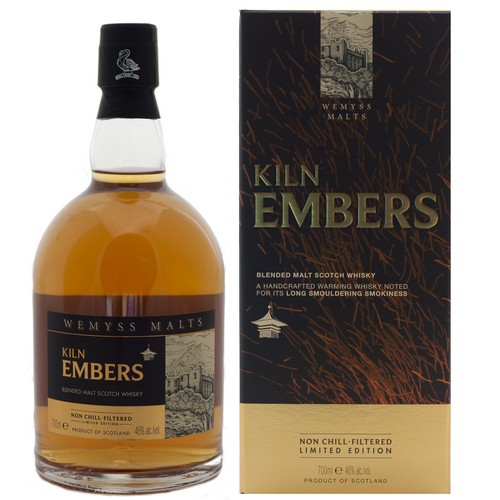
Blended Scotch Kiln Embers Whisky

Kiln Embers blended malt Scotch whiskey. A high peaty malt content – perfect for lovers of smoky whisky. Limited release of 12,000 bottles.

Tasting Notes

On the nose, snuffed smoke mingles with salted lemons and sweet cure bacon; while oats and orange peel toast over embers and heathery peat on the palate; resulting in a sweet smoke finish.

BUY $51.02

Blended Malt Scotch Whisky

Blended Malt is a mixture of two or more Single Malt Scotch Whiskies which have been distilled at more than one distillery. Because Scotland’s whisky blenders are able to standardise the colour, strength and taste in their blends their customers are assured of consistency in a product which may be marketed over a number of years. Formally known as a Vatted Malt.

the-whisky-barrel-new-logo-2011-1024x250

Canadian Whisky News “An updated 26-ounce Canadian whisky primer for journalists, editors, and publishers” – Canadian Whisky News

AA CW1

An updated 26-ounce Canadian whisky primer for journalists, editors, and publishers

Davin de Kergommeaux
AA CW2

1. The story of Canadian whisky offers a distilled and bottled history of Canadian settlement and commercial enterprise.

2. Jesuit missionaries who arrived here in the 1600s, left no record of distilling. However, they did try (with limited success) to make wine for use in their liturgies.

3. Later, in the 18th and 19th centuries when large groups of settlers arrived in Canada they often brought small stills with them.

4. Despite what you might expect, when the early Scottish and Irish settlers began distilling here in Canada it was rum and not whisky that they made.

5. The history of distilling in Canada, like many things Canadian, varies province by province. For example, the shift from distilling rum to whisky began as settlers moved west into Ontario. Why? Because its distance from the sea made it expensive for producers in Ontario to acquire molasses, (which they preferred over grain.) Sea-going vessels transporting Caribbean molasses to Canada could not navigate beyond Montreal.

6. Whisky making in Canada is really an imported Scottish tradition, right? Not quite. The first commercial whisky distillers were mostly English and German. Not surprisingly, Americans of English or German descent were also keen to expand business opportunities here in Canada. As for those Scottish and Irish immigrants, they made no contribution to creating the Canadian whisky we know today. They were, however, enthusiastic distillers and consumers of rum.

7. There is much conjecture that United Empire Loyalists arriving here from the U.S. late in the 18th and early 19th century were responsible for introducing distilling to Canada. Nice story, but not one supported by the historical record. There is no evidence that this happened or that they ever distilled commercially.
AA CW3

8. Although Scotch whisky enthusiasts will swear that Aeneas Coffey invented the column still, Coffey stills were not the norm here in Canada. Those early Canadian column stills were of American and European design, adapted to suit Canadian conditions.

9. Canadian whisky was, from the start, an integrated commercial enterprise. The early distilleries were generally associated with flourmills from which they sourced their grist.

10. With an abundance of locally grown wheat, it’s not surprising that for the most part, in the early days, the grain of choice for making Canadian whisky was wheat. In those days, wheat whisky was so common that it was actually called “common” whisky.

11. When and how was the switch made from common whisky to rye? It was German and Dutch immigrants who wanted more flavour in their whisky. They suggested adding small amounts of rye-grain flour to the mashes. They called this new whisky style “rye” and it quickly became so popular that wheat whisky all but disappeared.

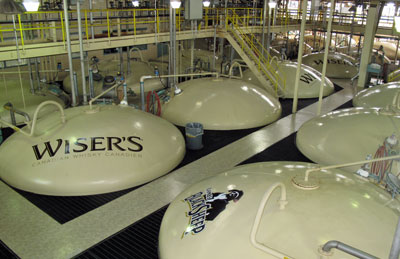
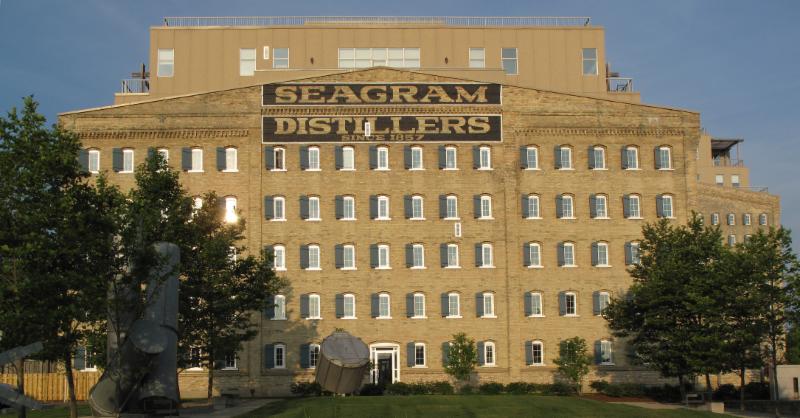
12. Several key figures were responsible for establishing the Canadian whisky style. James Gooderham Worts arrived here from England in 1831 and William Gooderham arrived the following year. Another immigrant from England was Henry Corby who arrived in 1832. Then, in 1841, Joseph Seagram was born here. He was of English descent but his whisky style was influenced by his German-Canadian customers. In 1857, JP Wiser crossed the border into Canada from the US, bringing his German heritage and American distilling methods with him. Two years later and also from the US, Hiram Walker arrived, bringing with him his English family heritage and expectations of quality whisky. Gooderham, Worts, Corby, Seagram, Wiser, Walker: these are the dynastic and iconic names of Canadian whisky.

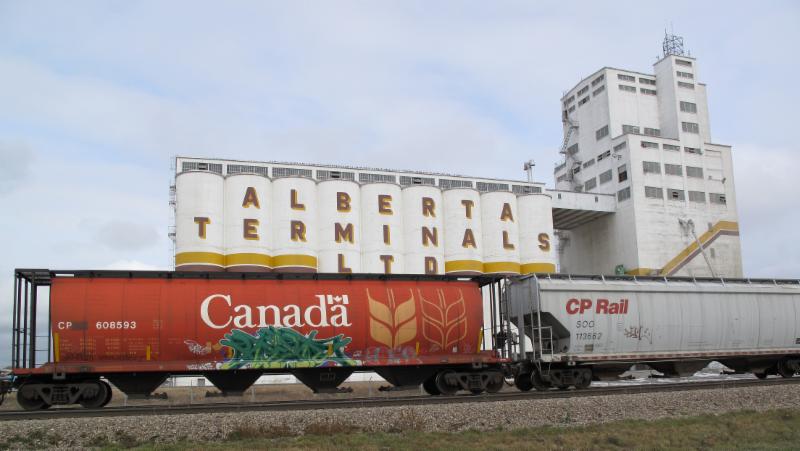
13. Canadian whisky was and remains a southbound cross border enterprise. Early on, commercial Canadian distillers made inroads into American markets, and the US quickly became the primary market for Canadian whisky. This is still the case today as American drinkers buy about 75% of the whisky that Canada produces.
AA CW4

14. The American Civil War so disrupted whisky production in the US that by 1865, three generations before Prohibition, Canadian whisky was the best-selling whisky in the US, period. And it remained that way until 2010 when bourbon overtook it. It is now number 2 in the US, and practically neck-and-neck with bourbon. Canadian whisky is still the best selling whisky in North America.

15. Where there’s booze there’s legislation (and taxation) and Canada leads the way. In 1890, Canada became the first nation to pass legislation requiring that whisky be aged. More than a quarter of a century later the British government followed suit. The Scotch ageing legislation of 1916 was actually modeled on Canada’s. This is not an assertion but a fact, confirmed by the official government correspondence of the day.

16. Canada’s whisky ageing legislation was intended to facilitate tax collection, and it had a dramatic commercial impact. It meant that it was no longer economical to operate small distilleries, leaving whisky production exclusively to the larger distilleries, most of which were already ageing whisky anyway.

17. Prohibition may have had a moral tone to it in the US, but it also threatened the formerly lucrative cross-border sales of Canadian whisky. In 1920 when the US declared Prohibition, Canada’s largest market suddenly dried up, creating serious financial difficulties for most of Canada’s commercial distilleries. They continued to export some whisky to the US but in volumes so reduced that Corby’s, Gooderham & Worts, and Seagram’s faced near bankruptcy. Hiram Walker’s distillery fared slightly better but not for long. It was eventually sold for about half its commercial value. Moreover, much of the whisky reaching the US from Canada was Scotch and Irish whisky imported to Canada for sale in the US.

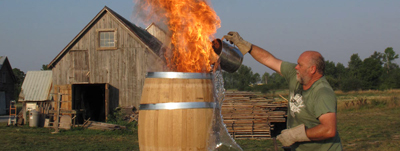
18. Fast forward to today. Canadian whisky sales are in a resurgence. The most recent statistics (from 2014) indicate that Americans bought almost 16 million 9-litre cases of Canadian whisky that year, the equivalent of nearly 200-million standard-size bottles.
AA CW5

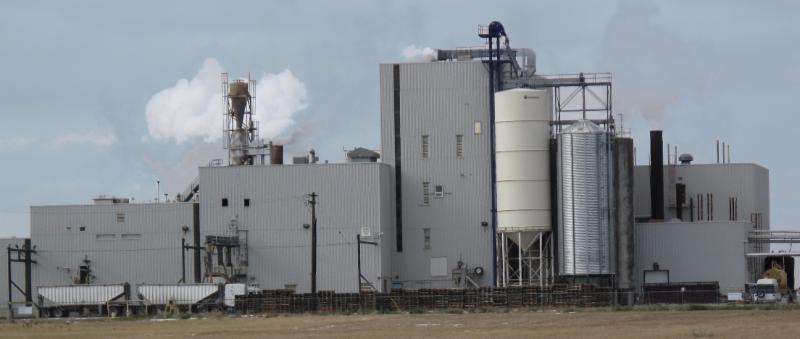
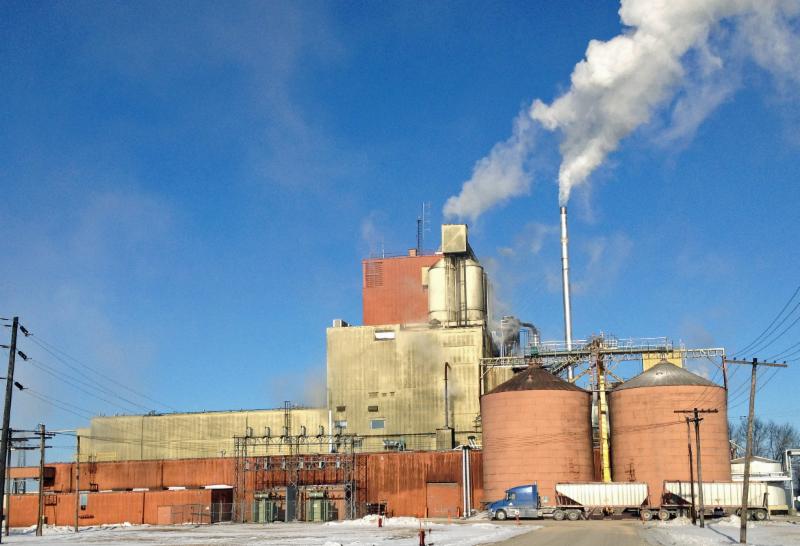
19. And where does Canadian whisky come from? There are eight large-scale commercial distilleries in Canada and each one of them is undertaking expansion and/or modernization projects because of the continually increasing demand for Canadian whisky. Production is racing to keep pace with demand.

20. Canada’s major commercial distilleries span the country and include three in Alberta (Highwood, Black Velvet, and Alberta Distillers), one in Manitoba (Gimli), three in Ontario (Hiram Walker, Canadian Mist and Forty Creek), and one in Quebec (Valleyfield.)

21. These are distinct distilleries. Each one follows its own production processes and methods making it meaningless to talk about whisky “regions” in Canada.
AA CW6

22. What is it, then, that makes Canadian whisky so distinctive? Here is a 5-point overview of key production factors that, when taken together, distinguish Canadian whisky from all other whisky styles.
AA CW7

a. Like single malt Scotch, Canadian whisky is generally the product of a single distillery. With occasional exceptions, Canadian distillers do not exchange barrels or buy whisky from each other. Thus, Canadian whisky can perhaps best be described as “single distillery whisky.”

b. In general, unlike their US counterparts, Canadian whisky makers do not use mash bills. In Canada each grain type is milled, mashed, fermented, distilled, and matured separately, and only then mingled together as mature whisky. American distillers combine their grains before making whisky. Canadian distillers combine them afterwards. Like all things Canadian, there are exceptions: Canadian Club and Black Velvet distil their spirits separately, like everyone else, but mingle these spirits before maturing them.

c. Regardless of grain type, Canadian distillers generally make two whisky streams which they later combine after maturation. This is similar to how blended Scotch is made.

One stream (called “base whisky”) is distilled to a high alcohol content and, although it still includes many grain-derived congeners, when matured it facilitates the full expression of congeners derived from the wood. (Congeners are the chemicals that give whisky its flavour.) Some distilleries make only one type of base whisky, while others make several. This base whisky is most often matured in barrels that have already been used one or more times. The first use reduces the influence of oak caramels, tannins, and vanillins, allowing other wood-derived congeners to contribute to the flavour in greater proportions. This is one source of the “elegance” of Canadian whisky.

The second stream (called “flavouring whisky”) includes whiskies that are distilled to a low alcohol content in order to emphasize grain-derived congeners. These flavouring whiskies are commonly made from rye, wheat, barley, and corn – and each is distilled and matured separately. Flavouring whiskies are generally matured in new virgin barrels or in a mix of new and used barrels.

d. Each type of grain spirit within each stream is matured in optimal conditions for that particular spirit. This requires the use of different barrel types and chars for each grain, as well as different periods of maturation depending on the characteristics of the particular spirit.

e. The addition of non-whisky flavouring − the so-called 9.09% rule − is sometimes talked about on chat boards, although it is poorly understood. This is a practice that is not nearly as prevalent as some people suggest. It is more of a footnote to a discussion of the elements of Canadian whisky production.

In a nutshell, to aid US producers, American tax law provides financial incentives for foreign spirits that include some American-made spirits. For high-volume bottom-shelf whiskies this is a substantial tax break. For lower-volume whiskies it is often not worth the effort. Thus, some Canadian whiskies made for the US market include American spirits even though the version of the same whisky made for the Canadian market (and the rest of the world) often will not. As well, in some cases, regardless of the intended market, small amounts of foreign spirit will be added to enhance certain flavours.

This is further complicated by the use of the words “wine” and “sherry” to describe some of these additives, even though the actual liquid used bears little or no resemblance to what the general public perceives wine or sherry to be. Moreover, all spirits added to Canadian whisky under this rule must have spent at least 2 years maturing in wood.

23. In addition to the eight Canadian distilleries mentioned above, two small Scottish-style distilleries (Glenora and Shelter Point) have been established in Canada in the past two decades. Recent years have seen a burgeoning of a craft distilling movement in Canada and there are some 30 of them at the last count. About half a dozen of these micro-distilleries are already making − or are planning to make − whisky.

24. One issue that confuses some whisky writers is that unlike in the US and the UK, Canada does not unify all of its whisky laws, rules, and regulations in one tidy legislative place. Distilling in Canada is a matter, first of all, of provincial regulation even though many aspects of its production and export fall under federal regulation. Consequently, two levels of government and many provincial and territorial government departments and agencies, share these responsibilities. Each of them makes rules specific to its areas of legislated responsibility. To complicate matters further, provincial rules vary across the country. While it is not incorrect to rely on the basic definition of Canadian whisky from the Food and Drug Act, it is incorrect to draw the conclusion that this is the only regulation that whisky makers must comply with in Canada.

25. The Food and Drug Act includes this definition:
Canadian Whisky, Canadian Rye Whisky or Rye Whisky

a. shall:
i. be a potable alcoholic distillate, or a mixture of potable alcoholic distillates, obtained from a mash of cereal grain or cereal grain products saccharified by the diastase of malt or by other enzymes and fermented by the action of yeast or a mixture of yeast and other micro-organisms,
ii. be aged in small wood for not less than three years,
iii. possess the aroma, taste and character generally attributed to Canadian whisky,
iv. be manufactured in accordance with the requirements of the Excise Act and the regulations made thereunder,
v. be mashed, distilled and aged in Canada, and
vi. contain not less than 40 per cent alcohol by volume; and

b. may contain caramel and flavouring.

26. Finally, a key resource for all these matters of history, production, commerce, regulation, and − perhaps most important of all: the delicious taste of Canadian whisky − my book, Canadian Whisky: The Portable Expert, published by McClelland & Stewart 2012 and 2014 is a well stocked bar of valuable information.

This primer is a carefully researched overview of key points about Canadian whisky to assist journalists and others writing about it. These points may be quoted freely with credit to the author. Davin de Kergommeaux is also the author of Canadian Whisky: The Portable Expert, the definitive book about Canadian whisky.

These notes were first published in this format, September 3, 2014 and revised September 17, 2015.

Canadian Whisky: The Portable Expert

The world’s first in-depth book about Canada’s national spirit.
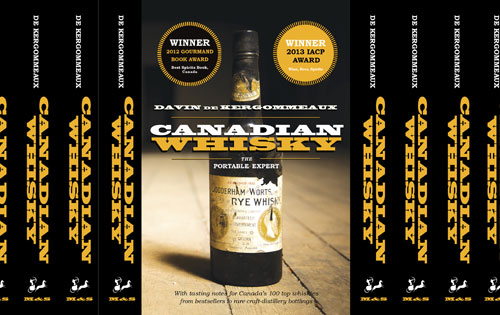
AA CW8

WINNER, GOURMAND BOOK AWARDS
BEST SPIRITS BOOK CANADA 2012

WINNER, 2013 IACP BOOK AWARDS
WINE, BEER AND SIRITS

Canadian Whisky: The Portable Expert is published by McClelland & Stewart and distributed by Penguin Random House. It is available from most book shops and on-line book sellers.

Secure The Ultimate Investment with an Exclusive Membership to the Boann Cask Society and Boann Cask Collection – Irish Whiskey News

AA Boann

Secure the ultimate investment with an exclusive membership to the Boann Cask Society and Boann Cask Collection.

Ireland’s newest craft distillery offers two unique opportunities to become part of the revival of Irish whiskey, the Irish whiskey Renaissance.  

Located in the heart of the Boyne Valley, Boann Whiskey Distillery has unveiled details of their exclusive Boann Cask Society and Boann Cask Collection, which will allow members to become part of history in the making of Ireland’s newest and most innovative craft distillery.

Opening in 2016, the Boann Distillery will create the finest whiskeys from specially designed nano-copper pot stills in its state of the art distillery in Drogheda.

The Cooney family, creators of the Boann Distillery, are excited about the distillery nearing completion and are keen for you to play a role in the renaissance of Irish Whiskey. The distillery will honour the timeless tradition of Ireland’s master distillers by creating the finest Irish Malt and Pot Still Whiskeys for discerning drinkers and collectors around the world. From milling to mashing, distilling, maturing and bottling, every drop of Boann malt and pot still whiskey is crafted within the quietude of the unique family distillery.

Boann Distillery Head Distiller, Ainé O’Hora, learnt her trade from the internationally renowned Master Distiller, John McDougall. He is the only man alive to have distilled all five types of Scotch whiskey and Irish whiskey. Their shared passion and wealth of knowledge means every detail of Boann Distillery has been meticulously considered.

Speaking about the Boann Cask Society, Ainé O’Hora, Head Distiller, at Boann Distillery said:

Anyone who loves and appreciates the craft of whiskey will understand what a wonderful and unique opportunity the Boann Cask Society presents. It truly is the ultimate gift for whiskey lovers. We are very excited to welcome our 500 Cask Society Members and look forward to a long and rewarding journey with them. I’m so proud to be involved with such a beautiful product and I’m excited to share that experience with our members.”

Benefits of becoming a member of the Boann Cask Society

  • As a Boann Cask Society Member, you will own one of the first five hundred whiskey casks, complete with certificate of authenticity and named cask.
  • You can fill your own cask at the distillery and bottle it once it has matured.
  • You can choose Irish Malt or Irish Pot Still Whiskey and decide which barrel to mature it in – Bourbon, Sherry, Port, with a choice of finishes. John or Ainé will be available to meet with you for guidance on the finishes.
  • You can enjoy personal tastings of your whiskey cask with our Head Distiller. Alternatively, Boann Distillery will send you a taster every year, on your cask’s birthday.
  • You will receive an exclusive Boann Cask Society loyalty card, which offers a 10% discount on all purchases at the distillery plus priority booking of events.
  • You will be rewarded with a limited edition Boann Distillery Tasting Book to record your whiskey adventure.
  • You will receive a special invitation to the Boann Cask Society Party, held once a year.
  • You will have your cask stored safely for you, for a minimum of three years in the Boann Cellar.
  • You will experience a once in a liftetime hands on experience through the distilling, filling, maturation, ageing, blending, bottling, appreciation and enjoyment of the wonderful world of whiskey.

Boann Cask prices start at €5,800 + Excise Duty + VAT. This is a lifestyle investment for your generation and the next. 

Benefits of becoming a member of the Boann Cask Collection

    • As a Boann Cask Collection Member you will own exclusive bottlings from our distillers choice casks, hand picked as they mature in our cellar and selected by our Master Distiller, as the best expressions of our signature style.
  • This offer is a 10 bottle, 10 year plan in which you will receive a bottle of the maturing malt whiskey from one year spirit, two year spirit, three year old whiskey, four, five, six, seven, eight, nine and ten year old whiskey, building a unique and covetable vertical collection of our special whiskeys, all with a unique limited edition label. 

The Boann Cask Collection price is €650 for 10 bottles over 10 years. 

For further details about becoming a member of the Boann Cask Society or Boann Cask Collection, go to www.boanndistillery.ie or email caskoffer@boanndistillery.ie

Cadenhead’s London “Small Batch Release Now In” – Scotch Whisky News

AA Cadenheads

From the highland’s we have an amazing malt in our small batch range starting off with a rather enjoyable Blair Athol sherry cask bottled at 46% Vol followed by some great Speyside malts with islay and the rare vintages.

SMALL BATCH 46%

BLAIR ATHOL DISTILLERY 2001 14Y/O 46% (S) – 330 BTLS

Nose: Starts as a mixture of earthy and sherry notes. Liquorice; eucalyptus; plums and beeswax. Palate: Very fruity with some soft spices; ginger, cumin and star anise. Finish: Toffee apples with hints of cloves; black pepper and cardamon along with a lingering orange creaminess

GLEN ELGIN-GLENLIVET DISTILLERY 1991 23Y/O 46% – 630 BTLS

Nose: Dark chocolate; some meatiness along with a good glug of sherry. Bruised bananas; Distant smokiness and some maple syrup. Palate: More chocolate, although softer than on the nose. Cinnamon buns; strawberry Yoghurt and poached pears. Finish: Some soft oaky notes along with red fruits. Faint dunnage warehouses with Raspberries and lychees.

SMALL BATCH CASK STRENGHT SPEYSIDE REGION

GLEN ELGIN-GLENLIVET DISTILLERY 1991 23Y/O 46% – 630 BTLS

Nose: Dark chocolate; some meatiness along with a good glug of sherry. Bruised bananas; Distant smokiness and some maple syrup. Palate: More chocolate, although softer than on the nose. Cinnamon buns; strawberry Yoghurt and poached pears. Finish: Some soft oaky notes along with red fruits. Faint dunnage warehouses with Raspberries and lychees.

CRAGGANMORE-GLENLIVET DISTILLERY 1993 22Y/O 56.3% – 492 BTLS

Nose: Dried apples; white chocolate and hints of aniseed. Palate: Quite herbal; sage and lemon thyme and hints of spices. Finish: Lingering melted white chocolate; quite floral and then some mandarin.

GLENBURGIE-GLENLIVET DISTILLERY 1992 23Y/O 54.7% – 456 BTLS

Nose: Sweet and grassy; very fresh. Melon; fresh mint leaves; clementines and lime leaves. Palate: Gooseberries; kiwi fruits; whole limes and dried bananas. Some celery salt and then some soft brown sugar. Finish: A soft but long finish. Very floral with light zesty fruits. A fresh and vibrant whisky.

GLENTAUCHERS-GLENLIVET DISTILLERY 1989 25Y/O 53.3% – 378 BTLS

Nose: Soft stewed fruits; some redcurrant and raspberries. Touches of mango and a little oily. Palate: Some grassy notes to start with and then growing dark fruits with blackberries and some candied ginger. Finish: Slightly drying with gingerbread and lots of salted butter.

SMALL BATCH CASK STRENGHT ISLAY REGION

BUNNAHABHAIN DISTILLERY 1994 20Y/O 57.1% – 354 BTLS

Nose: Olives; asparagus; fennel and fresh baked bread. Very oily and nutty. Palate: More oily notes. An industrial harbour with soft smokiness along with peanuts, praline and honeycomb. Finish: Chewy oily finish. Quite grassy before soft peat smoky and a touch of rosemary and lime cordial power through.

CAOL ILA DISTILLERY 2000 14Y/O 54.4% – 576 BTLS

Nose: Classic Caol Ila. Sweet and creamy with dry ashy smoke in perfect balance. Palate: Ashier than the nose suggests. Smoky limoncello? Lots of thick creamy notes and A touch of honey. Finish: Smoke; vanilla; lemon; lime and melted white chocolate intertwine long after you finished drinking this.

SMALL BATCH SINGLE GRAIN WHISKY CASK STRENGTH

CAMERONBRIDGE SINGLE GRAIN 1989 26Y/0 56.6% – 456 BTLS

Nose: Milk chocolate; brandy snaps and runny honey. Palate: Soft woodiness gives way to vanilla pods, gingersnap biscuits and lemon icing. Finish: Initial toffee notes fade to reveal hints of pears, white chocolate and some soft earthy notes.

SMALL BATCH SINGLE CASK STRENGHT GOLD LABEL SERIES

LINKWOOD-GLENLIVET DISTILLERY (S) 1989 26Y/O 50.2% – 324 BTLS

Nose: Rich sherry is immediately obvious. Raisins, figs and soft meaty notes. Then it becomes more orangey with faint cinnamon and nutmeg. Palate: Lots of red fruits and much creamier than the nose suggests. Red apple skins with Cranberry sauce and a hint of cocoa powder. Finish: Delicate finish of strawberries; walnuts; toffee and dry sherry.

CAMBUS SINGLE GRAIN 1988 26Y/O 47.5% – 288 BTLS

Nose: Very oily; peaches; mangoes and white chocolate. Palate: Soft white pepper and raisin butter; soft brown sugar; hints of fresh ginger and lemongrass. Finish: some caramelised bananas with boiled sweets and Scottish tablet with a faint but noticeable Sauternes note.

SPEYSIDE SPECIAL RELEASE BELNDED MALT BURNSIDE

BURNSIDE™ (BLENDED MALT) 1989 26Y/O 48.8% – 282 BTLS

Nose: Marshmallows; lemon meringue pie with runny toffee and hints of blueberries. Palate: Custard creams; almonds; slightly salty with growing citrus fruits. Finish: Creamy, hints of coffee beans with honey and dried apricots.

You may notice Royal Brackla 38 year old is not on this list. This is down to only 150 bottles in the world from the cask with our whole allocation reserved because news of the release came out a little early. If any bottles on the reserve do not have the payment made after 3 days of the release we will add them to the web shop.

Next release is going to be our Authentic range due later in October, we will have a few more Islay casks on offer along with a rich collection of Speyside malts, as soon as we have the release date and finish off the tasting notes.

We also hope to have news about the new vintage Springbank 25 very limited release.

All the best

Stephen Cadenhead’s London

Cadenhead’s Whisky Shop & Tasting Room
26 Chiltern Street
London
W1U 7QF

Tel: 020 7935 6999

Top Picks at K&L California – Whisky News

kl_logo_trans

  • 1998 Ben Nevis 17 Year Old Exclusive Malts “Ex-Sherry” Cask Strength Single Malt Whisky 750ml ( $139.99) This lovely cask of Ben Nevis is proof that the oft forgotten distillery can play with the big boys. 17 years in a refill sherry butt and maturation at the foot Scotland’s highest peak have done wonders here. Nevis’ rich malty profile is integrated perfectly with the dense flavors from the Sherry Cask. Grab it will you can, this one is pretty limited.
  • White Oak Akashi Grain Whisky 750ml $34.99
  • Arran 12 Year Old Cask Strength Single Malt Whisky 750ml $64.99
  • 1998 Ben Nevis 17 Year Old Exclusive Malts “Ex-Sherry” Cask Strength Single Malt Whisky 750ml $139.99

K&L Wine Merchants
http://www.klwines.com
Phone: 877-KLWines (toll free 877-559-4637)
Email: wine@klwines.com
San Francisco, Redwood City, Hollywood CA

KL-emailheader

Ardbeg Supernova SN2015 Committee Release Islay Single Malt Scotch Whisky at The Whisky Barrel – Scotch Whisky News

AA ardbeg-supernova-2015-sn2015

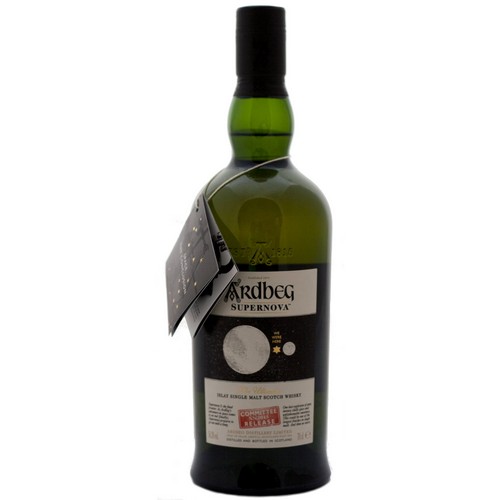
Ardbeg Supernova SN2015 Committee Release Islay Single Malt Scotch Whisky

Ardbeg Supernova Committee SN2015 Release Islay single malt Scotch whiskey. The final fleeting Supernova bottling heralds the culmination of the Ardbeg experiment in space. Limited edition 2015 release.

$646.20

Ardbeg

Ardbeg Distillery was established in Ardbeg on the Kildalton Peninsular on the Isle of Islay in 1815 by John McDougal. Ardbeg Distillery draws soft peaty water from Loch Uigeadail and Loch Airigh nam Beist up amongst the hills behind the distillery. Ardbeg Distillery is a participant in the world famous Feis Ile, the annual Islay Festival of Malt and Music. Visitors are welcome at the distillery visitor center which offers Ardbeg Distillery tours and serves delicious Scottish fare in the Ardbeg Café.

the-whisky-barrel-new-logo-2011-1024x250

GlenDronach Batch #12 at The Whisky Barrel – Scotch Whisky News

AA GlenD 72

GlenDronach Batch #12

Nine Pedro Ximenez sherry cask expressions from 1972/1990/1995/2003/2004

Shop – Glendronach Batch 12

the-whisky-barrel-new-logo-2011-1024x250

CELEBRATING 200 YEARS WITH A RARE LAPHROAIG® 32 YEAR OLD – Scotch Whisky News

AA Laphroaig 32

CELEBRATING 200 YEARS WITH A RARE

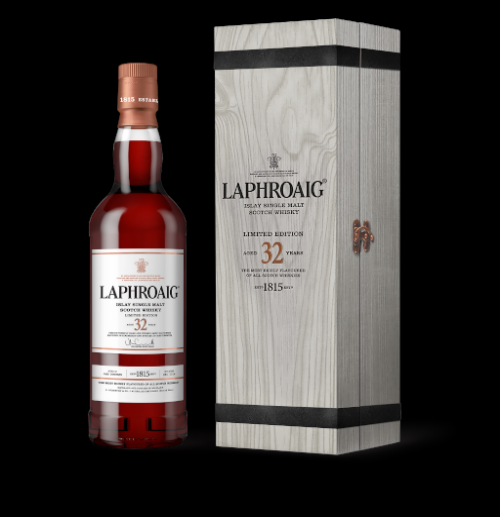
LAPHROAIG® 32 YEAR OLD

Laphroaig® Islay Single Malt Scotch Whisky continues to celebrate its bicentenary with the release of the Laphroaig 32 Year Old.  The very special bottling, distributed by Maxxium UK, has been aged for over three decades in a single cask type.

Matured exclusively in a first-fill ex-Oloroso cask, the Laphroaig 32 Year Old is a whisky that has picked up all the flavours so typical of spirit laid down in ex-Sherry casks – the dark Christmas fruits, the nuts and spice, and at the same time possesses the extraordinary delicate balance common to old, excellent whiskies. It is an extremely rare and accomplished whisky.

On the nose the aroma of caramelised brown sugar is predominant, with notes of dark, bitter chocolate and nutmeg leading the palate, followed by a dry and lingering sherried oak finish.

Laphroaig 32 Year Old, an intensely rich single, malt will be available in October 2015 in selected specialist whisky retailers with a RRP of £750.00.

NOTES

www.laphroaig.com  

Tasting Notes for Laphroaig 32 Year Old:

  • Colour – Deep Mahogany
  • Nose – Reminiscent of a Christmas fruit cake, the rich, sherry sweetness and the aroma of caramelised brown sugar is predominant. A drop of water reveals notes of cinnamon spiced red apples, with just a hint of bitter dark chocolate.
  • Body – Intense and rich.
  • Taste – The dark, bitter chocolate follows through to the palate, with nutmeg and an intense spicy oakiness. Adding a touch of water allows sweeter, sherry flavours to come through, together with just a hint of salt tang and subtle peat smoke.
  • Finish – Dry, long and lingering, sherried oak finish.

Editors Notes:

  • Laphroaig is the No.1 selling Islay Single Malt Scotch Whisky globally
  • Unmistakably peat-smoke flavours are delivered by burning local Islay peat, containing unique traces of seaweed and heather.
  • One of only a few distilleries that still uses traditional malting floors and dries and infuses its own malt with the thick blue smoke from old peat-fired kilns.
  • The Friends of Laphroaig programme keeps fans of the brand up to date with special offers and news from distillery manager, John Campbell. On signing up, members are allocated their own square foot of land on Islay, and their names are added to the members’ book in the friends lounge at the distillery. Members who visit the distillery are invited to collect their ‘rent’ – a dram of Laphroaig. The community comprises more than 669,000 like-minded Scotch fans from more than 190 countries.

About Beam Suntory Inc.:

As the world’s third largest premium spirits company, Beam Suntory is Crafting the Spirits that Stir the World.  Consumers from all corners of the globe call for the company’s brands, including the flagship Jim Beam bourbon and Yamazaki Japanese whisky, as well as world renowned premium brands including Maker’s Mark and Knob Creek bourbons, Hakushu and Hibiki Japanese whiskies, Teacher’s,  Laphroaig, and Bowmore Scotch whiskies, Canadian Club whisky, Courvoisier cognac, Sauza tequila, Pinnacle vodka, and Midori liqueur.  The company generates annual worldwide sales exceeding $4 billion excluding excise taxes.

Beam Suntory was created in 2014 by combining the world leader in bourbon and the pioneer in Japanese whisky to form a new company with a deep heritage, passion for quality, innovative spirit and entrepreneurial culture.  Headquartered in Deerfield, Illinois, Beam Suntory is a subsidiary of Suntory Holdings Limited of Japan.  For more information on Beam Suntory, its brands, and its commitment to social responsibility, please visit http://www.beamsuntory.com/ and www.drinksmart.com.

IRISH DISTILLERS SET TO CONTINUE CATEGORY LEADERSHIP WITH NEW MICRODISTILLERY – Irish Whiskey News

Irish Distillers CEO Anna Malmhake and Graduate Disitller Karen Cotter 1

IRISH DISTILLERS SET TO CONTINUE CATEGORY 

LEADERSHIP WITH NEW MICRODISTILLERY

Irish Distillers, the largest whiskey producer in Ireland and home to the iconic brands of Irish whiskey – Jameson, Powers, PADDY, Redbreast, Green Spot and Midleton Very Rare, has unveiled a new Microdistillery in Midleton, Co. Cork. The Microdistillery is a key innovation hub that will support the resurgence of Irish Whiskey through experimentation with distillations of new and old styles of Irish whiskey.

The opening of the new facility marks the return to distilling in the Old Midleton buildings for the first time since 1975. An innovative array of whiskeys, featuring a mix of cereals, will be distilled using a manual operation during the first year, while in phase two a microbrewery will be introduced that will enable the Microdistillery to craft whiskeys using a wider range of cereals and yeast strains.

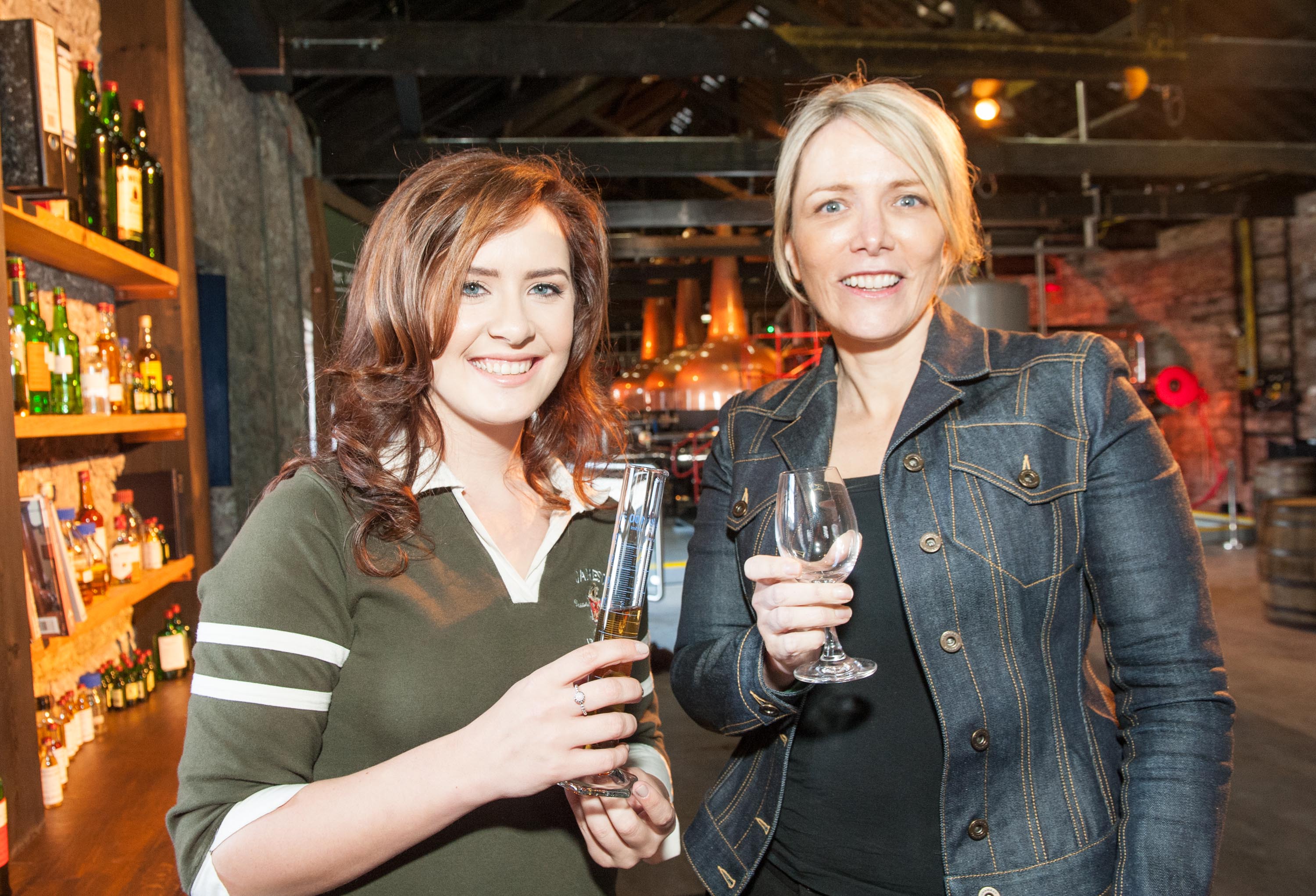
The first Distiller of the Microdistillery at Midleton has been announced as Karen Cotter – one of eight alumni of the Jameson Graduate Distiller Programme and the only female distiller in Ireland. Karen joined Irish Distillers in 2012 and has been mentored by Midleton Master Distiller, Brian Nation – an ongoing relationship that will ensure that Karen has the support she needs to carry on the proud tradition of distilling in Midleton.

Anna Malmhake, Chairman and CEO of Irish Distillers, commented: “As Jameson continues to underpin the success of the Irish whiskey category, we are looking at new ways of building on our tradition while also forging the future of Irish whiskey. We are delighted with the opening of the Midleton Microdistillery which, when fully operational, will produce 400 casks of Irish whiskey per annum, from brewing through to maturation. These will be innovative, small batch expressions that will play a key role in the development of the category.

“Our Archivist recently uncovered a notebook personally used by John Jameson II in 1826 which he used to take note of special recipes and ingredient mixes used by the original Jameson distillers. The Microdistillery will enable us to bring these old Irish whiskeys back to life in the modern era, as well as experiment and innovate with new ingredients mixes.

“In addition, it will be a key feature of the Jameson Experience Midleton. We currently welcome over 410,000 tourists per year to the Old Jameson Distillery in Dublin and the Jameson Experience Midleton. As Irish whiskey tourism continues its rapid expansion, it is essential that we develop our tourist offering so they get an authentic, Irish experience.”

Karen Cotter, Distiller at the Midleton Microdistillery, added: “I am honoured to take up my new role as Distiller at the Midleton Microdistillery – my own distillery! I had my first taste of Midleton during a six-month work placement and found the story of what we do in Midleton and why we do it fascinating. I wanted to be a part of an industry that respects the traditions of old while using environmentally sustainable ways to ensure quality whiskey production for the future.”

“Craft and innovation are at the core of everything we do and Irish Distillers have had the foresight to invest in an experimentation hub that will enable us to study cereal mixes, resurrect old Irish whiskey recipes and be a centre of excellence for training up-and-coming Midleton distillers. For me, the Microdistillery presents a fantastic opportunity to be at the cutting edge of innovation in Irish Whiskey and, with a steady hand guiding me, the future really is bright for us. Who knows – maybe we will find the next Jameson here!”  

Notes  

About Irish Distillers

Irish Distillers was formed in 1966, when a merger took place between Irish whiskey distillers, John Power & Son, John Jameson & Son and the Cork Distillery Company. In an attempt to reverse the decline in Irish whiskey sales, the company decided to consolidate production at a new purpose-built facility alongside the existing distillery in Midleton, Co. Cork. Irish Distillers was bought by Pernod Ricard in June 1988 and today, Jameson is the No.1 Irish whiskey in the world, selling over 4 million 9L cases worldwide and contributing more than any other Irish whiskey brand to the phenomenal global growth of the category. Irish Distillers is committed to driving continued, sustainable growth of the Irish whiskey category.

Irish Distillers’ portfolio of whiskeys is comprised of Jameson, the world’s no.1 Irish whiskey; Irish favourite Paddy; Powers, the robust super premium whiskey for discerning drinkers; and the much-acclaimed brands that comprise the Irish Distillers’ Prestige Collection – the Single Pot Still Whiskeys of Midleton which includes the Spot range (Green Spot, Yellow Spot) and Redbreast, Ireland’s most awarded single pot still whiskey brand – and the pinnacle of the Prestige Collection, Midleton Very Rare.

www.irishdistillers.ie

About Pernod Ricard

Pernod Ricard is the world’s co-leader in wines and spirits with consolidated Sales of € 8,558 million in 2014/15. Created in 1975 by the merger of Ricard and Pernod, the Group has undergone sustained development, based on both organic growth and acquisitions: Seagram (2001), Allied Domecq (2005) and Vin&Sprit (2008). Pernod Ricard holds one of the most prestigious brand portfolios in the sector: Absolut Vodka, Ricard pastis, Ballantine’s, Chivas Regal, Royal Salute and The Glenlivet Scotch whiskies, Jameson Irish whiskey, Martell cognac, Havana Club rum, Beefeater gin, Kahlúa and Malibu liqueurs, Mumm and Perrier-Jouët champagnes, as well Jacob’s Creek, Brancott Estate, Campo Viejo, Graffigna and Kenwood wines. Pernod Ricard employs a workforce of approximately 18,000 people and operates through a decentralised organisation, with 6 “Brand Companies” and 80 “Market Companies” established in each key market. Pernod Ricard is strongly committed to a sustainable development policy and encourages responsible consumption. Pernod Ricard’s strategy and ambition are based on 3 key values that guide its expansion: entrepreneurial spirit, mutual trust and a strong sense of ethics. Pernod Ricard is listed on Euronext (Ticker: RI; ISIN code: FR0000120693) and is part of the CAC 40 index.

www.pernod-ricard.com

The Whisky Exchange Whisky Show – this weekend! – Late Breaking Whisky News

AA TWE Show 1

The Whisky Exchange Whisky Show – this weekend!

It’s that time of year again. The office is really busy, new whiskies are appearing in every corner, emails containing huge lists of things are zipping around and I’m working on a weekend – it’s time for The Whisky Exchange Whisky Show.

Lots more details have appeared on the Whisky Show website since we last wrote about the event in February. Back then all we knew was that the venue had changed and that the theme was Legends of Whisky. Now, we’ve only got a few masterclass tickets left, we know what’s on the brasserie menu, have a lists of Dream Drams and special guests (including some proper legends of the whisky industry), know what food pairings and cocktails we’ll have, have a published schedule and map, and even have a list of all of the whiskies available to try.

It’s going to be excellent.

We’ll have TWE exclusive whiskies dotted around the show, with new whiskies from Arran, Kilchoman and The English Whisky Company all selected by us and available to try on their stands. The exclusive single casks of BenRiach and Glendronach that appeared a few weeks back will also be on the BenRiach Distillery Co stand, if you’ve not had a chance to taste them yet.

AA TWE Show 2

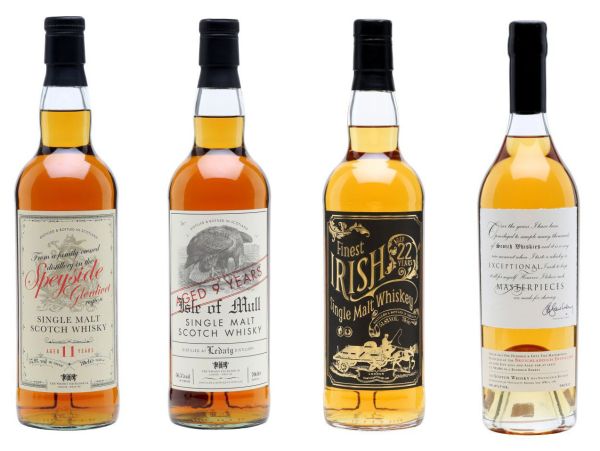
The show bottlings, available to try at the show for the first time

 On the Show Bottlings stand we’ll have some new exclusive whiskies bottled specially for the show. They are so new that I’ve not had a chance to try them yet, but reports from those who have are very good. Sherried drams from Ledaig and an anonymous family-run distillery in Speyside, a 22-year-old Irish single malt, and the latest in our Masterpieces series, as chosen by TWE director Sukhinder Singh.

This year, the boss has gone for a 2002 vintage Bruichladdich matured in a bourbon cask. The previous releases have not lasted long, and we don’t expect this one to hang around, either. If there are any show bottlings left after the weekend then they’ll appear on The Whisky Exchange website, so keep your eyes peeled.

AA TWE Show 3

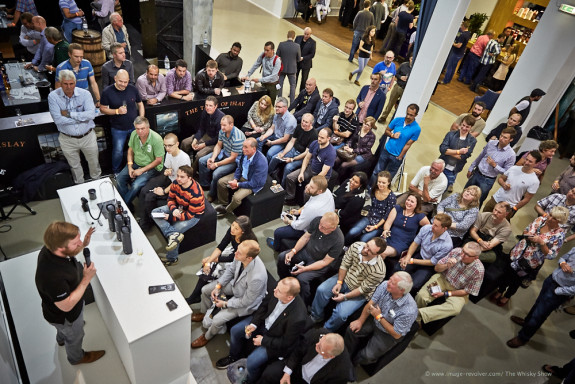
Daryl Haldane from Highland Park introducing the room to Dark Origins last year

 Along with all the whisky, food, cocktails and special guests, we have our famed masterclasses. While many are already sold out, we do have a few tickets left for some of them:

The Science of Whisky with Ian Buxton and Paul Hughes, authors of The Science and Commerce of Whisky, comparing and contrasting whiskies from Royal Lochnagar, Dalwhinnie and Mortlach
Benromach: The Making of the Classic Speyside Malt with distillery manager Keith Cruickshank, deconstructing the excellent Benromach 10 Year Old and trying the 15 Year Old
Arran: The Coming of Age with brand manager Louisa Young, celebrating the distillery’s 20th birthday with a selection of new and upcoming limited-edition whiskies
Cigar Pairing with Dalmore and Hunters & Frankau, pairing up a Cuban cigar and one of Dalmore’s drams three times a day – once with a light cigar, once with a medium and once with a heavy, featuring a different dram each time
Whisky and Cheese with Balvenie and La Fromagerie. Balvenie’s James Buntin and cheese expert Bruno d’Abo will be bringing along six cheeses and three whiskies each day at the show to teach us how the two can complement each other

There’s also a whole program of free seminars and Q&A sessions through the weekend, many with a few special drams thrown in for good measure. As mentioned before: it will be excellent.  If you’ve not got a ticket yet, head over to our ticketing partner Billetto and grab one – we still have a few left for Sunday 4 October. Just click the oversized button below:

AA TWE Show 4

If you already have a ticket, then make sure to pop by Stand 8 to say hello. Even if you don’t want to talk to me, the whiskies are worth the trip.


Powered by WordPress