A Wee Note from Richard Joynson Himself;
A TOUR OF ROSEISLE DISTILLERY – October 2010
Your Correspondent (YC) was able to tag onto the back of a group of assorted journos, hacks and bloggers during a get-to-know-us tour of the new Roseisle Distillery. YC is delighted to report that he is very impressed and that the future of malt distilling is safe; the doomsayers will have to make up some new conspiracies.

A TOUR OF ROSEISLE DISTILLERY – October 2010
Your Correspondent was able to tag onto the back of a group of assorted journos, hacks and bloggers during a get-to-know-us tour of the new Roseisle Distillery. YC is delighted to report that he is very impressed and that the future of malt distilling is safe; the doomsayers will have to make up some new conspiracies.
BACKGROUND
Diageo is the largest producer of Scotch and is enjoying very strong growth in demand from it’s new markets, so much so that, having checked their sums with a calculator, they are convinced they need a further 20m litres annual production of malt whisky for their blends. Malt Production supremeo Brian Higgs has managed to whip their existing 27 Diageo distilleries into eeking out half that volume but three years ago he also got the go-ahead to build new capacity which is now built and producing as Roseisle Distillery.
THE MALTINGS
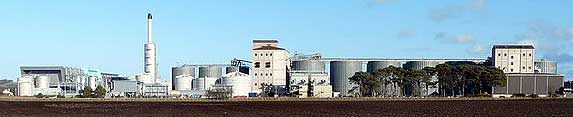
Roseisle Distillery (left) and Roseisle Maltings *Picture credit at footnote
Roseisle shares infamy with Glen Ord and Springbank – they are the only distilleries to malt all their requirements of barley on site! The distillery (to the left of the tall chimney above) shares its site with the 1980 built maltings and will consume all of the malt produced.
THE DISTILLERY
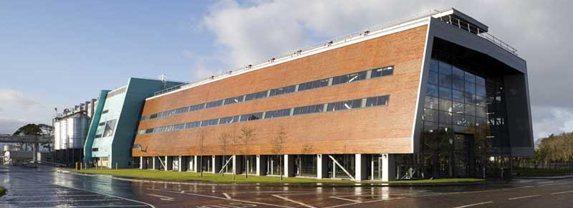
Roseisle is one of Scotland’s biggest distilleries, at 10m litres Glenfiddich and Glenlivet are as big, Clynelish and Caol Ila are, for example, about 4m, while tiny Edradour’s volume for the year can be yielded at Roseisle in less than 4 days.
THE WHISKY
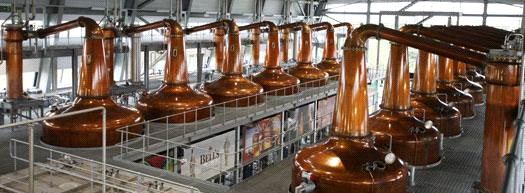
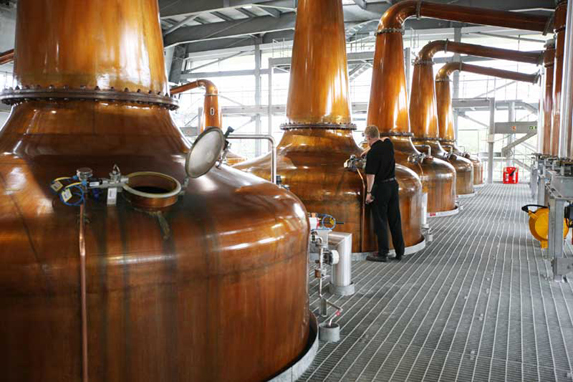
The distillery will produce one style of malt whisky – Speyside – which is the biggest component of all blended Scotch. The seven pairs of stills are medium sized and six have a mix of both copper and steel condensers (like Dailuaine); the option to reduce the proportion of copper contact results in a heavier Speyside malt (like that produced by worm tubs).
Since production started at the beginning of 2010 they have produced all copper condensed spirit (light character) but soon will divert some of the vapour through the steel condensers for a season of heavy Speyside character make. It’s like having a Cardhu Distillery with Cragganmore’s stills in the cupboard!
For any professors of distilling reading this; they will make clear worts (lauter tuns) and over 75 hours fermentation (in steel washbacks) – resulting in more ‘flavour bits’.
A couple of road tankers take the new spirit away every day to be filled into refill hogsheads – soon to be produced at the company’s new cooper-friendly super-cooperage, another part of their £100m investment in more malt whisky.
LFW.co.uk plans to investigate the Diageonesian investments in grain distilling soon.
THE BIG ANSWERS
Will Roseisle cause the closure of smaller distilleries?
No, Roseisle is only half the investment in more capacity; Diageo really believes they have customers for much more Scotch Whisky.
Will we see it bottled as a single?
Yes! Although a blend producing company, since Dr. Alan Rutherford’s day they have bottled all their malts for the workers (see page 3, SWR2 – Autumn 1994). Once considered ready, the single malt will be bottled but it is not expected to become one of their Classic Malts Selection, LFW.co.uk will be able to supply it, but you’ll have to wait!
Can I visit?
Not as a drop in visitor but there will be open day(s) during the Spirit of Speyside Festival, so prepare your trips carefully.
THE MECANNO
Roseisle is a modern distillery. The building, while lacking the charm of a 19th century Doig design fits in the surrounds of the maltings. It’s certainly big, but that’s so you can get a crane and other big kit in there for maintenance and stuff.
The attention to detail, comfort and efficiency is fascinating; routine access is all on one level – its two duty workers can see and run the plant from a central control point – yet the production is unchanged from traditional methods, they really did get it right 100 years ago. A visitor to Roseisle can appreciate that malt distillation is essentially a simple process, it’s all very clear here with very little clutter- mash, ferment, boil – simples!
THE TREE HUGGING
The distillery is on course to becoming carbon-neutral and given the huge amounts of energy required to make malt it’s a phenomenal achievement.
Draff and pot-ale by-products are squeezed dry and burned to produce steam to heat the stills (plus the ash from the fire is a fertiliser).
Methane biogas produced from the wet squeezings is also burned.
Hot water from the coolers and condensers is piped to the maltings to pre-heat the drying air required there.
All process water is treated on-site and is to be used by the maltings to steep the barley, there will be no final discharge footprint left by the distillery.
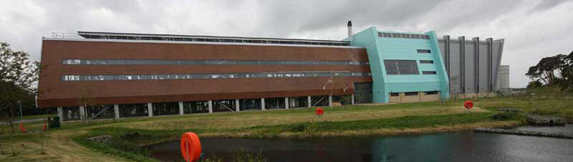
Still room to the left, tun room to the right, the middle houses the mash tun, why it’s turqoise, no one could explain…
*Wide view picture found by Google and reproduced here without permission because I can’t find how to contact the photographer and ask. Sorry photographer ‘Elisabeth’, please get in touch!
Whisky Intelligence would like to express our thanks to the dear Joynson for allowing his humble words to be reproduced here.
Visit Loch Fyne Whiskies at www.lfw.co.uk