Archive for April, 2010

Whisky Mad Regis LeMaitre To Host A Companions of the Quaich Evening – Scotch Whisky News

companions_logo

Cornwall (Ontario) Chapter    
                                       Presents                                          
AN  EVENING WITH

regis_top_banner

Enjoy a Single Malt Scotch Whisky Tasting and Dinner with one of Europe’s premier Whisky Masters.  Régis is a highly respected and well recognized figure in his field.  

Sample 5 limited edition single with a presentation on each whisky by Régis,  along with a 5 course dinner. All seats are $75, seating is limited.  For more information please contact Frank McDonald at 613-936-1761 or at fmcdonald4@cogeco.ca    Reservations required

Tuesday April 27, 2010 at the Best Western Parkway Inn,  Vincent Massey Drive, Cornwall, Ontario.

regis
Visit Regis at http://www.regiswhiskymad.co.uk/  and the Companions of the Quaich at  http://www.thequaich.com/

Early Times Kentucky Whisky Releases Commemorative 150th Anniversary Bottle – American Whiskey News

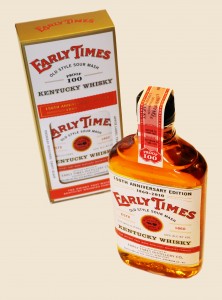
et_dramatic_150thanniv

Early Times Kentucky Whisky Releases Commemorative 150th Anniversary Bottle

Louisville, Ky. (April 9, 2010) – Early Times Kentucky Whisky, first distilled in 1860 in Early Times Station, Kentucky, is a whisky known for its rich heritage and mild taste profile. To celebrate the 150th anniversary of the brand, Early Times Kentucky Whisky will release a one-time, limited release expression in a 375ml commemorative bottle.

Although the year 1860 congers up images of “early times” today, at the time, the brand’s original distillers believed the industry was turning too modern, too quickly, and wanted a brand that captured the “good old days.” Thus, the brand name Early Times was selected to remind consumers of the old-fashioned methods of making whisky – mashing grain in small tubs and boiling the beer and whisky in copper stills over open fires.

Closed by Prohibition, the distillery, brand and barrel inventory was acquired by medicinal whiskey permit holder Brown-Forman Distillers in 1923.  Brown-Forman moved the production of Early Times to Louisville, Kentucky in 1935 where it has thrived to this day.  Every drop is distilled under the late 1800’s permit number DSP – 354. 

 “This commemorative bottle celebrates the rich history of Early Times’ role as the second oldest continually produced whisky brand in America,” said Joe Murray, brand manager for Early Times. “While Early Times is now made with modern methods, its name still invokes images of the good old days and still provides a welcome reward at the end of a hard day’s work. As one of America’s top selling Kentucky Whiskies for the last 60 years it still lives up to its reputation as ‘The Whisky that made Kentucky Whiskies Famous.’ 

The Early Times 150th anniversary edition will come in a unique 375ml bottle at 100 proof and carry an Early Times retro 1920’s label. The distillery will produce only 3000 cases which will be available in 20 US states at a suggested retail price of $11.99.

“Early Times 150 is crafted to emulate the flavor profile the brand would have possessed in 1923 when it was acquired by Brown-Forman,” said Chris Morris, Brown-Forman Master Distiller. “Most whisky aficionados who have been treated to a prohibition-era medicinal whisky taste a late bottling. These contain whisky that was aged up to three times longer than the distiller planned. In 1923 Brown-Forman began bottling 5-6 year old Early Times as medicine. This bottling, with its light honey color, mellow oak, brown sugar, vanilla aroma and simple sweet corn, vanilla and faint butterscotch taste bring back the best of a by-gone time – an Early Times to remember.”

About Early Times Kentucky Whisky:

Early Times Kentucky Whisky is made at the Brown-Forman Distillery in Louisville, Kentucky. Early Times Kentucky Whisky is one of the fine spirits produced and marketed by Brown-Forman Corporation, a diversified producer and marketer of fine quality consumer products, including Jack Daniel’s, Southern Comfort, Finlandia Vodka, Tequila Herradura, el Jimador Tequila, Woodford Reserve, Canadian Mist, Old Forester, Fetzer Wines and Korbel California Champagnes.  Early Times reminds you to drink responsibly. For more information on Early Times Kentucky Whisky visit www.earlytimes.com.

###

___________________________________________________________

The Best TIMES Are Enjoyed Responsibly

Early Times Distillery Co., Kentucky Whisky, 40% Alc. by Volume, Louisville, KY

©2010 EARLY TIMES is a registered trademark

The Whisky Exchange 10th Anniversary Clynelish 37yo – Scotch Whisky News

twev1

Clynelish 37 Year Old / The Whisky Exchange 10th Anniversary / 46% / 70cl

Single Highland Malt Scotch Whisky

A truly old-fashioned Clynelish in the classic Highland style, this 37yo is oaky and spicy with ample Clynelish beeswax and a warming, dry finish. Bottled for TWE’s 10th Anniversary.
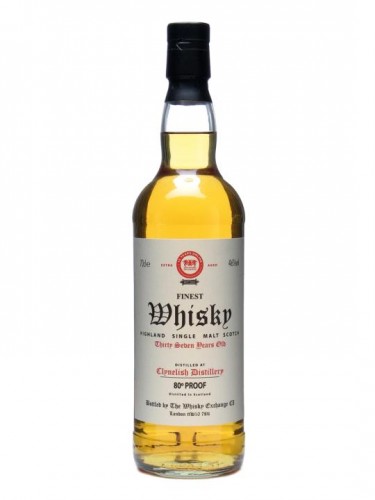
clytwe37yo-375x500

Tasting Notes by Tim F

Nose:  Classic old Clynelish, with wax (beeswax and candlewax) and honey.  A slight whiff of brine and the faintest trace of smoke (really took time for me to find it); also citrus (orange marmalade, lemon curd) and other fruits (maybe some dried banana), marshmallow; spice (clove), dried ginger, faint pepperiness. These latter combine with hazelnuts and musty old books (and I mean that in a good way), underlining the oak influence.

Palate:  The citrus flits through on a bed of creamy malt, then a big surge of honey and burgeoning spice as the oak moves in: powerful, ‘old-fashioned’ (as I think of it) dry oak, lifting the spices.  Strong hints of ginger ale, becomes quite peppery, the old books are still there, but not much in the way of smoke.  Delicate fruit, polished malt and powerful oak and spices – classic (for me) aged Highland whisky.

Finish:  Medium-full length, warm, salty. Faint smoke, residual waxiness, lingering oakspice and brine.  Becomes drying, as is natural for drams of this immense age.

Comment: a thrilling treat for fans of a nearly-extinct Highland style.  Evokes one of those longhaired ginger cows chewing on a thistle, nodding along to the wail of a distressed bagpipe played by a man with mutton-chop sideburns.  This is so old-fashioned that you can almost taste its kilt.

Order your bottle from the Whisky Exchange http://blog.thewhiskyexchange.com/

clynelish_logo

The Clynelish name started life in 1819 when a distillery was founded in the vilalge of Brora by the Marquis of Stafford, later known as the Duke of Sutherland.  This notorious character is more famous in Scotland for his part in the Highland Clearances of the same year, when he evicted around 15,000 crofters from his land in order to farm sheep.  It is speculated that he started the distillery to provide a market for his barley and to put the local moonshiners out of business. 

After enjoying immense popularity almost from its inception (for long periods in its early history the malt produced at Clynelish was sold only to private customers and not to blenders at all), the distillery, in common with most of the industry, suffered in the period between the beginning of Prohibition in America and the end of WWII.  Production ceased in the years 1931-38, and again from 1941-45.

During the subsequent recovery after the war demand from blenders for Clynelish malt was extremely high, so in 1967-68 owners Distillers Company Ltd (DCL, which was eventually to become part of Diageo) built a new distillery adjacent to the existing one to increase capacity.  This distillery was also called Clynelish, as the company wished to trade on the existing good name of the old distillery.  Unfortunately, there seems to be some confusion and lack of agreement as to the exact sequence of the events which followed in the history of the two distilleries, with little or no agreement on the dates. 

It would appear that the original distillery ran in tandem with the new distillery under the names of Clynelish A and Clynelish B (sources disagree over which was the new distillery and which the original Clynelish) during 1968/9.  Predictably, this arrangement was not to the liking of the Customs & Excise folk and the SWA due to the dissimilarity between the types of whisky being produced at the two distilleries.  The original distillery was closed down in 1969 and then reopened at some point in the 1970s under the new name of Brora.  The date of the re-opening is unclear, although everyone seems to agree that it was definitely producing by 1975.  It then operated intermittently, producing heavily peated (around 40ppm) whisky for blending purposes, before eventually becoming a victim of the DCL cull of distilleries in 1983.

The new Clynelish distillery was built as an exact replica of DCL’s modern Caol Ila distillery on Islay and has continued to produce a muscular, slightly peaty malt that is much valued by blenders – it is one of the base spirits for the excellent Johnnie Walker Gold Label.  In recent years Caol Ila’s profile has increased thanks to some excellent independent bottlings and its incorporation into Diageo’s ‘Classic Malts’ series. 

From the website:

When you think of the great homes of malt whisky, you probably think first of Speyside and Islay. But other regions play a full part in whisky’s story, and Scotland’s far north-east, from where Clynelish comes, is one. Distilleries here on the stormy sea coast of Sutherland were forever few and far between, yet malt whisky enthusiasts have always championed Clynelish™ over many more famous names.

When the original distillery was built in 1819 by the future Duke of Sutherland, the quality of Clynelish™ whisky was so prized that only private customers were supplied.

Over the years, Clynelish™ has continued to be held in high regard by experts. The great Victorian, Professor George Saintsbury, selected it as a favourite and today’s malt whisky gurus consistently praise its unique combination of North Highland and maritime qualities.

You can almost taste the sea air in Clynelish, with its crisp, medium-bodied, mustard-fresh style. Although there isn’t an Islay’s pungent smokiness here, there is a trace or two of it. Don’t think that this is a heavy malt, though. Its clean taste makes it a fine aperitif – and you can enjoy it just as much later in the evening, such is its versatility.

“The most coastal-tasting mainland whiskies are those from Clynelish, between Inverness and Wick. They typically have seaweedy, salty and mustard-like aromas and flavours. Mustard-and-cress, perhaps? The 14-year-old is less peaty than some older editions.” Michael Jackson, whisky writer and expert.

tel1

Longrow Christmas 2009 46% abv At Loch Fyne Whiskies – Scotch Whisky News

logo1_fine7

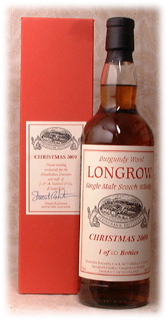
Longrow Christmas 2009 46% abv in the Loch Fyne Whiskies Collectors’ Loft

A very rare Burgundy matured Longrow limited to 60 bottles all handsigned on the box label and rear bottle label by Stuart Robertson.

‘Private bottling exclusively for the Shareholders, Directors and staff of J & A Mitchell & Co. (Group) Ltd. Stuart Robertson Distillery Manager’

Price excluding VAT: £1,063.83
£1,250.00 Including VAT at 17.5%

Visit Loch Fyne Whiskies at www.lfw.co.uk

longrow_christmas_2009

Spring Offers & New Douglas Laing OMC at Single Malts Direct – Scotch Whisky News

12

Here at Single Malts we’d like to apologise for the slight delay in our weekly newsletter. Due to the Easter weekend many of our staff were on holiday and heavy snow here in the North East of Scotland caused delays in consignments getting despatched. We also had the sad departure of our retail shop manager Ronnie Routledge last week, who will now be working at the Glenglassaugh distillery. We wish him the very best of luck, he will be sadly missed here at www.singlemaltsdirect.com

Not to worry though, with all the egg rolling and departures past with, were finally getting back to normal. Just in time to happily welcome in lots of brand new collectable whiskies, which you might be interested in!

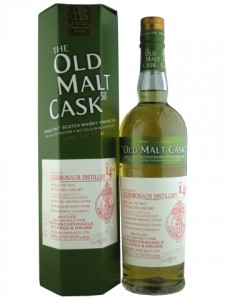
Old Malt Cask Glendronach 1995

glendronach-1995

14 Year Old
Distilled 1995 May
Bottled 2010 January
50%
No Chill Filtration
One of 240 bottles
Bottled exclusively for The Passchendaele 1917 Pipes & Drums
Nose: Fresh and gristy sweet – running to vanilla + butter cream.
Palate: Round & smooth with sweet, cocoa butter + ripe banana.
Finish: Replicates the nose and palate – still fresh and sweet.
£54.99
 
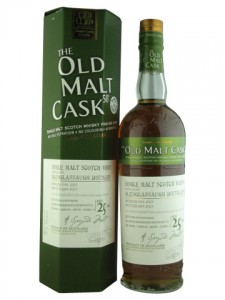
Old Malt Cask Glenglassaugh 1984
 
glenglassaugh-19941

25 Year Old
Distilled 1984 July
Bottled 2009 July
50%
No Chill Filtration
One of 624 bottles
Nose: Fresh, spice, fruited, buttery and oaked.

Palate: More fruit (now macerated) with a dark sherry/nutty style.
Finish: Now darker + a liquorice bite + more spice + late vanilla. 
£99.99

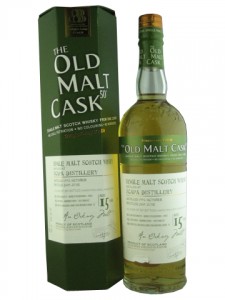
Old Malt Cask Scapa 1993

scapa-1993 

15 Year Old
Distilled 1993 October
Bottled 2009 June
50%
No Chill Filtration
One of 307 bottles.
Nose: Clean, fresh, barley’d – warms to polished wood + spices.
Palate: Lightly oaked – warmingly spiced – toffee vanilla’d
Finish: Syrup, still spiced with honey cough medicine flavour.
£59.99

Single Malts Limited | 36 Gordon Street | Huntly | Aberdeenshire | AB54 8EQ |

Brandy Library New York To Host Signatory Vintage, Isle of Skye & Smokehead – Scotch Whisky News

cover11

The Brandy Library will be holding a Signatory Vintage, Isle of Skye and Smokehead Scotch tasting 6 to 8 pm on Wednesday April 14th.

brandy-library-sig11

Tomatin Distillery Product Profile – Scotch Whisky News

34

THREE NEW TOMATIN’S

The Tomatin Distillery, Inverness-shire, is delighted to announce the release of two single cask and one limited edition bottling.

The first of the single casks was distilled in September 1997 and matured in a first fill bourbon barrel for over 12 years and bottled at cask strength – 57.1% abv. Only 244 bottles are available and will be sold in a limited number of western European markets as well as Japan.

The second Single cask was distilled in January 1999 and matured initially in a re fill American oak cask before being transferred into a European oak cask that was used to mature tempranillo wine. After spending over 2 year in the wine cask it was bottled at cask strength – 57.1% abv.  Only 302 bottles are available and again they will be sold in a limited number of Western European markets as well as Japan.

The third release is a limited edition 21 year old bottling which was created using 7 casks, 6 of which were re fill American oak casks and the 7th an ex sherry butt. Again bottled at casks strength – 52% abv – and limited to a release of just 2400 bottles which will be made available in selected markets throughout the world including the United Kingdom.

Stephen Bremner, Sales Director at the distillery commented: “Up until very recently you would have been hard pushed to find any limited edition official distillery bottlings from Tomatin. This is no longer the case and I am pleased to confirm that there will be a steady flow of this type of product over the coming years. We have some amazing casks from the 1960’s up to the present day and I feel confident that consumers will be delighted with what we bring to the market in the near future.”

He continued “The single casks are obviously very different in character with one representing the traditional house style of Tomatin and the other showing that our whisky is fairly adaptable and works well in different cask types. I feel that the 21 year old is a good example of a traditional highland malt whisky. It is very soft and smooth but also has a slightly spicy edge to it which is typical of Tomatin as it gets past the teens.”

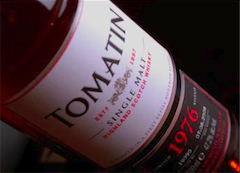
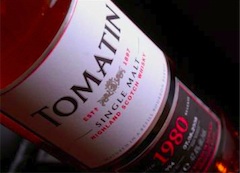
t1976

t1980

3
TOMATIN GAINS A NEW LOOK

Rebranding Tomatin Malt Whisky

Scotch Malt Whisky producer, The Tomatin Distillery Co Ltd, is currently in the process of re launching its single malt range, as it continues in its efforts to develop the Tomatin name into an internationally renowned brand.

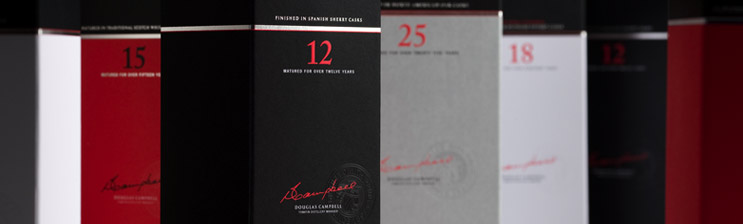
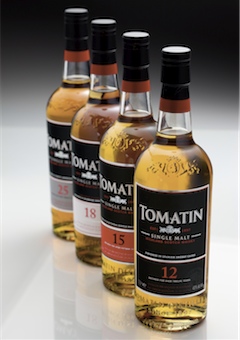
The company has opted for the ‘less is more’ approach by adopting a sophisticated and simplistic design for its packaging. The classic typography also help to give the brand a more stylish and premium look.

As part of the re brand the core range has been extended with the introduction of a 15 year old single malt which has been matured exclusively in North American Oak casks. The core range now consists of a 12 year old which is lightly sherried, a 15 year old, an 18 year old which is now produced at 46% abv and non chill filtered. It is also much more heavily sherried than previously, spending its final 24 months maturation in Oloroso Sherry butts. A 25 year old which is sophisticated single malt with a deep and complex character.

Stephen Bremner , Global Sales Director , said “ I felt strongly that in order for our single malt to develop into a truly global brand that a re styling of the packaging was imperative. I am confident that the new look will not only help develop the brand in our core markets but also help to open up markets that we are not currently present in”. He added “ We have already received some very positive feedback from consumers and in fact there has been a noticeable increase of sales in some of our key markets since the new package was launched”.

As well as producing a single malt the Tomatin Distillery is also the owner of ‘The Antiquary ‘ Blended Scotch Whisky. This famous old Scotch whisky brand is also being given a new look and will be re launched in several markets towards the end of 2009.

1xxx
8

22


Visit Tomatin Distillery at http://www.tomatin.com/

Sensational New Packaging For The Antiquary – Scotch Whisky News

12-detail

Sensational New packaging for The Antiquary

21-detail1

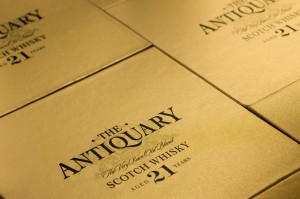
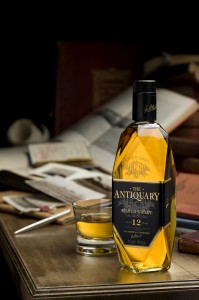
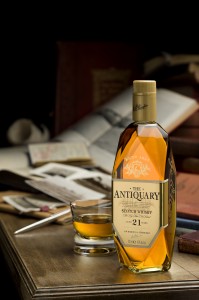
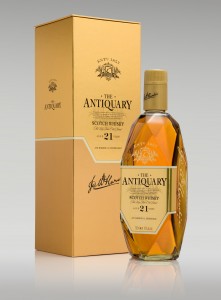
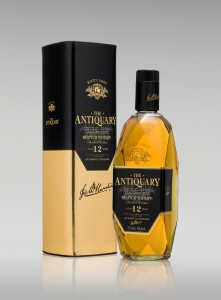
As part of its global strategy to establish ‘The Antiquary’ as a key brand within the deluxe blended whisky market, J&W Hardie Ltd have revamped the brands packaging. The new packaging is designed to enhance the quality, value and brand awareness of The Antiquary but also to give the brand a more modern look and feel, while maintaining its heritage.
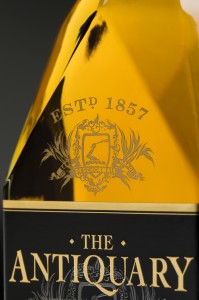
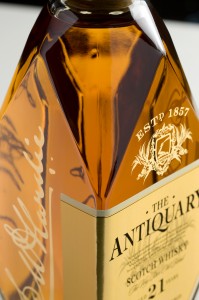
The two expressions of the Antiquary, the 12 year old and the 21 year old are distributed in 25 countries throughout the world. As part of the new look the company has enhanced the iconic diamond cut bottle by updating the J&W Hardie Logo and firing it onto the glass using gold ink. The stunning new labels and gift packs now have a bolder, more modern look and a sense of sophistication which has been created through the use of luxurious gold inks.

12-set

This redesign comes at a time when J&W Hardie are expanding distribution of The Antiquary into the South American market by securing distribution agreements in Brazil and Argentina. It is also their intention to target key markets in South and South East Asia.

21-set

Robert Anderson Managing Director of J&W Hardie Ltd which is a subsidiary of The Tomatin Distillery Co Ltd , commented “ We feel that in The Antiquary we have a brand with massive potential that has perhaps thus far not been utilised properly by the company. Although current market conditions are still tough there is definitely still an appetite out there for top quality premium brands. We see massive potential in some South American markets and parts of Asia for the Antiquary and always mindful of our customers’ expectations in taste and design, we are more than delighted with this packaging development”.

21-detail2

antiquary-21

antiquary-12

Visit The Antiquary at http://www.antiquary.co.uk/

The Bailie Nicol Jarvie NAS (40%, OB, ‘Very Old Reserve’, +/-2010) – Scotch Whisky Tasting Note

bailie20nicol20jarvie20bnj

The Bailie Nicol Jarvie NAS (40%, OB, ‘Very Old Reserve’,+/-2010)

A blended Scotch whisky that comes highly recommended. Oddly the web address, while is suitably registered to Macdonald & Muir, a WHOIS search reveals, leads to …nothing. Now why would you go to the effort of putting a web address on a back label if you don’t even have a website? Apparently the whisky possesses a high malt content….

The nose is malty and honeyed initially followed by a mildly oppressive layer of Marmite and mild rubber; however there is also some good oak spiciness. There are also some fragrant heather notes but the Marmite/rubber muddies the waters some what and it is Omni present throughout the assorted collection of aromas. The taste is malty and honeyed, a good start however the Marmite/rubber make a swift showing. There is also the arrival of some smoke and after a short while the taste settles don some what and becomes quite pleasant. After a while it becomes a little creamy and smokey. Quite nice. The finish is light Marmite and malt and carries on for quite some time. Some later moments of dryness arrive along with some malt. The finish grows a little and ends on a good note towards the end. Some really good sweet malt after a few minutes.

Mildly confused and the picture is most definitely blurred by the Marmite and rubber. Disappointing.

71 Points

£19

Visit Bailie Nicol Jarvie at www.bnjwhisky.com ha ha ha ha!

Maker’s Mark 46 – American Whiskey News

makersmarklogo

The Story Behind The Idea

How it’s Made

Since 1958, the Maker’s Mark® Distillery in Loretto, Ky., has made only one thing — Maker’s Mark Bourbon. It was Bill Samuels, Sr.’s pioneering spirit that led him to experiment with soft red winter wheat as the flavoring grain, in place of rye, that ultimately created the taste profile that is so unique to Maker’s Mark. His idea not only changed the bourbon category forever, but his philosophy of combining “taste good” with “good taste” has remained the core of the brand’s guiding principles to this day.

In the innovative spirit of Bill Samuels, Sr., and at the consistent prodding from bourbon lovers, taste-makers and our Ambassadors, Master Distiller Kevin Smith began experimenting to see if we could come up with something new and different that would be true to the craft and heritage of Maker’s Mark.

After many bad ideas, Kevin came to the conclusion that the foundation for our new bourbon would be our own fully matured Maker’s Mark. Kevin’s next decision would prove equally insightful. He decided to enlist Brad Boswell, owner of our barrel maker, Independent Stave, to provide technical assistance. Brad’s passion soon equaled Kevin’s passion to create
something new and different. Together they experimented tirelessly, realizing that their creation could not and should not come from artificial flavors. Instead, the creation should come naturally from grains and wood. Finally, in December 2009, they exclaimed, “We think we’ve got it!”

Maker’s 46 is the first new product ever from Maker’s Mark Distillery, and we are the only distillery to use this stave process in creating bourbon.

Maker’s 46™ Bourbon Whisky, 47% Alc./Vol. ©2010 Maker’s Mark Distillery, Inc., Loretto, KY.

makers46-thumb

Maker’s 46 Tasting Notes
Age To Maturity Proof 94

Aroma Pleasant, sweet, toasty oak nose with caramel overtones. More intense aroma without an alcohol nose.
Taste Rich, creamy seared-oak flavors; caramel and vanilla notes linger on
the front of the palate, but it is still soft enough to hold on the tongue
even at 94 proof.
Finish A big, mouth-watering oaky finish. Long with a little spice, staying forward on the palate without the bitter bite found in older whiskies

Why the number 46?

During the experimentation process, Brad and Kevin tried manipulating oak staves in a variety of ways for different flavors, and it was through that  process that Maker’s 46 got its name. 46 was the profile number assigned by Brad Boswell to the process used to sear the oak staves that proved successful in creating the taste profile that Kevin and Brad had been working to achieve.

nmo4437_mx
Visit Maker’s Mark at http://www.makersmark.com/


Powered by WordPress