Archive for 2009

FAMOUS AUTHOR BACKS KEEP JOHNNIE WALKER IN KILMARNOCK CAMPAIGN

FOR IMMEDIATE USE:  AUGUST 2009

FAMOUS AUTHOR BACKS KEEP JOHNNIE WALKER IN KILMARNOCK CAMPAIGN

Famous Scottish author William McIlvanney added his support to the swelling campaign to Keep Johnnie Walker in Kilmarnock, when he visited recently to make a film for BBC’s The One Show.

Willie, who was born in Kilmarnock in 1936 and now lives in Glasgow, spent the day with the BBC film crew. They visited various locations around town, including Grange Street and West George Street, where Willie spoke to several ex-Johnnie Walker workers.

He also chatted to passers-by in Bank Street about the plight of hundreds in the town facing joblessness and the fight to save 700 Johnnie Walker jobs in Kilmarnock.

Mr McIlvanney, who had been abroad when the 20,000 strong mass rally was held, said: “I couldn’t believe the passion in the place. I only wish I had been able to be at the march.”

He added: “It was the Kilmarnock Edition of Robert Burns that introduced his poems to the world – poems which had at their core a profound belief in the dignity and importance of the ordinary worker.

“It is bitterly ironic that what is probably the second most famous product of Kilmarnock, Johnnie Walker whisky, is now being used to subvert that belief, to demonstrate utter contempt for the ordinary workers who, over generations, have made the product the respected world brand it is today.

“It’s enough to make Robert Burns turn in his grave at a thousand revs a minute.

“Diageo, the current owners of Johnnie Walker, can have no motivation for closing down the plant in Kilmarnock but greed.  Having made over £2 billion profits last year, they are trying to devise ways of making more, regardless of the devastating impact their soulless pursuit of

money will have on the lives of those who made their product so profitable in the first place. There can be no response to such contempt for people but total opposition.”

Other well-known Scots backing the campaign include the Proclaimers, Biffy Clyro, Eddi Reader, Trashcan Sinatras and poet Rab Wilson.

For more information, visit www.keepjohnniewalkerinkilmarnock.com.

Note to editors:
William McIlvanney was born in Kilmarnock in 1936, the youngest of four children of a miner who took part in the 1926 General Strike. His father died when Willie was eighteen, an experience reflected in his first novel Remedy is None. Willie was educated at Kilmarnock
Academy and was the first member of his family to go to university. He was an English teacher in Ayrshire, before becoming a full-time writer in 1975.
Remedy is None (1966) won the Geoffrey Faber Memorial Prize. Docherty (1975), a moving portrait of a miner whose courage is tested during the depression, won the Whitbread Novel Award. Other works include The Big Man, The Kiln, Laidlaw, The Papers of Tony Veitch and Weekend. Some of his stories are set in Graithnock, a fictional town based on Kilmarnock.
ends

willie-bar

New Products & Sale Items at Single Malts Direct

2091

Scapa 16yo 40% – RRP £48.99 – Offer £43.99 SAVE £5.00
 
To the North of mainland Scotland, marking the point where North Sea and Atlantic converge, lie the islands of Orkney. At the heart of these lies Scapa Flow, an expanse of calm water which has acted as a sanctuary for weary seafarers through the ages.
The Scapa distillery has overlooked these waters since 1885. Here, a surprisingly subtle malt whisky is created, a malt reminiscent of an Orcadian summer’s day. With its warm golden embrace, traces of honey and wild heather, and the merest hint of the sea, this delicious whisky is an expression of the life of the islands, where community and friendship are still valued above all else.
Aged in Orkney for 16 years, this golden malt delivers a sweet and silky-smooth, heather-honey taste perfectly balanced with delicate spice.
 
Ardmore Traditional Cask £26.99 Offer £22.99 SAVE £4.00
 
Founded in 1898 by one of Scotland’s most famous whisky families, Ardmore single malt has a long commitment to quality. William Teacher was a believer in traditional distilling methods and insisted that Ardmore only used the aromatic smoke from natural, Highland peat fires to dry their malted barley. Sadly, today the high cost has meant that only one Highland Distillery still routinely fully “peats” its standard malt. Ardmore is rightly proud to be that distillery. Ardmore Traditional Cask is double matured, first in the more unusual oak barrels, and then in much smaller “quarter casks”. These were common in the 19th century, but are too costly for most distillers to use today. Finally, bottled at 46% abv, Ardmore is only barrier rather than chill filtered thus preserving the natural flavours. These methods ensure we maintain the quality of our uniquely complex and rewarding malt whisky. Taste: Full, smooth, peat-smoke and earthy richness, tempered by subtle sweetness.

Limited Release
Ardbeg 1993 15yo 58.9% cask 1724 – Duncan Taylor & Co. RRP £99.99
A single cask bottling from the Icons of Whisky “Independent Bottler of the Year 2009”. Colour: Pale gold. Nose: Creamy, oily with a little warm grass note.  Smoke and dry ash giving way to a touch of liquorice. Taste: More dry ash.  Hints of olive oil, some bread like notes.  Quite creamy with a faint hint of treacle toffee all wrapped in smoke. Finish: Obvious lingering smokiness, quite oily and chewy.  Wet wood smoke and dry moss and a touch of pepper.

New Products 
 
Glendronach 12 Year Old 43% – £25.99 was 27.99 save 2.00
  
Knockando 14 Year Old Old Malt Cask 50% – 47.99

Macallan 1990 19 Year Old Rare Auld Cask 8099 50.1% – 75.99 
  
Balvenie 1978 30 Year Old Vintage Cask 2705 *Limited Edition* 53.8% – 459.00
 
Introducing

Loch Ness Single Highland Malt – RRP £30.99

A mature and singular malt distilled just a few miles, as the eagle flies from the shores of Loch Ness. A “Monstrously Good Malt”. Loch Ness is an enchanted place set in the ancient Highlands of the historic North of Scotland. Generation after generation has grown up with the legend of the monster thought to inhabit the cold depths of the loch. There are said to have been several sightings during the last hundred years and there has, from time to time been inconclusive photographic evidence. The first sighting of the monster to be recorded in the local press was reported by the Inverness courier in 1868 – which described it as a huge fish! Today Nessie, as she is affectionately known, continues to be the subject of many different theories and much scientific research. Of only one thing can we be certain – we shall toast with The Loch Ness Single Malt Whisky, the first people to prove beyond doubt her existence!
 

Contact Single Malts Direct info@singlemaltsdirect.com

Website http://www.singlemaltsdirect.com/

The discontinuation of Benromach Organic – Kensington in Calgary

Dear Malt Messenger Subscribers,

I hope you are enjoying your summer, even if it has been a little wetter, little windier and little cooler than usual. I’m often asked, what my favourite whisky is, and in all sincerity I have often replied that my answer depends on a number of factors including: time of year, weather, time of day and my mood. This past weekend I enjoyed some rich and smooth Strathisla 40 Year ($343.99) with a Cuban cigar; the deep tobacco notes in both made an excellent pairing. I also happily sipped on some fresh, sweet, malty Arran 10 Year ($53.99) while sitting out on the deck. I find my palate and my preferences for single malt whisky changes with the seasons. Fall is the time for lightly peated medium bodied whisky like Highland Park or Springbank. In winter I reach for the big-smoky-peaty whiskies like Port Ellen, Bowmore and Ardbeg. In Spring a rich and spicy Speysider is what’s called for like Glenfarclas, Aberlour or Strathisla. And in the summer I look for something light, and refreshing like an Arran, Rosebank or the Benromach Organic.

Benromach Organic has been one of our best selling single malts for the last three years. It was until very recently the only certified organic single malt Scotch in the world. Produced from organically sourced barley, and made with organically approved distilling methods the whisky was then matured in virgin American oak casks from a wild forest in Missouri.  Because the whisky was matured in new oak, rather than used bourbon barrels, it is very buttery on the palate with a massive surge of sweet vanilla. This soft, sweet, buttery palate was the principal reason for the whisky’s success. It found admirers amoungst those looking for a softer light dram—a breakfast or summer dram if you will—and those looking to wean themselves into the word of single malts. Whether people were buying it as a “gateway-whisky” or a patio sipper, Benromach Organic never disappointed. Jim Murray gave it 91pts in his Whisky Bible and called it a “guns-blazing big’un!”
             
This whisky has been a Kensington Wine Market exclusive for the last three years, and is not available anywhere else in Canada! Sadly, Benromach distillery has confirmed that they have discontinued the Benromach Organic, and we will not be receiving any further shipments of it. Between our warehouse and the store we have but 26 bottles, and when they’re gone, they’re gone! If you’re a fan of the Benromch Organic or looking for the right “gateway-whisky” to get you into single malts, don’t delay, the Benromach Organic will soon be nothing more than a memory, or a heel in someone’s whisky cupboard… hopefully yours!

The last 26 bottles of the Benromach Organic will retail for $85.99 + GST.  They are exclusively available at Kensington Wine Market, 403-283-8000, or www.kensingtonwinemarket.com.. Jim Murray’s complete tasting note is below:  “Nose: massive oak input and the freshest oak imaginable. But sits comfortably with the young pulsing malts. Wow!!; Taste: oak arrives first again, but has enough deftness of touch to allow the rich, mouthwatering malts to prosper; Finish: plenty of vanillins and natural, sweet toffee; Balance: young and matured in possibly first fill bourbon or more likely, European (even Scottish) oak [Jim Murray’s palate didn’t know what to make of the new oak influence, and who can blame him!]; you cannot do other than sit up and take notice of this guns-blazing  big’un. An absolute treat!”
____________________

If you have any whisky questions or comments concerning The Malt Messenger please contact me by e-mail, phone, or drop by the store. Feel free to forward me any whisky news you feel should be included in a future issue of The Malt Messenger; it might just get included.

All of the products mentioned in THE MALT MESSENGER can be purchased in store, over the phone or from our website at www.kensingtonwinemarket.com.. All prices quoted in the Malt Messenger are subject to change!

Thanks for reading the Malt Messenger!

Slainte!

Andrew Ferguson
KWM Scotchguy

403-283-8000
888-283-9004
1257 Kensington Rd. NW
Calgary, AB, Canada
T2N 3P8

scotchguy@kensingtonwinemarket.com

Jack Daniel’s ‘Green Label’ at Park Avenue Liquor

Jack Daniel’s ‘Green Label’
has arrived at the
Park Ave Liquor Shop

We’re very excited to announce that after years of limited availability, Jack Daniel’s Green Label has finally arrived here at the Park Avenue Liquor Shop. Some of you may be familiar ‘Green Label’ but for those who are not the short description is that this is a younger version of Black Label. You can find more information  below and as always, feel free to contact us with any questions you might have.
Cheers!
Jonathan & Eric
Park Avenue Liquor Shop                                      
                     
292 Madison Avenue
New York, NY 10017
212-685-2442
info@parkaveliquor.com
www.parkaveliquor.com

Comment by Dave Broom on Column Stills being Traditional Equipment for Malt Whisky Production

This article was first published in July 2008 and is here with permission of the author.

Funny thing tradition. Seems to mean different things to different people. Finishing, for example, is ‘traditional’ despite being an innovation which started in the 1990s. Making malt whisky in a column still isn’t traditional despite having been a technique used since the 19th century. Let me explain.
Two weeks ago, Loch Lomond Distillers asked the SWA to consider creating a new category for malt whisky made in continuous stills. As it makes such a product this seems worthy of debate. The SWA rejects this, as the technique “does not …reflect traditional Scotch Whisky distillation and practice.”
This strikes me as strange. Historical records show that so-called ‘Silent Malt’ was widely made in the 19th century. Cameronbridge, Yoker and Glenmavis distilleries all produced such a spirit and there’s evidence that the practise was common elsewhere. In 1913, Nettleton refers to: “Patent-still all-malt whisky, as made at one or two distilleries, may claim the title ‘whisky’ with the qualifying description.”  Neither was the technique restricted to the 19th century. George Christie produced this type of whisky from a continuous still at his North of Scotland distillery until the 1960s and, obviously, Loch Lomond continues to do so. Both Irish Distillers and Nikka are currently making whiskies of this style.. outwith the Scotch Whisky Act of course, but evidence that this isn’t just a one-off. Coffey Malt may be unusual, but it has solid historical precedent. 
I wrote to the SWA for clarification and they, speedy and polite as ever, responded, highlighting a sub-clause in the new regulations which states that malt whisky can only be made in pot stills, a change from the current regs.
What then, I wonder idly, is the legal definition of a pot? Is a Lomond still, for example a pot? Is a pot still with a rectifying column attached a pot? “We’ve looked at them,” came the response, “and they’re considered to be pots. Loch Lomond is however producing from column stills and that’s outwith the new regulations.” They then added that though Loch Lomond will have to call its product grain whisky, it would be allowed to state on the label that it was made from 100% malted barley. Reasonable enough?

Well.. maybe we should read on:

“Patent stills have been used since the mid 19th century – what is not traditional is that Scotch Whisky produced from such a still should be described and/or sold to customers as Single Malt Scotch Whisky [which is] a recognised trade description with a particular reputation. Whether or not Mr Christie distilled a malt mash in a continuous still in 1960 and whether or not such a practice was known in the 19th century is neither here nor there.
“But for the new Regulations, the fact that some of the ‘Single Malt’ being distilled by Loch Lomond since 2005 is from a continuous still would never have become public – it certainly isn’t mentioned on their web-site. The new Regulations are needed to prevent precisely this sort of thing going on behind the scenes.
“The requirement to adhere to traditional practice arises out of EU Regulations, hence the use of the term. Just because something has happened a couple of times in the past does not make it a traditional means of producing Single Malt Scotch Whisky in 2008.”
 
Is this double-think? The EU requires you to adhere to traditional practise, but despite this having been a technique used continuously (pardon the pun) since the 19th century it isn’t traditional? This production technique didn’t happen ‘once or twice’, but was an accepted practise which, though not widely used, was and still is part and parcel of the making of Scotch Whisky.  In other words it is part of the tradition.
Given this, there is greater historical precedent in the distillation of 100% malted barley in a patent/column still than there is around finishing. I can find no reference in any historical documents about distillers using Sauternes casks (etc) in the production of their whiskies. I can however find plenty of evidence of them making ‘Coffey malt!’ If tradition is to be used a legal grounding for these regulations then it must be used in a consistent and equable fashion. That isn’t the case here. 

The SWA also argued that one reason for rejecting Loch Lomond’s submission was that “one of the aims is to produce a lighter spirit which matures more quickly.  You can imagine the implications for small traditional malt whisky distilleries if such a product was able to use the Single Malt description.”
Now, “quicker-maturing” whisky has been the holy grail of every distiller (or at least their accounts departments) for decades. If distillers find a way of creating a mature whisky at 3 years of age then what is to stop them? Or is this suggesting that single malt should have a different minimum age? Are the 3yo malts used in blends not mature?
It’s an open secret that experiments are ongoing to try and find ways of accelerating the interactive process. The fact that continuous stills might make a quicker maturing whisky can’t be an argument for not allowing the “Coffey Malt”.
 
It transpires however that the real reason for the rejection of the 6th definition might be down to finance. “Installing a continuous still in an existing Single Malt distillery is for all intents and purposes a shortcut to increase capacity without the expense of installing new pot stills. (We understand, for example, that the single continuous still used by Loch Lomond for distilling malt mash has an output equivalent to six pot stills.)” So, the reason this was rejected was because it saved money? The SWA logic was that if Coffey Malt could be defined as a single malt then all distillers would scrap their pots, install columns and make this lighter variation on the theme. Fact is, Loch Lomond didn’t want to call their malt single malt whisky, which would potentially cause confusion, but wanted a new designation for this specific method of production.

I felt obliged to ask whether the SWA’s remit now extended to controlling firms’ financial decisions? “The simple answer is no. We are not making any attempt to control financial decisions and, as you are aware, we cannot do so. There is nothing to stop the building of patent stills and distilling a malt mash in them. Our point is the resultant spirit cannot be described as Single Malt Scotch Whisky for reasons explained.” But that’s not what was said and the logic behind the other reasons [ie the lack of tradition etc] strike me as being fundamentally flawed.
 
This one will run.

http://www.maltmaniacs.org/ADHD/mm-db.html

Further comment on the subject can be viewed at:

https://www.whiskyintelligence.com/2009/08/gauntleys-whisky-newsletter-no36-july-2009/

The Whisky Society from the Whisky Exchange in London

484_header

The Whisky Society is a range of premium whiskies that show case the very best single malt whiskies. We’ve managed to grab hold of a small parcel intended for the overseas market-these whiskies are all from terrific distilleries, but ofcourse they are unrepeatable and stock is pretty limited, once they’re gone they’re gone!

View the complete range at http://www.thewhiskyexchange.com/D-484.aspx

Gauntleys Newsletter Bruichladdich Octomore & PC8 Update

Dear Whisky Customers
 
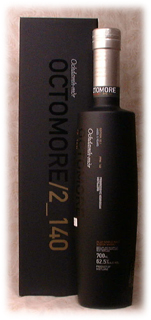
Just a quick email to let you know that I will have some of the Octomore 2 in later this month. They’ve bored out the cylinders as they say and upped the peating level from 132 to 140 ppm. Unlike last time I have a larger allocation. Thus there will be no need for drawing names out of a hat!!
 
I have 10 bottles available, thus it will be sold on a first come first served basis, with a maximum purchases of one bottle per customer. The normal Gauntleys retail for this will be £82.95. However for the member of the whisky mailing list you will be able to purchase it for only £79.95. Arn’t we nice to you!
 
Also PC8 ‘Ar Duthchas’ (Gaelic for ‘Land of Our Heritage’ ) will be available as well, matured in 100% American oak, retailing for £68.95. This is the fourth and final release of the spirit distilled in 2001. The natural cask strength has fallen to 60.5% and a must buy for those of you who purchased PC5, 6 and 7.
 
If purchased in conjunction with the Octomore you can have it for £65.95. My, all this generosity in one email!!!!
 
Jim McEwan’s tasting notes follow:
 
Octomore 2 62.5%

100% Bourbon Cask – 140ppm

Colour: Winter sun/Lemon Grass

Body: A total tempest of peaty marine spirit that leaves the palate mesmerised, it’s absolutely gorgeous!! The power of the spirit is phenomenal and Phenolic as it crashes onto the palate like a tidal wave of smoke, engulfing the senses in a mind blowing whirlpool of Islay character that has never been experienced before. Awesome does not even come close!!

Nose/Palate: Without water (which is the way I enjoy it), the aromas are of peat fires,  iodine, burning heather and oily sea crusted rope. Then it opens a little allowing notes of Hawthorn, Birch, Myrtle and Juniper to evolve. It’s the wild plants and trees you find on walking Islay’s’ hills.  These aromas cool the senses a little and bring a freshness to the spirit which  is really beautiful. With the addition of water the Myrtle mint oiliness moves forward and clears a path for the little notes of green apple and pine needles to emerge which is a much welcome relief from the thunder clouds of peat smoke that threaten to erupt at any moment.
      
After some 25 minutes and water, a chink of sunlight breaks through to reveal the oak and the malt, both of whom are now coming to terms with their situation which is that sharing a glass with the peat monster requires patience, but they prevail and some kind of harmony is reached and so the thunder clouds roll on menacing and moody but with just a hint of a silver lining beginning to emerge.

After 45 minutes it’s safe to really get your nose into the glass. All the lighter notes are more evident, particularly the Myrtle and malt. I don’t suggest that if you’re a storm chaser that you wait so long, it’s twice the fun to enjoy it as it is, straight without dilution, but that’s your choice. It’s not a difficult decision!! Face the monster and enjoy what is a totally unique experience. Peatophiles, this one is for you. It is the heaviest peated single malt in the world but there is a gentler side that will evolve as time goes by, but for now, its Rock & Roll.

Finish: 24 Hours is about right!!

Regards

Chris Goodrum

Visit Gauntleys at http://www.gauntley-wine.co.uk/

Northern California Tastings featuring Isle of Skye, Edradour and Sigantory

The confirmed schedule of tastings-seminars in Northern California, Fall 2009.

It is a rare opportunity for scotch connoisseurs or just the beginners to try 9 malts from different regions of Scotland, in different expressions (86 proof, 92 proof UCF and Cask Strength) at the various price points (from $28.00 to $ 150.00 per bottle).

The tastings will feature Isle of Skye, Edradour and Sigantory. The complete list of malts will be released in the beginning of September.

The attendees will be taken through the whisky making process, explained how the distilling techniques, location, the wood and etc. influence the final product.

Traverso’s
September 20 th
Contct
Michael or Fred
707-542-2530 or info@traversos.com

To be held
Hyatt Vineyard Creek Hotel
170 Railroad Street
Santa Rosa, CA 95401
4:30 pm

Admission
$ 50.00 – general
$35.00 –club member

Jackson’s Wine & Spirits
September 22
Ph. 925-284-4100

To be held
Metro Lafayette
3524 Mt.Diablo Blvd
Lafayette, CA 94549
6:30 pm

Admission is $ 45.00

The Whisky Shop
September 23
Ph. 415-989-1030

To be held:
E & O Trading Company
314 Sutter Str
San Francisco, CA 94108
6 :30 pm

Admission: $ 45.00

Mill Valley Market’s
September 24
Contact David Canepa @ 415-388-3222

To be held
Golf Course- Club House
280 Buena Vista Ave
Mill Valley, CA 94941

Admission: $ 20.00

7 pm

Roberts Market Portola Valley
September 25
Ph 650-851-1711

To be held
Parkside Grill
884 Portola Road Ste A 1
Portola Valley, CA 94028
6 pm

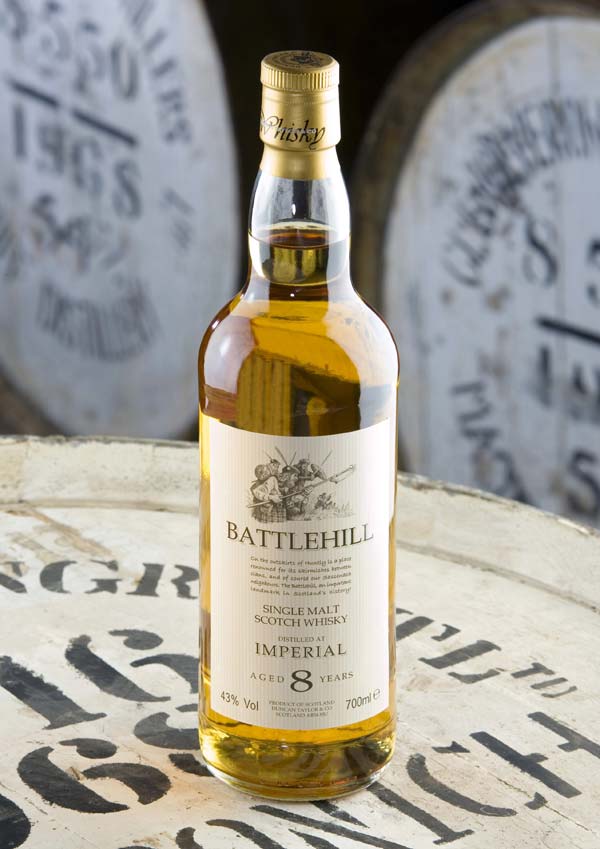
Imperial 9yo (43%, Duncan Taylor, Battlehill, +/-2008)

battlehill

From the Duncan Taylor Battlehill line of whiskies comes a youngish 9yo Imperial, a distillery that is not prolific and is found mostly in the form of Independent bottlings. The nose is immediately sweet with a backing of dry dusty malt, Demerara brown sugar, vanilla, oak and tree fruits. Very much the aromas of a warm summer day in the orchard in some respects. And very nice. After a few minutes in the glass the oaky wood notes come to the fore striking a nice balance with the sweetness. The taste is very good with a good balance of the sweetness and the oaky wood notes and the fruit, an oily sweet mouth feel followed by some dryness and more fruit and some excellent malt. The finish is both warming and very long with additional malt and a dark chocolate bitterness arriving towards the end along with the oaky dryness. A surprise appearance of some mild citrus followed by a wonderful taste of malt.

Extraordinarily good and very much more-ish. Very much from the woody and fruity segment of the flavour wheel.

C$85

Score 85 Points

Visit Duncan Taylor at http://www.duncantaylor.com/products/battlehill.htm

battlehilll-imperial

Bruichladdich Octomore 2 News

octomore_2
The World’s Peatiest Whisky Just Got Peatier

Octomore  is now 7%  more peaty than the inaugural 2008 record-breaker.

The peatiness, at 140 ppm (parts per million) in the original malted barley, gives this whopper a huge peat smoke punch, almost 30% more than its nearest rival to the title.

It is referred to as ‘the iron fist in a velvet glove’ owing to the whisky’s surprisingly subtle charms, and is distilled at Islay’s Bruichladdich Distillery by head distiller Jim McEwan:

“It’s a great equation: massive peat + Bruichladdich elegance = awesome spirit. We dialed up the peating level of this 2nd bottling of Octomore because it seemed churlish not to.”

“But Octomore is not for the feint-hearted. At this peating level it is for savouring; a little goes an awful long way. Taste with minimal water to appreciate and share in its evolution.”

“Dr Riffkin, Tatlock & Thompson’s analyst that certified the whisky, told me: “this is the highest peating level we have ever seen – by miles.”

 Another slice of Octomore anyone?

Notes for Editors:
Distributed in the UK by Blavod,  202 Fulham Road, London SW10 9PJ  – contact: rambler@blavodextreme.com or Phyllis Taylor 0207 3522096  Exports: Andrew Gray andrew@bruichladdich.com

Peat smoke was traditionally used to arrest by desiccation the germination of malting barley to provide fermentable sugars.

Octomore is an Islay single malt distilled at Bruichladdich distillery annually since 2003.

Octomore 2009 bottling was distilled from barley that measured 140 ppm parts per million of total phenols in the original malted barley by the industry standard method of HPLC.

The certificate of analysis of the Octomore 2009 bottled whisky by Tatlock & Thompson Scientific Services is available for inspection at Bruichladdich Distillery.

15,000 numbered bottles are available worldwide at cask strength. Available from Loch Fyne Whiskies http://www.lfw.co.uk/

http://www.bruichladdich.com/

bruichladdich-logo1


Powered by WordPress