David Copp doesn’t have a big law office, or even a secretary for that matter, but the Halifax lawyer didn’t think twice about taking on the forces of the Scotch Whisky Association in what has become one of the most notorious trademark cases in the country.
“I am a Cape Bretoner and I am very sensitive to anything that threatens or is damaging to the people and economy of the place that is my home,” he said Friday.
On Thursday, Mr. Copp’s client, Glenora Distillers International Ltd., won a major victory when the Supreme Court of Canada refused to hear the whisky’s association’s appeal of a Federal Court of Appeal decision. The ruling allows Glenora to register the name Glen Breton, Canada’s only single malt whisky, under the Trademarks Act of Canada.
Mr. Copp, who practices law by himself in Halifax, was hired by the Cape Breton distillery about nine years ago after the Edinburgh-based association tried to stop the distillery’s use of the word Glen in the Glen Breton name. It claimed the name Glen makes consumers believe the whisky is produced in Scotland
But what started out as a seemingly straightforward administrative hearing went all the way to the Federal Court of Appeal.
“It is a little distillery and resort area . . . (and) it has been the subject of a really determined and relentless attack by the Scotch Whisky Association on its primary brand,” Mr. Copp said.
The Scotch Whisky Association represents some multinational corporations like Diageo Plc, which produces and distributes brands including Smirnoff vodka, Johnnie Walker Scotch whiskies, Guinness, Bailey’s; J&B Scotch whisky, Captain Morgan rum and Tanqueray gin, according to its website.
Mr. Copp said he did not believe the association’s attack on Glenora had any merit.
“It is an example of how difficult it can be when large commercial forces align themselves to oppose what is a really important element of success in business — mainly having a good trademark,” he said.
Mr. Copp, who worked as lawyer for the former crown corporation International Centre for Ocean Development in Halifax, has practiced law by himself since 1992, and taken on many trademark cases.
But he concedes they have never been as complicated and time consuming as this case.
He was forced to bring in some paralegal reinforcement to help him keep on top of the massive amounts of documents that the case generated.
“The filing for the Court of Appeal was almost 4,000 pages. Each level produced several bankers boxes (of documents.) . . . We are dealing with tens of thousands of pages of printing.”
The Scotch Whisky Association was represented by national law firm Gowlings in the case.
And while it might be the end of the trademark battle in this county, the Scotch Whisky Association said Friday it could take action outside Canada depending on how Glenora markets its products internationally.
“Our job now, on behalf of the Scotch whisky industry, is to monitor very carefully how the product is marketed and to ensure there is no risk of confusion in any other market,” said the association’s David Williamson.


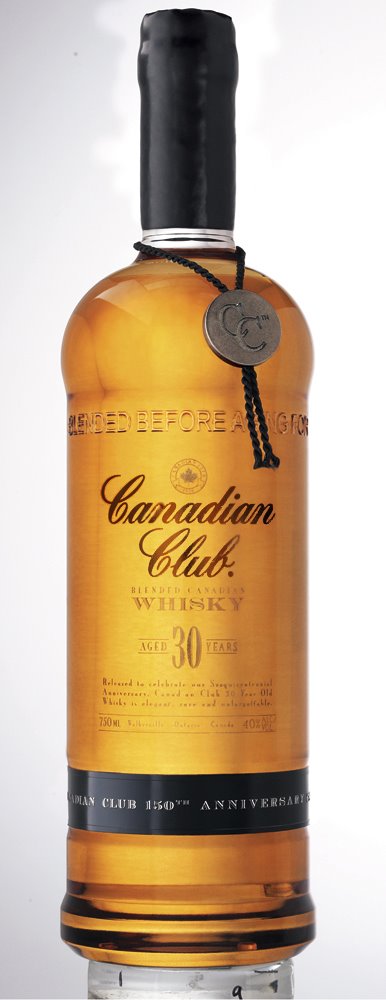


 The late Michael Jackson was a huge fan of Highland Park. In his seminal Malt Whisky Companion, he referred to it as “this great Orcadian distillery” and went on to write;